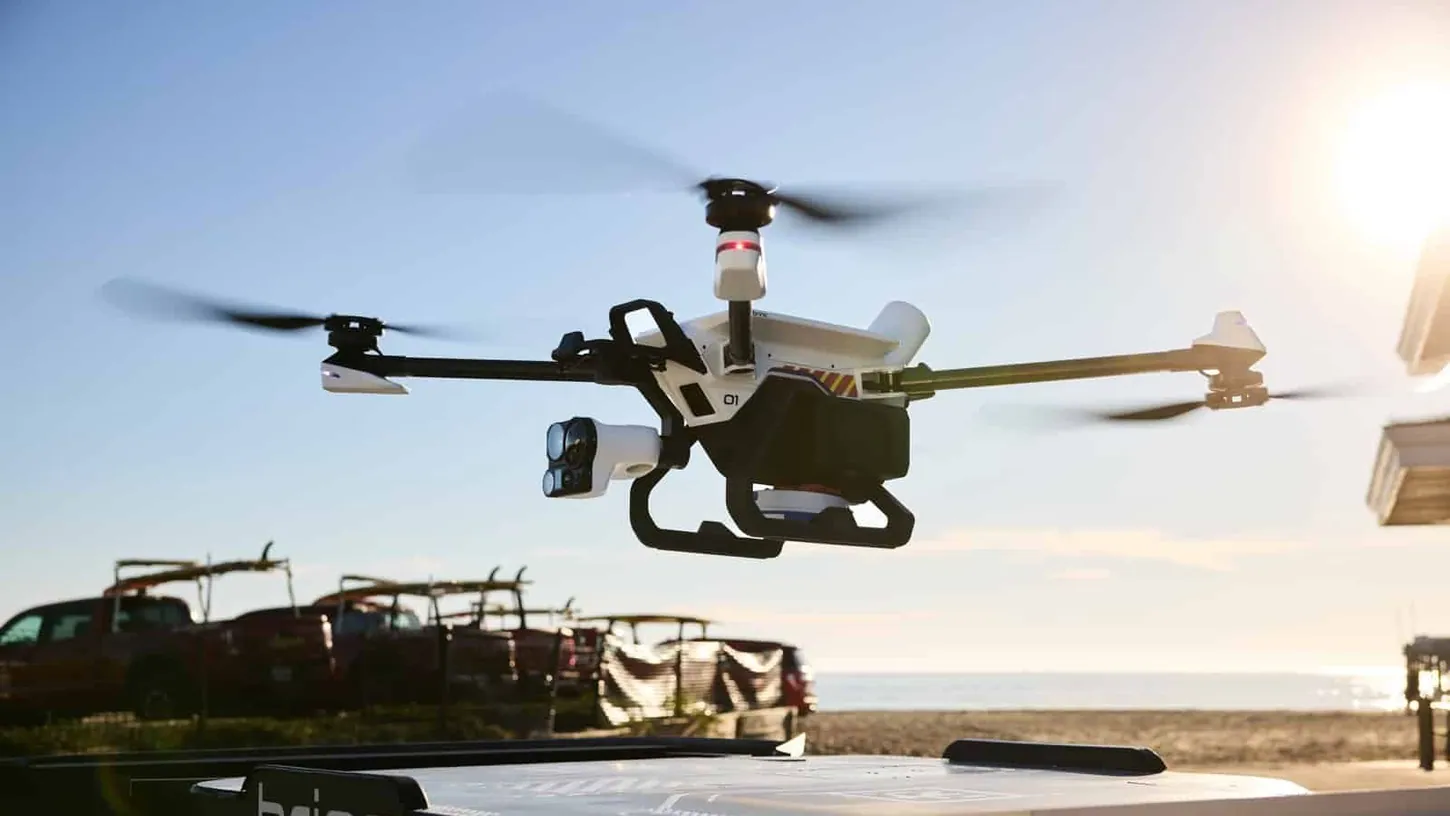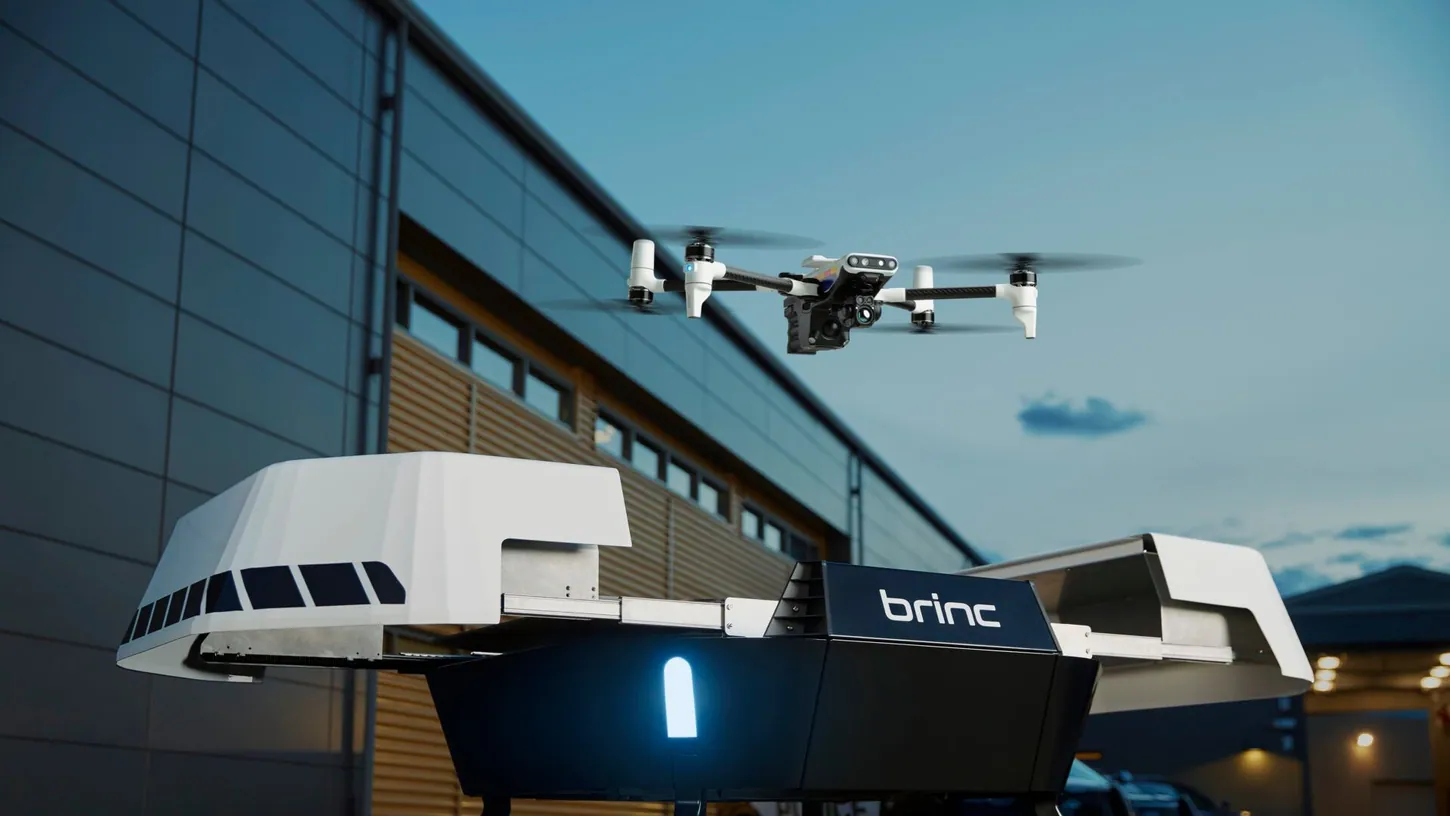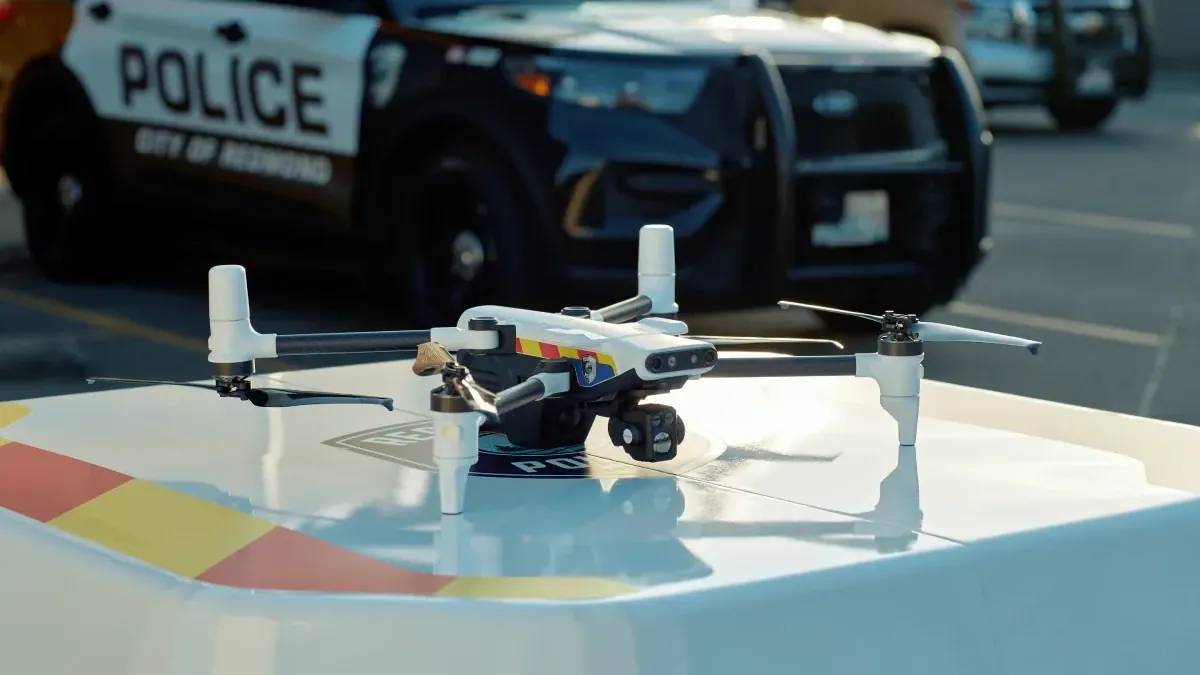
The Village of Pinehurst Council approved a one-year trial of a Drone as First Responder program for the Pinehurst Police Department at its Tuesday, November 17 meeting. The North Carolina village of about 18,700 residents gets two BRINC Responder drones and their docking stations through Motorola Solutions, with no subscription fee for the first 12 months.
Police Chief Glen Webb said in the Village’s November 19 announcement, “This is about giving our officers better information when every second matters.” The Village says the free year lets it evaluate the drones “before making a long-term financial commitment.”
Motorola’s paperwork in the council packet says Pinehurst “has agreed to a multi-year Subscription.” Five paid years at $159,998 each follow the free one unless the Village gives notice in time.
Motorola’s Addendum Starts the Paid Years Unless Pinehurst Gives Notice
Motorola’s TAKEOFF Program Addendum lets Pinehurst end the BRINC subscription without penalty by giving notice “up to 30 days prior” to the first paid year. Without that notice, years two through six bill at $159,998 each, and Motorola’s July 13 quote puts the total at $799,990.
The quote’s own term note states the exit more broadly, as a “right to exercise termination for convenience at any point within the first year.” Under either reading, leaving during the free year costs Pinehurst nothing if it gives notice in time.
Village staff told the council about the deadline. The staff memo in the November 17 agenda packet says staff “will plan around the addendum’s 30-day notice provision” and confirm the deadline with Motorola. It promises findings and a recommendation to the council before that deadline, and it says, “Given the price, we need to see benefits in actual calls that justify the expense.”
The quote, numbered 3721276 and addressed to Webb, lists two Responder aircraft and two Responder Stations, with installation, training and two hardware refreshes included. Motorola is the seller and BRINC supplies the drones. During the free year the aircraft stay BRINC’s property, and the Village pays for any damage the support plan does not cover. Title passes to Pinehurst when the first paid year starts.
The addendum also makes BRINC the Village’s only DFR supplier for those 12 months. Pinehurst may not deploy or buy an autonomous docked drone from another company until the paid years begin, and Motorola can end the deal immediately if it does. Motorola or BRINC may ask the Village to act as a public reference.
The packet leaves two things about the paperwork unsettled. The quote’s stated expiration date is September 11, more than two months before the meeting, and the copy of Motorola’s products agreement in the packet is signed by Motorola but not by the Village. In August, Financial Services Director Dana Van Nostrand told the council that any contract would need its review and approval before being executed, according to that meeting’s minutes. The Village’s meeting highlights say the council “approved a one-year trial.” As of November 20, the Village had not posted the minutes or a vote count.
Motorola uses the same structure elsewhere. West Valley City, Utah, was offered a free year followed by $874,985 on the same addendum terms, and League City, Texas, approved a free first year with up to $1,759,980 over six years in July. Motorola led BRINC’s $125 million funding round the same month.
Pinehurst Police Already Reach High-Priority Calls in 3:29
Webb’s slides in the packet estimate a drone would be first on scene 72% of the time, with a response of two to four minutes inside the village. The Village’s first-quarter fiscal 2027 scorecard, in the same packet, lists the police 90th percentile response time to high-priority calls as 3:29.
The slides do not say where the 72% and two-to-four-minute estimates come from or which calls they cover, so the two figures cannot be compared directly. Speed is only one of the reasons Webb gave the council. His slides list officer safety, live information for officers on the way, and a staffing argument: the drones would “mitigate increasing CFS,” police shorthand for calls for service, and give the Village “space to plan staff increases.” The department’s web page lists 26 sworn officers besides the chief and about 1,500 dispatched calls a month.
The memo commits staff to track how often a drone reaches a call before officers, how much earlier it arrives, whether the video changes the response or improves safety, and what the program costs in staffing and operations. Webb told the council in August that the trial would also show whether Pinehurst needs two drones or could manage with one and extra batteries, according to the minutes.
The Quote Leaves FAA Approvals and Site Preparation to Pinehurst
Motorola’s statement of work makes FAA approvals Pinehurst’s job. The Village must obtain and keep the waivers DFR flights require, with Motorola’s managed services assisting “as agreed,” and supply Part 107 certified pilots. Webb’s slide deck, dated August, says, “Brinc handles all FAA licensing and pilot training.”
The statement of work does have BRINC train the Village’s pilots and teleoperators, so the slide and the quote differ only on who handles the FAA paperwork. The FAA has been approving these requests quickly. A FOIA release this summer showed it had cleared more than 1,000 agencies for DFR flights in 10 months.
Each station needs a surface of at least 16 by 16 feet (4.9 by 4.9 meters) that can carry 360 pounds (163 kg) with an open view of the sky, a mount for the radio equipment, continuous 110-volt power and hard-wired internet. The packet puts no dollar figure on that work or on staff time, both of which the Village says it will pay for, and it does not say where the two stations will go.
On privacy, the Village says the drones will answer specific calls and will not “conduct routine aerial patrols or general surveillance.” The department’s proposed safeguards are a written use policy, a public transparency portal and quarterly audits. No drone policy text is in the packet. The Village’s new Public Safety Technology Advisory Committee, whose November 4 meeting agenda listed drones, is to provide additional oversight.
DroneXL’s Take
I like how Pinehurst’s staff set this up. The memo names the notice deadline, lists what the department will measure and says in plain words that the price has to be justified by actual calls. West Valley City’s packet named the price and the exit when we went through it on November 9, but no notice deadline and no list of what the department would measure. But the contract in Pinehurst’s packet is still a six-year subscription with a free first year, and under its terms paying is what happens if nobody acts. My read is that speed will be a hard case to make in a village where officers reached the most urgent calls in about three and a half minutes nine times out of ten last quarter. The numbers that could justify $799,990 are the calls a drone clears without sending an officer and the scenes officers approach more safely because they saw them first. The council should ask for those numbers in writing well before the notice deadline.
Sources: Village of Pinehurst (November 19, 2026 announcement; Village Council agenda packet for November 17, 2026, including the staff memo, Motorola quote 3721276 with statement of work and TAKEOFF Program Addendum, and the quarterly scorecard; minutes of the August 11, 2026 council meeting; meeting highlights; Public Safety Technology Advisory Committee agenda for November 4, 2026; police department page), Sandhills Sentinel, U.S. Census Bureau
DroneXL uses automated tools to support research and source retrieval. All reporting and editorial perspectives are by Haye Kesteloo. Read our editorial standards.
Advertise with DroneXLYour company hereReach 200,000+ drone readers a month with a sponsored article, a banner on your beat, or a partnership.See the options →