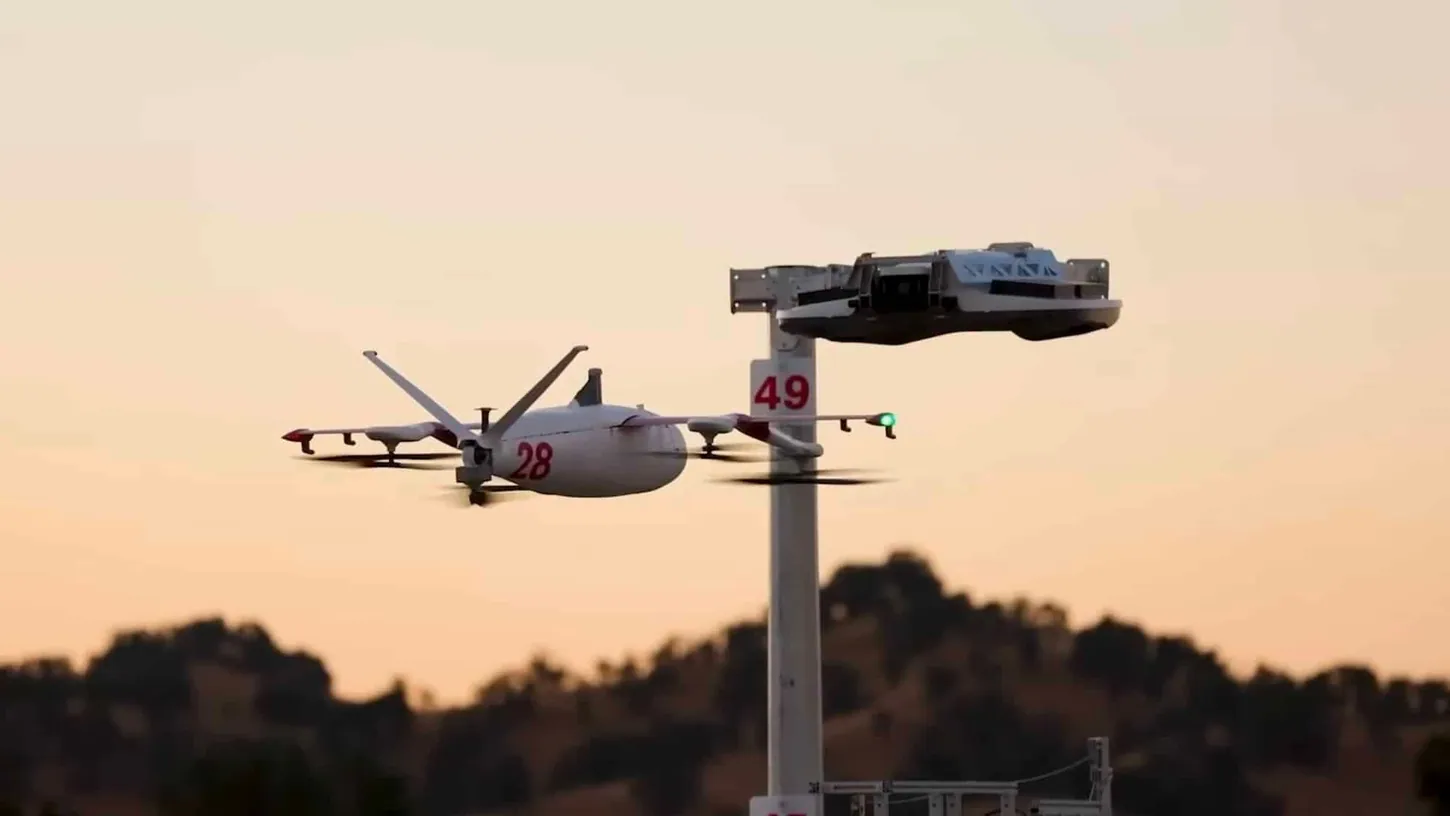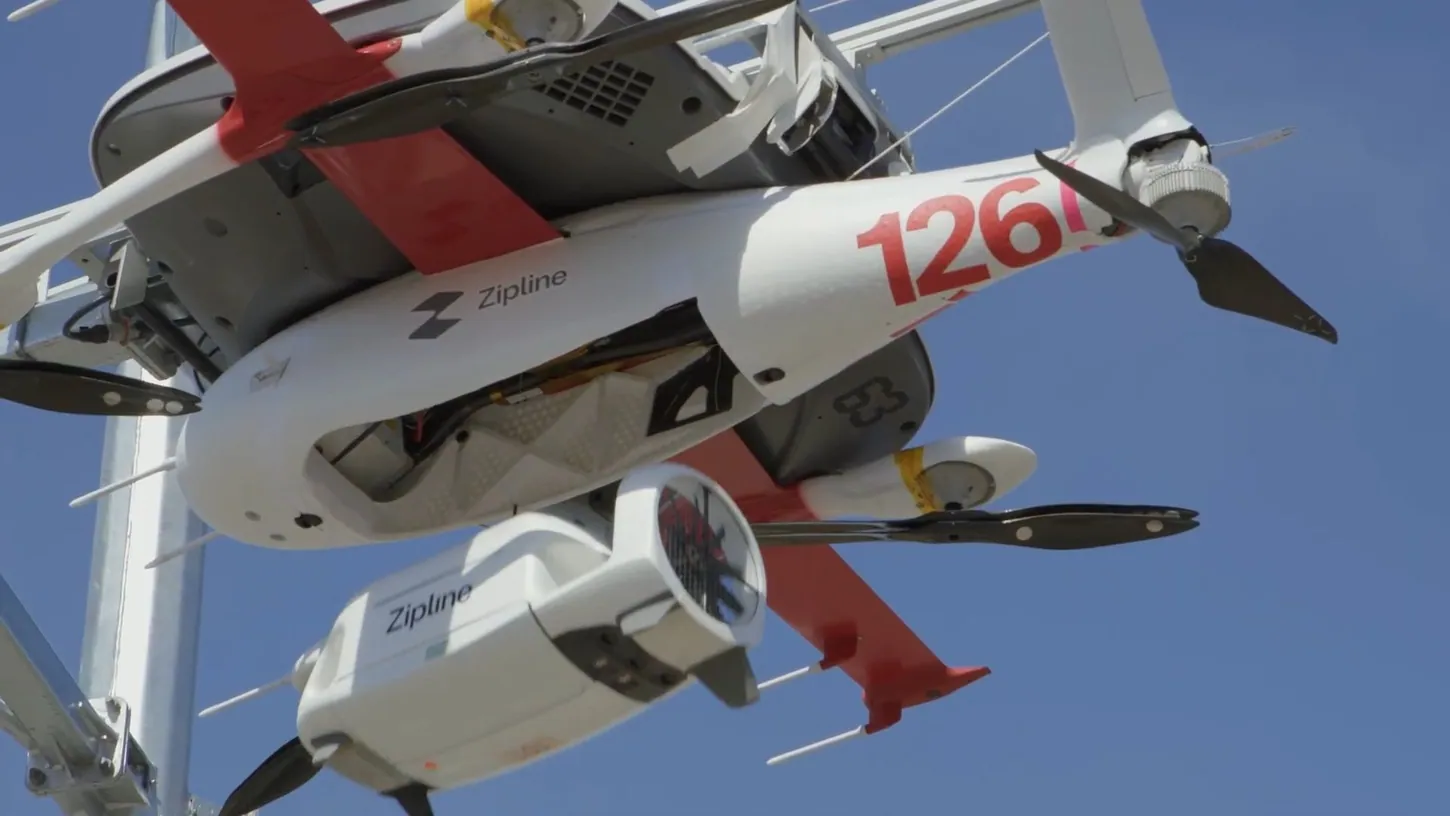
The FAA is taking public comment on a draft environmental assessment that would let Zipline fly up to 130,000 drone deliveries a day over Arizona: 65,000 in the Phoenix metro area and 65,000 in Tucson, around the clock, holidays included.
Zipline does not fly in Arizona yet. The company told 12News in Phoenix this week that it hopes to start serving customers there in early 2027. The closest comparison is the five-metro Texas draft DroneXL broke down in September, which is still a draft.
The FAA’s web page tells them to send comments by December 9. The notice inside the document says all comments must be received by 5 p.m. Central Time on Monday, December 7.
Tucson’s Ceiling Is 117 Deliveries Per Square Mile, More Than Twice El Paso’s
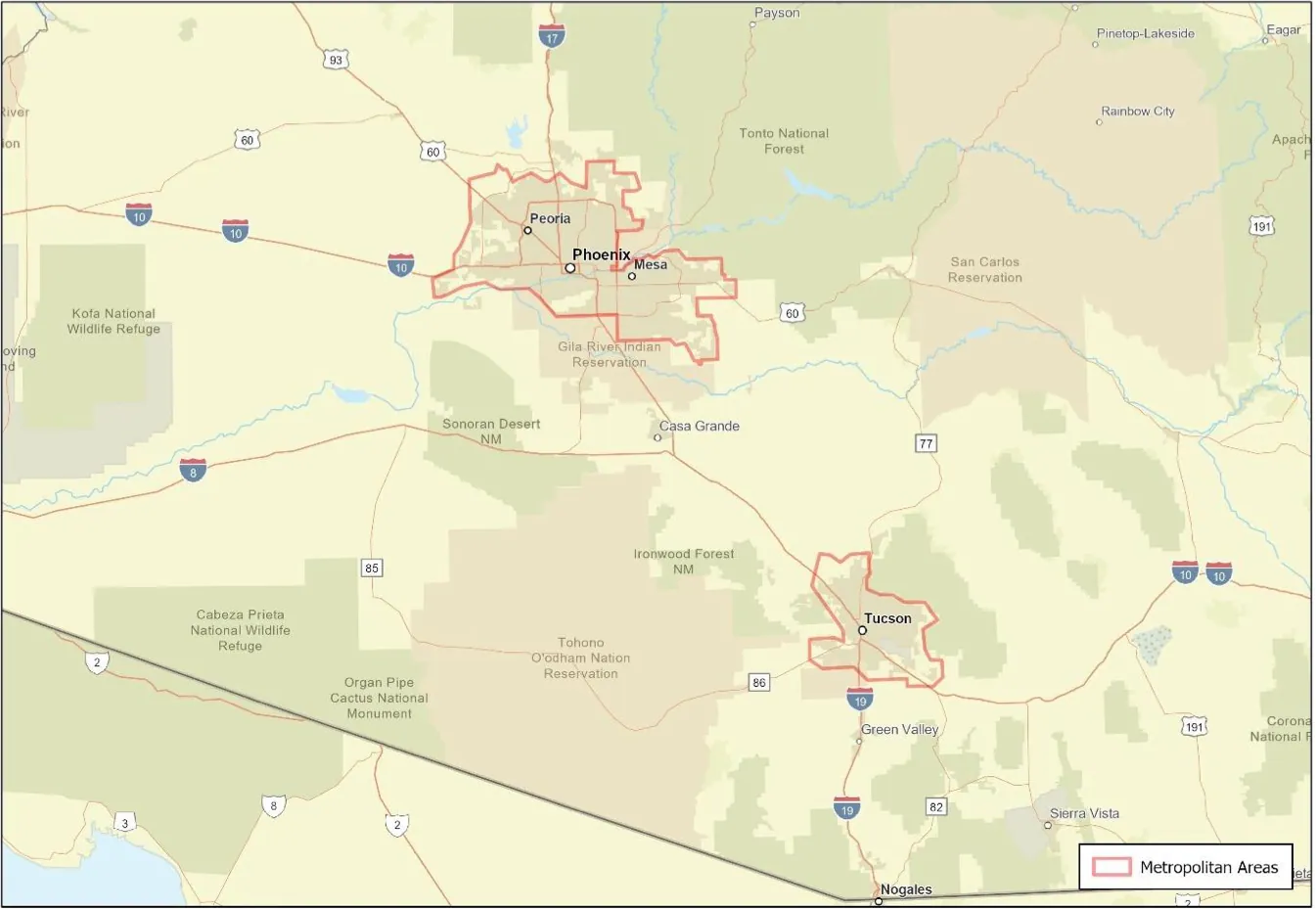
Zipline is asking the FAA to amend its Part 135 operations specifications for two Arizona operating areas. Each one gets up to 65 Chargers, 1,300 Dropbox pickup kiosks and 65,000 deliveries a day, although Phoenix covers 1,540 square miles (3,989 square kilometers) and Tucson 554 (1,434).
| Metro | Square miles | Chargers | Dropboxes | Deliveries/day | Transits/day |
|---|---|---|---|---|---|
| Phoenix | 1,540.17 | 65 | 1,300 | 65,000 | 195,000 |
| Tucson | 553.72 | 65 | 1,300 | 65,000 | 195,000 |
| Total | 2,093.89 | 130 | 2,600 | 130,000 | 390,000 |
That works out to 117 deliveries per square mile per day in Tucson and 42 in Phoenix. The densest metro in the Texas draft was El Paso at 47.7, and Houston came in at 6.5. Each ceiling is simply 65 Chargers at 1,000 deliveries a day. The draft says Charger locations will follow partner agreements and market demand, and it does not explain why Tucson gets the same 65 as a metro nearly three times its size.
The aircraft and the flight profile are the ones from Texas. The Platform 2 weighs 63 pounds (28.6 kilograms) with an 8-pound (3.6-kilogram) payload, cruises at 330 feet (101 meters) and 70 mph (113 km/h), and lowers a pod on a winch line while it hovers. Each delivery is three flight legs, so the ceiling is 390,000 transits a day. About 5 percent of flights would run between 10 p.m. and 7 a.m., which at the ceiling is 6,500 overnight deliveries a day across the two metros.
The FAA’s project list shows one earlier drone delivery review in Arizona: Amazon’s Prime Air hub in Tolleson, approved in November 2024 for 469 flights a day. Zipline’s ask is 277 times that.
The numbers are a ceiling. Zipline’s community engagement lead, Zach Hill, told 12News that the company makes a delivery somewhere in the world every 15 seconds, which is 5,760 a day. “It’s a demand based system,” he said of Arizona. Hill said Zipline has met with Phoenix Sky Harbor International Airport. 12News reported that the company has not named a store or a neighborhood. Walmart signed for 300 more Zipline sites nationwide this month.
The Draft’s Comment Deadline Is December 7, In A Time Zone Arizona Does Not Use
The notice of availability inside the draft sets a 30-day review that began on Friday, November 6, and ends on Monday, December 7, at 5 p.m. Central Time. That is 4 p.m. in Arizona. The FAA’s web page, last updated on November 9, says December 9 and gives no hour.
The Central Time deadline is not the only Texas detail left in the Arizona document. The noise chapter refers readers to “Appendix G, Texas Metro Areas Airports.” The wildlife chapter puts the maximum at 65,000 flights a day across the Arizona metro areas, against 130,000 deliveries and 390,000 transits in the draft’s own table. One page says a passing aircraft is visible from the ground for about 15 seconds and another says 6. The historic-properties section mentions the viewshed of “the autoloaders,” which is the FAA’s word for Wing’s pickup hardware, not Zipline’s. And the common grackle again carries Cyanocitta cristata, the scientific name of the blue jay, the same error DroneXL pointed out in the Texas draft in September.
Zipline prepared the draft under FAA supervision, which is standard for these reviews. The responsible FAA official is Derek Hufty, the same manager named on the Texas draft.
Comments go to [email protected] with “Zipline Arizona Draft EA” in the subject line, or by mail to Federal Aviation Administration, Suite 802W, c/o AVS Environmental, 1200 New Jersey Avenue SE, Washington, DC 20590. The draft is posted on the FAA’s drone environmental review page.
The FAA Opened Two Consultations One Day Before The Comment Period
The FAA sent its Endangered Species Act consultation request to the U.S. Fish and Wildlife Service on November 5, and its letter to the Arizona State Historic Preservation Office went the same day. The comment period opened on November 6, and letters to 11 tribes are dated only to November.
The draft concludes that the flights may affect, but are not likely to adversely affect, six listed birds, among them the cactus ferruginous pygmy-owl and the Mexican spotted owl. It says the Fish and Wildlife consultation will be finished before the final assessment is issued.
Saguaro National Park, Coronado National Forest and Tonto National Forest all sit inside the study area. The draft says wildlife refuges, national forests and parks are “not currently included in Zipline’s fly less restrictions,” and relies on National Park Service and Forest Service drone rules to limit flights there. The Park Service rule it cites covers launching, landing or operating a drone from park land. Zipline says it will keep its aircraft 1,000 feet (305 meters) from any bald eagle nest it learns about, partly by checking iNaturalist.
Zipline’s Chargers Could Sit 170 Feet From Homes, Against 600 In The National Review
A Charger flying the maximum 1,000 deliveries a day would sit at least 170 feet (52 meters) from homes and other noise-sensitive places, and a Dropbox at least 50 feet (15 meters). The FAA’s national drone delivery assessment requires 600 feet (183 meters) for a hub at 1,150 deliveries.
The shorter distance comes from sound measurements of Zipline’s own aircraft, in an ICF noise report dated May 2026 that is attached to the draft, and the Dropbox figure assumes up to 300 pickups a day. On that basis the FAA concludes the noise would not reach the level its rules count as an impact. Where Charger service areas overlap, the draft caps traffic over any one spot at 2,000 transits a day and puts the resulting day-night average at 48.4 decibels, against a federal threshold of 65. Two thousand transits is one every 43 seconds, averaged over 24 hours.
The Arizona draft never mentions the national assessment the FAA signed on July 28, which was written so operators would not need a new document for each city. Arizona is one of the 15 states that asked the Second Circuit on September 28 to throw that national finding out.
DroneXL’s Take
Zipline is doing this one in the right order, and I want it approved. In Houston the aircraft were overhead in April and the comment period opened in September, and I said then that asking people to comment on something already happening teaches them their comment is decorative. In Arizona the paperwork is out before the first delivery, with more than a year of Texas flying behind it.
But the Arizona draft reads like the Texas one with the place names changed. A template works for the aircraft, which is the same in both states, but the review is supposed to be about the place. Arizona has joined a lawsuit against the FAA’s national delivery review, and California’s attorney general says that review tells nobody anything about the communities underneath. A draft that calls its own airport appendix Texas, and gives Tucson more than twice the density of any Texas metro without a sentence on why, makes that argument for them.
If you live in Phoenix or Tucson and want to comment, treat December 7 at 4 p.m. Arizona time as the deadline, and ask the FAA in your email which date it will honor. DroneXL’s drone delivery tracker has every Zipline hub, approval and incident on the record.
Sources: FAA Draft Environmental Assessment for Zipline International Inc. Proposed Drone Package Delivery Operations in Multiple Arizona Metropolitan Areas, FAA Public Involvement and Environmental Review for Drone Operations, 12News via Yahoo News
DroneXL uses automated tools to support research and source retrieval. All reporting and editorial perspectives are by Haye Kesteloo. Read our editorial standards.
Advertise with DroneXLYour company hereReach 200,000+ drone readers a month with a sponsored article, a banner on your beat, or a partnership.See the options →