
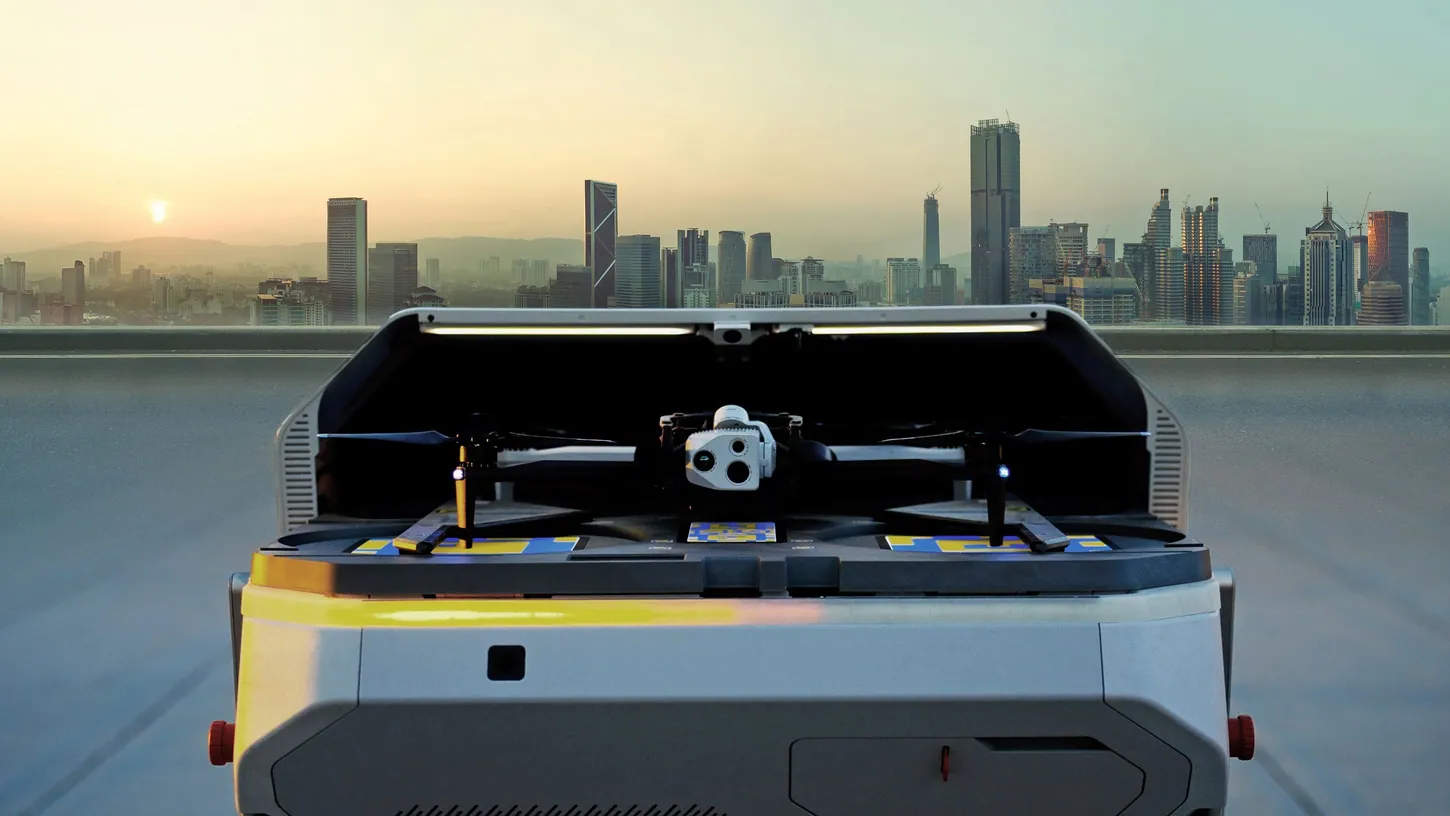
Grapevine, Texas approved a five-year, $1,048,565 lease-to-own deal with Axon Enterprise on November 17 for three Skydio X10 drones and their docking stations. The city council voted 7-0, and the aircraft will fly a police Drone as First Responder (DFR) program in a city that sits next to Dallas Fort Worth International Airport.
Grapevine will pay Axon $209,713 a year. A $160,000 award from the Texas Motor Vehicle Crime Prevention Authority (MVCPA) covers two of the drones and docks, and $133,333 of that is state money. The award is for fiscal year 2027 and the police department has to reapply every year. The Axon contract runs for five.
The MVCPA is the car-theft fund whose money helped put thousands of Flock license plate cameras on Texas roads, and a state senator filed a bill this month to stop it from funding them.
A one-year state grant covers two of Grapevine’s three drones
Grapevine’s own matching money makes up $26,667 of the award, Community Impact reported from city documents, and the city pays another $49,713 for the third drone and dock, which the grant does not cover. That puts its first-year share of the Axon bill at $76,380.
The council handled the grant and the lease as one item. The city’s action agenda shows Resolution No. 2026-027 accepting the money and approving the lease from Axon, and Ordinance No. 2026-080 appropriating the funds. The agenda names the award the FY2027 MVCPA Drone First Responder Program, so the state fund granted it for this use. Nobody signed up to speak during citizen comments.
The Axon payment is the same in each of the five years, Community Impact reported, and the city owns the drones at the end. Skydio representative Izzy Valdovino told the council the aircraft have a technology lifespan of around three years, and that the program includes a refresh to newer drones at about the two-and-a-half-year mark.
Grapevine is getting its Skydio aircraft through Axon, which is now the route for every police department. Axon announced on November 5, twelve days before the vote, that it had become Skydio’s exclusive distributor to public safety agencies in the United States and Canada.
The fund behind Grapevine’s grant helped pay for 3,200 Flock cameras
Texas lawmakers created the MVCPA in 1991 to fight auto theft. A fee on car insurance policies pays for it. Its money has helped pay for at least 3,200 Flock cameras, the Texas Tribune reported in August, and its grants also went to drones and other surveillance devices.
Gov. Greg Abbott ordered state agencies to pause funding for Flock cameras in late August, the same week the Tribune published its report. In October, Comptroller Don Huffines banned license plate readers from grants issued by his own office. Bill filing for the 2027 session opened on November 9, and Sen. Carol Alvarado’s SB 232 would block the MVCPA from paying for roadside license plate readers.
Those measures are aimed at Flock cameras and plate readers. The Tribune’s account of the four bills filed that week does not mention drones in any of them.
Grapevine’s trial drones were first on scene in 43% of cases
Grapevine police flew two trial drones from September 8 to October 5 and logged 125 flights and 26.8 flight hours, according to the city. The drone was first on scene in 43% of cases, and 9% of calls were cleared without a patrol unit being sent.
That works out to about 13 minutes in the air per flight. The city’s report says 94% of flights returned useful intelligence, and in 21% of calls the drone helped find a person or a vehicle. Assistant Chief Rebecca Graves, who presented the results to the council, said the department determined it needed a third drone, with one each on the north, central and south sides of the city.
The drones will be flown remotely and sent to specific calls. They will not be used for general patrol or surveillance, and Chief Mike Hamlin said they will not be capable of any kind of force. Coverage hours are still being worked out. Graves said the department will build a public portal showing the time and path of each flight.
The airport is the limit. DFW’s proximity restricts flying in parts of Grapevine, and the department has submitted an airspace proposal that would let it fly up to 200 feet (61 meters) in more of the city if it is approved.
Grapevine is the latest department in the area to go this way. North Richland Hills started a Skydio DFR trial in June, and Dallas put eight Skydio drones on 911 calls in May.
DroneXL’s Take
I’d approve these drones too. A drone that reaches the scene first in 43% of cases and closes 9% of calls without sending a cruiser is doing what DFR promises, and a public map of every flight is how a police drone program should be run.
I’m less comfortable with how it is paid for. Grapevine has signed up for five years of payments to Axon with one year of state help, and lawmakers have already filed a bill to restrict what that fund can buy. Lakeland, Florida applied an immigration-enforcement grant to the first two years of its ten-year Axon deal last month. In both cities the grant covers the start of a long contract, and a grant can end long before a lease does. Grapevine should budget for the full Axon payment every year and treat any grant as a bonus.
Sources: City of Grapevine City Council action agenda (November 17, 2026), Community Impact, The Texas Tribune, KBTX.
DroneXL uses automated tools to support research and source retrieval. All reporting and editorial perspectives are by Haye Kesteloo. Read our editorial standards.
Advertise with DroneXLYour company hereReach 200,000+ drone readers a month with a sponsored article, a banner on your beat, or a partnership.See the options →


