

Drones Lead UK Military Strategy as DSEI 2025 Opens
Check out the Best Deals on Amazon for DJI Drones today!
As Britain’s Defence and Security Equipment International (DSEI) arms show opens in London this week, the UK military is ramping up its drone programs, training soldiers for strike missions and courting industry partners to deliver advanced uncrewed aerial systems (UAS). The effort, backed by billions in government funding, draws directly from Ukraine’s experience where drones proved decisive in reshaping modern warfare, according to The Times.
Drone Training Moves From Recon to Strike
On a training field in Hampshire, the British Army’s 2nd Battalion Parachute Regiment has launched a dedicated UAS platoon to instruct infantry on flying drones, conducting reconnaissance, and piloting suicide drones. At Bramley Training Area near Basingstoke, soldiers are adapting to the complexities of manually controlled strike drones.
Kingsman Kaidyn Hilton of the 1st Battalion Duke of Lancaster’s Regiment explained the challenge: “They are hard to fly because you are fully in control of it whereas a normal drone is basically on autopilot and you’re directing it where to go.” He added: “It can be disorientating… You’ve got control of a weapon that can hit bigger targets more quickly than the infantry used to be able to do. This is where warfare is going and the skills are very different to what you would expect for an infantry soldier.”
Drones Diversify Military Roles
Drones now kill more people than traditional artillery in Ukraine, Defence Secretary John Healey warned earlier this year: “Technology is changing how war is fought. Whoever gets new technology into the hands of their armed forces the quickest will win.”
Applications extend beyond kinetic strikes. In logistics, drones enable the “last ten miles” of battlefield supply runs; in maritime, they transfer cargo ship-to-ship or ship-to-shore. They also support intelligence, surveillance, reconnaissance, and electronic warfare to jam communications or intercept threats.
Industry Races to Supply the MoD
DSEI 2025 showcases the breadth of this fast-growing sector. Hydra Drones is developing heavy-lift UAVs using hybrid jet engines; Tekever, a Portuguese-British firm, supports Royal Air Force missions; U.S.-based Anduril is investing in UK facilities for interceptor drones; and Italian manufacturer Modini supplies “one-way effectors” already on the MoD’s books.
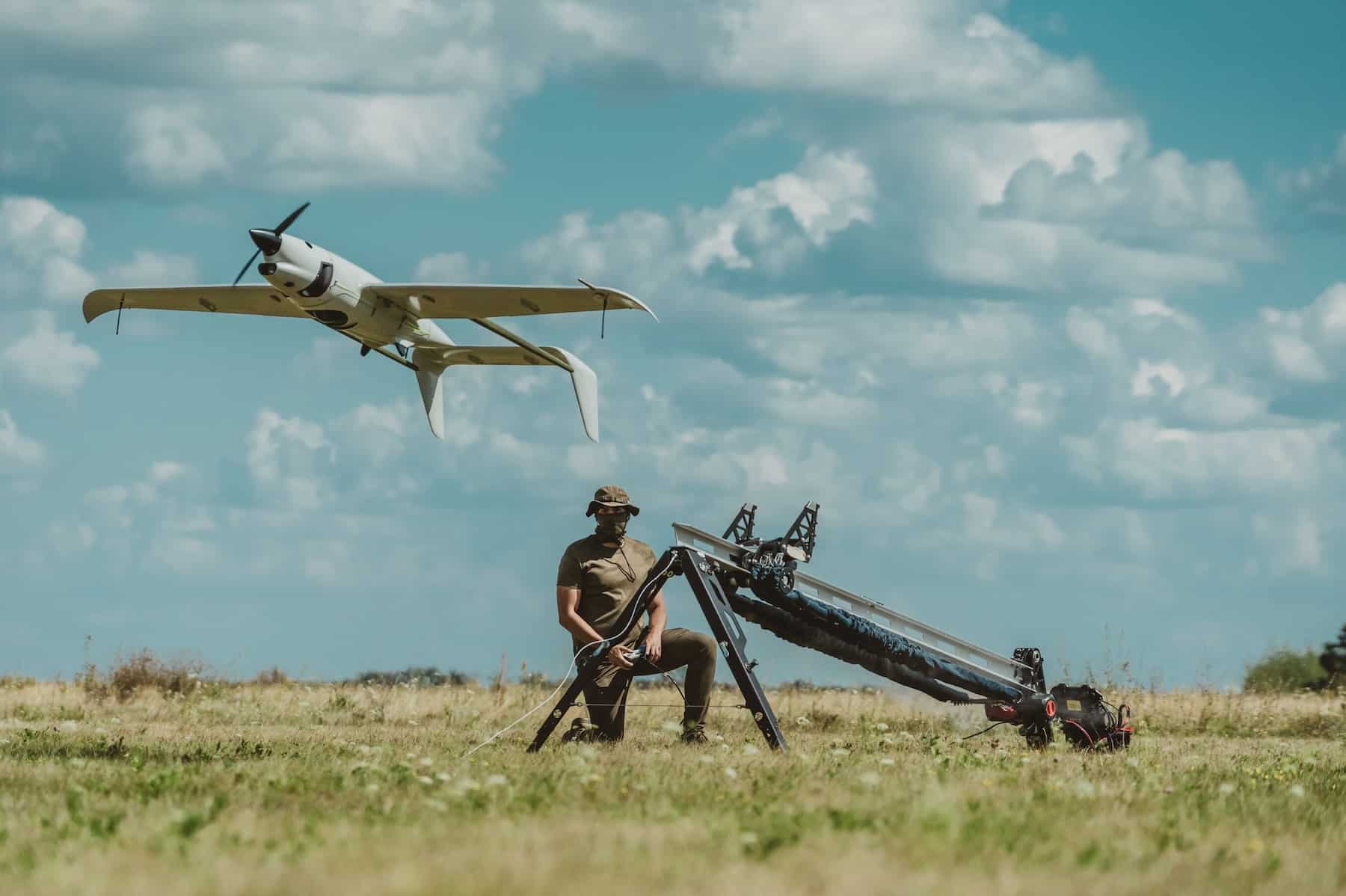
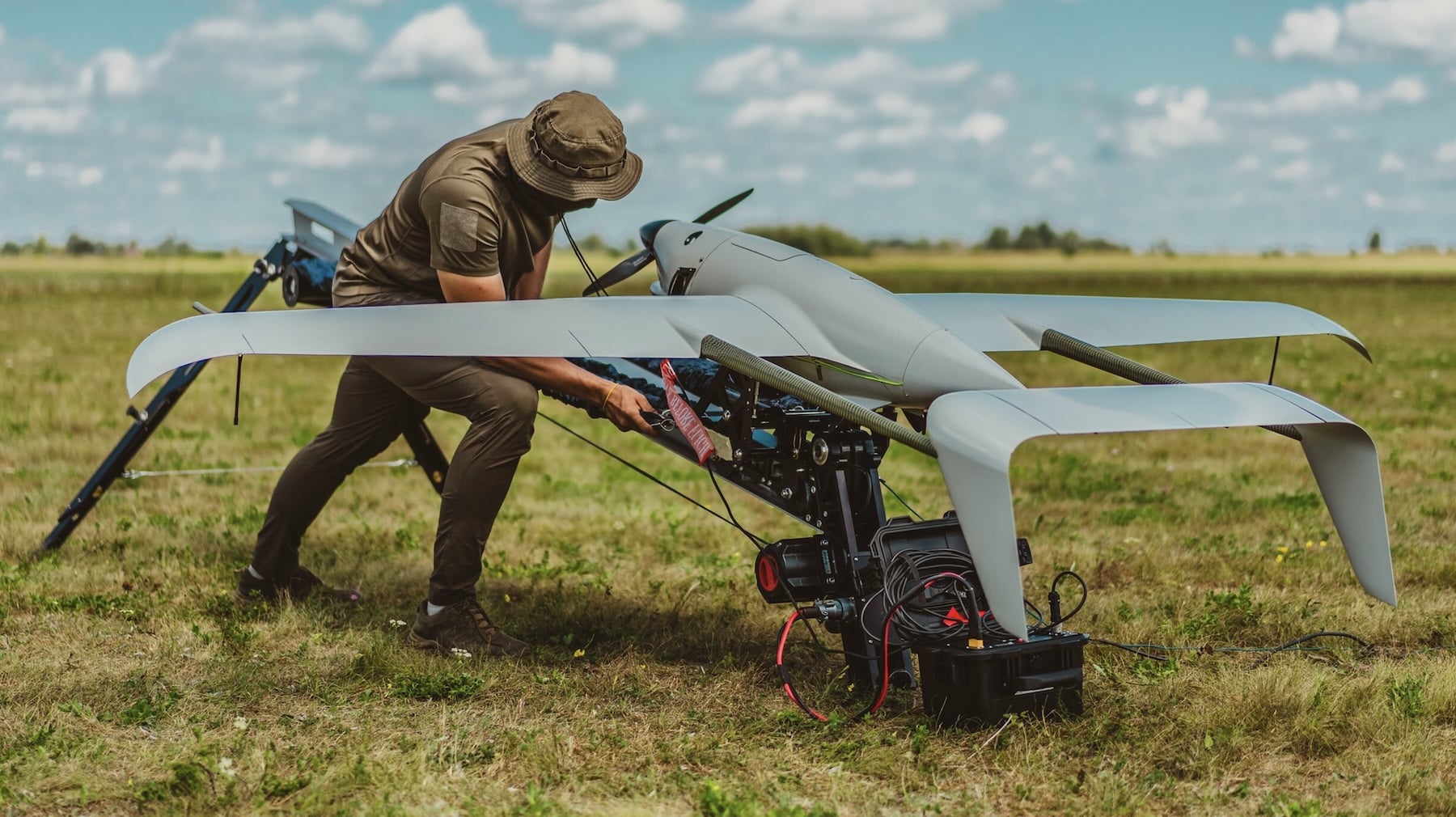
Prevail, a consultancy led by former Royal Marine Justin Hedges, has partnered with Ukrainian firm Skyeton to bring the Raybird UAV to Britain. Designed as a replacement for the troubled Watchkeeper surveillance system under Project Corvus, Raybird has flown an average of 85 missions per airframe in Ukraine, demonstrating radar evasion, ultra-high altitude endurance, and flexible payload options.
“Around 80 per cent of Raybird’s financial value is concentrated in 20 per cent of the components and all these can be sourced in the UK,” Hedges said. A manufacturing site in Plymouth’s freeport has been identified, supporting both domestic deployment and export opportunities.
Industrial and Strategic Hurdles
Despite momentum, analysts caution Britain may struggle to scale drone production. Robert Tollast of the Royal United Services Institute asked: “Will our next conflict be as ‘drone-ised’?” He noted that Ukraine’s reliance on drones was partly driven by outdated air forces—unlike Britain, which still fields advanced F-35 and Typhoon aircraft.
Andrew Kinniburgh, director general of Make UK Defence, argued that traditional procurement is too slow and costly: “We have to wean ourselves off an outdated model.” Challenger firms, he said, backed by automotive and energy-sector expertise, could accelerate delivery.
There are also space-based risks. Drones depend on satellite connectivity, and one industry executive warned: “If satellite capabilities lag behind drone deployment, it could limit global reach and autonomous operation of drones, reduce real-time targeting and surveillance effectiveness, and increase dependency on allied satellite networks, compromising sovereignty.”
DroneXL’s Take
The UK is clearly betting that drones will define the next era of warfare, from frontline FPV strikes to industrial-scale ISR platforms. But the path ahead raises critical questions: Can Britain manufacture drones at scale without relying heavily on foreign suppliers? Will satellite infrastructure keep pace with operational demand? And will rapid adoption of suicide drones reshape ethical debates on autonomy in combat?
For the drone community, these developments matter beyond the battlefield. Military investment often accelerates technology that later filters into civilian and commercial UAS use. What features—high-altitude endurance, payload flexibility, electronic countermeasure resistance—might one day influence professional or recreational drones?
What do you think: should Britain double down on scaling drone production, or focus on integrating them with existing airpower? Share your perspective in the comments.
Photos courtesy of Skyeton
Discover more from DroneXL.co
Subscribe to get the latest posts sent to your email.
Check out our Classic Line of T-Shirts, Polos, Hoodies and more in our new store today!

MAKE YOUR VOICE HEARD
Proposed legislation threatens your ability to use drones for fun, work, and safety. The Drone Advocacy Alliance is fighting to ensure your voice is heard in these critical policy discussions.Join us and tell your elected officials to protect your right to fly.

Get your Part 107 Certificate
Pass the Part 107 test and take to the skies with the Pilot Institute. We have helped thousands of people become airplane and commercial drone pilots. Our courses are designed by industry experts to help you pass FAA tests and achieve your dreams.

Copyright © DroneXL.co 2026. All rights reserved. The content, images, and intellectual property on this website are protected by copyright law. Reproduction or distribution of any material without prior written permission from DroneXL.co is strictly prohibited. For permissions and inquiries, please contact us first. DroneXL.co is a proud partner of the Drone Advocacy Alliance. Be sure to check out DroneXL's sister site, EVXL.co, for all the latest news on electric vehicles.
FTC: DroneXL.co is an Amazon Associate and uses affiliate links that can generate income from qualifying purchases. We do not sell, share, rent out, or spam your email.

