Amazon Drone Makes Emergency Sidewalk Landing Days After Resuming Flights Post-Crane Crash

Check out the Best Deals on Amazon for DJI Drones today!
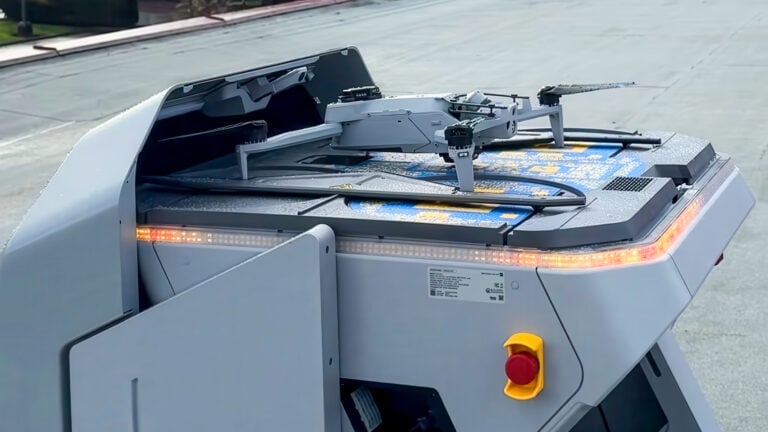
An Amazon Prime Air delivery drone made an unplanned landing on a Goodyear, Arizona sidewalk on Tuesday, just 10 days after the company resumed operations following a double crane crash that remains under federal investigation. Resident Austyn C. discovered the grounded MK30 drone while checking his mailbox, ABC15 reports.
The October 14 incident marks the latest in a troubling series of Amazon drone mishaps throughout 2025, raising questions about whether the e-commerce giant is moving too fast with its ambitious Prime Air program. While Amazon characterizes these events as routine safety procedures, the frequency of unplanned landings suggests the MK30’s autonomous systems struggle with real-world complexity.
What Happened in Goodyear
The drone landed on the sidewalk approximately 5 feet (1.5 meters) from where Austyn C. was standing.
“I’m glad that it didn’t just hit me or my car, honestly, because it was like five feet away,” he told ABC15. “That shouldn’t be there. It’s not an everyday occurrence.”
Amazon spokesperson Terrence Clark provided a carefully worded statement:
“During a delivery on Oct. 14, a Prime Air drone made a precautionary safe landing due to external factors outside of its control. Safety is our top priority, and the drone’s onboard perception system worked exactly as it was designed by identifying an appropriate area for it to land. The drone landed safely, there were no injuries or damage to the property, and we’re thankful to our community neighbors for their support.”
Amazon’s “Safe Contingent Landing” System
Amazon markets these emergency landings as Safe Contingent Landings, automated procedures triggered when conditions deteriorate unexpectedly. The company says the system activates during sudden weather changes, cell tower outages, emergency air traffic, or system failures.
The MK30 drones use cameras and radar to identify landing zones that avoid people, pets, homes, and vehicles before descending. Amazon then retrieves the equipment. The 80-pound (36-kilogram) aircraft normally operate within a 7-mile (11-kilometer) radius of the Tolleson fulfillment center, serving parts of Goodyear, Avondale, Glendale, and West Phoenix.

Part of a Troubling 2025 Pattern
This Goodyear incident follows a far more serious event on October 2, when two MK30 drones collided with a construction crane in nearby Tolleson. One drone caught fire after impact, prompting investigations by both the National Transportation Safety Board and Federal Aviation Administration. Those probes remain active.
Amazon resumed Tolleson operations just 48 hours after the crane crashes, citing confidence that “there wasn’t an issue with the drones or the technology that supports them.” The company implemented “enhanced visual landscape inspections to better monitor for moving obstructions such as cranes” as its primary fix.
Earlier in 2025, an MK30 dropped a customer’s package into a swimming pool in July, made a “precautionary landing” at a Tolleson apartment complex in May, and the entire program was grounded in January following two Oregon test crashes caused by faulty LiDAR sensors.
DroneXL’s Take
Let’s be clear about what “Safe Contingent Landing” really means: the drone’s systems detected a problem serious enough that continuing the mission wasn’t safe, so it executed an emergency landing procedure. That’s not a routine feature demonstration—it’s a failure mode.
The timing here is damning. Amazon rushed back to operations less than 48 hours after the crane crashes, assuring everyone the technology was sound. Ten days later, another drone is making unplanned landings. Whether you call it “precautionary,” “contingent,” or “controlled,” a drone landing on a public sidewalk 5 feet from a resident is exactly the kind of scenario that erodes public trust in autonomous delivery systems.
We’ve now documented five significant incidents in 2025 alone: the crane crashes, the pool drop, the apartment landing, and now this sidewalk event—not to mention the January grounding following the Oregon crashes. At what point does Amazon acknowledge these aren’t isolated “external factors” but rather evidence that the MK30’s autonomous systems aren’t ready for the messy reality of urban environments?
The company’s goal of 500 million annual drone deliveries by 2029 looks increasingly disconnected from their actual operational capabilities. You can’t scale to half a billion deliveries when you can’t maintain consistent safe operations across two test markets. Construction cranes extend and retract. Weather changes. Cell towers experience outages. These aren’t edge cases—they’re normal conditions that any robust delivery system needs to handle without emergency landings.
What do you think? Share your thoughts in the comments below.
Discover more from DroneXL.co
Subscribe to get the latest posts sent to your email.
Check out our Classic Line of T-Shirts, Polos, Hoodies and more in our new store today!

MAKE YOUR VOICE HEARD
Proposed legislation threatens your ability to use drones for fun, work, and safety. The Drone Advocacy Alliance is fighting to ensure your voice is heard in these critical policy discussions.Join us and tell your elected officials to protect your right to fly.

Get your Part 107 Certificate
Pass the Part 107 test and take to the skies with the Pilot Institute. We have helped thousands of people become airplane and commercial drone pilots. Our courses are designed by industry experts to help you pass FAA tests and achieve your dreams.

Copyright © DroneXL.co 2026. All rights reserved. The content, images, and intellectual property on this website are protected by copyright law. Reproduction or distribution of any material without prior written permission from DroneXL.co is strictly prohibited. For permissions and inquiries, please contact us first. DroneXL.co is a proud partner of the Drone Advocacy Alliance. Be sure to check out DroneXL's sister site, EVXL.co, for all the latest news on electric vehicles.
FTC: DroneXL.co is an Amazon Associate and uses affiliate links that can generate income from qualifying purchases. We do not sell, share, rent out, or spam your email.