Ukraine’s Viral ‘Call Of Duty’ Drone System Awards Points For Russian Targets

Check out the Best Deals on Amazon for DJI Drones today!
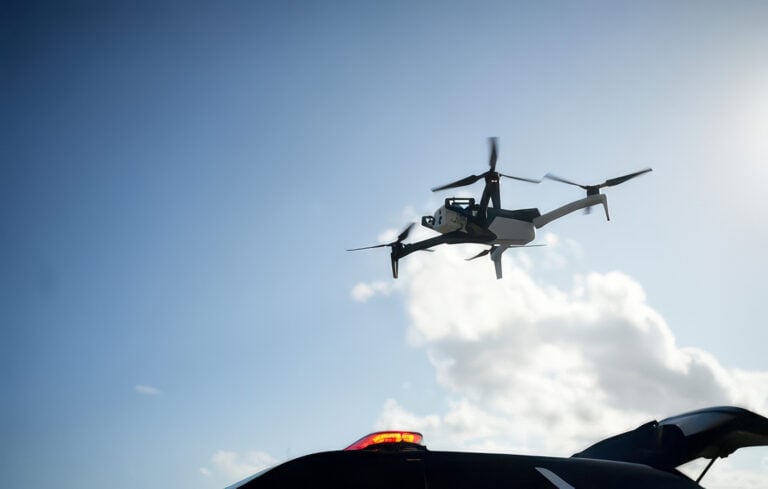
Ukraine’s military has transformed drone warfare into a competitive video game where verified kills earn points redeemable for advanced weapons, resulting in 18,000 Russian casualties in September alone. The gamified “Army of Drones Bonus System” has gone viral among Ukrainian units and now extends beyond drone strikes to artillery, reconnaissance, and logistics operations, fundamentally reshaping how modern militaries incentivize battlefield effectiveness.
First Deputy Prime Minister Mykhailo Fedorov revealed to The Guardian that 400 drone units now participate in the competition, up from just 95 in August 2025. The system rewards soldiers with points for successful strikes, which can be exchanged for equipment on Brave1, an online marketplace Fedorov describes as an “Amazon-for-war” featuring over 100 types of drones, autonomous vehicles, and military technology.

How The Points System Works
The gamification operates through precise point allocations for different target types and missions. Ukrainian officials recently doubled the reward for killing Russian infantry from six to 12 points, a change that Fedorov credits with dramatically increasing casualty figures. Destroying an enemy drone operator now earns 25 points, while using a drone to capture a Russian soldier—valuable for prisoner exchanges—attracts 120 points.
Higher-value targets command premium scores. A Russian tank yields 40 points, while a multiple-rocket launcher can earn up to 50 points depending on the type. These points accumulate on monthly leaderboards visible to all units, creating fierce but cooperative competition among drone teams with names like Achilles, Phoenix, and Condor.
“It’s become truly popular among units,” Fedorov told The Guardian. “All the defense forces know about this and there’s competition for the points, for getting these drones, electronic warfare systems and other things to help them in warfighting.”
To earn points, drone operators must upload video confirmation of every strike. This requirement serves dual purposes: preventing fraudulent claims while simultaneously generating massive datasets that help Ukrainian military analysts understand battlefield patterns, weapon effectiveness, and tactical innovations. The Ukrainian cabinet approves the reward structure, though Fedorov emphasized the emotionally detached approach necessary for survival.
“We have been at war for four years straight, and it is hard,” Fedorov said. “We are simply looking for ways to be more effective. We treat this as part of our daily work. There is almost no emotional reaction here. It is like technical work. Because if you do not stop the enemy, he will kill your servicemen, and after their deaths he will come to the city, capture it, destroy it and kill civilians.”
The Brave1 Marketplace And Self-Reinforcing Cycle
Points feed directly into the Brave1 Market, which offers more than 1,000 products from Ukrainian manufacturers. Among the platform’s popular offerings is the Vampire drone, a heavy bomber with six rotors that can carry a 15-kilogram (33-pound) warhead, redeemable for 43 points. The marketplace bypasses traditional defense bureaucracy, enabling frontline units to source quadcopters, fixed-wing UAVs, sensors, robotic ground systems, and replacement parts based on battlefield needs rather than procurement timelines.
“The more infantry you kill, the more drones you get to kill more infantry,” Fedorov explained. “This is becoming kind of a self-reinforcing cycle.”
The system has expanded far beyond FPV drone strikes. Artillery units now earn points for confirmed strikes that can be used to purchase new weapons. Reconnaissance teams receive points for spotting enemy targets through what Ukrainian forces call “Uber targeting”—marking locations on maps like calling a ride-hailing service, except instead of a taxi arriving, a drone from another unit strikes the target.
Even logistics teams participate by earning points for using autonomous vehicles instead of human drivers to resupply frontlines, reducing personnel risk while advancing the adoption of unmanned ground systems.

AI Integration And Technology Evolution
Ukraine is actively encouraging the use of drones partially controlled by artificial intelligence to improve strike precision and reduce operator workload. The AI systems provide target recommendations and manage terminal trajectories, enhancing accuracy while operators maintain oversight of engagement decisions.
The competition has driven rapid innovation across Ukrainian drone manufacturers. Reconnaissance units employ advanced targeting systems, while interceptor drones hunt Russian attack UAVs mid-flight. The video verification requirement has created what Fedorov calls the “mathematics of war”—an unprecedented dataset analyzing which weapons and tactics prove most effective under different battlefield conditions.
“Thanks to the points, we’re actually starting to understand more about what’s happening in the battlefield,” Fedorov noted.
Each verified strike contributes to this growing knowledge base, allowing Ukraine to continuously refine its drone warfare doctrine based on empirical combat data rather than theoretical assumptions.
Competition Breeds Excellence And Cooperation
Drone operators often work dangerously close to frontlines, sometimes within 250 meters (820 feet) of Russian positions, guiding their machines using computer screens and controllers. Yuriy Fedorenko, commander of the Achilles drone regiment, emphasized that skill and discipline matter more than gaming experience for successful pilots.
“Disciplined people are the best pilots,” Fedorenko said. “Of course, if you’re younger, you can stay awake longer, and you need less time to restore your strength.”
The competition among units is fierce but collaborative when combat intensifies. Commander Andriy Poltoratskyi described the dynamic:
“The whole unit has a competition. The drone operators compete with each other. Groups of drone operators compete with other groups. Even the highest commanders compete with each other.” He added that when Russians launch offensives, “the competition stops and everybody works together.”
Ukrainian drone teams now deploy approximately 9,000 drones daily against Russian forces, consuming 270,000 drones monthly—a staggering operational tempo that exceeds Ukraine’s domestic production capacity of 200,000 units per month and highlights the critical importance of NATO partnerships and European Union funding commitments.
Russian Response And Future Concerns
Ukrainian intelligence suggests Russia may be developing its own gamified drone warfare system to compete with Ukraine’s innovative approach. Meanwhile, the doubled Russian casualty figures in September compared to previous months reflect both the incentive structure changes and Russia’s increased reliance on infantry assaults.
However, NATO analysts have urged caution about over-reliance on drone warfare. Experts from the Royal United Services Institute recently recommended renewed focus on traditional artillery and aircraft, noting that Russian defenses against unmanned attacks have become highly effective. The technological race shows no signs of slowing, with both sides continuously developing countermeasures and counter-countermeasures.
The system’s sustainability also raises questions. Can Ukraine and its allies scale production fast enough to match the 9,000 daily deployment rate? What psychological toll does a kill-based incentive system impose on operators over extended periods? And as warfare becomes increasingly automated and data-driven, what ethical frameworks should govern these technologies?
DroneXL’s Take
We’ve been tracking Ukraine’s drone warfare evolution since the conflict began, and this gamification represents the logical—if unsettling—culmination of trends we’ve documented extensively. When we covered Ukraine’s deployment of 9,000 drones daily in October, the scale was already staggering. Now we understand the incentive structure driving that consumption rate.
The Brave1 marketplace isn’t new to DroneXL readers—we detailed how drone units earn points for strikes back in August when Condor’s team topped the leaderboards. What’s evolved is the system’s expansion across all military branches and the doubling of infantry kill points, which directly correlates to the doubled casualty figures Fedorov reports.
This gamification sits at the intersection of several trends we’ve covered: Ukraine’s achievement of 100% domestic FPV drone production, the country’s massive 4-million-drone annual production capacity, and the fundamental reality that $400 Ukrainian FPV drones outperform $100,000 American Switchblades in high-intensity peer conflict.
The data generation aspect cannot be overstated. We reported on Ukraine’s 2-million-hour combat footage dataset in December 2024. The points system’s video verification requirement is systematically building the world’s most comprehensive database of drone warfare effectiveness—essentially crowdsourcing military innovation through competitive incentives.
But here’s the uncomfortable truth: this works. The self-reinforcing cycle Fedorov describes—more kills earning more drones to achieve more kills—has created an industrial-scale attrition machine that’s inflicting unprecedented casualties while generating the empirical data needed to continuously improve tactics. It’s warfare optimized like a tech startup optimizes user engagement, complete with A/B testing through point allocation adjustments.
The ethical implications are profound. Fedorov’s description of treating combat as “technical work” with “almost no emotional reaction” reflects the psychological detachment necessary for drone operators to function—but it also raises questions about the long-term human cost of gamified killing, even when the cause is just defense against aggression.
NATO should pay attention. Ukraine has demonstrated that cheap, mass-produced drones combined with innovative incentive structures can achieve battlefield effects that expensive Western systems cannot match. The UK-led coalition’s delivery of 30,000 FPV drones in January showed Western militaries are learning, but the procurement mindset needs fundamental transformation.
The gamification model could reshape military logistics worldwide—but should it? Does turning warfare into a points competition optimize military effectiveness at the cost of necessary moral friction? And as Russia develops similar systems, are we witnessing the future of industrialized conflict where algorithmic optimization determines casualty rates?
What do you think about Ukraine’s gamified drone warfare system? Does the effectiveness justify the approach, or does reducing combat to video game mechanics cross an ethical line? Share your thoughts in the comments below.
Discover more from DroneXL.co
Subscribe to get the latest posts sent to your email.
Check out our Classic Line of T-Shirts, Polos, Hoodies and more in our new store today!

MAKE YOUR VOICE HEARD
Proposed legislation threatens your ability to use drones for fun, work, and safety. The Drone Advocacy Alliance is fighting to ensure your voice is heard in these critical policy discussions.Join us and tell your elected officials to protect your right to fly.

Get your Part 107 Certificate
Pass the Part 107 test and take to the skies with the Pilot Institute. We have helped thousands of people become airplane and commercial drone pilots. Our courses are designed by industry experts to help you pass FAA tests and achieve your dreams.

Copyright © DroneXL.co 2026. All rights reserved. The content, images, and intellectual property on this website are protected by copyright law. Reproduction or distribution of any material without prior written permission from DroneXL.co is strictly prohibited. For permissions and inquiries, please contact us first. DroneXL.co is a proud partner of the Drone Advocacy Alliance. Be sure to check out DroneXL's sister site, EVXL.co, for all the latest news on electric vehicles.
FTC: DroneXL.co is an Amazon Associate and uses affiliate links that can generate income from qualifying purchases. We do not sell, share, rent out, or spam your email.