Colombia Turns to Drones to Fight Cocaine Boom

Check out the Best Deals on Amazon for DJI Drones today!
Colombia is reopening a chapter it thought it had closed a decade ago, but this time the crop dusters have rotors instead of wings.
After banning aerial fumigation in 2015 due to health and environmental concerns tied to glyphosate, the Colombian government has approved a new plan to spray coca crops using drones, a move driven by record cocaine production and rising pressure from the United States, as reported by Food Manufacturing.
Justice Minister Andrés Idárraga confirmed that the program will begin this week, with drones deployed to remote regions where armed groups force farmers to grow coca. These are areas where manual eradication has become slow, dangerous, and sometimes deadly, thanks to land mines, ambushes, and well armed criminal networks.

Photo credit: Wikimedia
The promise, according to the government, is precision. Unlike the spray planes of the past, which blanketed large areas and often hit legal crops and waterways, these drones will fly as close as 1.5 meters to the target plants.
The goal is to remove coca while keeping nearby ecosystems, rivers, and food crops out of harm’s way.
How The Drone Eradication Program Works
According to Colombian officials, a single drone can eliminate roughly one hectare of coca every 30 minutes, operating low and slow to reduce chemical drift. That may not sound dramatic, but scale changes everything. When thousands of hectares are involved, efficiency starts to matter more than spectacle.

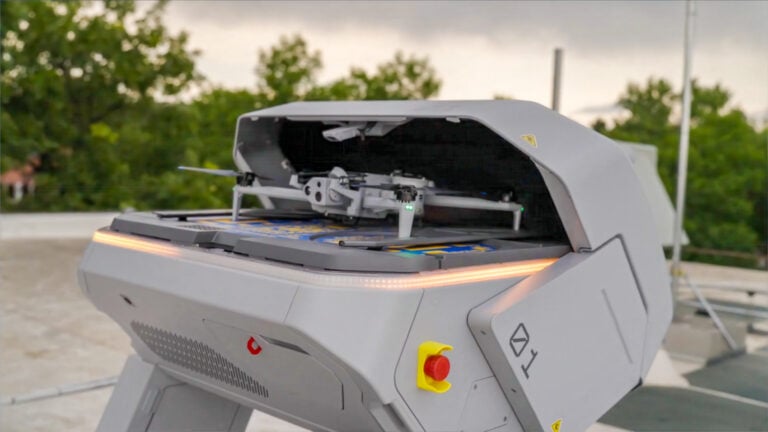
Photo credit: DJI
This approach also reduces risk to security forces. Manual eradication teams have long been exposed, walking into hostile terrain guarded by criminal groups. Drones, by contrast, do not step on land mines or get caught in crossfire, and they do not need a pilot sitting inside a vulnerable aircraft, and it’s really good for the sake of everyone to control the drones from far away.
Environmental groups remain cautious. Past fumigation campaigns left deep scars in rural communities, contaminating water supplies and damaging trust in the government. Colombian authorities insist this new system is different, controlled, and far more selective, but history means skepticism will linger.
Politics, Pressure, And The Cocaine Equation
The timing is not accidental. Colombia is producing more cocaine than ever, with the United Nations estimating around 261,000 hectares of coca planted in 2024, nearly double the amount seen in 2016. That surge has strained relations with Washington, especially after the United States accused President Gustavo Petro’s government of being too soft on drug traffickers.
The U.S. has already added Colombia to a list of nations failing to cooperate fully in the drug war and has imposed sanctions, while even floating the idea of cross border strikes against cartels. Petro rejects the criticism, arguing that Colombian forces are intercepting record drug shipments even as production remains high.
Interestingly, the idea of drone based eradication did not come from Petro’s administration. It was first proposed back in 2018 under President Iván Duque, then shelved due to political gridlock. Now, faced with escalating violence and diplomatic pressure, the current government is dusting off the concept and putting batteries where politics once stalled.
DroneXL’s Take
This is a textbook example of drones being used as a compromise technology. Colombia wants enforcement without repeating the environmental and humanitarian disasters of the past, and drones offer a middle ground that looks modern, precise, and politically defensible.
Whether they actually reduce cocaine production is another story, since history shows coca has a habit of moving rather than disappearing. Still, this move highlights how drones are increasingly becoming tools of policy, not just cameras in the sky, and once again proves that when governments run out of easy options, they reach for rotors.
Photo credit: Wikimedia, DJI.
Discover more from DroneXL.co
Subscribe to get the latest posts sent to your email.
Check out our Classic Line of T-Shirts, Polos, Hoodies and more in our new store today!

MAKE YOUR VOICE HEARD
Proposed legislation threatens your ability to use drones for fun, work, and safety. The Drone Advocacy Alliance is fighting to ensure your voice is heard in these critical policy discussions.Join us and tell your elected officials to protect your right to fly.

Get your Part 107 Certificate
Pass the Part 107 test and take to the skies with the Pilot Institute. We have helped thousands of people become airplane and commercial drone pilots. Our courses are designed by industry experts to help you pass FAA tests and achieve your dreams.

Copyright © DroneXL.co 2026. All rights reserved. The content, images, and intellectual property on this website are protected by copyright law. Reproduction or distribution of any material without prior written permission from DroneXL.co is strictly prohibited. For permissions and inquiries, please contact us first. DroneXL.co is a proud partner of the Drone Advocacy Alliance. Be sure to check out DroneXL's sister site, EVXL.co, for all the latest news on electric vehicles.
FTC: DroneXL.co is an Amazon Associate and uses affiliate links that can generate income from qualifying purchases. We do not sell, share, rent out, or spam your email.