Japan Is Doing What Countries Only Talk About With Medical Drones

Check out the Best Deals on Amazon for DJI Drones today!
Medical drones are often discussed in glossy presentations and optimistic press releases, but Japan is one of the few countries where the conversation has moved past theory and reportedly into daily operations.
While the global medical drone market is projected to grow from roughly 787 million dollars in 2024 to nearly 2.8 billion by 2032, driven by emergency care, vaccine delivery, and disaster response, Japan’s approach feels less like chasing market size and more like solving real problems.
And that distinction matters: Japan is aging faster than almost any country on Earth, its rural communities are shrinking, and many of its islands are logistically expensive to serve by traditional means. In that context, medical drones are not futuristic gadgets. They are a practical response to geography, demographics, and cost.
Medical Drones in Japan Are Not a Demo Anymore
One of the most telling examples is the work being done by Toyota Tsusho and its subsidiary Sora-iina.

Their autonomous medical drone flights to the remote Gotō Islands are not short pilot tests designed for press photos. These are operational deliveries to pharmacies and hospitals, paired with serious BVLOS testing to make the system scalable.

This is what many drone programs elsewhere still struggle with. Japan is pushing autonomy because it has to.

Visual line of sight flights are fine for demonstrations, but they do not solve access problems for elderly communities scattered across islands and mountainous terrain. High-level autonomy is not a luxury here. It is the only way the math works.
Zipline’s growing footprint in Japan reinforces the same point. The company’s fixed-wing delivery model has already proven itself globally, and Japan is integrating it not as an experiment but as part of routine medical logistics. When a system quietly becomes boring and reliable, that is usually the strongest signal that it works.
Industry Events Show Momentum, But Policy Makes It Stick
Japan Drone 2025, the country’s largest drone industry expo, showcased a wave of medical logistics platforms, autopilot systems, and communication modules. Trade shows alone do not change healthcare systems, but they do reveal where investment and engineering talent are flowing.
What makes Japan different is that regulation is moving in the same direction as technology. BVLOS approvals, autonomous flight frameworks, and public private partnerships are progressing at a pace that allows companies to actually deploy. Without that regulatory backbone, medical drones remain stuck in trial phases indefinitely, something we have seen repeatedly in other regions.
Not All Medical Drones Solve the Same Problem
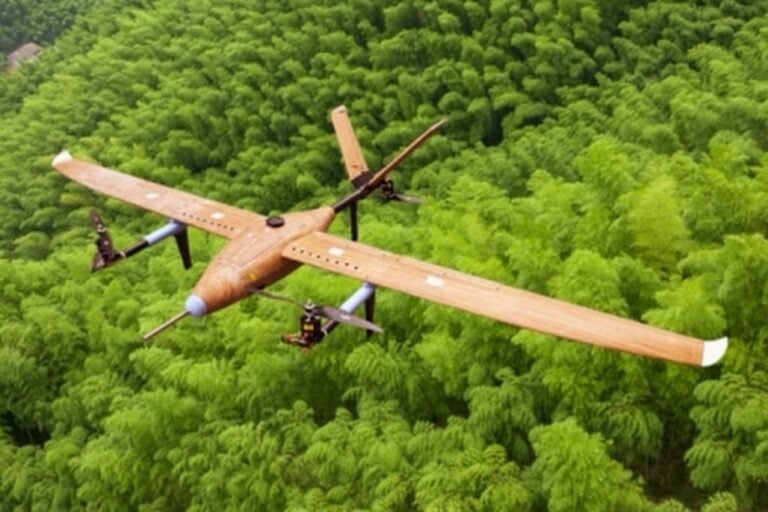
One thing market reports often gloss over is that medical drones are not interchangeable. Fixed-wing platforms dominate long-range island and rural routes because endurance matters more than precision. Rotor drones shine in dense urban environments where controlled drops and tight landing zones are critical. Hybrid VTOL systems sit in between, offering flexibility at the cost of added complexity.
Japan appears to understand this segmentation well. The country is not betting on a single drone type to do everything, but instead matching platforms to missions. That is a subtle but important difference between functional deployment and tech enthusiasm.
The Real Drivers Are Boring, and That’s a Compliment
When you strip away market jargon, the drivers behind medical drone adoption in Japan are refreshingly practical. Faster delivery times for blood, medicine, and samples. Lower logistics costs for hospitals and pharmacies. Better disaster response in a country that knows earthquakes all too well.
Battery improvements, autonomy, and telemedicine integration matter, but only insofar as they reduce friction. The moment drones become more expensive or complicated than existing logistics, adoption stalls. Japan’s progress suggests those tradeoffs are finally tilting in the right direction.
Japan as a Preview, Not an Outlier
North America still leads in overall investment, Europe continues to experiment with blood delivery and EMS integration, and regions in Latin America and Africa arguably demonstrate the clearest humanitarian value. But Japan sits in a unique position. It blends strong regulation, advanced manufacturing, real demographic pressure, and a willingness to operationalize rather than endlessly test.
If medical drones are going to become a standard part of healthcare infrastructure rather than a niche solution, Japan’s current trajectory is likely closer to the future than many louder announcements elsewhere.
DroneXL’s Take
Japan’s medical drone push is compelling precisely because it is not flashy. It is quiet, methodical, and rooted in necessity rather than novelty. While market forecasts point to explosive growth, Japan is showing that the real milestone is not market size, but normalization. When drones become just another trusted tool in the healthcare supply chain, the industry will have truly arrived.
Photo credit: Toyota Tsusho & Sora-iina
Check out our Classic Line of T-Shirts, Polos, Hoodies and more in our new store today!

MAKE YOUR VOICE HEARD
Proposed legislation threatens your ability to use drones for fun, work, and safety. The Drone Advocacy Alliance is fighting to ensure your voice is heard in these critical policy discussions.Join us and tell your elected officials to protect your right to fly.

Get your Part 107 Certificate
Pass the Part 107 test and take to the skies with the Pilot Institute. We have helped thousands of people become airplane and commercial drone pilots. Our courses are designed by industry experts to help you pass FAA tests and achieve your dreams.

Copyright © DroneXL.co 2026. All rights reserved. The content, images, and intellectual property on this website are protected by copyright law. Reproduction or distribution of any material without prior written permission from DroneXL.co is strictly prohibited. For permissions and inquiries, please contact us first. DroneXL.co is a proud partner of the Drone Advocacy Alliance. Be sure to check out DroneXL's sister site, EVXL.co, for all the latest news on electric vehicles.
FTC: DroneXL.co is an Amazon Associate and uses affiliate links that can generate income from qualifying purchases. We do not sell, share, rent out, or spam your email.