Trump’s ‘Drone-Free Roof’ Reveals How Butler Changed Everything

Check out the Best Deals on Amazon for DJI Drones today!
President Donald Trump announced Monday that his controversial $400 million White House ballroom will feature bulletproof glass and a “drone-free roof” – vague marketing speak that nonetheless reveals how profoundly the Butler assassination attempt has reshaped his thinking about aerial threats.
“It’s got all bulletproof glass, it’s got all drone, they call it drone-free roof, so drones won’t touch it,” Trump said during a press conference at Mar-a-Lago with Israeli Prime Minister Benjamin Netanyahu. “It’s a big, beautiful, safe building.”
The mainstream coverage focused on the ballroom’s ballooning cost and the controversial East Wing demolition. But for those of us tracking the counter-drone industry, this is something else entirely: the first time a sitting president has publicly announced counter-drone features as a selling point for a building he’s constructing.
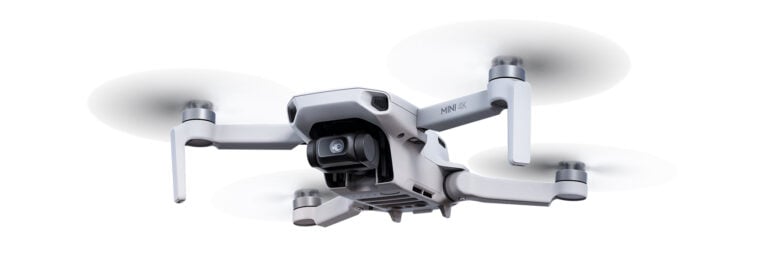
And the reason isn’t hard to find. On July 13, 2024, a 20-year-old named Thomas Crooks flew a DJI drone over the Butler Farm Show grounds for 11 minutes, roughly two hours before the rally, livestreaming aerial surveillance of the site where he would later shoot Trump. The Secret Service had no drones deployed. Their counter-drone system experienced bandwidth issues at the critical moment, with a technician on a cellular support call troubleshooting the system exactly when the shooting occurred.

What Does ‘Drone-Free’ Actually Mean?
Here’s what none of the mainstream outlets are asking: What does “drone-free roof” actually mean technically?
Trump’s phrasing – “they call it drone-free roof” – suggests he’s repeating terminology from architects or security consultants rather than describing specific technology. And let’s be honest: the term is marketing language. It implies a physical property the building doesn’t actually have, like calling a screen door “bug-free” because you installed a zapper nearby.
In reality, “drone-free” likely means some combination of standard counter-UAS systems already deployed at high-security government facilities. The options fall into several categories:
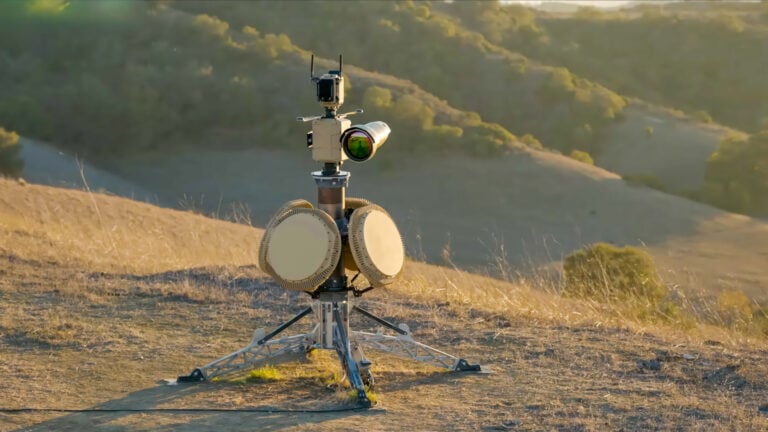
Detection systems: Radar, RF sensors, and optical cameras that identify incoming drones. Companies like Dedrone, DroneShield, and D-Fend Solutions offer these systems for government facilities. Detection alone doesn’t stop a drone – it just tells you one is there.
Jamming and RF disruption: Systems that interfere with the radio link between a drone and its controller, forcing the aircraft to land or return home. The Secret Service already uses jammers in presidential motorcades. However, jamming consumer electronics is generally illegal under FCC regulations, though federal facilities can operate under different rules.
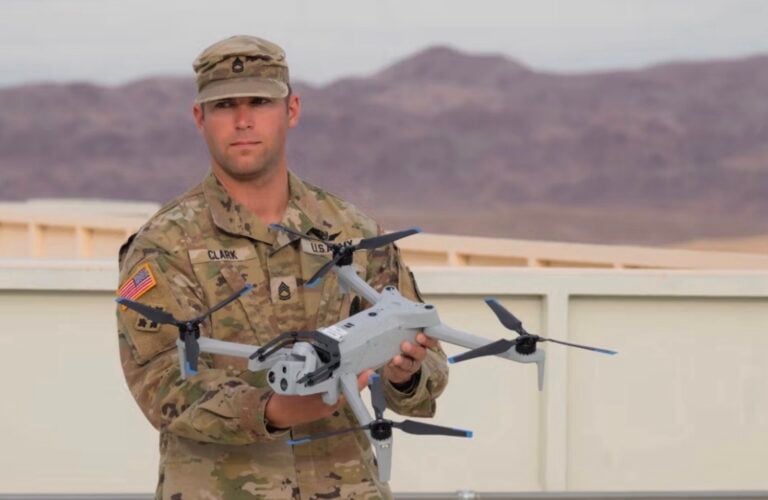
Cyber takeover: More sophisticated systems like D-Fend’s EnforceAir can actually seize control of a drone’s flight path and guide it to a safe landing zone. The U.S. Army recently deployed this technology at Combined Resolve 25-02.
Physical barriers: Nets, mesh systems, or hardened structures that physically prevent drone access. One security expert memorably suggested the White House could be “encased in a net” – not pretty, but effective.
Most likely, “drone-free roof” combines detection with active mitigation – standard fare for any high-value government target. The $400 million price tag doesn’t necessarily mean cutting-edge counter-drone tech; it might just mean expensive architecture with standard C-UAS sensors bolted on.
The Butler Factor
The timing and context matter. Trump survived an assassination attempt where drone reconnaissance played a documented role. FBI Director Christopher Wray testified that Crooks used the DJI drone’s footage to assess the area behind his eventual shooting position – “almost like a rear-view mirror of the scene behind him.” Since then, Trump’s administration has pursued an aggressive counter-drone agenda:
- The Secret Service adopted military-grade drones for surveillance and counter-UAS operations, with Deputy Director Matt Quinn stating they can now “not just detect, but mitigate unauthorized UAS”
- The White House pushed for expanded federal drone-killing powers (which Ted Cruz called an “extremely problematic power grab”)
- The NDAA 2026 includes the SAFER SKIES Act, giving certain state and local police authority to detect, track, and disrupt drones at “covered sites”
- $500 million was allocated for counter-drone systems ahead of the 2026 World Cup and 2028 Olympics
- FBI Director Kash Patel announced the National Counter-UAS Training Center at Redstone Arsenal to deputize local police
Now he’s building counter-drone protection directly into government architecture. That’s institutional learning from a near-death experience. But critics might argue it’s also convenient justification for a project facing intense scrutiny over its massive cost and the destruction of the historic East Wing.
The Collateral Damage Question
Here’s what concerns me most: jamming and cyber-takeover systems don’t respect property lines.
The White House sits at the epicenter of the National Capital Region (NCR), the most strictly regulated airspace in the world. While the ‘inner ring’ (the 15-mile Flight Restricted Zone or FRZ) is often called a ‘No Drone Zone,’ it is actually a ‘Highly Coordinated Zone.’ Legitimate commercial operations occur daily, but only via TSA Airspace Waivers and the Special Flight Rules Area (SFRA) protocols.
In 2025, news organizations frequently deploy vetted, high-security drone teams for pre-approved coverage of the National Mall. Critical infrastructure providers, like DC Water and Pepco, utilize ‘shielded’ drone flights for bridge and power grid inspections under streamlined Part 108 regulations. Even medical logistics are emerging; following the 2025 ‘American Drone Dominance’ Executive Order, authorized U.S.-manufactured drones have begun pilot corridors for urgent lab-sample transport between District hospitals.
A counter-drone system powerful enough to create a “drone-free” perimeter around a 90,000-square-foot ballroom will have effects beyond the building’s footprint. RF jamming bleeds into adjacent spectrum. Cyber-takeover systems that can seize control of a DJI drone don’t know whether that drone is a threat or a news crew operating legally 500 feet outside the TFR.
We’ve already seen this tension at airports and prisons, where counter-drone deployments have interfered with legitimate operations. Scaling that to a permanent installation in the nation’s capital raises questions nobody in the mainstream coverage is asking.
What This Means for Pilots
Let me be direct: this announcement doesn’t change anything operationally for Part 107 or recreational pilots today. The White House has been a no-fly zone since 2001. You couldn’t legally fly there before, and you can’t fly there now.
But the broader signal matters. When the president personally touts counter-drone features as a selling point for new construction, it normalizes this technology in government buildings. The real question is whether “drone-free” infrastructure becomes standard in courthouses, federal buildings, and critical infrastructure – and what that means for legitimate drone operations in adjacent airspace.
DroneXL’s Take
We’ve tracked counter-drone policy for years, and Trump’s “drone-free roof” comment – however casual it sounded – marks a shift. We’ve moved from reactive counter-drone measures (deploying systems at events) to proactive infrastructure (building protection into the architecture itself).
The irony isn’t lost on us: the president who signed executive orders promoting “American Drone Dominance” is also building the most drone-hardened government structure in the country. But after Butler, that’s not a contradiction – it’s the same recognition that drones are transformative technology with dual-use potential.
Here’s what we expect: the ballroom project will become a template. When it’s completed in 2028, other high-security government projects will point to it as the standard for “modern” construction. Counter-drone infrastructure will move from specialized security add-on to baseline building requirement.
Whether that’s genuine security or expensive theater dressed up with marketing terms like “drone-free roof” – that’s the question we should be asking. Because $400 million buys a lot of actual counter-drone capability, or it buys standard systems with premium branding. The difference matters.
What do you think? Is baking counter-drone tech into government buildings the right response to evolving threats, or security theater that will expand surveillance while creating collateral problems for legitimate operators? Let us know in the comments below.
Discover more from DroneXL.co
Subscribe to get the latest posts sent to your email.
Check out our Classic Line of T-Shirts, Polos, Hoodies and more in our new store today!

MAKE YOUR VOICE HEARD
Proposed legislation threatens your ability to use drones for fun, work, and safety. The Drone Advocacy Alliance is fighting to ensure your voice is heard in these critical policy discussions.Join us and tell your elected officials to protect your right to fly.

Get your Part 107 Certificate
Pass the Part 107 test and take to the skies with the Pilot Institute. We have helped thousands of people become airplane and commercial drone pilots. Our courses are designed by industry experts to help you pass FAA tests and achieve your dreams.

Copyright © DroneXL.co 2026. All rights reserved. The content, images, and intellectual property on this website are protected by copyright law. Reproduction or distribution of any material without prior written permission from DroneXL.co is strictly prohibited. For permissions and inquiries, please contact us first. DroneXL.co is a proud partner of the Drone Advocacy Alliance. Be sure to check out DroneXL's sister site, EVXL.co, for all the latest news on electric vehicles.
FTC: DroneXL.co is an Amazon Associate and uses affiliate links that can generate income from qualifying purchases. We do not sell, share, rent out, or spam your email.