Russia’s Shahed Production Surge: Ukraine’s Top Commander Warns of 1,000 Drones Per Day by 2026

Check out the Best Deals on Amazon for DJI Drones today!
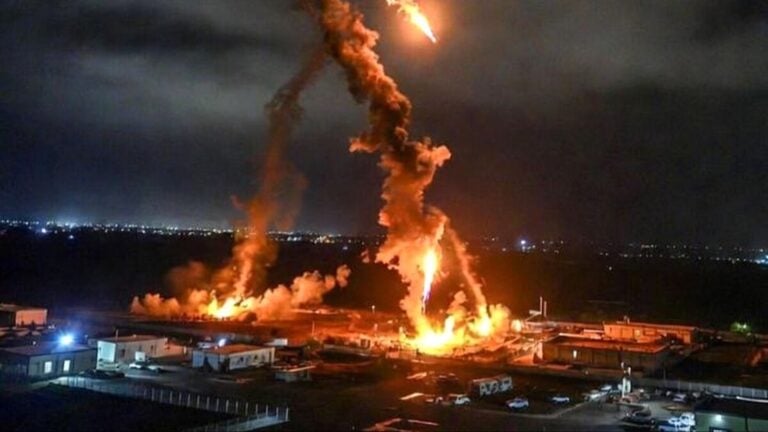
The numbers from Ukrainian Armed Forces Commander-in-Chief Oleksandr Syrskyi are stark: Russia currently produces 404 Shahed-type drones daily and plans to more than double that capacity to 1,000 units per day. That production target, revealed in an interview published Sunday by Ukrainian media outlet LB.ua, would represent a five to six-fold increase in Russia’s ability to saturate Ukrainian airspace with low-cost attack drones.
The Development: Russia is scaling Shahed drone manufacturing from 404 units daily to a planned 1,000 per day, enabling unprecedented saturation attacks against Ukrainian infrastructure and cities.
The “So What?”: This production surge would overwhelm even Ukraine’s innovative interceptor drone programs and force NATO allies to accelerate their own counter-drone investments.
The Source: Syrskyi made these disclosures in an LB.ua interview published January 18, 2026, providing the most detailed assessment yet of Russia’s drone manufacturing capacity from a senior Ukrainian military official.
Russia’s current Shahed production already exceeds previous estimates
Russia currently manufactures 404 Shahed-type drones of various configurations every day, according to Syrskyi’s assessment, a figure that substantially exceeds earlier estimates from Western intelligence sources. This daily output includes the propeller-driven Geran-1 and Geran-2 variants capable of speeds up to 115 mph, the faster jet-powered Geran-3, and cheaper decoy variants called Gerberas designed to exhaust air defense resources.
Syrskyi did not break down exact production figures for each drone type, but the numbers represent a significant escalation from the “hundreds per week” Ukrainian intelligence reported when Russia first established drone manufacturing facilities in Tatarstan in late 2024. The planned surge to 1,000 daily units would enable Russia to launch nearly 30,000 attack drones monthly, transforming the current trickle of nightly attacks into an unrelenting aerial barrage.
The Institute for Science and International Security calculated that Russia launched an average of 166 Shahed drones per day in December 2025. The gap between that usage rate and the 404-unit production capacity suggests Moscow is either building stockpiles for future surge operations or experiencing delivery and deployment bottlenecks that could eventually be resolved.

The economics favor Russia’s saturation strategy
Each Shahed-type drone costs between $20,000 and $70,000 to manufacture, making them dramatically cheaper than conventional cruise missiles while still capable of carrying explosive payloads up to 110 pounds. This cost advantage has allowed Russia to deploy combined waves of 500 to 700 Shaheds alongside cruise and ballistic missiles, a tactic designed to exhaust Ukraine’s finite supply of expensive surface-to-air missiles through sheer volume.
The math is brutally simple: Ukraine cannot afford to fire $1 million Patriot missiles at $20,000 targets indefinitely. This economic reality drove Ukraine’s rapid development of interceptor drones costing as little as $2,500 that can physically collide with incoming Shaheds. But even those cost-effective countermeasures face limits when confronting potential waves of 1,000 drones daily.
Russia has generally deployed 5,000 to 6,000 Shaheds monthly against Ukraine, with roughly half to four-fifths consisting of strike variants rather than decoys. Scaling to 1,000 daily units would enable monthly deployment of 30,000 drones, fundamentally changing the calculus of air defense across the entire country.
Syrskyi’s fiber-optic admission reveals a critical gap
Perhaps more significant than the production numbers was Syrskyi’s candid assessment of the qualitative balance in drone warfare. “In conventional drones, quality is on our side,” he told LB.ua. “In fiber optics, unfortunately, we are only catching up with the enemy.”
That admission carries significant weight. Fiber-optic drones transmit control signals through glass cables rather than radio waves, making them immune to the electronic warfare jamming that has become central to both sides’ defensive strategies. Russia’s deployment of these jam-proof drones has outpaced Ukraine’s, with Ukrainian troops reporting that Russian fiber-optic FPVs turned critical supply routes in the Kursk region into death traps.
Ukraine’s roughly 500 drone manufacturers include at least 15 companies now developing fiber-optic models, with another 20 producing the cable coils. But catching up requires time Ukraine may not have if Russia achieves its 1,000-drone-per-day production target.
Russia continues modifying Shaheds with advanced capabilities
The production surge coincides with Russia’s ongoing efforts to transform the basic Shahed platform into an increasingly sophisticated weapons system. In the past two months alone, Ukrainian forces have intercepted Shaheds equipped with MANPADS and R-60 air-to-air missiles, turning one-way attack drones into self-defending platforms capable of engaging Ukrainian helicopters and aircraft attempting intercepts.
The jet-powered Geran-3 variant has also complicated Ukrainian defenses. These drones can reach speeds of 230 to 310 mph, roughly double the velocity of earlier propeller-driven models, and feature jamming-resistant satellite navigation using 12-element adaptive antenna arrays. The speed advantage threatens to outpace Ukraine’s interceptor drones, which were designed to chase down slower targets.
Moscow has also been adding onboard cameras and modem antennas to enable remote piloting, allowing operators to make mid-flight adjustments and evade defenses rather than following preprogrammed routes. Combined with nearly doubled warhead sizes, these upgrades make each drone that penetrates Ukrainian defenses significantly more lethal.
Zelenskyy’s air defense warning adds urgency
Syrskyi’s production assessment comes just days after Ukrainian President Volodymyr Zelenskyy acknowledged that Ukraine was running low on ammunition for Western-supplied air defense systems. Zelenskyy said Ukraine had been fielding “several systems without missiles” before recently securing a replenished stock.
“Today I can say this openly, because today, I have those missiles,” Zelenskyy stated, implying the shortage has been at least temporarily resolved. But the combination of dwindling interceptor supplies and surging drone production creates a dangerous inflection point for Ukrainian air defense.
Ukraine’s military loses roughly 10,000 drones monthly to electronic warfare and other factors, according to Syrskyi’s previous statements. If Russia can sustain 1,000-drone-per-day attacks, even Ukraine’s innovative combination of interceptor drones, mobile fire teams, and electronic warfare may prove insufficient to protect critical infrastructure and population centers.
DroneXL’s Take
We’ve tracked the evolution of Russia’s Shahed program from Iranian imports to domestic mass production, and Syrskyi’s numbers represent the clearest confirmation yet that Moscow is winning the production race in long-range attack drones. The 404 daily figure alone exceeds what many analysts estimated was possible from Russia’s manufacturing base, and the 1,000-unit target would transform drone warfare from a supplement to missile attacks into the primary instrument of strategic bombardment.
What stands out is Syrskyi’s admission about fiber-optic drones. This is Ukraine’s top military commander publicly acknowledging that Russia has achieved qualitative superiority in the most jam-resistant drone technology currently deployed on the battlefield. That’s not typical wartime messaging, and it suggests the gap is significant enough that Ukrainian leadership believes public pressure on allies for additional support is worth the morale cost of acknowledging the deficit.
The six-month production forecast matters because it aligns with broader political timelines. If Russia can achieve 1,000-drone-per-day capacity by late 2026, it would coincide with potential diplomatic pressure on Ukraine to negotiate from a position of eroding defensive capability. Expect Ukrainian strikes on Russian drone production facilities, particularly the Tatarstan plants and the Saransk fiber-optic cable factory, to intensify as Kyiv attempts to disrupt this production surge before it materializes.
Editorial Note: AI tools were used to assist with research and archive retrieval for this article. All reporting, analysis, and editorial perspectives are by Haye Kesteloo.
Discover more from DroneXL.co
Subscribe to get the latest posts sent to your email.
Check out our Classic Line of T-Shirts, Polos, Hoodies and more in our new store today!

MAKE YOUR VOICE HEARD
Proposed legislation threatens your ability to use drones for fun, work, and safety. The Drone Advocacy Alliance is fighting to ensure your voice is heard in these critical policy discussions.Join us and tell your elected officials to protect your right to fly.

Get your Part 107 Certificate
Pass the Part 107 test and take to the skies with the Pilot Institute. We have helped thousands of people become airplane and commercial drone pilots. Our courses are designed by industry experts to help you pass FAA tests and achieve your dreams.

Copyright © DroneXL.co 2026. All rights reserved. The content, images, and intellectual property on this website are protected by copyright law. Reproduction or distribution of any material without prior written permission from DroneXL.co is strictly prohibited. For permissions and inquiries, please contact us first. DroneXL.co is a proud partner of the Drone Advocacy Alliance. Be sure to check out DroneXL's sister site, EVXL.co, for all the latest news on electric vehicles.
FTC: DroneXL.co is an Amazon Associate and uses affiliate links that can generate income from qualifying purchases. We do not sell, share, rent out, or spam your email.