Germany approves 536 million euro Helsing and Stark drone deal, but cuts long-term framework from 4.3 billion to 2 billion

Check out the Best Deals on Amazon for DJI Drones today!
We have been tracking Germany’s kamikaze drone procurement saga since the Bundeswehr first tested loitering munitions from Helsing and Stark Defence late last year. Today, the story hit a turning point that nobody in Berlin’s defense circles predicted: the Bundestag’s budget committee approved the initial 536 million euro order, as Bloomberg first reported, but simultaneously cut the long-term framework deal from 4.3 billion euros to just 2 billion, according to Reuters.
That is a 53% reduction in the potential ceiling. Lawmakers are sending a clear message: they want drones, but they want oversight more.
The key developments:
- The Deal: Germany’s Bundestag budget committee approved initial contracts worth 269 million euros each for Helsing and Stark Defence to supply loitering munitions for the Bundeswehr, as reported by DW.
- The Cap: Lawmakers capped the total framework at 1 billion euros per company, down from potential ceilings of 1.46 billion (Helsing) and 2.86 billion (Stark) revealed in procurement documents we covered earlier this month.
- The Condition: Any follow-on contracts pushing the combined total past 2 billion euros will require fresh parliamentary approval. The seven-year framework agreements impose reporting requirements on the Defense Ministry for all future spending.
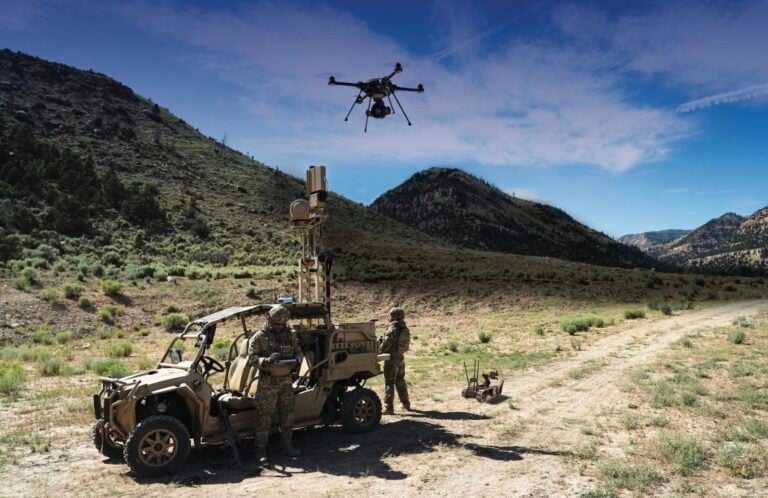
- The Mission: The drones will equip Germany’s 45th Armoured Brigade (Panzerbrigade 45) in Lithuania, the country’s forward-deployed NATO deterrence force on the alliance’s eastern flank.
The budget committee imposed strict conditions on both contracts
Germany’s Bundestag budget committee approved initial framework agreements with Helsing and Stark Defence for medium-range loitering munition systems, each worth approximately 269 million euros, while imposing spending caps and reporting requirements that significantly limit the Defense Ministry’s procurement authority going forward.
The original plan, as we reported on February 10, envisioned potential contracts reaching 4.3 billion euros combined. Helsing’s deal for its HX-2 drone could have scaled to 1.46 billion. Stark’s contract for the Virtus could have reached 2.86 billion. Those ceilings are now gone.
“Without parliamentary control, there would be a risk of billions in de facto budget commitments over a long period of time,” the lawmakers’ proposal stated, according to Reuters.
The rollback is notable because Chancellor Friedrich Merz’s government loosened Germany’s fiscal rules just last year, earmarking 500 billion euros in infrastructure spending and significantly boosting defense funding. Lawmakers clearly want guardrails on how that money flows to individual defense startups.
Helsing’s HX-2 and Stark’s Virtus will equip six new drone units
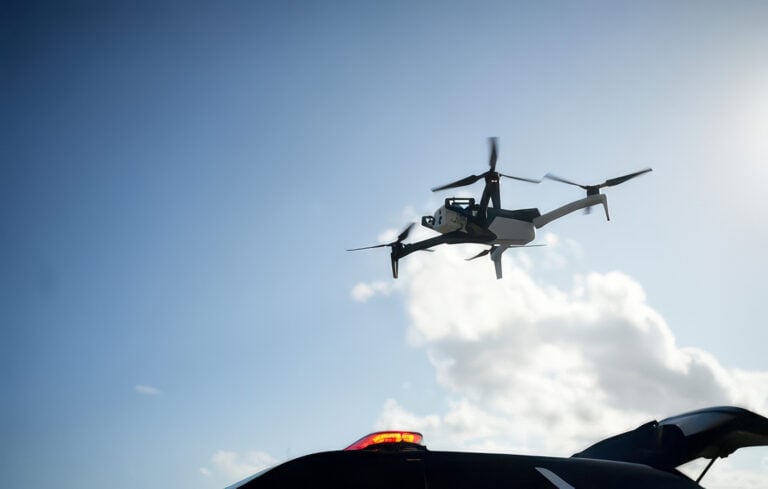
The loitering munitions are armed one-way attack drones that hover over a potential strike area before diving toward targets with built-in warheads. The initial order covers several thousand units from each company, with a five-figure total procurement planned over the life of the program.
Helsing’s HX-2 weighs 12 kilograms, launches from a catapult, and has been tested in Ukraine under actual combat conditions. The system uses AI-based guidance and can operate in GPS-denied environments. During October 2025 German military trials, all 17 HX-2 test flights were successful. That said, Helsing’s battlefield record is not spotless either. Bloomberg reported that Ukraine held off on additional HX-2 orders after frontline setbacks, and a separate briefing from Kyiv warned that Russian electronic warfare drove hit rates down to 36%. Helsing denied those claims.
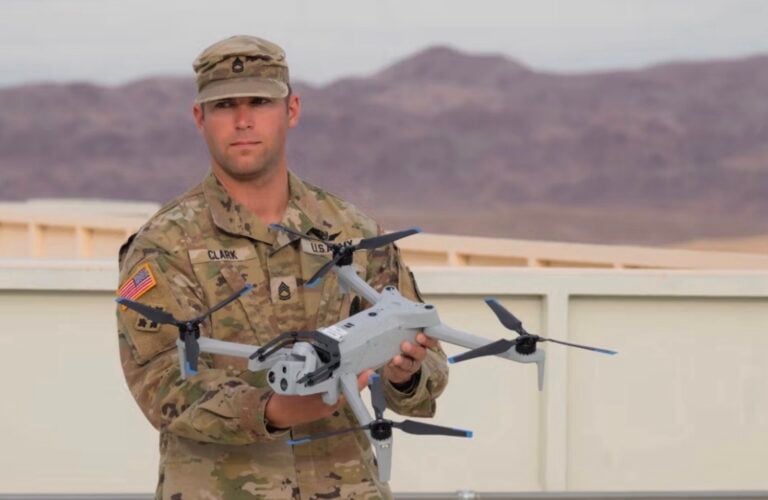
Stark’s Virtus is larger, performs vertical takeoff without a catapult, carries a 5-kilogram warhead, and can penetrate more than 80 millimeters of armor. That said, we have documented extensively that Stark’s Virtus failed to hit a single target across four attempts during trials with British and German forces in October 2025.
The Bundeswehr has made its own modifications to both drone systems, meaning the versions Germany receives will differ from those deployed in Ukraine. Neither system in its Bundeswehr configuration has been combat-tested. Both will need to pass additional German testing before operational deployment.
Lieutenant General Christian Freuding, Inspector of the German Army, plans to stand up six drone units over the next several years. The first battery, roughly company-sized with 60 to 150 soldiers, should be operational by 2027. Five more are targeted for 2029.
The Peter Thiel controversy did not stop the vote
In the weeks before today’s vote, Germany’s political class wrestled publicly with the fact that Peter Thiel holds a stake in Stark Defence. As we reported last week, the Green party’s defense budget specialist Sebastian Schafer demanded transparency about Stark’s ownership structure and even suggested the company should replace Thiel with another investor.
Thiel is a co-founder of PayPal and Palantir, an early Facebook backer, and a prominent supporter of U.S. President Donald Trump and Vice President JD Vance. Stark’s other investors include In-Q-Tel (the CIA’s venture capital arm) and Dopfner Capital.
The German Defense Ministry submitted a confidential report to lawmakers stating that Thiel holds only a passive minority stake through Thiel Capital with no operational authority. Stark says Thiel owns less than 10 percent and has no special voting rights.
Reuters reports that the lawmakers’ proposal made no reference to the Thiel debate. The Greens raised objections but did not block the deal. The spending cap and reporting requirements appear to be the compromise that got the committee across the finish line.
Rheinmetall remains in the wings as a potential third supplier
Germany’s largest defense contractor, Rheinmetall, was locked out of this initial procurement after failing to produce a working demonstrator during Bundeswehr testing. We covered that loss in January. The company’s FV-014 loitering munition was unveiled only in September 2025, and its development timeline has lagged behind both startups.
A separate contract for Rheinmetall remains possible later this year, but only if its drones perform satisfactorily in upcoming tests. Rheinmetall CEO Armin Papperger warned in September 2025 that military drones could become the defense industry’s “biggest bubble.” Being shut out of Germany’s biggest drone deal while two startups split 536 million euros is not the outcome he envisioned.
DroneXL’s Take
I have been following this procurement from the first Bloomberg report in January through the FT’s document leak, the Thiel firestorm, and now today’s vote. The pattern is consistent with what we see across European defense procurement: political pressure creates compromise, and compromise creates complexity.
The 2 billion euro cap is the real story here. When we reported the 4.3 billion ceiling two weeks ago, I wrote that Bundestag approval would get contentious. It did. Lawmakers halved the framework and imposed reporting requirements that will slow down future orders. For Stark, whose potential contract just dropped from 2.86 billion to a capped 1 billion, this is a significant financial hit.
The uncomfortable question we have raised repeatedly still stands. Stark’s Virtus missed every target in controlled trials. Helsing’s HX-2 went 17-for-17 in German testing, though its Ukraine combat record has been disputed. Yet both companies received identical initial contracts. Both contracts contain an “innovation clause” requiring the latest technology, which is Germany’s way of acknowledging that these systems are not finished products. And neither system in its Bundeswehr configuration has ever been fired in anger.
The Thiel issue was always a sideshow. The real risk for German taxpayers is performance, not politics. If Stark cannot deliver a Virtus that hits targets reliably by the time the 45th Armoured Brigade needs it in Lithuania, no amount of venture capital funding changes the math on the battlefield.
Expect the first deliveries to become a major test. If Stark’s modified Bundeswehr version of the Virtus performs in German testing over the next 12 months, the Thiel controversy fades. If it doesn’t, the budget committee will have its answer about whether to authorize the next billion.
Editorial Note: AI tools were used to assist with research and archive retrieval for this article. All reporting, analysis, and editorial perspectives are by Haye Kesteloo.
Discover more from DroneXL.co
Subscribe to get the latest posts sent to your email.
Check out our Classic Line of T-Shirts, Polos, Hoodies and more in our new store today!

MAKE YOUR VOICE HEARD
Proposed legislation threatens your ability to use drones for fun, work, and safety. The Drone Advocacy Alliance is fighting to ensure your voice is heard in these critical policy discussions.Join us and tell your elected officials to protect your right to fly.

Get your Part 107 Certificate
Pass the Part 107 test and take to the skies with the Pilot Institute. We have helped thousands of people become airplane and commercial drone pilots. Our courses are designed by industry experts to help you pass FAA tests and achieve your dreams.

Copyright © DroneXL.co 2026. All rights reserved. The content, images, and intellectual property on this website are protected by copyright law. Reproduction or distribution of any material without prior written permission from DroneXL.co is strictly prohibited. For permissions and inquiries, please contact us first. DroneXL.co is a proud partner of the Drone Advocacy Alliance. Be sure to check out DroneXL's sister site, EVXL.co, for all the latest news on electric vehicles.
FTC: DroneXL.co is an Amazon Associate and uses affiliate links that can generate income from qualifying purchases. We do not sell, share, rent out, or spam your email.