Ukraine Is Scaling Up Interceptor Drones as Russia’s Shahed Threat Outpaces Every Defense

Check out the Best Deals on Amazon for DJI Drones today!
At a secret training range north of Kyiv, a neurologist and a graphic designer are learning to shoot down drones. That’s not a quirky detail. It’s the clearest signal yet of how seriously Ukraine is taking the interceptor drone mission, and how fast the battlefield logic has shifted from expensive air defense systems to cheap, fast, semi-autonomous killers in the sky.
- The Development: Ukraine is industrializing its interceptor drone program, with the locally developed Sting drone at approximately $2,000–$2,500 now leading the field over more expensive semi-autonomous competitors.
- The Scale: In January 2026, Ukraine destroyed a record 1,704 Shaheds, according to The Economist, with 70% of those kills attributed to interceptor drones rather than guns or missiles.
- The Problem: Russia is already testing jet-powered drones flying at 400–500kph — faster than any current interceptor can chase — and experimenting with swarm tactics that break existing targeting algorithms.
- The Source: Reporting by The Economist, February 26, 2026 (paywalled), from Kyiv.
The Interceptor Drone Field Has Three Main Players
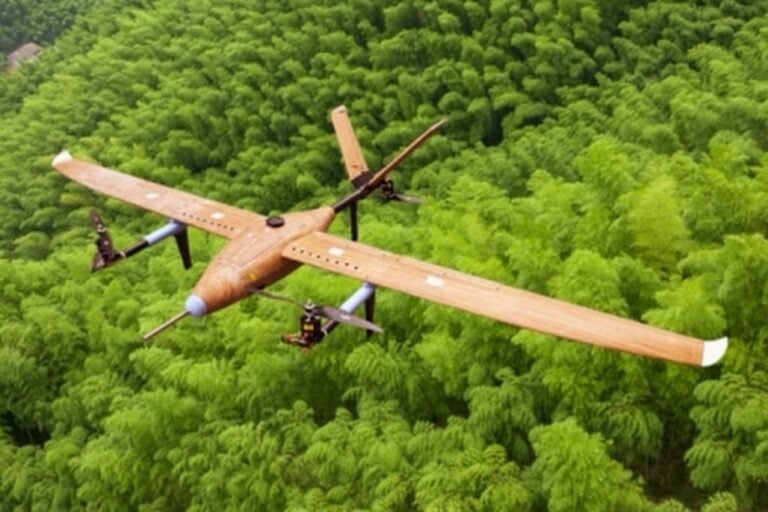
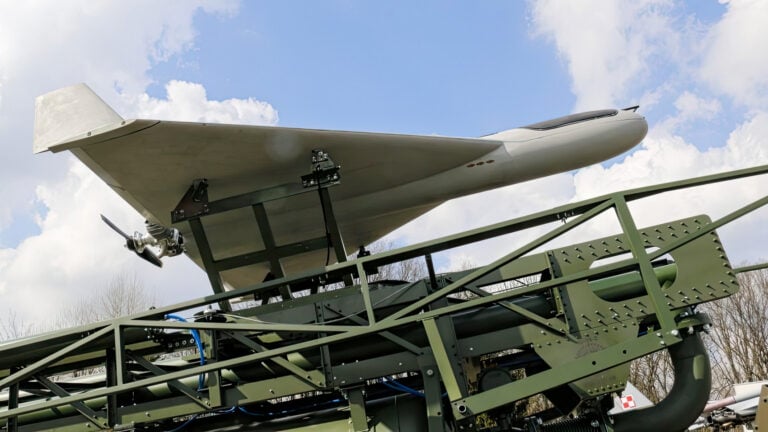
Ukraine’s interceptor drone program centers on three models competing on cost, autonomy, and kill rate. The Skyfall P1-SUN sits somewhere between a quadcopter and a mini-missile: it takes off vertically, then pitches forward 90 degrees so its bullet-shaped nose leads the way. At around 350kph, according to The Economist, it can ram a Shahed outright. A small charge sits in the tip, but pilots say the impact alone often does the job. The P1-SUN has already destroyed more than 1,000 airborne targets, including over 700 Shahed-type drones.
The Merops drone, built by a company founded by Eric Schmidt, Google’s former CEO, takes a different approach. Once the pilot guides it into visual range, it engages autonomously. We’ve covered the Merops program in detail, including its confirmed 95% hit rate in Ukrainian operations. The problem: it’s expensive, and Russian operators adapted quickly when they figured out it attacked from below. Shaheds started flying lower. Then came random evasive maneuvers every few minutes to break the targeting algorithms.
The current front-runner is the locally built Sting, at around $2,000 per The Economist — though our own previous coverage has cited $2,500 for comparable interceptors in this class. Either way, it costs a fraction of the Merops. Lt. Col. Pavlo Verkhovod of the 25th Airborne Brigade put it plainly: “There is little point in shooting down 100% of the drones if the interceptor costs more than the target.” That’s not just battlefield wisdom. It’s a procurement doctrine.

Russia’s Navigation Shift Reveals How Adaptive the Threat Is
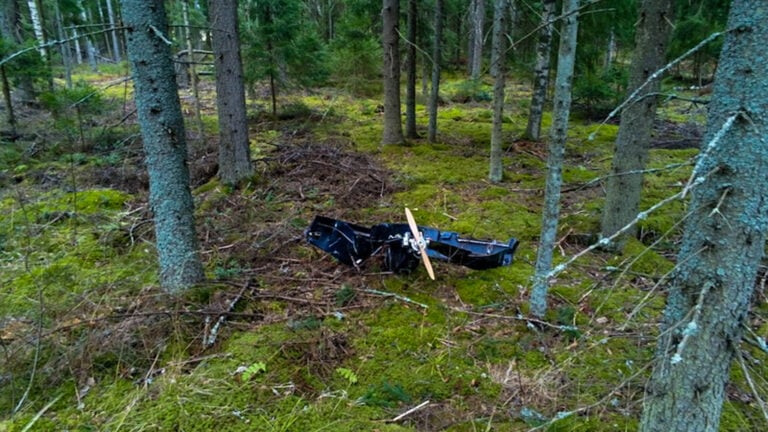
Engineers studying downed Russian drones found something unexpected: the craft had been using Ukraine’s own cellular and WiFi networks for navigation, hopping between nodes with inertial systems when jammers cut in. That’s not a design that came out of a Moscow factory floor. It’s a field-engineered workaround to jamming that Ukraine spent months developing.
Russia’s push to equip Shaheds with Starlink terminals makes more sense viewed through that lens. We reported in January on Starlink-guided Shaheds hitting a moving Ukrainian train, which required real-time navigation that fixed GPS coordinates alone can’t provide. In early February, SpaceX activated a terminal whitelist system that required all devices to be registered through Ukraine’s government — cutting off the unregistered terminals Russian forces had been exploiting. We covered the immediate operational disruption that followed. But that won’t last. Russia will find another navigation layer. It always does.
We’ve tracked how Iran’s drone blueprint gave Russia a mass-production weapon it couldn’t have built alone. The Shahed family, now paired with lighter Gerbera decoys, forms the backbone of attacks on Ukraine’s power grid and economy. Russia’s production capacity is already at 404 Shaheds per day, with a stated goal of 1,000 daily by end of 2026.
The 412th Unmanned Systems Brigade Runs Like a Startup
Ukraine’s 412th Unmanned Systems Brigade, known as Nemesis, accounted for one sixth of all January Shahed shootdowns, according to The Economist. That’s remarkable for a single unit. Its chief of staff, Lt. Col. Artem Bielienkov, is a former financial analyst. His description of how Nemesis operates: “We work as a startup. Fail fast, build new prototypes, test and scale — or put it in the box and move on.”
That culture comes from the top. Defense Minister Mykhailo Fedorov, 35, built Ukraine’s Army of Drones while serving as Digital Transformation Minister before moving to the defense portfolio. We covered his appointment in January and what it signals about Ukraine’s strategic direction. At a February 23rd briefing, Fedorov laid out three priorities: close the skies first, raise Russia’s attrition rate second, squeeze Russia’s economy third. The interceptor program is priority one. Ukraine’s pay-per-kill drone incentive structure, which we reported on separately, sits inside that same framework.
Jet-Powered Swarms Are the Next Problem Ukraine Can’t Fully Solve Yet
Ukraine has already encountered the first jet-powered Russian drones, flying at 400–500kph. Current interceptors top out around 350kph. That speed gap matters, and there’s no near-term fix on the horizon. Russia is also testing small swarms, using Shaheds as airborne launch platforms to deploy FPV drones near the front line. The logical endpoint, as Oleksiy Honcharuk, former Ukrainian prime minister and chair of Nemesis’s expert council, described it: Shahed-type drones may eventually become platforms that catapult smaller drones directly into cities, rather than weapons in themselves.
Honcharuk’s vision for future air defense: walls of interceptor drones that launch automatically on radar detection, bypassing human pilots entirely. “It might sound like science fiction,” he said, “but we are getting ready for it. Europeans should be asking themselves if they are too.” Europe’s E5 defense ministers are starting to ask that question, backing the LEAP program to build low-cost autonomous drone systems modeled on Ukraine’s approach. Ukraine’s Sunray laser system is another layer of that defense architecture, burning drones out of the sky at a fraction of what Western equivalents cost.
DroneXL’s Take
The detail that stays with me from this Economist report isn’t the kill numbers or the drone specs. It’s the training range north of Kyiv where a former deputy infrastructure minister is learning to shoot down drones. The war has moved so fast, and the threat has scaled so aggressively, that Ukraine can’t rely on professional military units alone. The country is training civilians in drone interception the way previous generations trained civilians in rifle marksmanship.
The cost dynamic is the real story. A Sting interceptor at around $2,000–$2,500 taking out a Shahed that costs Russia somewhere between $20,000 and $70,000 per unit is a 10-to-1 or better cost advantage for Ukraine. That’s the math Fedorov is working with. It’s also why the jet-powered drone problem is so dangerous: once Russia can reliably deliver a drone at 450kph that current interceptors can’t catch, the entire cost equation flips.
I’d expect Ukraine to publicly debut an interceptor capable of exceeding 400kph within six months, most likely a fixed-wing design rather than a modified quadcopter. The P1-SUN’s hybrid vertical-takeoff approach is clever, but pure speed will require a different airframe. Watch Nemesis. They fail fast and move on. That’s the right culture for this problem.
Europe should pay close attention. Honcharuk’s warning wasn’t rhetorical. If Russia builds out swarm delivery systems using Shaheds as motherships, no NATO country currently has the interceptor infrastructure to handle that at scale. The technology exists. The doctrine is being written in real time over Ukrainian cities. The question is whether European defense planners are reading the right reports.
Editorial Note: AI tools were used to assist with research and archive retrieval for this article. All reporting, analysis, and editorial perspectives are by Haye Kesteloo.
Discover more from DroneXL.co
Subscribe to get the latest posts sent to your email.
Check out our Classic Line of T-Shirts, Polos, Hoodies and more in our new store today!

MAKE YOUR VOICE HEARD
Proposed legislation threatens your ability to use drones for fun, work, and safety. The Drone Advocacy Alliance is fighting to ensure your voice is heard in these critical policy discussions.Join us and tell your elected officials to protect your right to fly.

Get your Part 107 Certificate
Pass the Part 107 test and take to the skies with the Pilot Institute. We have helped thousands of people become airplane and commercial drone pilots. Our courses are designed by industry experts to help you pass FAA tests and achieve your dreams.

Copyright © DroneXL.co 2026. All rights reserved. The content, images, and intellectual property on this website are protected by copyright law. Reproduction or distribution of any material without prior written permission from DroneXL.co is strictly prohibited. For permissions and inquiries, please contact us first. DroneXL.co is a proud partner of the Drone Advocacy Alliance. Be sure to check out DroneXL's sister site, EVXL.co, for all the latest news on electric vehicles.
FTC: DroneXL.co is an Amazon Associate and uses affiliate links that can generate income from qualifying purchases. We do not sell, share, rent out, or spam your email.