Ukraine Sends Drone Warfare Experts to the Gulf as the Atlantic Council Confirms Its Superpower Status

Check out the Best Deals on Amazon for DJI Drones today!
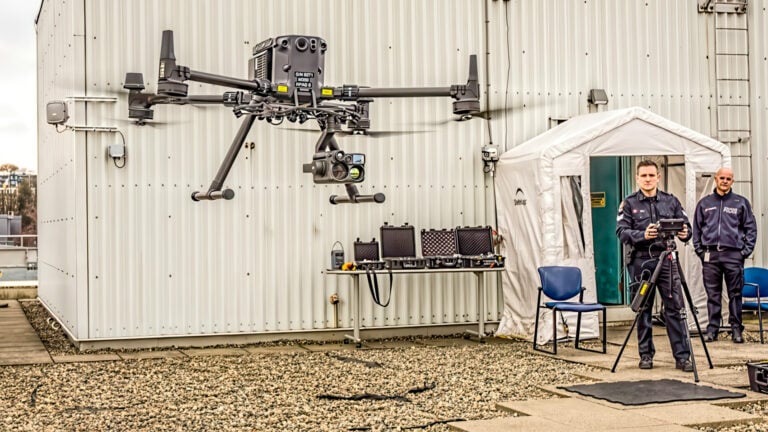
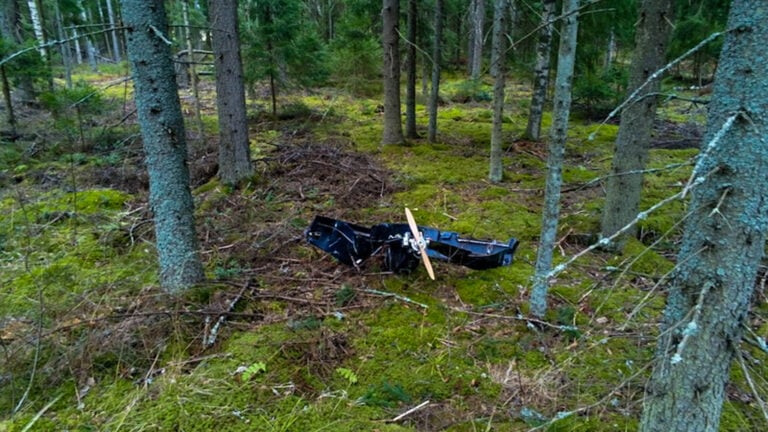
When I covered Ukraine’s Zelenskyy confirming the U.S. request for anti-Shahed support earlier this month, the idea of Ukrainian crews physically deploying to defend Gulf oil infrastructure still felt like a near-term possibility rather than a present fact. It isn’t a possibility anymore. Teams of Ukrainian drone warfare specialists are now on the ground in Qatar, Saudi Arabia, and the UAE, coordinating air defense operations against Iranian attack drones. Additional crews are reportedly working alongside U.S. personnel to protect American military bases in Jordan.
A new analysis published on the Atlantic Council’s UkraineAlert blog frames these deployments as the clearest signal yet that Ukraine has crossed from aid recipient to security exporter. The piece, written by Henry Jackson Society associate research fellow David Kirichenko, lays out the full scope of what four years of near-daily combat drone operations have produced. The views are the author’s own, not the Atlantic Council’s institutional position — but the core facts are hard to argue with.
- The Development: Ukrainian drone warfare crews have deployed to Qatar, Saudi Arabia, the UAE, and Jordan to help counter Iranian Shahed attack drones threatening to overwhelm conventional missile-based defenses in the region.
- The Scale: Germany confirmed this week that Ukrainian experts will train Bundeswehr troops. Romania announced a joint drone co-production venture with Ukraine. Saudi Aramco is reportedly among the customers queuing to buy Ukrainian interceptor drones.
- The Numbers: Ukraine is on track to produce seven million drones domestically in 2026, up from a handful of producers when the full-scale invasion began in February 2022.
- The Source: Full analysis at the Atlantic Council’s UkraineAlert blog.
Ukraine’s Drone Expertise Now Travels Abroad
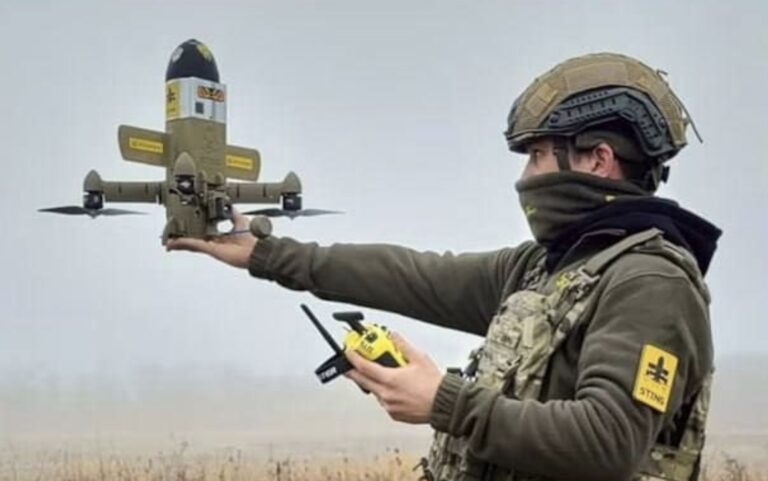
Ukraine’s deployment to the Gulf is a direct consequence of what the Iran war exposed: Gulf states and U.S. forces were burning through Patriot PAC-3 MSE missiles at over $13.5 million per shot to intercept Shaheds that cost a fraction of that to build. We covered this economic breakdown in detail when the Pentagon and Gulf states began eyeing Ukrainian interceptor drones as Patriot stocks ran low. The Sting interceptor, priced at roughly $2,500, is the answer Kyiv has been offering. As we reported, that $2,500 drone became America’s most urgent defense import.
The Atlantic Council piece adds political context. These deployments landed exactly one year after Zelenskyy’s Oval Office meeting with President Trump, where Trump told him, “You don’t have the cards.” The timing is not subtle.
The demand isn’t limited to interceptors. The broader ask from Gulf partners is operational knowledge — how to build and run the detection networks, the intercept geometry, the electronic warfare layers Ukraine has developed to defeat Shaheds at scale. That system took years of continuous combat iteration to build. No classroom can replicate it. Sending the people who built it is the fastest transfer path available.

Four Years Built the Drone Wall
Ukraine’s current drone capability is the product of a specific, pressure-driven development path that began after Russia’s 2014 invasion and accelerated sharply after February 2022. Around three-quarters of all Russian battlefield casualties are now attributed to Ukrainian drones, according to Kirichenko’s analysis. A drone-dominated kill zone more than ten kilometers deep on each side of the front line has made large-scale ground offensives extremely costly for Russian forces.
That same strategic logic drove Kyiv toward interceptor development. Russia upgraded its Shahed fleet after acquiring Iranian blueprints early in the war, making the drones bigger, faster, and harder to kill with conventional missiles. Ukraine’s response was mass-producible interceptors that could absorb the volume at sustainable cost. The interceptor program is now what Gulf customers want most.
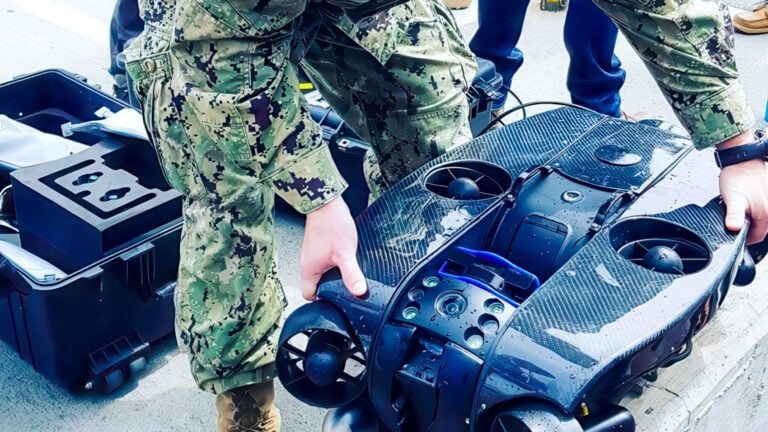
At sea, the results are equally stark. Ukraine’s naval drone program broke the Russian Black Sea blockade and has neutralized roughly one-third of Russia’s Black Sea Fleet. Putin withdrew his remaining warships from Crimea to Russian ports. Ukraine’s drone unit redefined naval warfare without operating a conventional navy. More recent models carry anti-aircraft missile systems; others have functioned as launch platforms for smaller drones. Ukraine’s upgraded Sea Baby drone can now reach any target in the Black Sea.
Ukraine’s Drone Lessons Are Going Global Fast
The Middle East deployments are the most visible example, but not the only one. We first reported that Ukraine had become NATO’s drone warfare teacher last October. Germany’s confirmation this week that Ukrainian specialists will train Bundeswehr troops accelerates that trend. Romania’s joint drone production agreement with Ukraine extends it further.
The UK’s 12th Regiment Royal Artillery also deployed to the Middle East after developing its counter-drone expertise working alongside Ukrainian forces. The kill chain these formations built — detect, warn, target — is now being replicated across NATO and Gulf partner militaries. The math we covered in February — a $500 commercial drone defeating a $5 million tank — is the same math driving this entire transfer of expertise.
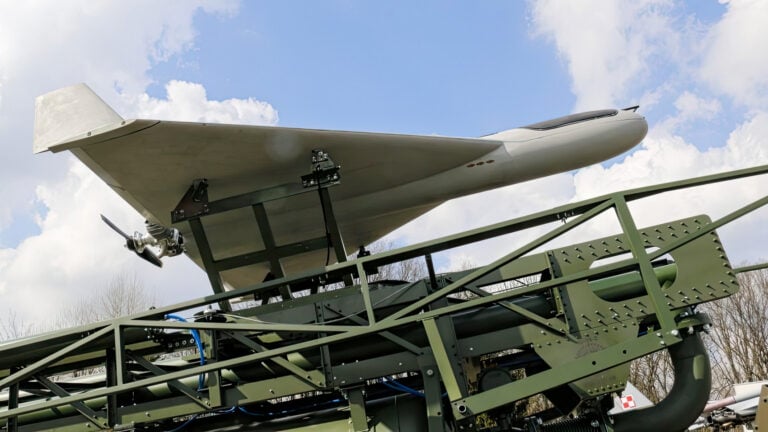
Ukraine’s long-range strike drone program adds a separate dimension to Kyiv’s leverage. Domestic producers are hitting targets more than 1,000 kilometers inside Russia. FirePoint alone ships 200 drones per day, across seven navigation generations, with zero GPS dependence. The production base behind these capabilities is what gives Kyiv real cards to play in diplomatic and security negotiations.
DroneXL’s Take
I’ve been tracking Ukraine’s transformation from drone importer to warfare teacher since the early months of the full-scale invasion. What’s happening now in the Gulf is the sharpest confirmation yet of a shift I wrote about when Ukraine’s drone innovations began reshaping modern warfare back in May 2025. The trajectory was clear then. The Gulf deployment makes it undeniable.
What strikes me most is how fast this happened. Four years. Ukraine went from almost no domestic drone manufacturing to exporting operational expertise to Gulf petrostates and training NATO armies at the same time. That isn’t just a defense story. It’s an industrial and institutional story about what pressure and necessity can produce when the alternative is national extinction.
The interceptor economics are the key detail most coverage misses. Saudi Aramco doesn’t queue up to buy a $2,500 drone out of sentiment. It queues up because burning $13.5 million Patriot PAC-3 MSE missiles to intercept $30,000 Shaheds is a budget problem, not just a tactical one. Ukraine solved that problem under live fire. No one else has.
My prediction: by the end of 2026, at least two additional Gulf states will sign formal drone cooperation agreements with Ukraine, and at least one European NATO member beyond Germany and Romania will announce a co-production deal. Zelenskyy’s team clearly knows how to convert battlefield knowledge into geopolitical leverage. Expect them to keep doing exactly that.
Editorial Note: AI tools were used to assist with research and archive retrieval for this article. All reporting, analysis, and editorial perspectives are by Haye Kesteloo.
Discover more from DroneXL.co
Subscribe to get the latest posts sent to your email.
Check out our Classic Line of T-Shirts, Polos, Hoodies and more in our new store today!

MAKE YOUR VOICE HEARD
Proposed legislation threatens your ability to use drones for fun, work, and safety. The Drone Advocacy Alliance is fighting to ensure your voice is heard in these critical policy discussions.Join us and tell your elected officials to protect your right to fly.

Get your Part 107 Certificate
Pass the Part 107 test and take to the skies with the Pilot Institute. We have helped thousands of people become airplane and commercial drone pilots. Our courses are designed by industry experts to help you pass FAA tests and achieve your dreams.

Copyright © DroneXL.co 2026. All rights reserved. The content, images, and intellectual property on this website are protected by copyright law. Reproduction or distribution of any material without prior written permission from DroneXL.co is strictly prohibited. For permissions and inquiries, please contact us first. DroneXL.co is a proud partner of the Drone Advocacy Alliance. Be sure to check out DroneXL's sister site, EVXL.co, for all the latest news on electric vehicles.
FTC: DroneXL.co is an Amazon Associate and uses affiliate links that can generate income from qualifying purchases. We do not sell, share, rent out, or spam your email.