DXB Ground Stop: How a Single $30k Drone Paralyzed the World’s Busiest Airport
Check out the Best Deals on Amazon for DJI Drones today!
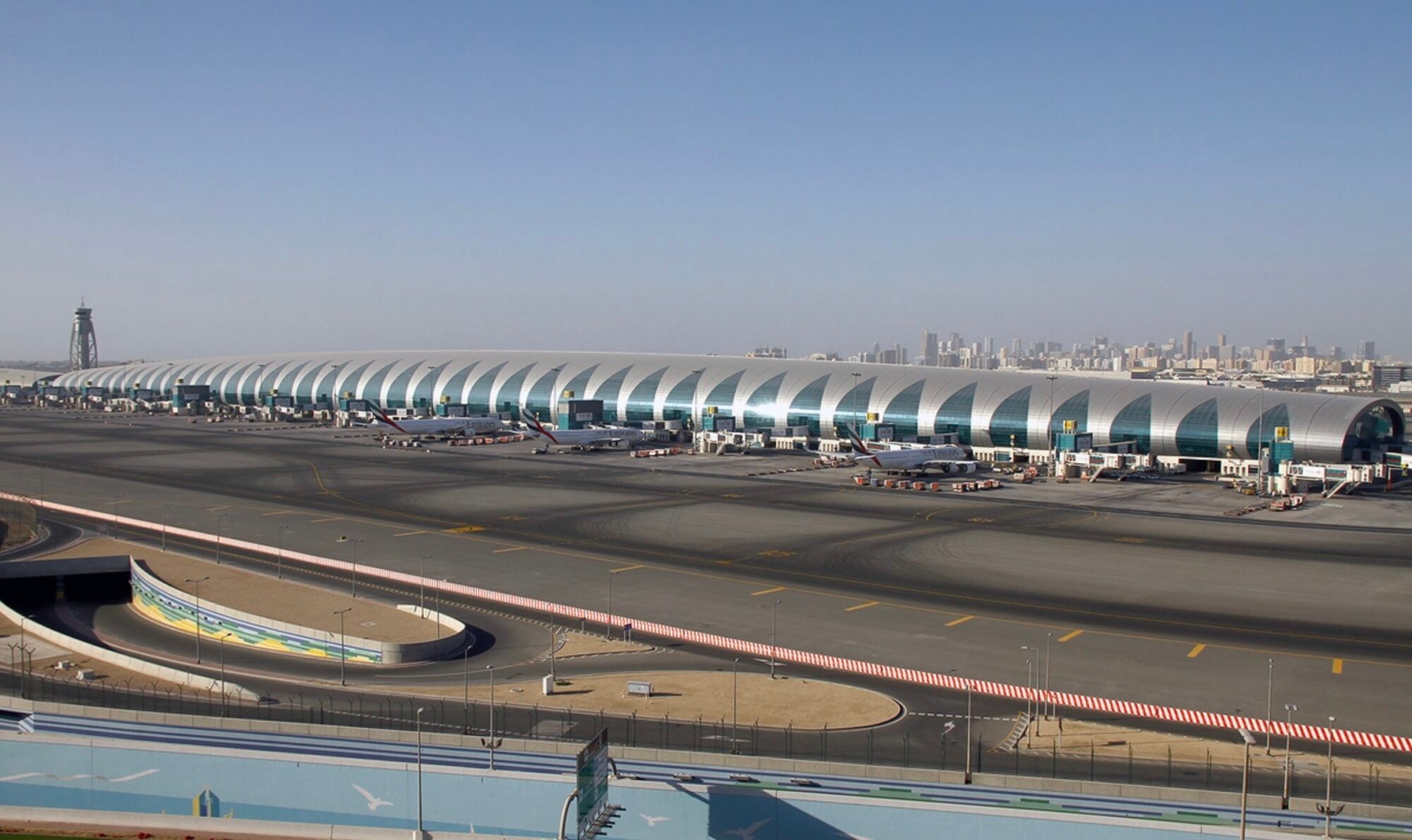
Dubai International Airport went dark to commercial traffic on Monday, March 16, after a drone struck one of its fuel storage tanks and ignited a fire. The Dubai media office confirmed the incident on X, stating that “a drone incident in the vicinity of Dubai International Airport (DXB) affected one of the fuel tanks.” Authorities contained the fire with no injuries reported, but the airspace closure — and the diversion of flights to Al Maktoum International Airport some 20 miles away in Jebel Ali — is a stark reminder of how exposed civilian aviation infrastructure is in this conflict.
- The Strike: A drone hit a fuel tank near Dubai International Airport (DXB) on March 16, 2026, causing a fire that was later contained with no reported casualties.
- The Disruption: Flights at DXB were suspended. Emirates airline halted all departures and arrivals. Diverted flights went to Al Maktoum International in Jebel Ali.
- Broader Context: Gulf Arab states have absorbed more than 2,000 Iranian missile and drone attacks since the US-Israeli war with Iran began on February 28, 2026, per The Jerusalem Post.
- Simultaneously: An Iranian missile struck a civilian vehicle in Abu Dhabi’s Al Bahia area, killing a Palestinian national, according to the Abu Dhabi Media office.
A Fuel Tank Strike at One of the World’s Busiest Airports
Dubai International is the world’s busiest international airport by passenger volume. Hitting a fuel storage tank there is not an accident of geography — in a conflict where Iran has been the attacking party across the Gulf, this is a deliberate strike on aviation logistics. A burning fuel tank near active runways forces an immediate ground stop, which is exactly what happened. The Dubai media office was measured in its language on X, but the operational consequences were immediate and significant: one of the world’s top aviation hubs went offline mid-day.
Emirates confirmed the suspension across its own channels. Passengers were diverted to Al Maktoum, a facility designed for cargo and lower-volume traffic, not a sudden surge of widebody international jets. Al Maktoum sits roughly 20 miles from central Dubai, and it lacks the terminal capacity DXB offers. The passenger experience at that diversion point would have been chaotic.
This attack follows a pattern DroneXL has tracked since late February. Iran has shifted from purely military targets to civilian and economic infrastructure across the Gulf. We reported on March 9 that two Amazon Web Services facilities in the UAE were struck directly, knocking cloud infrastructure offline. A fuel tank at DXB is the same targeting logic applied to aviation.
Saudi Arabia Intercepts 34 Drones in Five Separate Waves
On the same day as the DXB strike, Saudi Arabia’s Ministry of Defense confirmed it intercepted approximately 34 drones over the country’s eastern region in the early morning hours of March 16. The Saudi Press Agency released statements on X describing at least five separate attack waves, all of which were destroyed before reaching their targets, according to The Jerusalem Post, which cited both the Saudi Ministry of Defense spokesperson and the Saudi Press Agency directly.
The eastern region of Saudi Arabia is where the bulk of the country’s oil infrastructure sits. Aramco facilities, processing plants, and export terminals are concentrated there. At least five coordinated drone waves in a single morning is not a harassment operation — it is a sustained, multi-vector pressure campaign designed to overwhelm layered air defenses.
We covered the economics of this problem earlier this month: Gulf states were firing Patriot interceptors worth over $13.5 million each at Iranian Shaheds that cost roughly $30,000 to build. That math is not sustainable. Saudi Arabia intercepting 34 drones in one morning means 34 intercept events — each one burning through high-cost missiles to stop low-cost munitions.
The Gulf Strike Campaign Has Now Crossed 2,000 Attacks
Since the US-Israeli war with Iran began on February 28, 2026, Gulf Arab states have faced more than 2,000 combined missile and drone attacks. The targets span US diplomatic missions, military bases, oil infrastructure, ports, airports, hotels, and residential buildings. That number — 2,000-plus in under three weeks — is the operational tempo of a country treating its drone stockpile as disposable.
DroneXL has covered this escalation step by step. Iran’s Shahed-136 reached Bahrain, Kuwait, and Dubai in the first broad Gulf strike wave on March 1. By March 2, an Iranian drone had struck the RAF Akrotiri runway in Cyprus, extending the threat radius well beyond the immediate Gulf region. Debris analysis later confirmed a Russian Kometa navigation system inside the Akrotiri drone, pointing to a direct military technology pipeline between Moscow and Tehran.
The Abu Dhabi missile strike on Monday adds another layer. A civilian vehicle in the Al Bahia area was hit, killing a Palestinian national. The Abu Dhabi Media office confirmed the death. Civilian casualties from missile strikes in the UAE capital are a significant escalation — Abu Dhabi has not seen this level of direct kinetic impact before in this conflict.
Ukraine’s Drone Warfare Advisors Are Already on the Ground in the Gulf
The Gulf states are not absorbing this alone. As we reported two days ago, Ukraine has deployed drone warfare experts to Saudi Arabia, Qatar, and the UAE. Ukrainian operators have more real-world experience defending against Shahed swarms than anyone else on the planet — they have been doing it since 2022. The $2,500 Sting interceptor drone they brought with them is purpose-built for exactly the kind of saturation attack Saudi Arabia faced Monday morning.
Whether that expertise influenced Monday’s defensive operations is unclear. But the fact that Ukraine is now a security exporter to Gulf monarchies — countries it had no military relationship with three years ago — shows how quickly this conflict has reshuffled alignments.
DroneXL’s Take
The DXB fuel tank strike is the clearest signal yet that Iran’s targeting priorities have shifted from symbolic military hits to economic disruption. Hitting an airport fuel supply doesn’t kill soldiers — it grounds planes, delays cargo, spooks investors, and damages the Gulf states’ reputations as stable business destinations. That’s the point.
I’ve been covering drone warfare in this conflict since it escalated in late February, and what stands out about Monday’s strikes is the simultaneity. DXB hit. Abu Dhabi missile strike. Thirty-four drones in at least five waves over Saudi Arabia’s oil heartland. These weren’t isolated incidents — they were coordinated pressure across three countries in the same morning window.
The counter-drone math still doesn’t work in the defenders’ favor. Patriot missiles at $13.5 million each versus Shaheds at $30,000 is not a war of attrition anyone can win financially. Until cheap interceptors like Ukraine’s Sting scale up in the Gulf, Iran will keep probing for the gaps. Expect at least one more major civilian infrastructure strike — port, desalination plant, or airport — before the end of March.
Editorial Note: AI tools were used to assist with research and archive retrieval for this article. All reporting, analysis, and editorial perspectives are by Haye Kesteloo.
Discover more from DroneXL.co
Subscribe to get the latest posts sent to your email.
Check out our Classic Line of T-Shirts, Polos, Hoodies and more in our new store today!

MAKE YOUR VOICE HEARD
Proposed legislation threatens your ability to use drones for fun, work, and safety. The Drone Advocacy Alliance is fighting to ensure your voice is heard in these critical policy discussions.Join us and tell your elected officials to protect your right to fly.

Get your Part 107 Certificate
Pass the Part 107 test and take to the skies with the Pilot Institute. We have helped thousands of people become airplane and commercial drone pilots. Our courses are designed by industry experts to help you pass FAA tests and achieve your dreams.

Copyright © DroneXL.co 2026. All rights reserved. The content, images, and intellectual property on this website are protected by copyright law. Reproduction or distribution of any material without prior written permission from DroneXL.co is strictly prohibited. For permissions and inquiries, please contact us first. DroneXL.co is a proud partner of the Drone Advocacy Alliance. Be sure to check out DroneXL's sister site, EVXL.co, for all the latest news on electric vehicles.
FTC: DroneXL.co is an Amazon Associate and uses affiliate links that can generate income from qualifying purchases. We do not sell, share, rent out, or spam your email.










![Review And Rewrite This Article For Publication. Do All Of The Following: 1. Fact-Check: Verify Dates, Locations, Quotes, Agency Names, And Acronyms. Mark Anything Uncertain With [Verify]. Did The Article Reference And Link To The Original Source? Flag If Missing. 2. Devil'S Advocate: In 3–4 Sentences, Assess Whether The Article Is Factually Sound, Well-Written, And Reads As Human. Be Blunt. 3. Humanize: Fix All Ai Patterns — Break Parallel Sentence Pairs, Remove Em-Dashes Used As Dramatic Pauses, Cut Redundant Consecutive Sentences, Remove Rhetorical Counting Devices. Strip These Words: Crucial, Vital, Key, Significant, Notably, Importantly, Essentially, Arguably, Landscape, Ecosystem, Trajectory, Transformative, Game-Changer, Groundbreaking, Unprecedented, Cutting-Edge, Robust, Seamless, Leverage (Verb), Utilize, Going Forward, In Conclusion, In Summary. Vary Sentence Length. Make The Take Section One Editor'S Sharp Opinion, Not A Summary. 4. Seo: Give 5 Alternative Title Ideas, A Permalink Slug, And A Meta Description (Under 155 Characters). Output Order: Devil'S Advocate Assessment → Revised Article With [Verify] Flags → Seo Block.](https://dronexl.co/wp-content/uploads/2025/02/DJI-Dock-3-and-Matrice-4D-and-4TD-Usher-in-Versatile-Drone-in-a-Box-Solution-for-Remote-Operations-0022.jpg.webp)