UK Eyes Drones to Unlock Strait of Hormuz
Check out the Best Deals on Amazon for DJI Drones today!
Britain is drawing up plans to send autonomous minesweeping drones to the Strait of Hormuz as Iran’s threat to international shipping pushes oil prices past $100 a barrel.
The UK won’t send warships, as Trump demanded over the weekend. Instead, London is betting on two drone systems it already has in service or production to do the job without putting sailors directly in harm’s way, as The Guardian reported.
The Mine Threat in the Strait
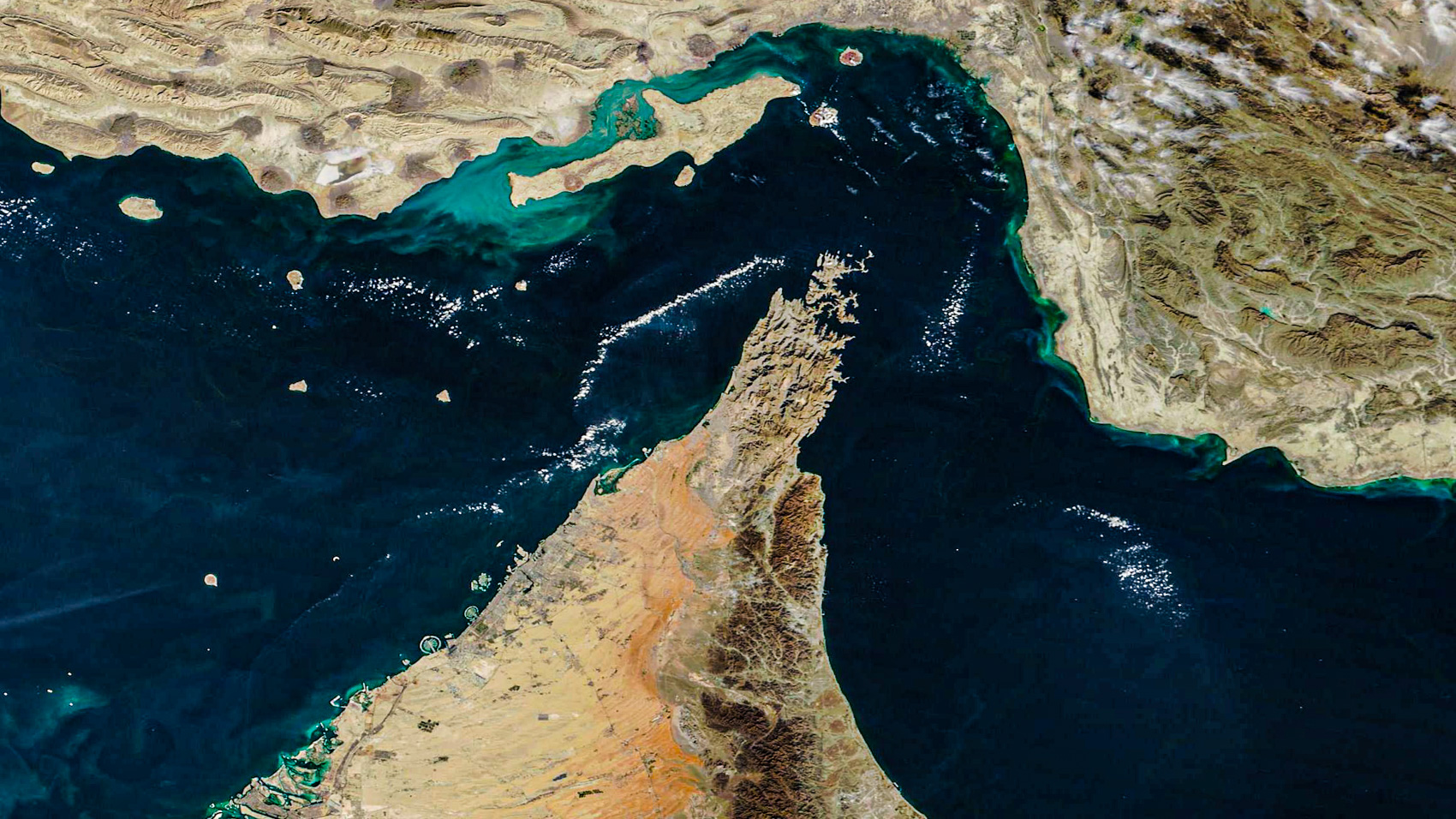
The Strait of Hormuz is roughly 20 miles wide at its narrowest point. About 20% of the world’s oil supply passes through it, and right now very little of that is moving. Iran’s announcement that it would target ships using the strait has sent crude prices from around $65 a barrel to above $100.
Commercial crews are refusing transits and insurers are cancelling war risk coverage: the economic pressure is immediate and global.
The mine threat here isn’t theoretical. In April 1988, during Operation Earnest Will, the guided-missile frigate USS Samuel B. Roberts struck an Iranian mine in the Persian Gulf. The explosion broke the ship’s keel and injured more than 60 sailors.
The strait is narrower now in practical terms than it was then, because modern digital mines are smarter. They don’t just sit on the seabed and wait. They listen for the acoustic, magnetic, and pressure signatures of specific ship types and detonate selectively. That’s exactly what the Royal Navy’s SWEEP system was designed to counter.
The SWEEP System
The minesweeping drone Britain is most likely to deploy is the Combined Influence Minesweeping system, known as SWEEP. It entered Royal Navy service on July 4, 2025, developed and manufactured by Dorset-based TKMS Atlas UK under a roughly $31 million contract.
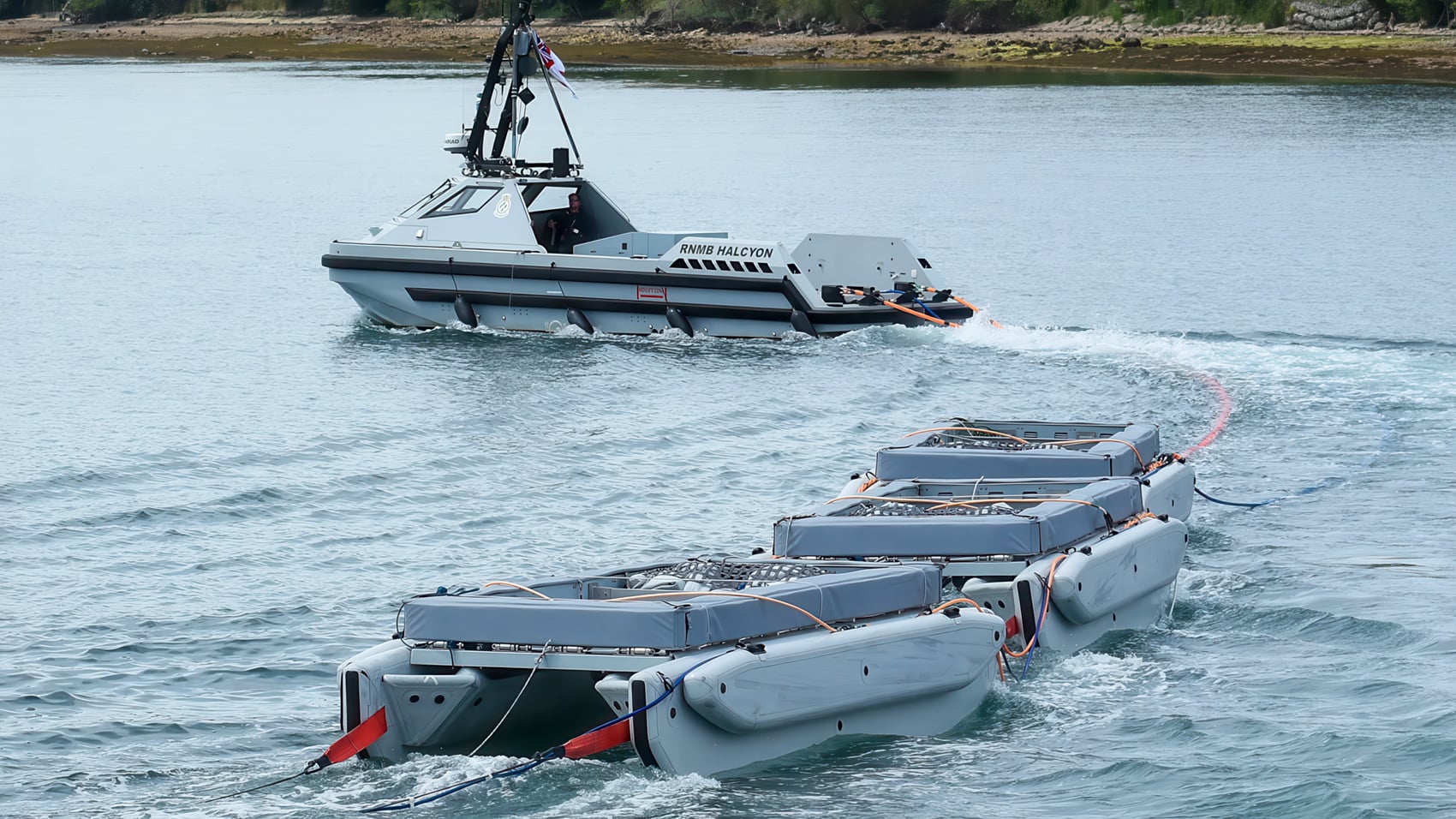
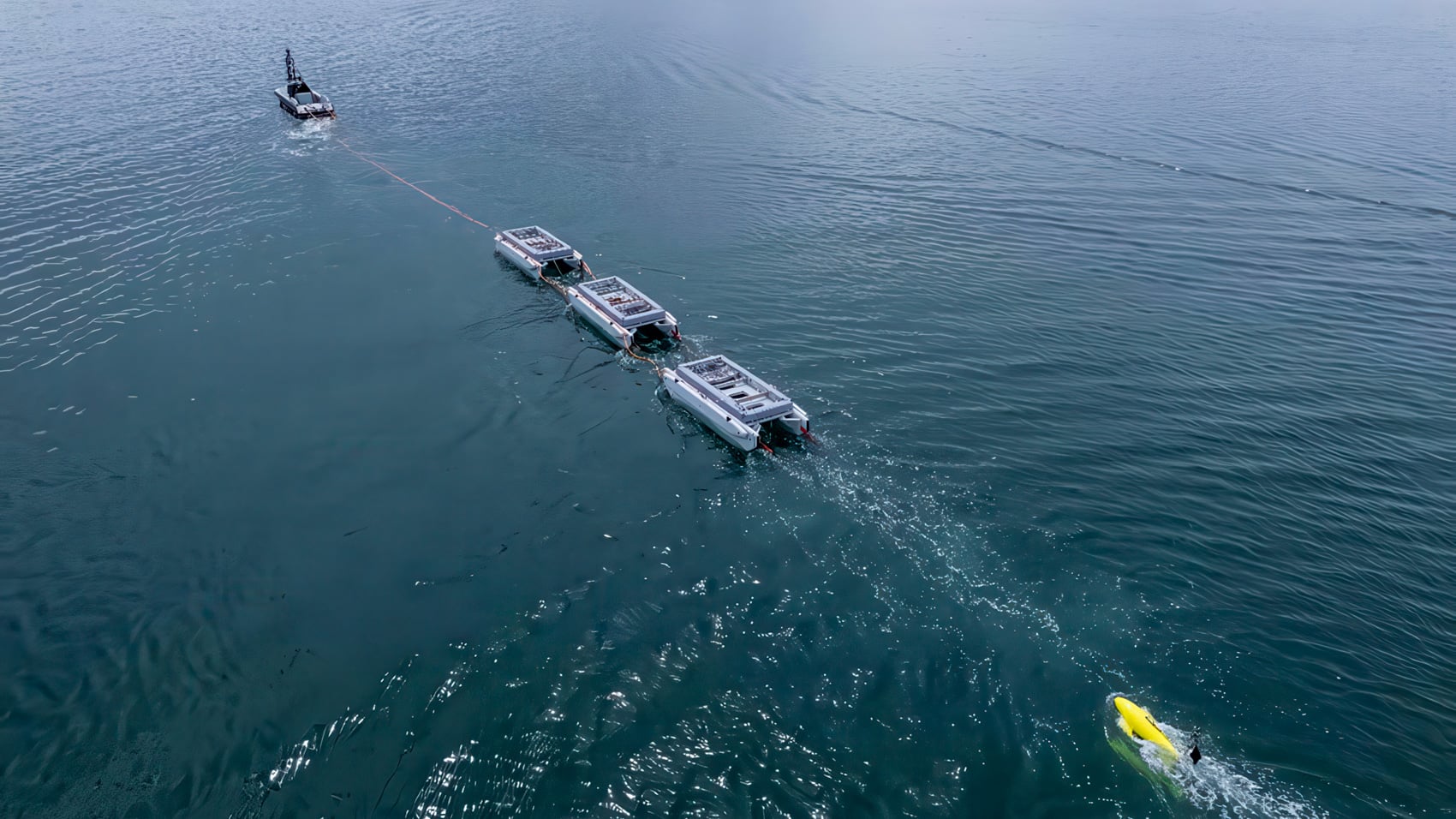
SWEEP is an uncrewed surface vessel that tows three sensor boats behind it. Each sensor boat emits magnetic, electric, and acoustic signals engineered to replicate the signature of a naval ship, tricking modern digital mines into detonating at a safe distance.
Unlike conventional mine-hunting methods that first require detecting a mine and then neutralizing it separately, SWEEP handles both tasks in a single pass. The system is controlled remotely from a portable command center that can be based on land or at sea, keeping operators well clear of the minefield.
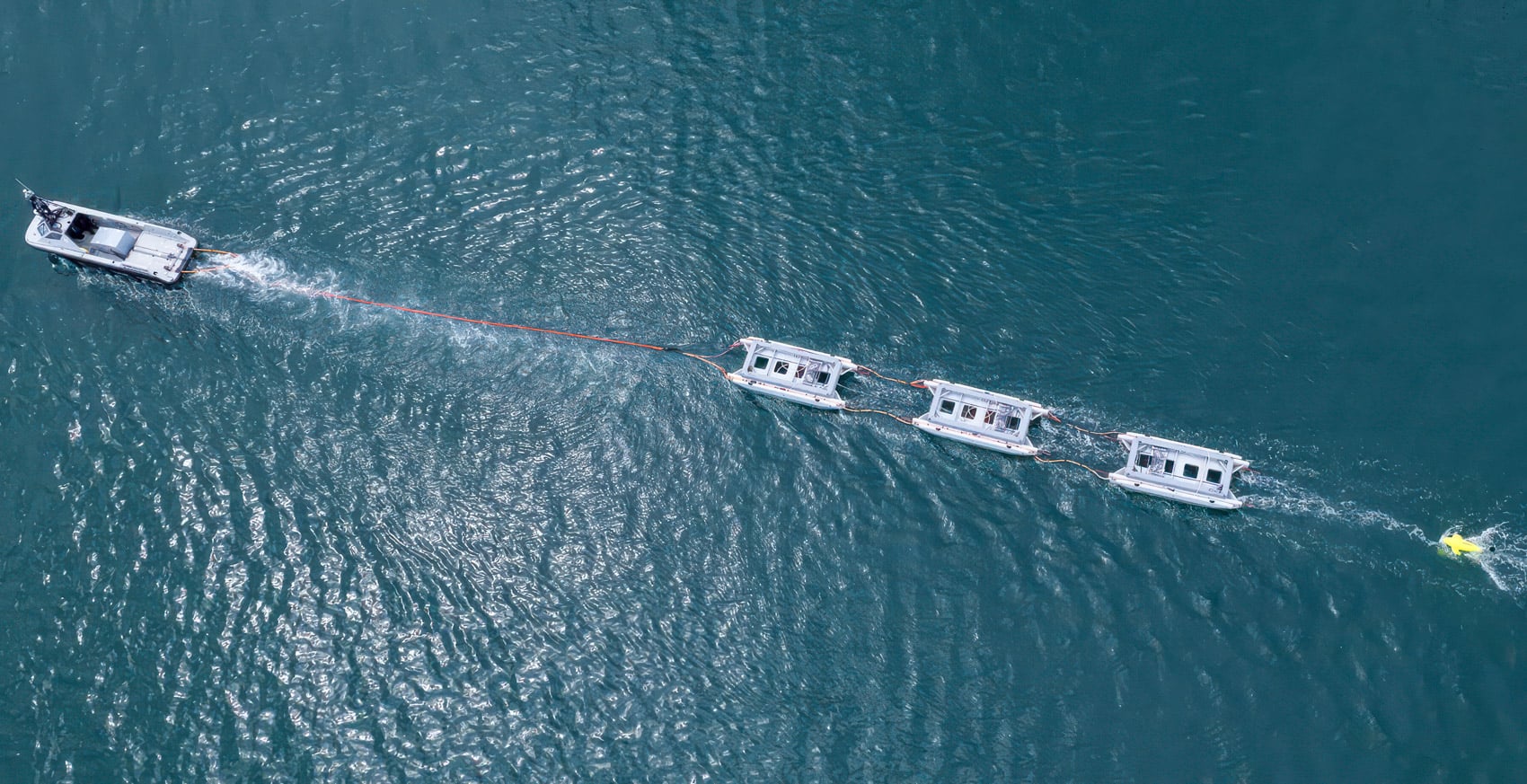
Three SWEEP units have been delivered to the Royal Navy. The system integrates with the Maritime Mine Counter Measures platform and SeaCat uncrewed underwater vehicles as part of a broader autonomous mine warfare package. Its operational debut in the Strait of Hormuz would be its first real-world combat deployment.
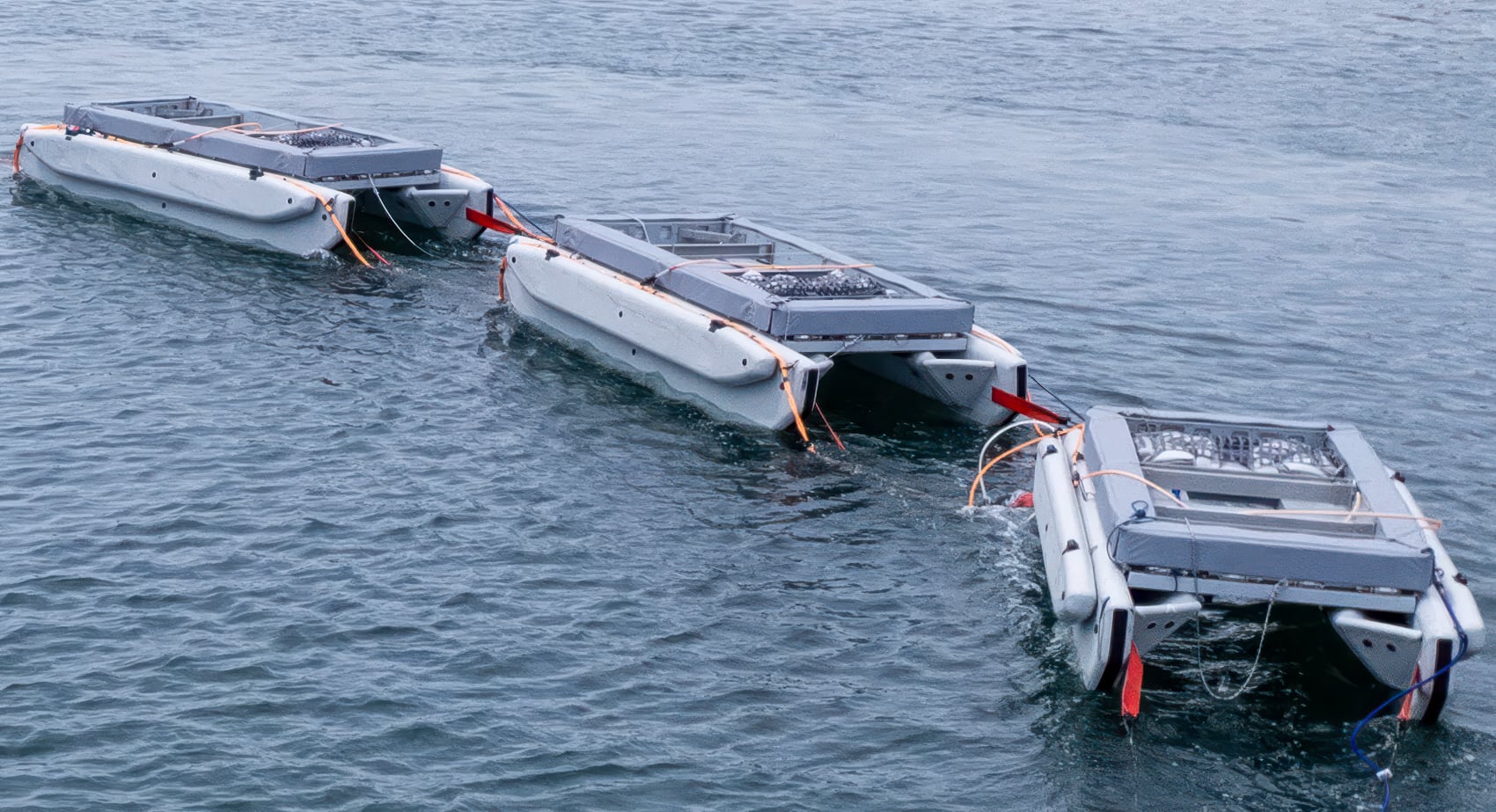
There is a genuine limitation worth stating plainly. Bloomberg reported this week that the control ships directing SWEEP would need to operate close enough to the minefield that they’d likely fall within range of Iranian anti-ship missiles. The drones keep human crews out of the mine threat. They don’t solve the broader Iranian weapons envelope.
The Octopus-100 Counter-Drone
London is also considering deploying the Octopus-100 interceptor drone, currently in production in the UK for Ukraine, to defend ships in the Gulf from Iranian aerial drone attacks. This is a different mission from minesweeping, but relevant given Iran’s use of Shahed-type one-way attack drones throughout the conflict.
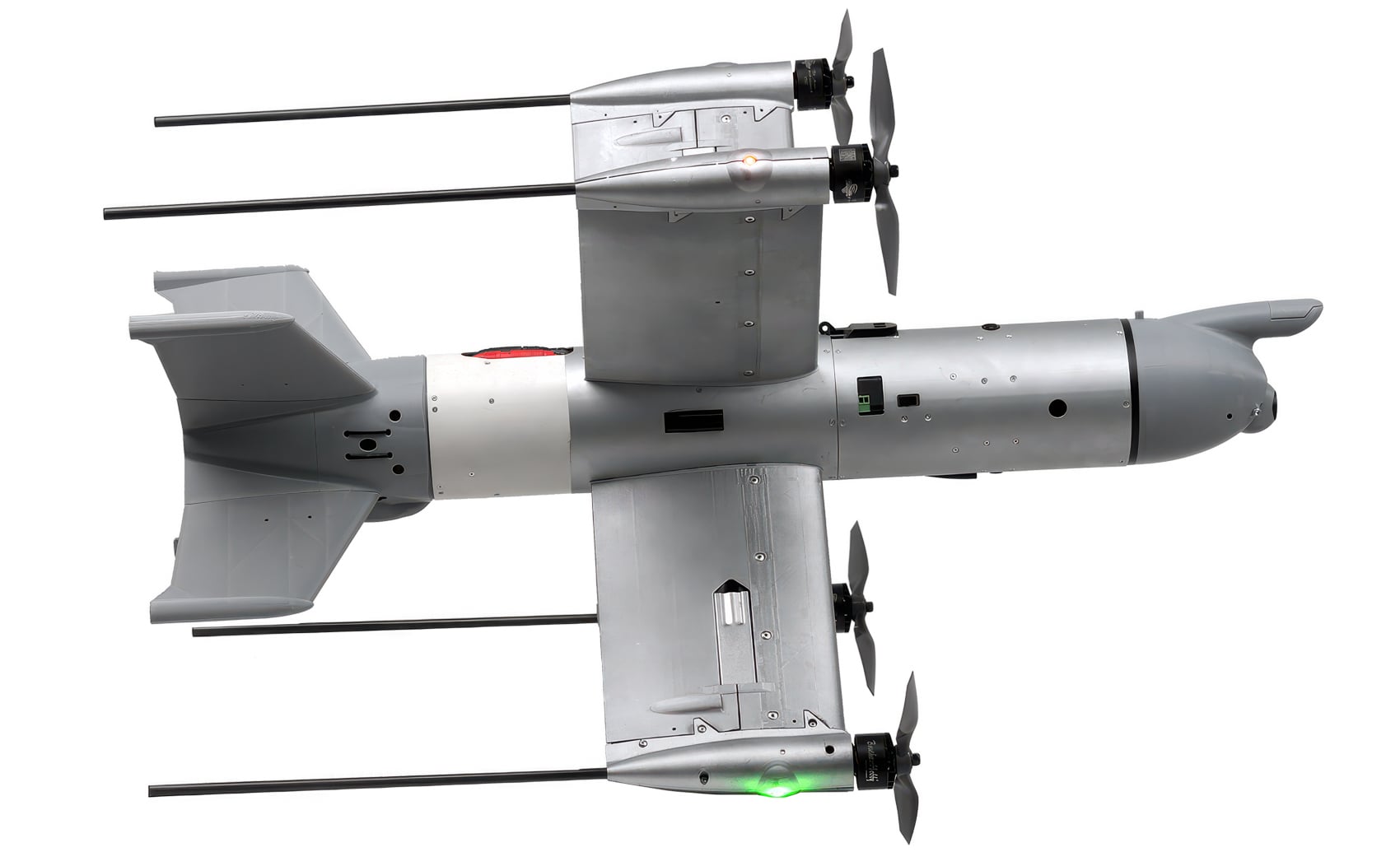
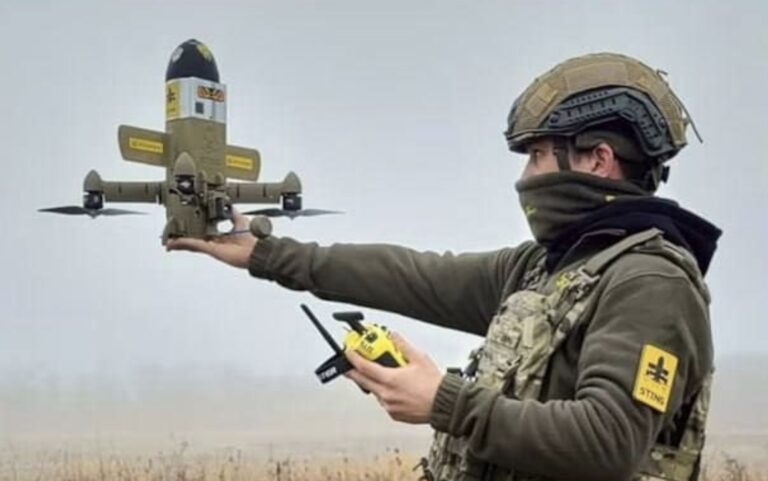
The Octopus-100 was designed in Ukraine by Ukrspecsystems with support from British engineers and technicians, and is now being manufactured in the UK under a roughly $250 million investment as the first serial production of a Ukrainian combat drone inside a NATO country. The UK production facility is located in Mildenhall in eastern England.
Its airframe is cylindrical with four tail-mounted propellers and a nose-mounted sensor. In its terminal phase, it uses image recognition to autonomously guide itself to target, which significantly improves hit probability over systems that rely on continuous ground-based guidance throughout the engagement.
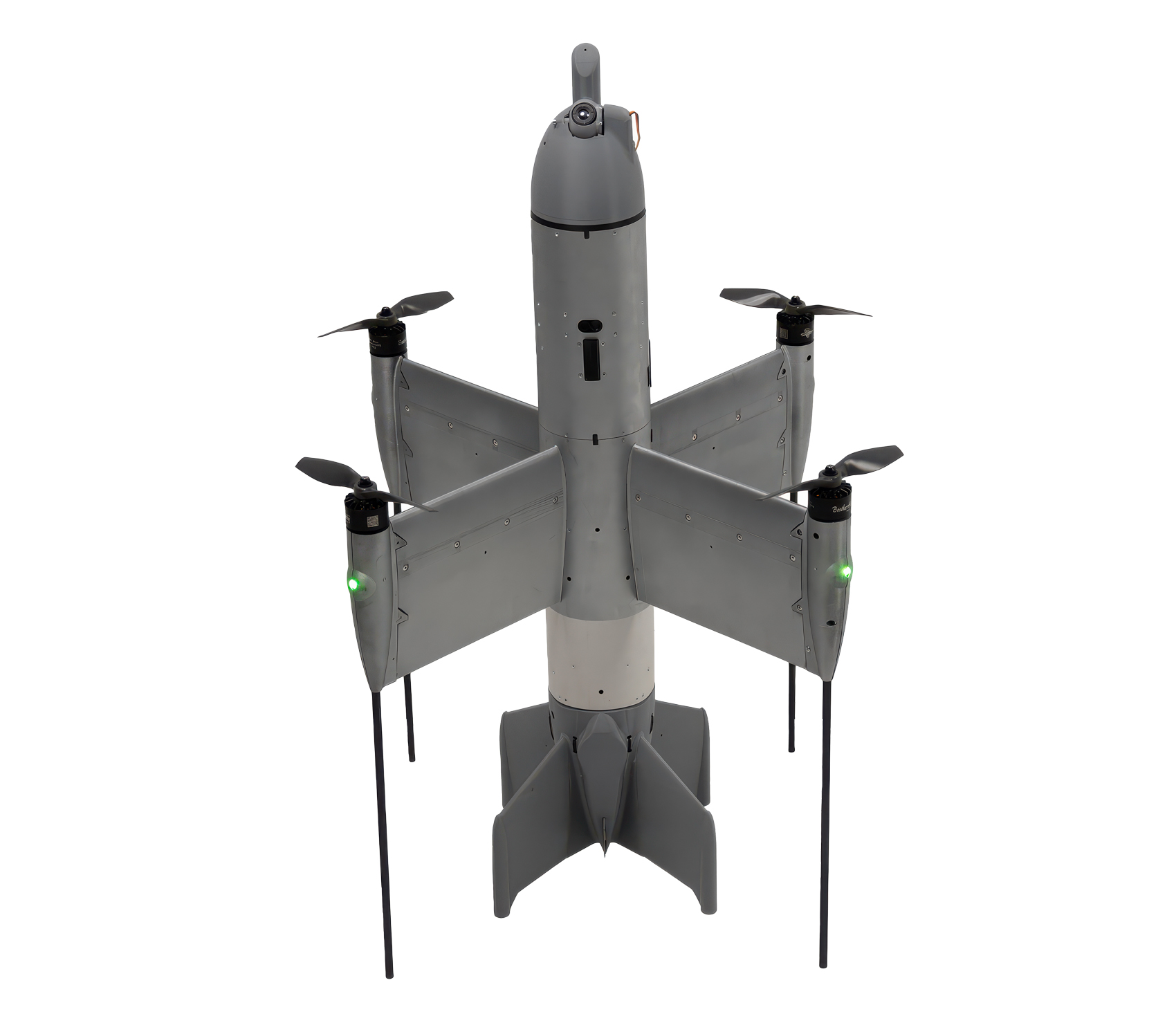
It operates effectively at night and under electronic warfare interference. Specific performance figures remain classified, but the system has demonstrated combat effectiveness against Russian Geran-2 drones over Ukraine, and costs less than 10% of the value of the targets it destroys.
The UK was producing roughly 2,000 Octopus units a month for Ukraine, according to statements made by UK Defence and Industry Minister Luke Pollard. Diverting even a portion of that production to the Gulf would be a consequential decision politically, given Ukraine’s ongoing need for the system.
What’s Actually Available and When
Britain’s mine-hunting posture in the Gulf is thinner than anyone in Whitehall would prefer to admit publicly. HMS Middleton, the last Royal Navy minesweeping ship in the region, departed Bahrain for maintenance just days before the current crisis began. That timing has triggered a political row at home over whether the government prepared adequately for the conflict.
HMS Dragon, a Type 45 destroyer, left Portsmouth last week heading for Cyprus. Officials say it won’t reach Cyprus for at least another week, and the strait is considerably further than Cyprus. It’s a capable air-defense platform, but it’s not a minesweeper.
The defence spending context matters here. MoD budget figures reviewed by the Guardian show investment in counter-drone systems fell from roughly $28 million in 2021 to around $22 million in 2023 under the previous Conservative government.
Ground-based missile defence spending dropped from approximately $196 million to roughly $61 million over the same period. The number of mine-hunting ships was cut from 16 when the Conservatives took office to seven.
DroneXL’s Take
Let’s be straight: the UK is doing something intelligent here, even if it arrived at this point partly through neglect.
Sending a destroyer into a minefield under Iranian missile coverage to satisfy a Trump social media post would be a poor trade. SWEEP was built precisely for this kind of scenario, keeping human crews clear of mine threats while autonomous systems do the dangerous work.
Deploying it here, if it’s operationally ready for contested waters at this scale, is the right call. The Octopus question is harder. Redirecting production away from Ukraine to protect Gulf shipping creates a genuine moral tension that London hasn’t resolved publicly yet.
The part that doesn’t make the headline is that this crisis has exposed how few deployable assets Britain actually has at short notice. Three SWEEP systems entered service less than a year ago. One minesweeping ship was in maintenance when the war started. The drone strategy is sound. The inventory behind it is thin.
Photo credit: Royal Navy, Ukrspecsystems, NASA.
Discover more from DroneXL.co
Subscribe to get the latest posts sent to your email.
Check out our Classic Line of T-Shirts, Polos, Hoodies and more in our new store today!

MAKE YOUR VOICE HEARD
Proposed legislation threatens your ability to use drones for fun, work, and safety. The Drone Advocacy Alliance is fighting to ensure your voice is heard in these critical policy discussions.Join us and tell your elected officials to protect your right to fly.

Get your Part 107 Certificate
Pass the Part 107 test and take to the skies with the Pilot Institute. We have helped thousands of people become airplane and commercial drone pilots. Our courses are designed by industry experts to help you pass FAA tests and achieve your dreams.

Copyright © DroneXL.co 2026. All rights reserved. The content, images, and intellectual property on this website are protected by copyright law. Reproduction or distribution of any material without prior written permission from DroneXL.co is strictly prohibited. For permissions and inquiries, please contact us first. DroneXL.co is a proud partner of the Drone Advocacy Alliance. Be sure to check out DroneXL's sister site, EVXL.co, for all the latest news on electric vehicles.
FTC: DroneXL.co is an Amazon Associate and uses affiliate links that can generate income from qualifying purchases. We do not sell, share, rent out, or spam your email.