Norway’s Elite Soldiers Are Hiding From Drones in Snow
Check out the Best Deals on Amazon for DJI Drones today!
The most sophisticated camouflage technology available to Norway’s elite Arctic reconnaissance unit right now isn’t thermal cloaking, radar-absorbing material, or anything you’d find in a defense procurement catalog.
It’s snow. Piled by hand into a dome, allowed to harden, and crawled into before dawn. The Ukrainians figured this out the hard way. The Norwegians figured it out decades ago. The difference is that now there’s a drone overhead trying to find them, as Defense News reported.
The Quinzhee and the Drone Problem
During NATO’s Cold Response 2026 exercise, which ran across Norway from March 9 to 19 with roughly 250 miles separating the training area from the Russian border, soldiers of the Norwegian Long Range Reconnaissance Squadron demonstrated the survival and concealment methods that define their trade.
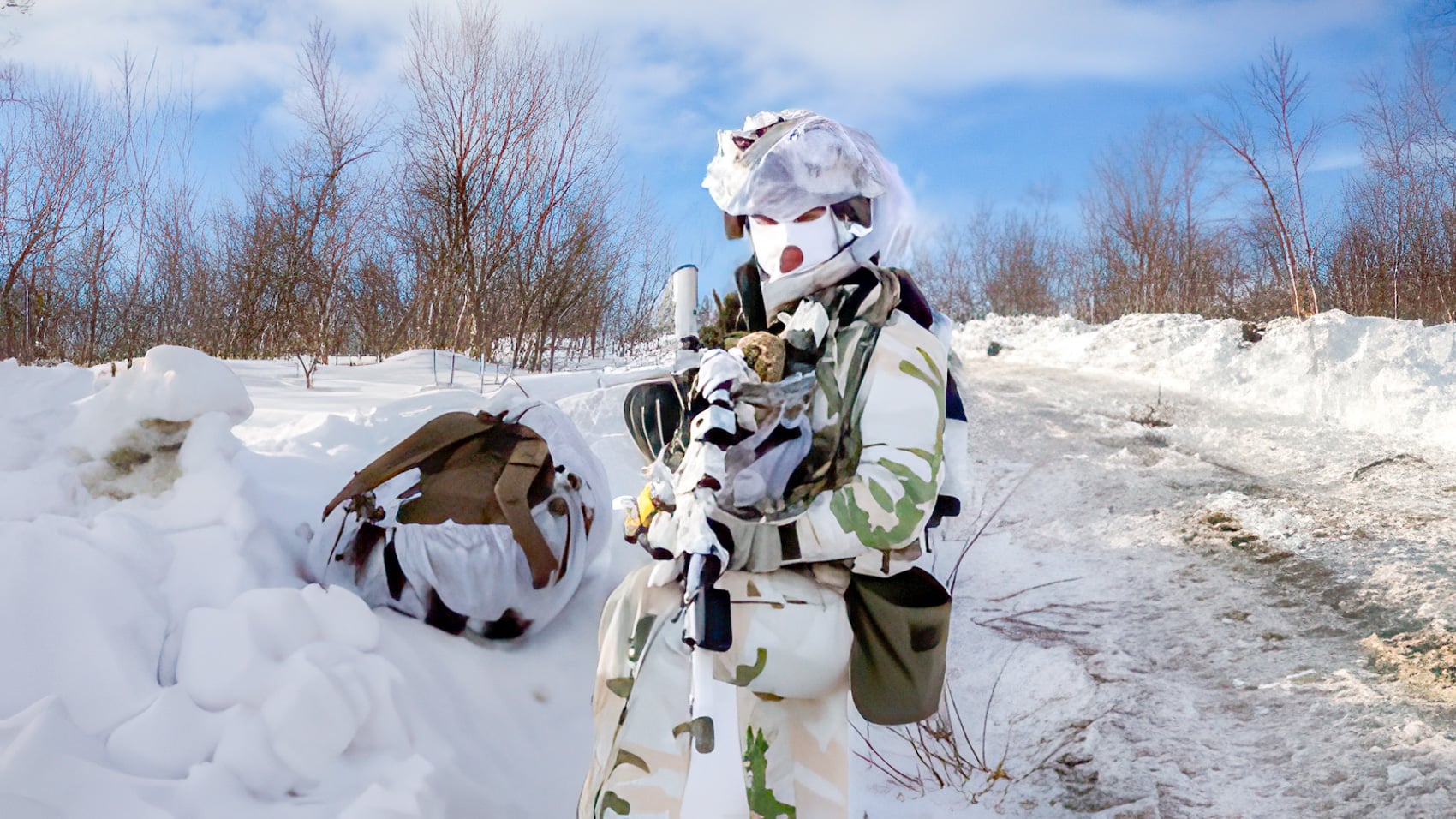
This Norway unit operates deep behind enemy lines on surveillance missions, where getting spotted is mission failure. Sometimes it’s also fatal.
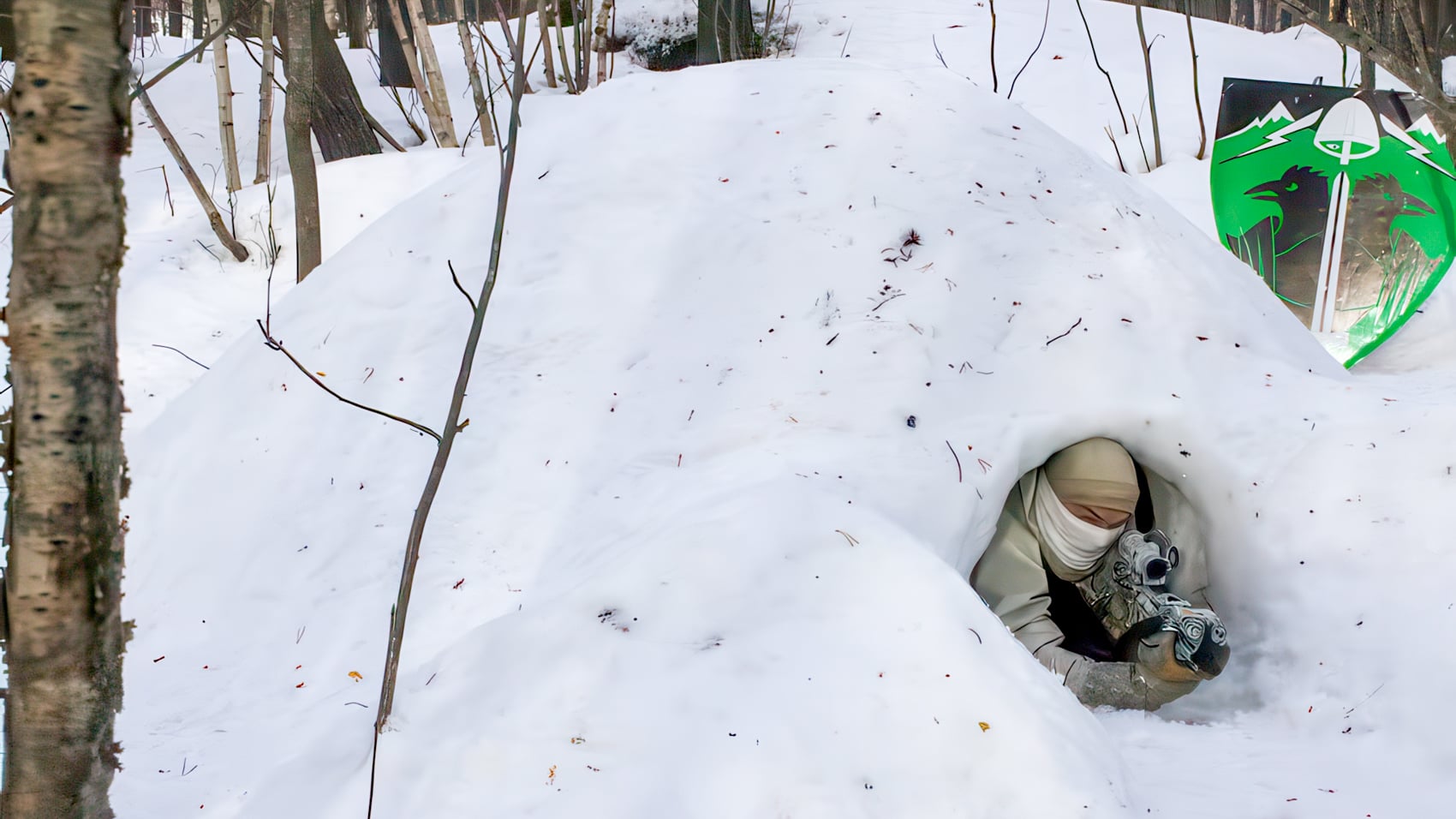
The shelter they rely on is a quinzhee, a snow cave about 5 feet high and 6.5 feet wide, built by piling snow and allowing it to sinter, a process where snow crystals bond under pressure and temperature into a structurally solid mass.
It’s not glamorous. It takes time and physical effort. But a well-built quinzhee is nearly invisible to thermal sensors because the snow acts as insulation, masking the heat signature of the person inside.
It also has no electronic signature, no radar return worth mentioning, and makes no sound. Against a surveillance drone carrying a thermal imager, it remains one of the most effective hiding places a soldier can build with materials already on the ground.
The officer who spoke with Defense News, identified only by the nickname Poster Boy due to the sensitivity of the unit, put it plainly: what worked four years ago might not work today due to technology developments.
A tent and camouflage used to be sufficient. It isn’t anymore. The Royal Marines training alongside the Norwegians added another data point: modern units that want to stay invisible in contested airspace often have to relocate every 15 minutes to avoid detection.
The Skydio X10D at Cold Response
The same reconnaissance unit from Norway hiding in snow caves are also carrying drones of their own. The unit is experimenting with the Skydio X10D and various FPV models as organic surveillance capability, with nearly every Norwegian Army unit at Cold Response equipped with at least one system for intelligence-gathering rehearsal according to an officer from the Land Warfare Centre speaking to Defense News.
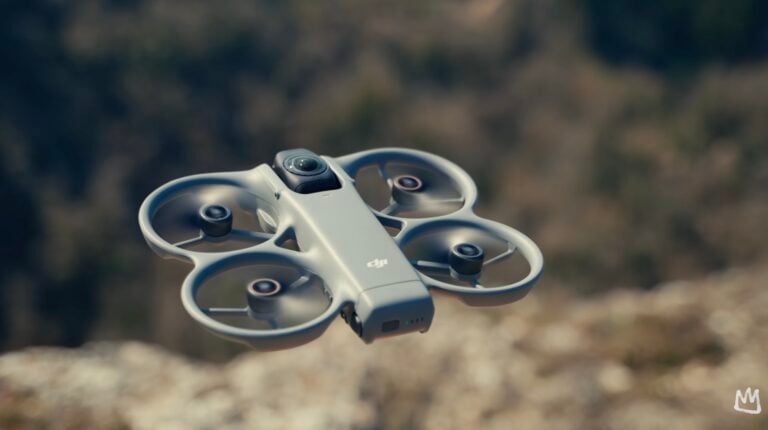
Norway’s Ministry of Defense awarded Skydio a contract worth approximately $9.4 million in July 2025 for the X10D platform, its first significant Skydio procurement. The X10D is the defense-specific variant of the X10, designed and assembled in the United States to comply with NDAA requirements.

It carries a multi-band radio for operation in electronically contested environments, an IP55 weather resistance rating, and is certified for cold-weather operation down to -4 degrees Fahrenheit.
Its sensor suite includes a 48 to 64-megapixel camera and a Teledyne FLIR thermal imager. It deploys from a backpack in under 40 seconds, reaches a top speed of approximately 45 mph, and has a maximum flight time of up to 40 minutes depending on payload and environmental conditions.
It also operates in GPS-denied environments using Visual Inertial Odometry, relevant on a battlefield where electronic warfare is assumed.
The honest performance note that didn’t make the press release: the X10D experienced operational difficulties in the Norwegian Arctic during Cold Response, consistent with what most drones face in extreme cold.
Battery chemistry degrades in low temperatures, propeller efficiency drops in dense Arctic air, and icing on leading edges is a genuine flight safety concern that Skydio’s own cold-weather documentation addresses in detail. The platform performed relatively well by the assessment of the officers flying it, but Arctic conditions remain a ceiling on what any current battery-powered drone can reliably deliver.
The Saab Mobile Camouflage System
Norway isn’t relying on snow alone. The Norwegian Defence Materiel Agency recently confirmed that trials in Denmark validated the effectiveness of the Saab-developed Mobile Camouflage System, a textile-based cloak designed to reduce visual, thermal, and radar signatures simultaneously, including in Arctic conditions.
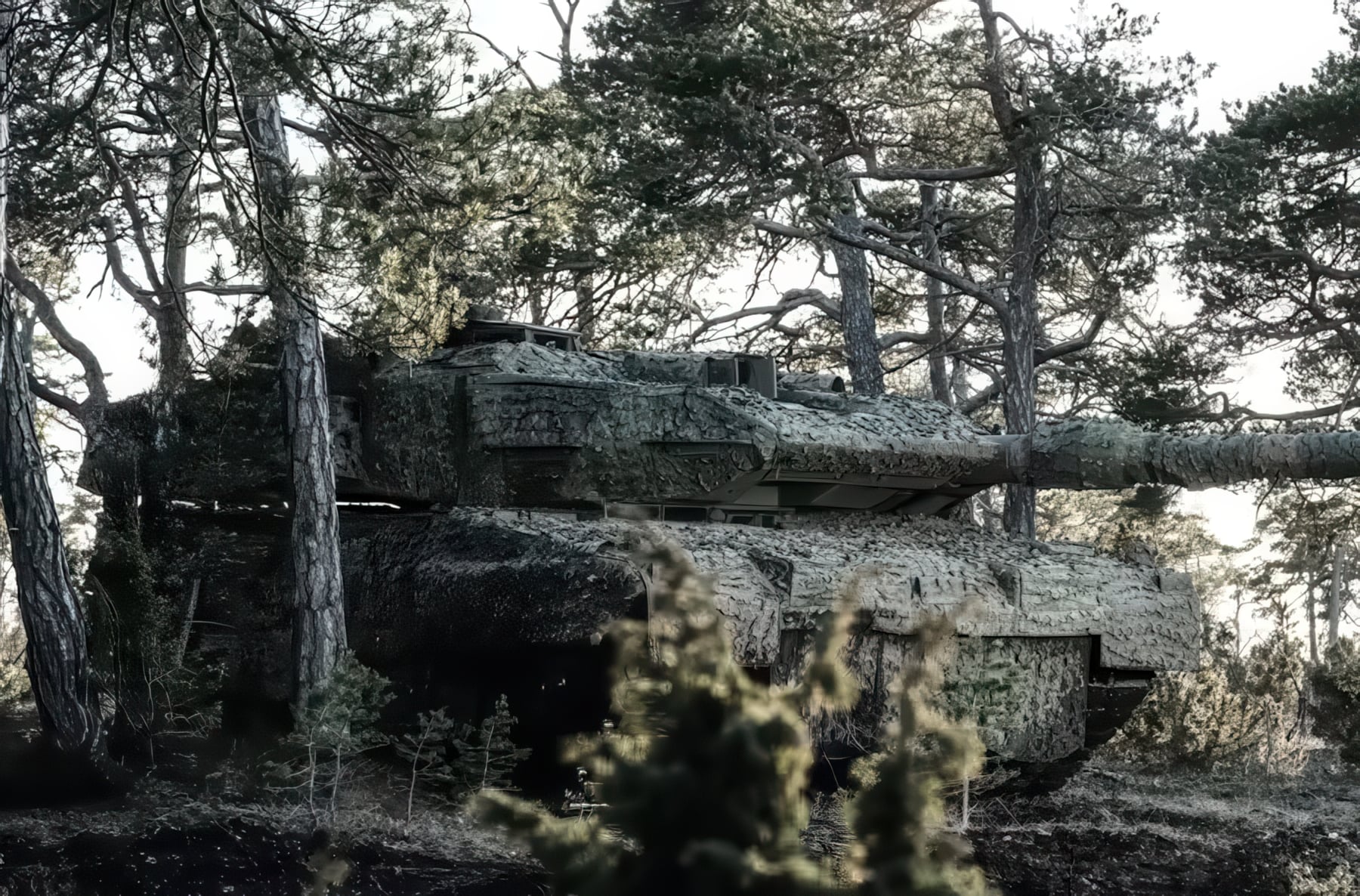
The system is designed for use over vehicles, equipment, and fighting positions, adding a technological layer on top of the natural concealment techniques the reconnaissance unit already practices.
The combination matters. Natural concealment like snow handles thermal masking and electronic silence. The Saab system addresses radar return and visual detection in conditions where snow isn’t immediately available or sufficient. Neither one solves the problem alone. Together they represent what the Norwegian approach is actually built on: layered signature management rather than reliance on any single solution.
The Drone on Both Sides of the Fight
What Cold Response 2026 demonstrated in practical terms is the same dynamic playing out in Ukraine at scale. Every unit is now simultaneously a drone operator trying to find the enemy and a potential drone target trying not to be found.
The Norwegian reconnaissance soldiers carry Skydio X10Ds and FPV platforms to push surveillance forward. They build quinzhees to hide from the same class of sensor their own drones carry. The symmetry is exact and deliberate.
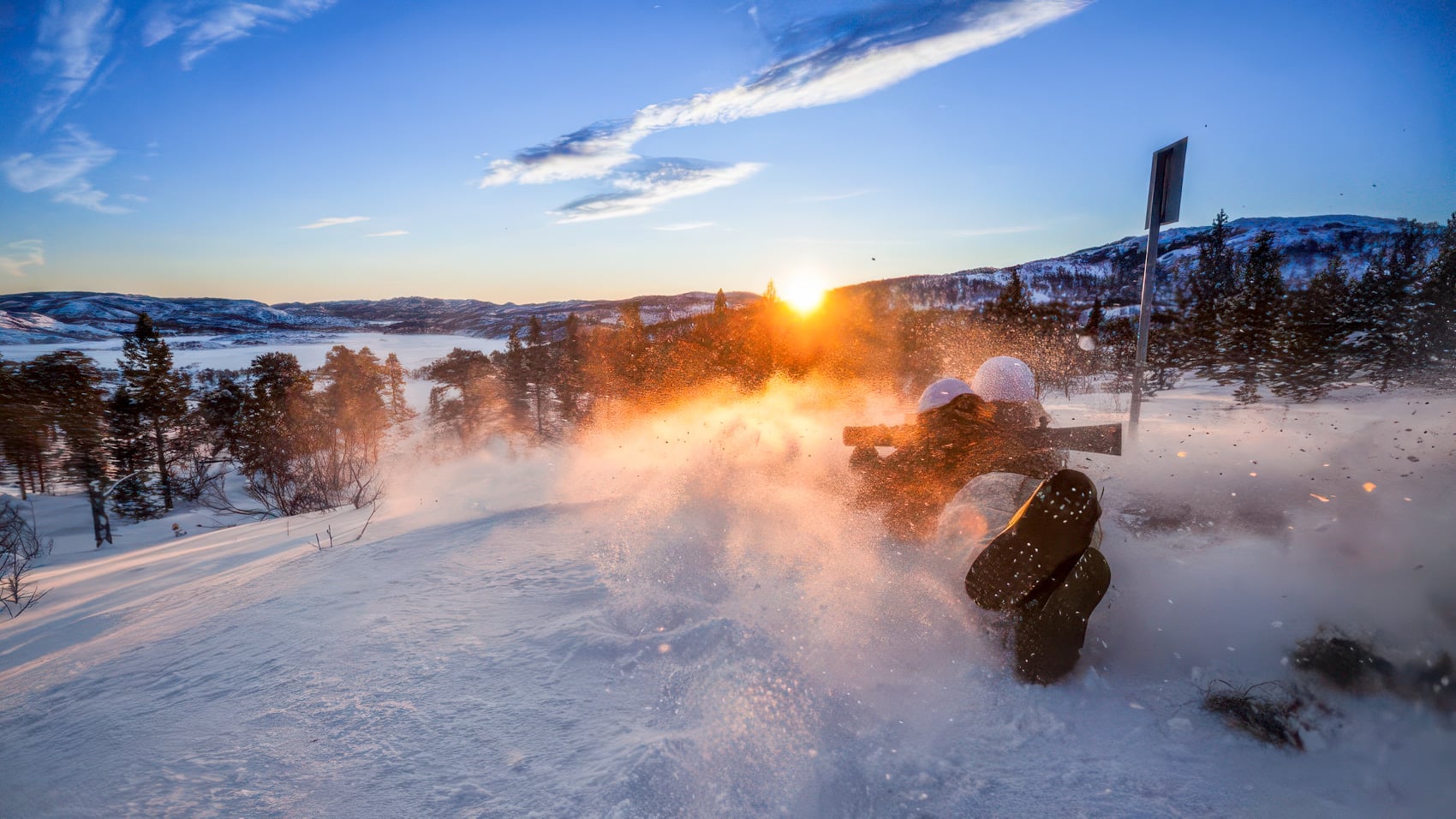
Norway’s Army chief, Major General Lars Lervik, confirmed to Defense News that Cold Response incorporated not just surveillance drones but also attack drones and unmanned ground robots tested in ground-to-ground and air-to-ground roles.
One Norwegian unit flew a self-built FPV assembled from commercially procured parts, configured as a one-way attack drone carrying explosives to test range and terminal performance.
The U.S. Marines brought an experimental FPV developed by Johns Hopkins University and flew it in force-on-force scenarios specifically to develop both strike skills and counter-drone tactics simultaneously.
The Arctic battlefield, if it ever comes, will look like Ukraine but colder and with longer distances between positions. Poster Boy said the drone systems being evaluated now will be increasingly relevant across vast stretches of icy terrain, which is the kind of understatement that only makes sense once you’ve seen what 250 miles of Norwegian wilderness actually looks like in March.
DroneXL’s Take
Strip away the press release language: this story is about the gap between what drone sensors can theoretically detect and what a skilled, disciplined soldier can actually hide from them when he uses terrain correctly.
The quinzhee isn’t a cute historical footnote. It’s a serious tactical tool that is beating current drone sensor suites precisely because it exploits the physics of snow in ways that thermal cameras struggle to compensate for.
The Ukrainians are learning similar lessons in real time, at enormous cost. The Norwegians are teaching those lessons in controlled conditions, with allies watching, before the cost goes up.
I find the DJI editorial position worth applying here. The Skydio X10D is a genuinely capable platform with real software advantages, an American supply chain, and appropriate security credentials for NATO use.
It’s also a drone that struggled in the same Arctic conditions it was purchased to operate in. That’s not a disqualifying observation. It’s an honest one. Cold weather is hard on batteries and propellers regardless of who makes them, and any drone program operating above the Arctic Circle needs to account for the performance ceiling that physics imposes.
The broader lesson from Cold Response 2026 is one the drone industry should be paying attention to: the best counter-drone technology currently available to a soldier hiding in the Norwegian woods is a pile of snow and the discipline to stay still.
Until sensors and processing improve enough to reliably separate a body-temperature human inside an insulated snow dome from the ambient thermal noise of an Arctic environment, the quinzhee wins.
Photo credit: SAAB, Elisabeth Gosselin-Malo, Skydio.
Discover more from DroneXL.co
Subscribe to get the latest posts sent to your email.
Check out our Classic Line of T-Shirts, Polos, Hoodies and more in our new store today!

MAKE YOUR VOICE HEARD
Proposed legislation threatens your ability to use drones for fun, work, and safety. The Drone Advocacy Alliance is fighting to ensure your voice is heard in these critical policy discussions.Join us and tell your elected officials to protect your right to fly.

Get your Part 107 Certificate
Pass the Part 107 test and take to the skies with the Pilot Institute. We have helped thousands of people become airplane and commercial drone pilots. Our courses are designed by industry experts to help you pass FAA tests and achieve your dreams.

Copyright © DroneXL.co 2026. All rights reserved. The content, images, and intellectual property on this website are protected by copyright law. Reproduction or distribution of any material without prior written permission from DroneXL.co is strictly prohibited. For permissions and inquiries, please contact us first. DroneXL.co is a proud partner of the Drone Advocacy Alliance. Be sure to check out DroneXL's sister site, EVXL.co, for all the latest news on electric vehicles.
FTC: DroneXL.co is an Amazon Associate and uses affiliate links that can generate income from qualifying purchases. We do not sell, share, rent out, or spam your email.