Luke Bell’s Solar Drone V2 Crashes Again After 2.5 Minutes — But the Engineering Keeps Getting Sharper
Check out the Best Deals on Amazon for DJI Drones today!
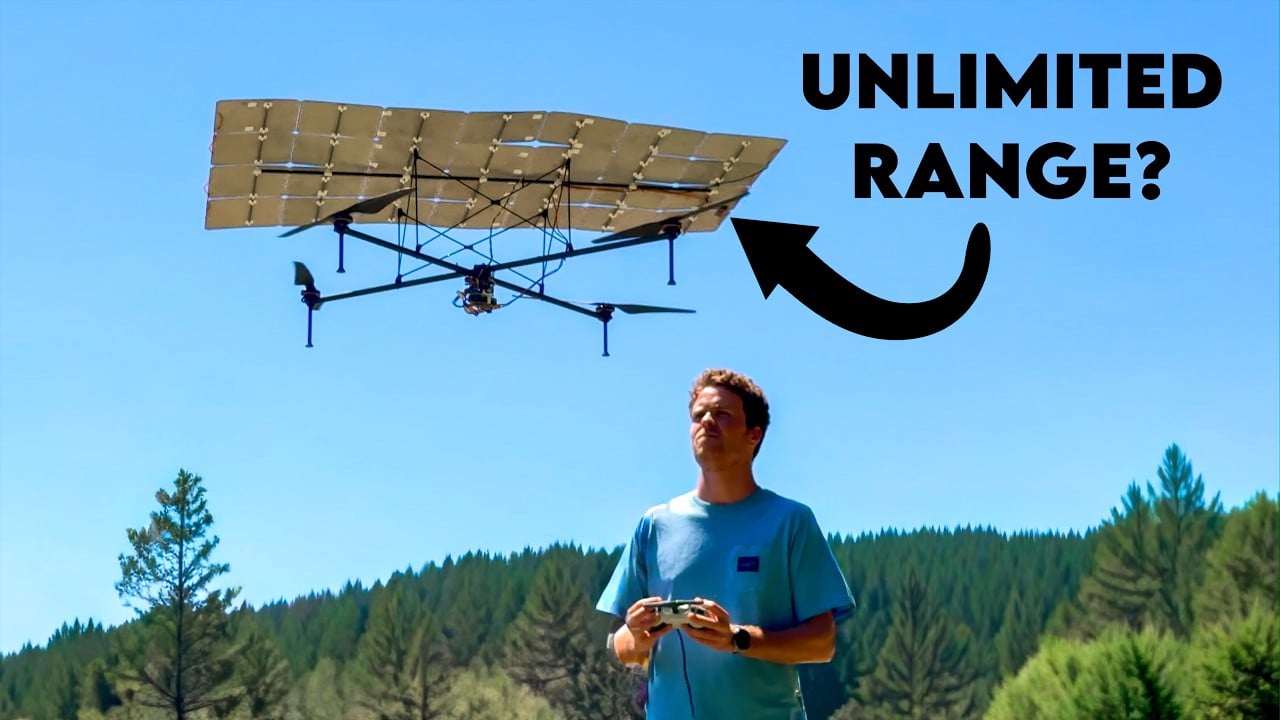
The panel array is 32 hand-soldered photovoltaic cells wired in an 8×4 grid across a carbon fiber frame — and it still can’t stay in the air long enough to grab lunch. That’s where Luke Bell’s solar drone project stands right now, and it’s one of the more honest engineering stories in drone development today. No clean success reel. Just broken landing legs, a crashed V2, and a redesigned circuit that might finally fix the core problem.

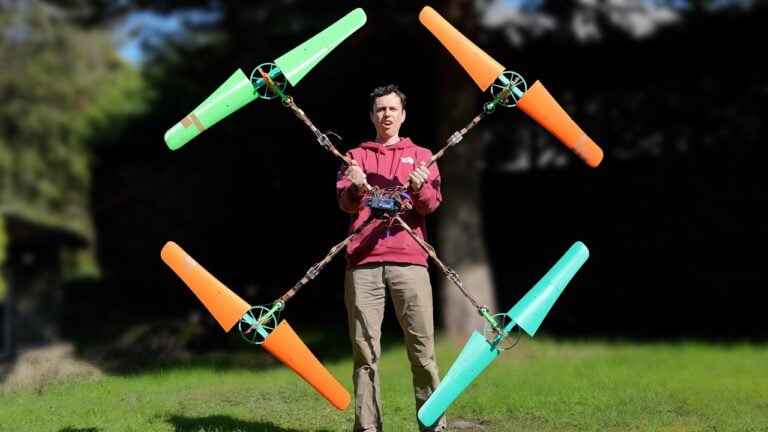
- The Development: Luke Bell — the South African engineer behind the Peregreen speed record quadcopters — has completed Version 2 of his solar drone build, documenting the full design process, two crash landings, and a hardware fix in a new video.
- The Problem: V2 flew for just 2.5 minutes before crashing, matching the V1 result. Wind gusts in Cape Town overwhelmed the fragile panel array and caused a voltage collapse in the solar power supply.
- The Fix: Bell added a small lithium-ion buffer battery with diodes to take over power delivery when solar output drops suddenly, giving the drone a fighting chance against light wind.
- The Source: Bell published the full build and flight video on his YouTube channel, walking through every design decision in detail.
Version 2 Fixes the Structure, Not the Weather
The solar drone V2 is a redesigned multirotor that addresses the three main failure points from its predecessor: brittle panel mounting, high rotational inertia from long arms, and a solar array that collapses under sudden load. Bell trimmed the arms significantly, saving 70 grams — roughly 4 watts of power — and redesigned the TPU sleeves holding the carbon fiber tubes to give the foam tape a much larger bonding surface.
The panel situation from V1 was grim. Every cell was cracked or broken. The foam tape failed on the carbon fiber tubes because the contact area was too small. The new sleeve design wraps two per section, and the panels held through assembly. That’s already progress.
The full array uses 32 cells — later reduced to 28 after Bell stripped four panels to better match the battery voltage and cut wind drag. At full Cape Town summer sun, the array pushed 110 watts across six load resistors in ground testing. Bell was visibly surprised. Hover power sits around 70 watts, so the margin looked comfortable on paper.
It wasn’t comfortable in practice. GPS hold was weak — only 13 satellites locked instead of the usual 20 to 26. Cape Town’s unpredictable wind arrived anyway. The drone crashed after 2.5 minutes. A landing leg snapped. There was no spare.
The Real Culprit Was a Voltage Collapse, Not Wind Alone
Flight log data from the crash revealed a voltage drop from the solar array immediately before impact — a sharp, sudden collapse caused by panels being overloaded as the drone fought a gust. The motors demanded more current than the cells could sustain, the voltage cratered, and the ESCs lost power. The drone didn’t flip or lose control; it just ran out of electricity.
Bell’s fix is straightforward: five lithium-ion cells wired in series, connected to the power bus through diodes. In normal operation, the solar array charges the battery through excess voltage. When the array collapses, the diodes flip the current source automatically — the battery takes over, the ESCs stay powered, and the solar panels come back online as soon as conditions stabilize. Bell tested this on the bench with a power supply simulating the solar input. Switching the simulated sun off and on showed the battery picking up load at 59 to 60 watts with no interruption.
He later swapped the small cell pack for a larger one with a higher C rating, added a basic BMS for cell balancing and overcharge protection, and stiffened the panel frame’s center spar to reduce the flutter that was destabilizing the whole drone in light wind. The panels were also lowered closer to the propellers to bring the center of gravity down. Bell ran AirShaper CFD simulations to check whether the new panel position would hurt thrust, and concluded the loss was not meaningful.
This same AirShaper simulation workflow appeared in Bell’s endurance drone build, where he used it to compare five arm length configurations before settling on 800 mm as the most efficient option.
Solar Drone Endurance Is a Weather Problem as Much as an Engineering One
Bell moved his final test location from Cape Town to Stalenbos, a farm site surrounded by trees that blocks low-level wind. Cape Town in summer is, as Bell puts it, “pretty much as good as it gets” when calm — but calm doesn’t last. The window for a still, sunny morning in the region is narrow enough that he had a single day available across a two-week forecast. He built the entire panel array overnight to hit that window.
That constraint isn’t unique to amateur builds. Mira Aerospace’s ApusNeo18 solar HAPS platform operates at high altitude specifically to avoid lower-atmosphere turbulence. Airbus’s Zephyr holds a 64-day endurance record at 75,000 feet for the same reason. Fixed-wing geometry and high altitude solve the wind problem cleanly. A quadrotor trying to hover at ground level is fighting physics on two fronts at once.
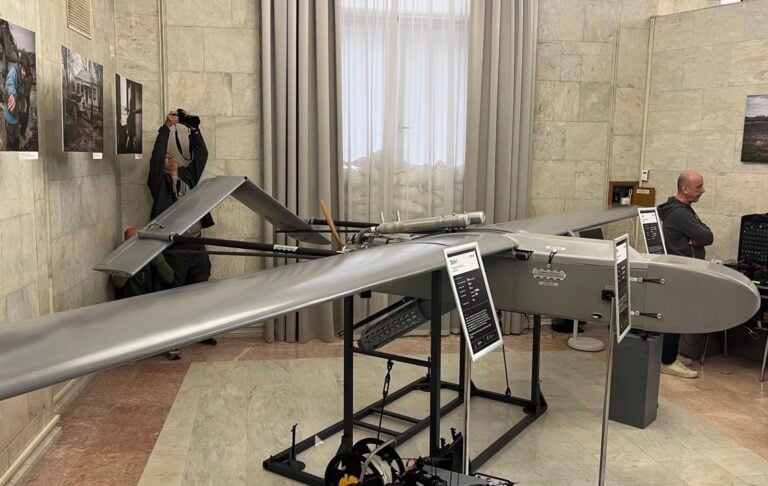
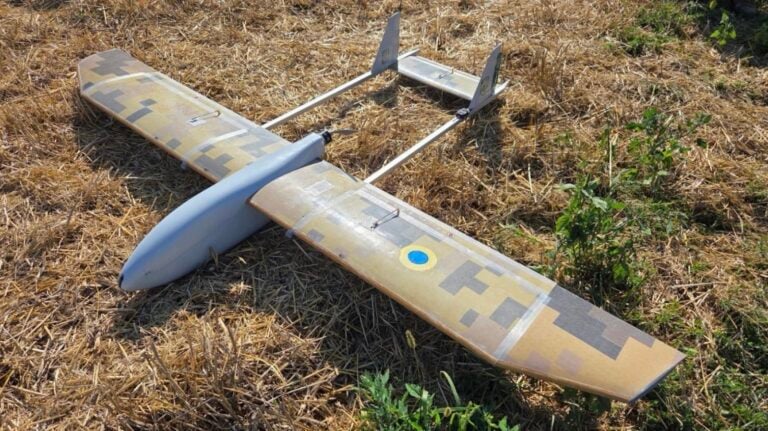
The military has noticed the same tradeoff. Russian FPV drones with solar cells spotted in Ukraine’s Kherson region are designed for stationary ambush, not dynamic hover — the cells extend loiter time while the drone sits still and waits. Motion is the enemy of solar efficiency at small scale.
The question of indefinite drone flight isn’t new. PowerLight Technologies explored laser-powered drone flight as an alternative path to the same goal. The physics differ, but the problem is identical: drones burn far more power than sunlight or beams can reliably deliver when turbulence, orientation, or cloud cover interrupt the energy source.
DroneXL’s Take
What I find genuinely interesting about this project is the gap between how it looks on paper and how it performs outside. The panels produced 110 watts in ground testing. Hover only needs 70. That sounds like a 57% power margin. In practice, a gust lasting a fraction of a second pulls peak current that collapses the whole array. Bell’s diode-and-buffer circuit is a smart patch, but it’s essentially an admission that solar panels alone can’t handle dynamic load demands from a quadrotor, even in light wind. That’s the core insight here, and it’s more valuable than any flight time number.
Bell’s engineering method is consistent whether he’s chasing 408 mph with the Peregreen V4 or trying to hover indefinitely on sunlight: test the bench circuit first, fly, crash, read the logs, fix one thing. It’s slow and unglamorous. It’s also exactly how you eventually get it right.
The move to Stalenbos is telling. Finding better geography is sometimes the only fix available. Bell can’t engineer away Cape Town’s wind, but he can choose a farm with a tree line. Expect V3 to fly somewhere with even more wind shelter — possibly indoors under artificial lighting, which would strip weather out as a variable entirely and prove the circuit design in isolation. If the buffer circuit holds under controlled conditions, the outdoor endurance attempt becomes a question of timing rather than hardware. Within the next two to three months, a solar drone flight exceeding 10 minutes is a reasonable target, assuming Bell gets a calm morning at Stalenbos.
Editorial Note: AI tools were used to assist with research and archive retrieval for this article. All reporting, analysis, and editorial perspectives are by Haye Kesteloo.
Discover more from DroneXL.co
Subscribe to get the latest posts sent to your email.
Check out our Classic Line of T-Shirts, Polos, Hoodies and more in our new store today!

MAKE YOUR VOICE HEARD
Proposed legislation threatens your ability to use drones for fun, work, and safety. The Drone Advocacy Alliance is fighting to ensure your voice is heard in these critical policy discussions.Join us and tell your elected officials to protect your right to fly.

Get your Part 107 Certificate
Pass the Part 107 test and take to the skies with the Pilot Institute. We have helped thousands of people become airplane and commercial drone pilots. Our courses are designed by industry experts to help you pass FAA tests and achieve your dreams.

Copyright © DroneXL.co 2026. All rights reserved. The content, images, and intellectual property on this website are protected by copyright law. Reproduction or distribution of any material without prior written permission from DroneXL.co is strictly prohibited. For permissions and inquiries, please contact us first. DroneXL.co is a proud partner of the Drone Advocacy Alliance. Be sure to check out DroneXL's sister site, EVXL.co, for all the latest news on electric vehicles.
FTC: DroneXL.co is an Amazon Associate and uses affiliate links that can generate income from qualifying purchases. We do not sell, share, rent out, or spam your email.