
Ukraine’s Drone Kill Zone Triples in Size as Deep Strike Command Centre Reshapes the War

Check out the Best Deals on Amazon for DJI Drones today!
Ukraine’s drone campaign is strangling Russian front-line logistics at a scale that wasn’t possible even a few weeks ago. Writing in The Telegraph, journalist Verity Bowman reports that Ukrainian drones can now strike targets up to 93 miles behind the front line, compared to roughly 31 miles previously. That threefold expansion of the so-called kill zone is not an accident. It is the direct result of a systematic campaign to destroy the Russian air defense and electronic warfare systems that previously kept Ukrainian drones closer to the line of contact.
At the center of this shift is Ukraine’s newly created Deep Strike Command Centre, stood up in early 2026 by the Unmanned Systems Forces to coordinate strikes deep into Russian-held territory. Experts describe its founding as Ukraine’s formal transition to network-centric warfare, where shared real-time data replaces massed troop movements as the engine of battlefield effect.
The Kill Zone Is Now a Logistics Catastrophe for Russia
The kill zone is the area behind the front line where Ukrainian drones can strike troops, vehicles, and supply lines with enough regularity to make movement dangerous or impossible. At 93 miles deep, it now covers terrain Russian commanders previously treated as safe staging ground.
Kateryna Stepanenko, Russia team lead at the Institute for the Study of War, told The Telegraph: “It is becoming much more systematic. Based on geo-located footage we are observing and frequent reports from Ukrainian officials about successful strikes — not just precision strikes against vehicles travelling along roads, but also attacks on Russian drone positions, assembly areas, storage facilities and other key targets.”
The strategic goal is straightforward and brutal: force Russian troops to walk to the front. If vehicles cannot move safely, soldiers have to cover those distances on foot, arriving exhausted and carrying less. Over time, that erodes their ability to hold defensive lines, let alone mount offensive pushes.
Russian war bloggers on Telegram are not hiding what’s happening. “The enemy has once again taken control of the ‘lower sky,'” one wrote. “The situation is difficult.”

Nemesis Heavy Bombers Cleared the Sky for Lighter Drones
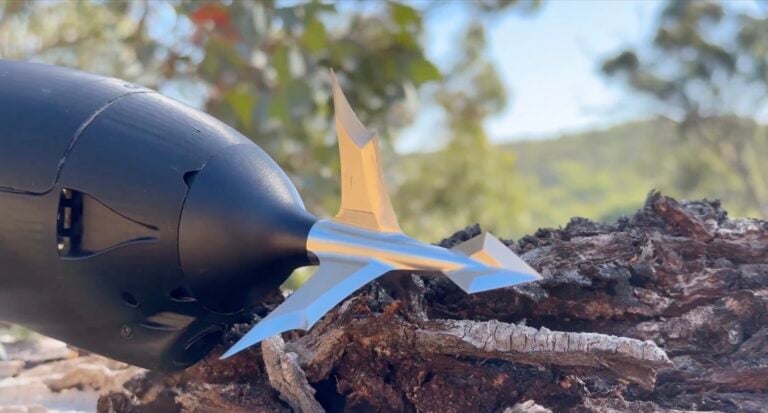
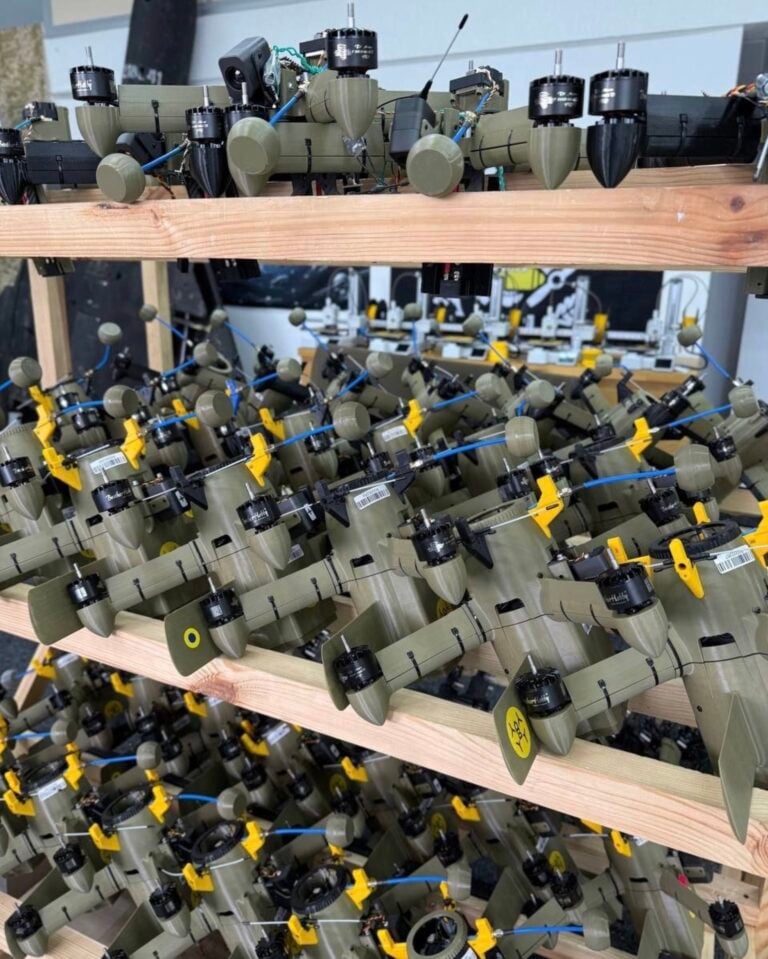
The campaign’s opening phase targeted the systems protecting Russian airspace — and it worked. Ukraine deployed heavy bomber drones, led by the Nemesis, a Ukrainian-developed attack platform that Russian troops call “Baba Yaga” after the Slavic folkloric figure, because of how silently it hunts at night.
Nemesis and similar heavies have been systematically hitting Russian Buk, Tor, and Pantsir-S1 air defense installations. With those systems gone or degraded, lighter FPV drones — the kind most vulnerable to electronic jammers — can now fly farther and deeper without being intercepted. We covered the economics of this approach back in January 2025 in Night Hunters: How Ukraine’s $20K Drones Are Reshaping Modern Warfare. The math hasn’t changed; the execution has just gotten more precise.
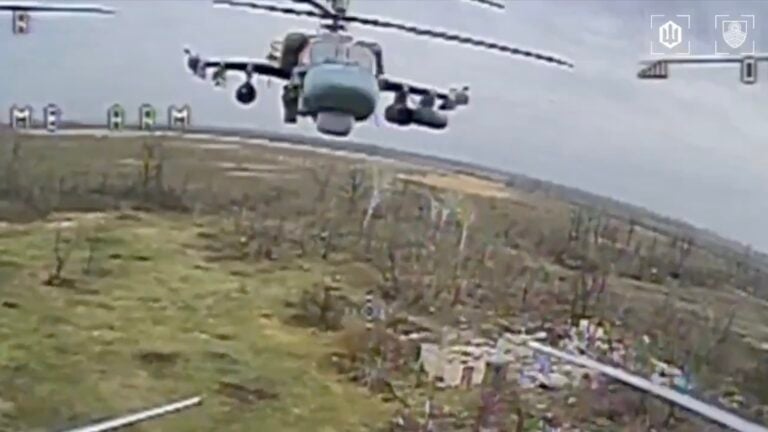
The destruction of those air defense assets is also forcing Russia into improvisation. Dimko Zhluktenko, a soldier and analyst with Ukraine’s 413th Unmanned Systems Regiment, told The Telegraph that some Russian units have stripped multi-barrel machine-gun mounts from old Soviet attack helicopters and installed them on improvised gun trucks to fight drones. That’s not adaptation. That’s desperation.
A Feedback Loop Is Driving Rapid Technological Evolution
Ukraine is not just flying more drones — it is learning faster than Russia can counter. Anton Zemlianyi, senior analyst at the Ukrainian Security and Co-operation Centre, described a continuous cycle: battlefield data feeds back to engineers, who update drone systems, communication links, and control frequencies to stay ahead of Russian jamming.
This is the same dynamic we reported on in March when we covered Fedorov’s managed-access AI training dataset initiative, which aims to make that feedback loop faster by giving Ukrainian defense companies access to geo-tagged battlefield footage without releasing the underlying data. Many of Ukraine’s heavy bombers now carry machine learning or artificial intelligence targeting capabilities, according to Stepanenko, and the range of lighter drones keeps climbing. FirePoint, one of Ukraine’s top long-range strike drone manufacturers, was producing 200 drones per day as of March, across seven generations of navigation systems, with the current generation GPS-independent.
Starlink disruptions are also hurting Russian drone operators. When connectivity drops, operators have to physically move into the open, climbing trees or attaching equipment to lamp posts to maintain control signals — exposing themselves in the process.
Zhluktenko put it plainly: “Russia is losing crazy amounts of rare air defence systems, radars, and there is no way to quickly replenish them.”
Network-Centric Warfare Has Arrived, and Ukraine Built It Under Fire
The Deep Strike Command Centre is Ukraine institutionalizing what it has learned since 2022 — making the coordination of drone strikes a command function rather than a unit-level improvisation. Experts say this mirrors the network-centric doctrine that Western militaries have theorized about for decades but never had to test at this pace or scale.
In February, we reported that a NATO Hedgehog exercise showed 10 Ukrainian drone operators effectively neutralizing two full battalions in a single day. The Deep Strike Command Centre scales that same competence across an entire theater. The integration of armed ground robots into Ukraine’s unmanned systems force adds another layer that Russian doctrine has no established answer for.
Successful drone operations have been confirmed along the Zaporizhzhia and Donetsk front lines, with specific gains reported around Dobropillia, Huliaipole, Kupiansk, Petrovske, and Kostiantynopil.
DroneXL’s Take
I’ve been tracking Ukraine’s drone warfare evolution since the early days of the invasion, and what’s happening now is qualitatively different from what we saw even six months ago. The kill zone tripling in size is the headline number. Behind it is the payoff from a patient, sequenced campaign — first destroy the defenses, then fly the drones. That’s not improvisation anymore. That’s doctrine.
When Nolan Peterson wrote in March that our billion-dollar bases are no longer safe from $20,000 drones, the argument felt theoretical to some readers. Ukraine’s Deep Strike Command Centre is the live proof. The same logic — cheap, networked, AI-assisted systems defeating expensive conventional defenses — applies whether you’re in Donetsk or in the Pacific.
The Nemesis targeting Russian Pantsir and Buk systems is not just a battlefield win. It shows that purpose-built, relatively low-cost platforms can systematically dismantle the air defense layers that trillion-dollar conventional militaries have spent decades building. Every NATO defense planner should be studying this campaign in detail.
Russia cannot replenish Buk and Pantsir systems on the timeline Ukraine is destroying them. If the current rate of attrition holds through the summer of 2026, Russian forces in Zaporizhzhia and Donetsk will be operating with air defense coverage so thin that even medium-range commercial-derivative drones will fly largely unchallenged. That outcome alone changes the ground equation more than any infantry advance.
DroneXL uses automated tools to support research and source retrieval. All reporting and editorial perspectives are by Haye Kesteloo.
Discover more from DroneXL.co
Subscribe to get the latest posts sent to your email.
Check out our Classic Line of T-Shirts, Polos, Hoodies and more in our new store today!

MAKE YOUR VOICE HEARD
Proposed legislation threatens your ability to use drones for fun, work, and safety. The Drone Advocacy Alliance is fighting to ensure your voice is heard in these critical policy discussions.Join us and tell your elected officials to protect your right to fly.

Get your Part 107 Certificate
Pass the Part 107 test and take to the skies with the Pilot Institute. We have helped thousands of people become airplane and commercial drone pilots. Our courses are designed by industry experts to help you pass FAA tests and achieve your dreams.

Copyright © DroneXL.co 2026. All rights reserved. The content, images, and intellectual property on this website are protected by copyright law. Reproduction or distribution of any material without prior written permission from DroneXL.co is strictly prohibited. For permissions and inquiries, please contact us first. DroneXL.co is a proud partner of the Drone Advocacy Alliance. Be sure to check out DroneXL's sister site, EVXL.co, for all the latest news on electric vehicles.
FTC: DroneXL.co is an Amazon Associate and uses affiliate links that can generate income from qualifying purchases. We do not sell, share, rent out, or spam your email.








![Review And Rewrite This Article For Publication. Do All Of The Following: 1. Fact-Check: Verify Dates, Locations, Quotes, Agency Names, And Acronyms. Mark Anything Uncertain With [Verify]. Did The Article Reference And Link To The Original Source? Flag If Missing. 2. Devil'S Advocate: In 3–4 Sentences, Assess Whether The Article Is Factually Sound, Well-Written, And Reads As Human. Be Blunt. 3. Humanize: Fix All Ai Patterns — Break Parallel Sentence Pairs, Remove Em-Dashes Used As Dramatic Pauses, Cut Redundant Consecutive Sentences, Remove Rhetorical Counting Devices. Strip These Words: Crucial, Vital, Key, Significant, Notably, Importantly, Essentially, Arguably, Landscape, Ecosystem, Trajectory, Transformative, Game-Changer, Groundbreaking, Unprecedented, Cutting-Edge, Robust, Seamless, Leverage (Verb), Utilize, Going Forward, In Conclusion, In Summary. Vary Sentence Length. Make The Take Section One Editor'S Sharp Opinion, Not A Summary. 4. Seo: Give 5 Alternative Title Ideas, A Permalink Slug, And A Meta Description (Under 155 Characters). Output Order: Devil'S Advocate Assessment → Revised Article With [Verify] Flags → Seo Block.](https://dronexl.co/wp-content/uploads/2025/02/DJI-Dock-3-and-Matrice-4D-and-4TD-Usher-in-Versatile-Drone-in-a-Box-Solution-for-Remote-Operations-0022.jpg.webp)
