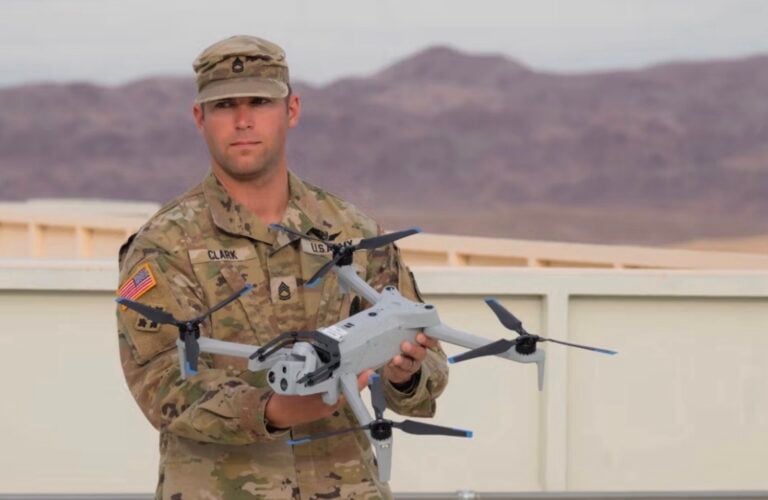
BRINC Launches Guardian Drone With Starlink and New Seattle Factory to Scale 911 Response
Check out the Best Deals on Amazon for DJI Drones today!
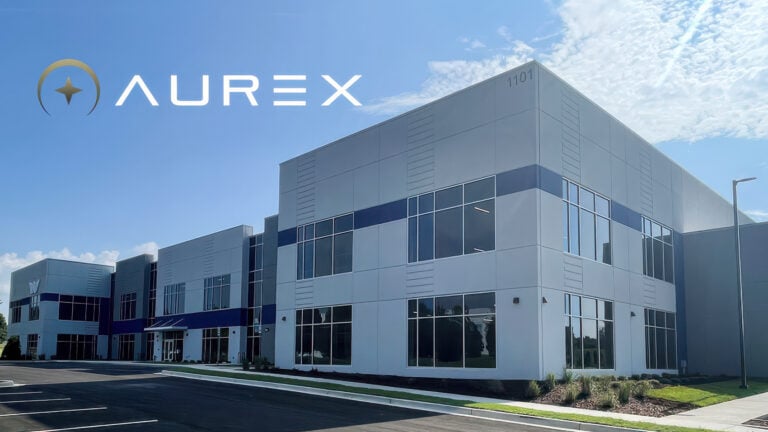
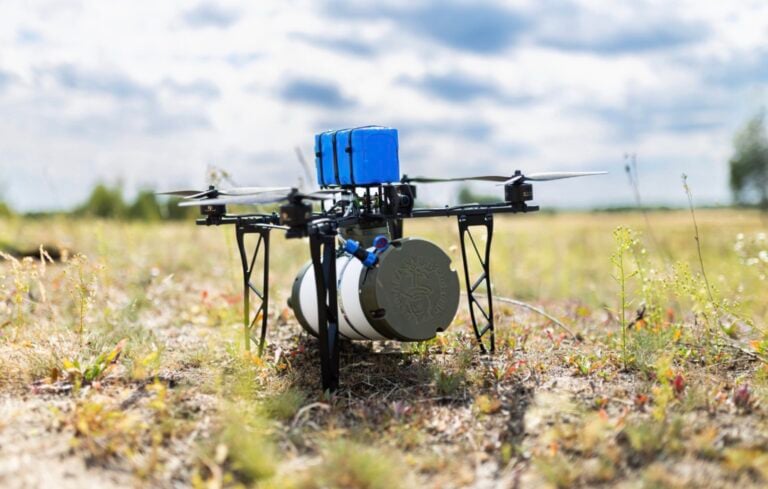
BRINC today unveiled the Guardian, its next-generation Drone as First Responder (DFR) platform, alongside a new Seattle manufacturing facility that more than doubles the company’s production footprint.
According to the Seattle-based company, Guardian is the world’s first Starlink-connected drone built for 911 response, capable of reaching incidents up to eight miles away, more than double the three-mile ceiling of current non-DJI DFR platforms. The announcement, made March 24, 2026, pairs a major hardware leap with a factory expansion driven by what BRINC says was a tripling of revenue and a fivefold increase in monthly production capacity in 2025 alone.
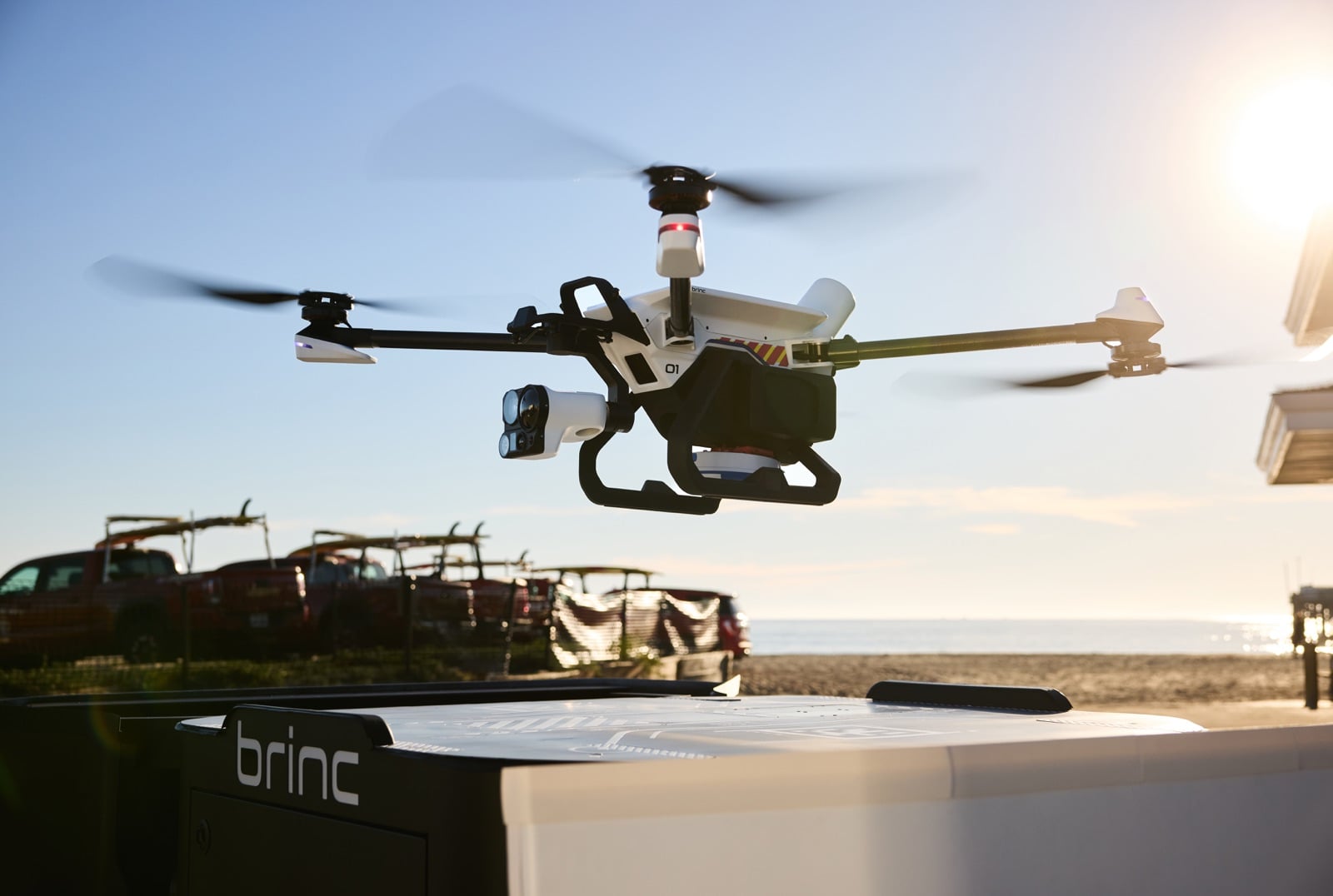
The timing is deliberate. BRINC raised $75 million in April 2025, backed by Motorola Solutions and Index Ventures, and has since been building toward this product. Guardian and Guardian Station (its robotic charging nest) deliver what BRINC calls true 24/7 readiness without human intervention: the station automatically swaps batteries and reloads payloads between missions, something no current DFR platform does. Existing systems must charge for at least 25 minutes between flights. Guardian Station eliminates that gap entirely.
Eight Miles, 62 Minutes, Starlink: What Guardian Can Actually Do
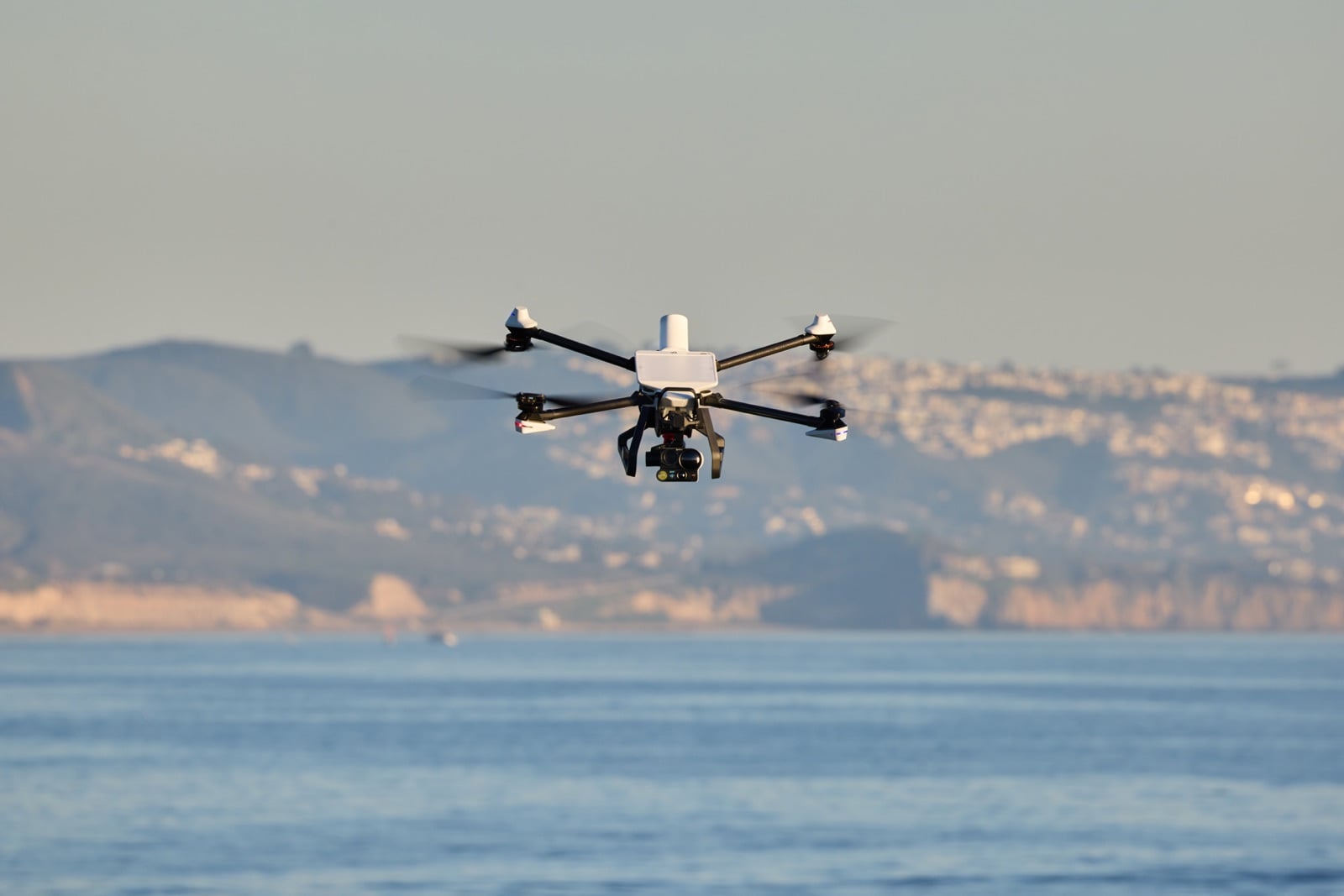
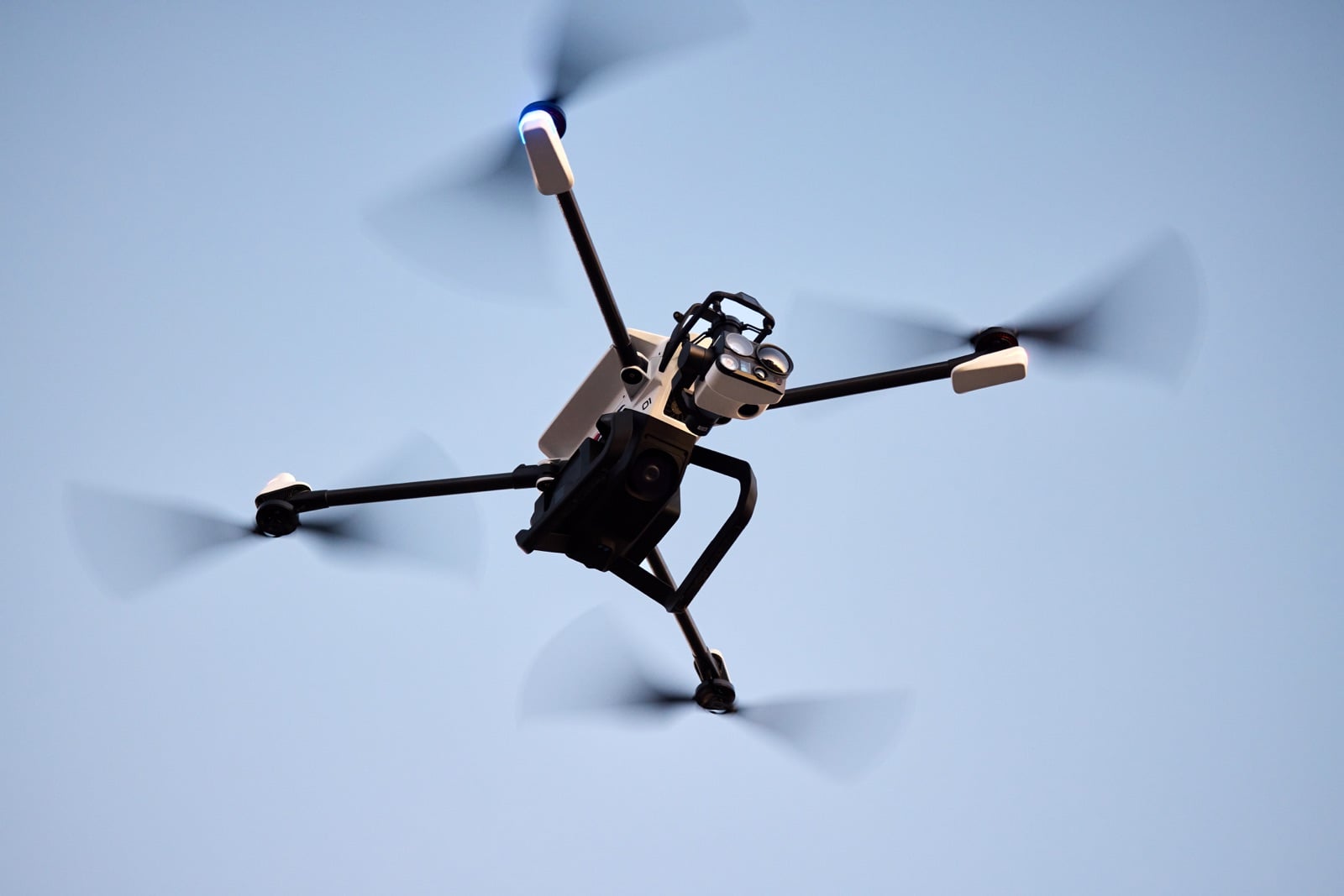
Range and endurance are where Guardian makes the most aggressive claims against the field. At eight miles, it dwarfs current non-DJI DFR drones limited to three miles by speed and connectivity constraints. BRINC lists flight time at 62 minutes (manufacturer-specified; endurance with payloads loaded has not been independently confirmed), with IP55 weather resistance built for the rain-soaked Pacific Northwest and the humid Gulf Coast communities now running BRINC platforms. The integrated Starlink satellite panel means Guardian maintains a reliable data link wherever terrestrial cellular or radio infrastructure is unavailable or overwhelmed, a common failure point during major incidents.
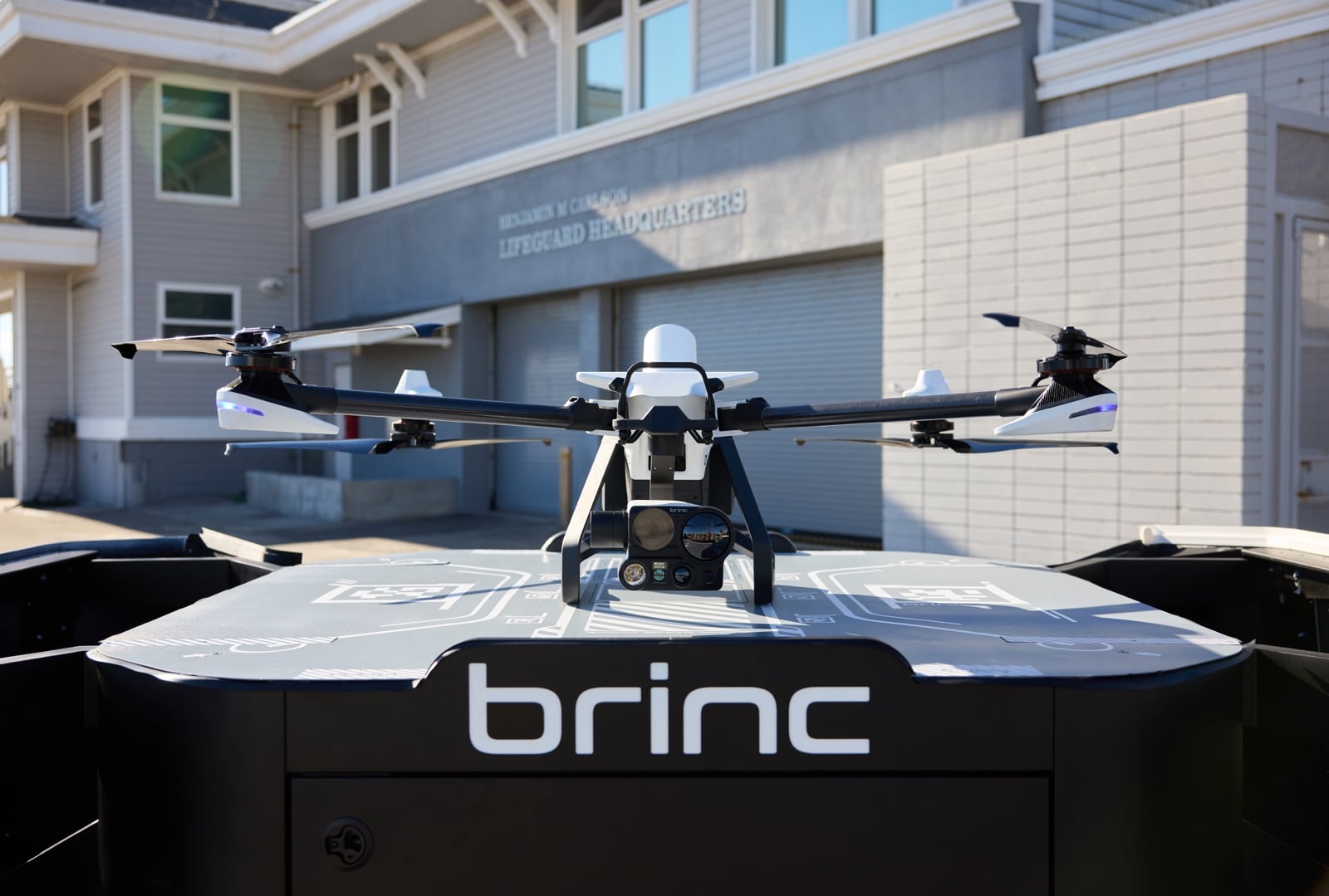
Look at the Guardian Station photo closely and you can see how the engineering philosophy materializes in hardware: the drone sits flush inside a weatherproof nest, every surface purpose-built for rapid autonomous deployment rather than adapted from a consumer design. The carbon-black frame, the low-drag motor mounts, the deliberate absence of anything decorative. The form follows a function that BRINC has been refining since first teasing the platform at IACP Boston in October 2024, where CEO Blake Resnick declined to confirm specifications but described it as the drone he had wanted to build for a decade.

Guardian’s Camera System Redefines What a Public Safety Drone Can See
The imaging payload is where Guardian separates itself most clearly from everything currently in the DFR market. The camera module visible in the press photos is a dense, purpose-built array. Count the lenses: there are at least six optical elements visible on the front face alone, including what appears to be a primary telephoto, a wide fisheye, and several smaller sensors arrayed beneath. This is not a single-sensor gimbal.
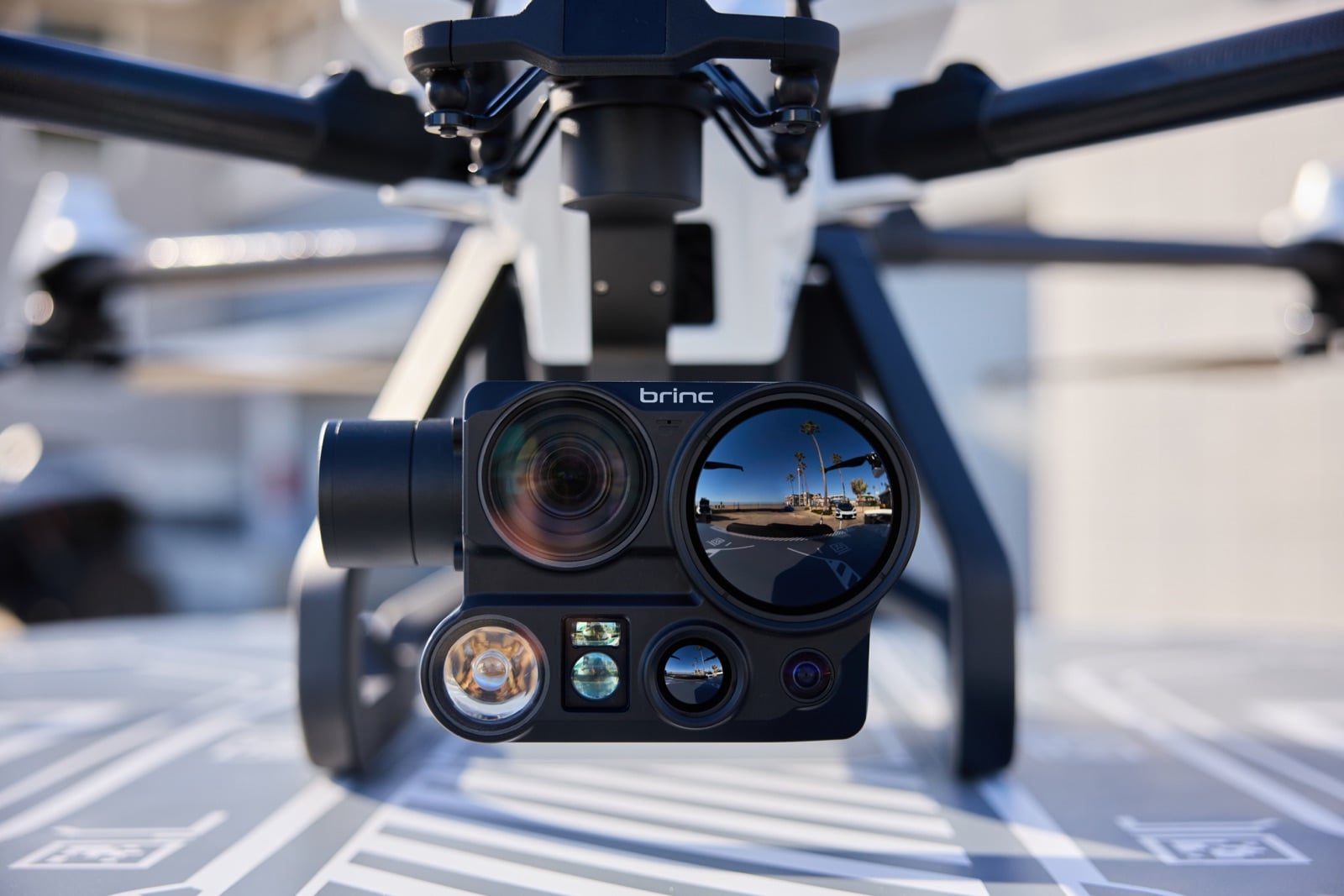
BRINC specs the main camera at 4K video with 640x total zoom, enough to deliver a usable image from over a thousand feet in the air. At that magnification level, operators can identify individuals, read markings, and assess what subjects are holding at distances that keep the aircraft well outside the immediate incident perimeter. The Dual HD thermal zoom cameras are what BRINC describes as a first for a drone of this size class. Most DFR platforms at this weight tier carry a single fixed-focal thermal sensor. The ability to zoom thermally changes search-and-rescue geometry. A missing child, a suspect hiding in a drainage ditch, a fire victim in a smoke-filled building: thermal zoom tracks heat signatures at distance rather than forcing the drone to descend into the risk envelope to confirm what it is looking at.
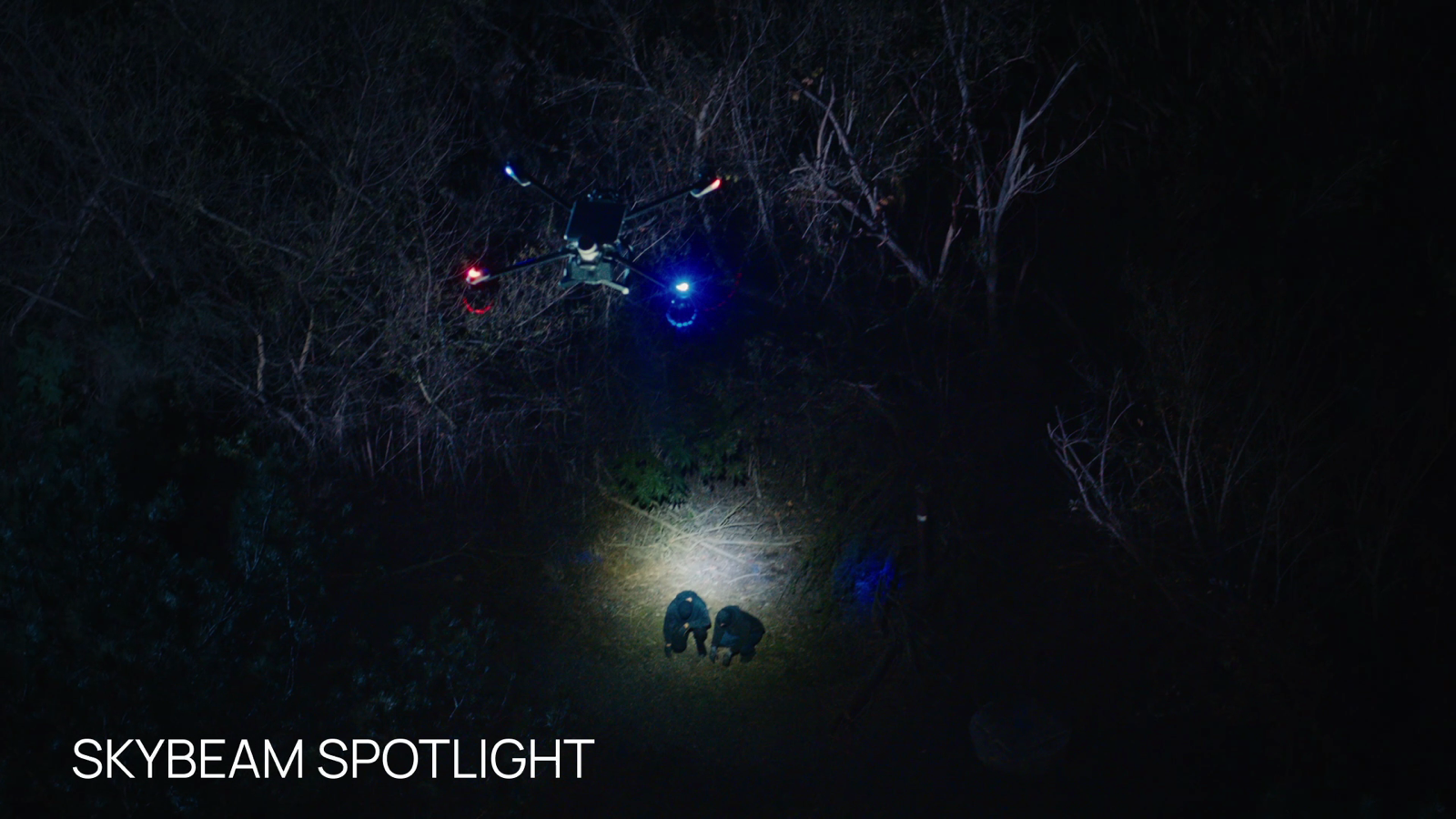
The 1,000-lumen SkyBeam spotlight integrated into the payload module gives ground teams a visual reference point at night, critical for coordinating units navigating on foot toward an active scene. The built-in laser rangefinder feeds precise distance data to the operator. The speaker and siren system outputs at three times the decibel level of a police car, which matters during vehicle pursuits: Guardian can position above a fleeing car, broadcast direct verbal commands, and maintain a top-down track that ground units follow on their screens. A ground officer navigating city streets cannot see around corners. Guardian can.
Guardian Station Eliminates the Downtime That Cripples Current DFR Programs
The battery-swapping architecture is the operational breakthrough the spec sheet undersells. Current DFR drones return to their nest after each flight and sit on a contact charger for a minimum of 25 minutes before they can fly again. For a single-incident call that resolves in 15 minutes, that gap is irrelevant. For an active shooter event, a multi-car pursuit, or a flooding emergency with multiple simultaneous calls, it means the drone is unavailable during the window it matters most.
Guardian Station robotically swaps the battery and loads the appropriate payload automatically based on the incoming call type. An overdose call dispatches Guardian with Narcan already loaded before the drone leaves the dock. A water rescue loads a flotation device. A cardiac arrest loads an AED. The dispatcher sees the call, the system identifies the payload, and Guardian lifts off with the right equipment without a human physically touching the drone between missions. BRINC’s LiveOps software, integrated with Motorola Solutions’ CommandCentral Aware platform, handles that dispatch logic. The Assist AI embedded in CommandCentral can parse 911 call keywords (“heart attack,” “allergic reaction,” “not breathing”) and determine which payload Guardian should carry before the call is even assigned to a unit.
Motorola Solutions Is the Distribution Engine Behind Guardian’s Rollout
Motorola Solutions serves as the exclusive North American reseller for Guardian, a relationship formalized through the strategic alliance announced alongside BRINC’s $75 million funding round last April. The significance of that channel partnership cannot be overstated: Motorola already has procurement relationships with virtually every public safety agency in the United States. An agency that already buys Motorola radios and runs CommandCentral does not need a separate vendor evaluation, a separate integration project, or a separate budget line for BRINC. Guardian arrives as an extension of infrastructure they already own.
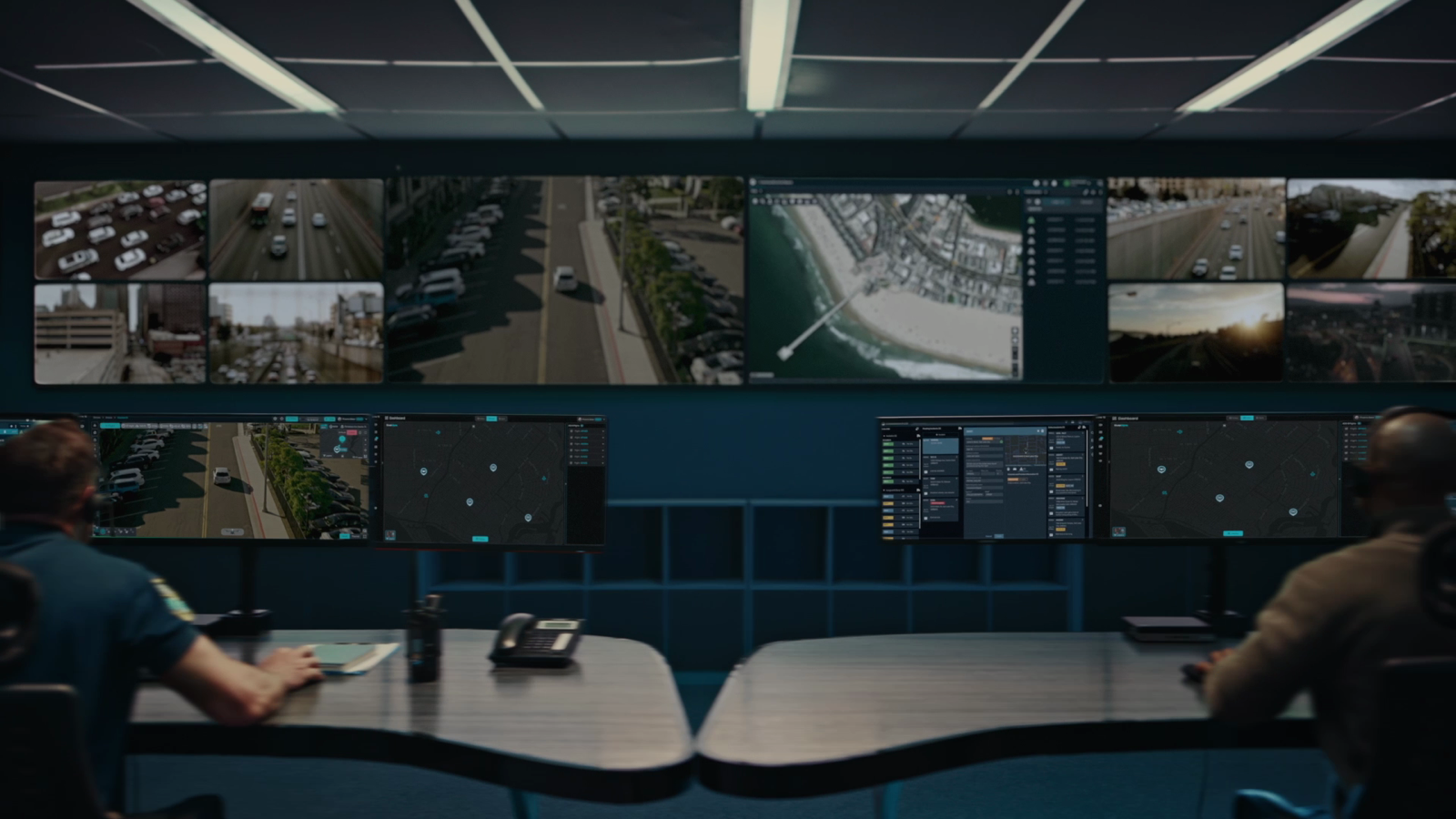
Jeremiah Nelson, Corporate Vice President at Motorola Solutions, confirmed the scope of the integration: agencies will be able to get eyes on a scene before the first unit arrives, store drone footage directly in Motorola’s integrated digital evidence management software, and push Guardian dispatches directly from APX NEXT smart radios when an officer activates the emergency button. An officer in distress triggers a drone, not a radio call that waits for dispatch acknowledgment. That latency reduction alone could be the margin between a recoverable situation and a fatality.
The New Seattle Factory Scales American Drone Manufacturing
The factory announcement sits alongside the product launch for a reason. Guardian’s Starlink integration, the dual thermal zoom cameras, the automated payload system: none of that ships at volume from a facility that was already at capacity before BRINC tripled its revenue in 2025.
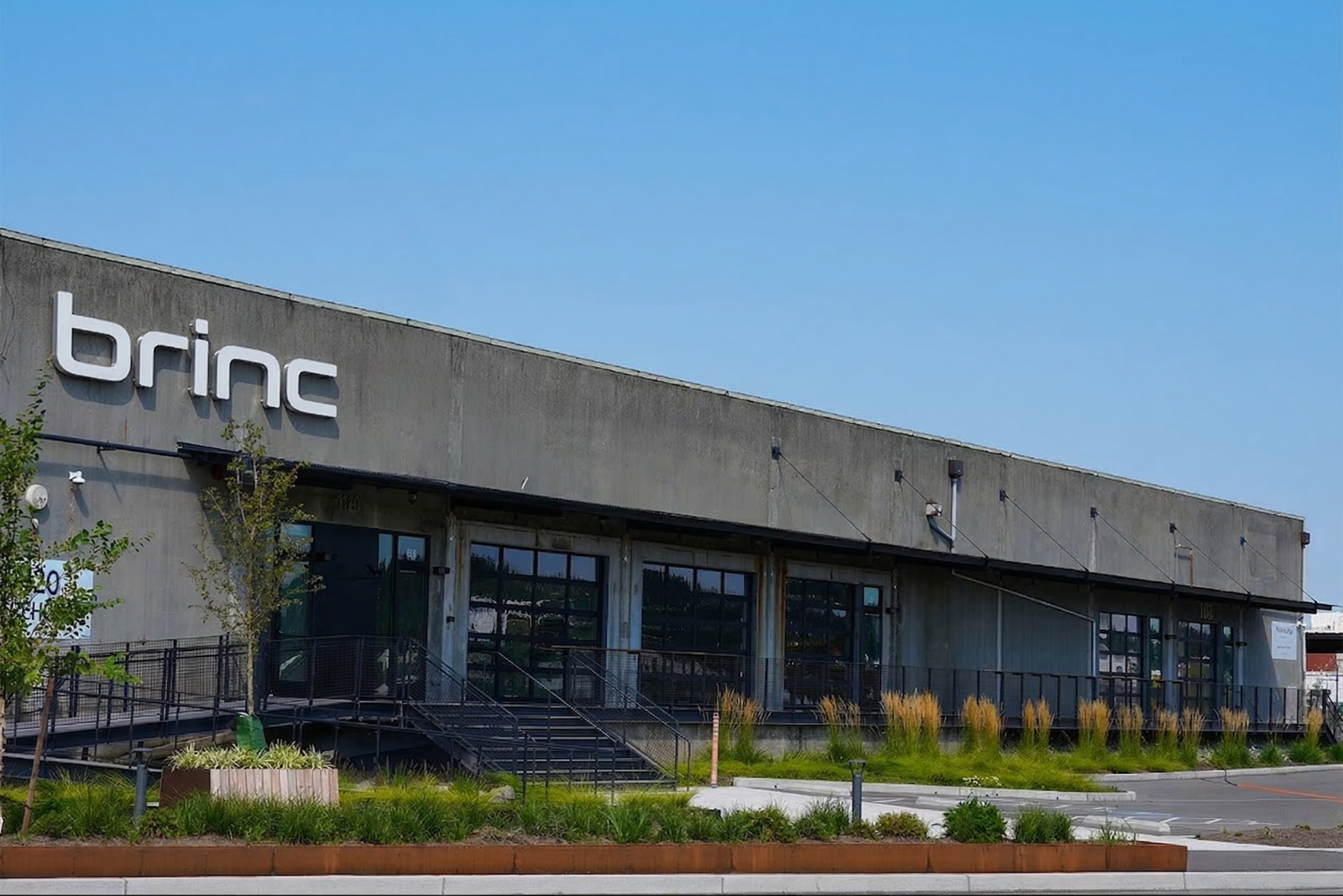
The new Seattle location more than doubles the production footprint and keeps engineering co-located with manufacturing, which is how the company has maintained its supply chain since founding. BRINC says no critical components are sourced from China and that it controls the entirety of its supply chain domestically. The company’s response to being placed on China’s “unreliable entity” list in late 2024 was a shrug: the supply chain architecture was already built to be resilient before the geopolitical pressure arrived.
“Co-locating manufacturing and engineering in Seattle has been a strategic advantage for BRINC,” said Blake Resnick, Founder and CEO. “We’ve outgrown our previous facility, and this investment allows us to scale production rapidly while remaining fast, focused, and vertically integrated. As demand for 911 response drones accelerates, we’re committed to building that capability here in the United States.”

More than 900 public safety agencies currently use BRINC products. Over 20% of SWAT teams in the US run BRINC platforms. Newport Beach committed $2.17 million to a BRINC DFR network earlier in 2025. The demand that justified the new factory is already on the books. Guardian gives BRINC’s existing customer base a compelling upgrade path, and it gives the agencies that Resnick estimates still represent about 80% of US public safety and are running Chinese-manufactured hardware a harder conversation to avoid.

Guardian Full Specifications
| Specification | Guardian |
|---|---|
| Flight Time | 62 minutes (manufacturer-specified) |
| Operational Range | 8 miles (vs. 3-mile limit of current DFR platforms) |
| Weather Resistance | IP55 |
| Connectivity | Integrated Starlink satellite panel |
| Main Camera | 4K video, 640x total zoom |
| Thermal Cameras | Dual HD thermal zoom (first on a drone this size) |
| Spotlight | 1,000-lumen SkyBeam integrated |
| Rangefinder | Built-in laser rangefinder |
| Audio | Speaker/siren 3x louder than a police car |
| Readiness System | Guardian Station: autonomous battery swap + payload loading |
| Supported Payloads | AEDs, flotation devices, Narcan, EpiPens, and more |
| Dispatch Integration | Motorola Solutions CommandCentral Aware, Assist AI, APX NEXT radio |
| Manufacturing | United States (Seattle, WA), NDAA compliant |
DroneXL’s Take
When I spoke with Blake Resnick at IACP Boston in October 2024, he wouldn’t confirm a single Guardian spec. What he did say, repeatedly, was that the current generation of DFR drones was limited by three things: camera capabilities, connectivity, and contact charging. He described Guardian as the answer to all three, and having now seen the full spec sheet, he wasn’t exaggerating. This is the one of the most capable purpose-built public safety drone anyone has put into production.
The Starlink integration is the move that changes the competitive landscape permanently. Every other DFR platform on the market, including BRINC’s own Responder, is bounded by cellular coverage. Cellular infrastructure is exactly what fails during the incidents where you need aerial intelligence most: earthquakes, floods, mass casualty events, complex fires. Guardian doesn’t need a cell tower. That’s not an incremental improvement. It rewrites the operational ceiling for the entire category.
The factory announcement matters in a way the product announcement doesn’t fully convey. BRINC has spent years as a credible but capacity-constrained alternative to DJI. Revenue tripled in 2025. Monthly production quintupled. Those numbers suggest demand already exceeded what the old facility could produce. The new Seattle factory isn’t BRINC preparing for growth. It’s BRINC catching up to orders already placed. That’s a different kind of problem to have.
The watch item is the Motorola distribution channel. Motorola’s roster covers virtually every public safety agency in North America. If Guardian integrates cleanly into CommandCentral (and BRINC’s software track record with LiveOps suggests it will), the friction that has kept the majority of US agencies on Chinese-made hardware largely disappears. Pricing remains the real variable. BRINC’s platforms cost significantly more than DJI equivalents even after tariffs narrowed the gap. By end of 2026, Guardian’s first real-world operational performance data will become the primary sales tool BRINC uses in every agency conversation it has.
DroneXL uses automated tools to support research and source retrieval. All reporting and editorial perspectives are by Haye Kesteloo.
Discover more from DroneXL.co
Subscribe to get the latest posts sent to your email.
Check out our Classic Line of T-Shirts, Polos, Hoodies and more in our new store today!

MAKE YOUR VOICE HEARD
Proposed legislation threatens your ability to use drones for fun, work, and safety. The Drone Advocacy Alliance is fighting to ensure your voice is heard in these critical policy discussions.Join us and tell your elected officials to protect your right to fly.

Get your Part 107 Certificate
Pass the Part 107 test and take to the skies with the Pilot Institute. We have helped thousands of people become airplane and commercial drone pilots. Our courses are designed by industry experts to help you pass FAA tests and achieve your dreams.

Copyright © DroneXL.co 2026. All rights reserved. The content, images, and intellectual property on this website are protected by copyright law. Reproduction or distribution of any material without prior written permission from DroneXL.co is strictly prohibited. For permissions and inquiries, please contact us first. DroneXL.co is a proud partner of the Drone Advocacy Alliance. Be sure to check out DroneXL's sister site, EVXL.co, for all the latest news on electric vehicles.
FTC: DroneXL.co is an Amazon Associate and uses affiliate links that can generate income from qualifying purchases. We do not sell, share, rent out, or spam your email.