

General Cherry Built Ukraine’s Counter-Drone Stack From Scratch. Now It’s Selling to the World.
Check out the Best Deals on Amazon for DJI Drones today!
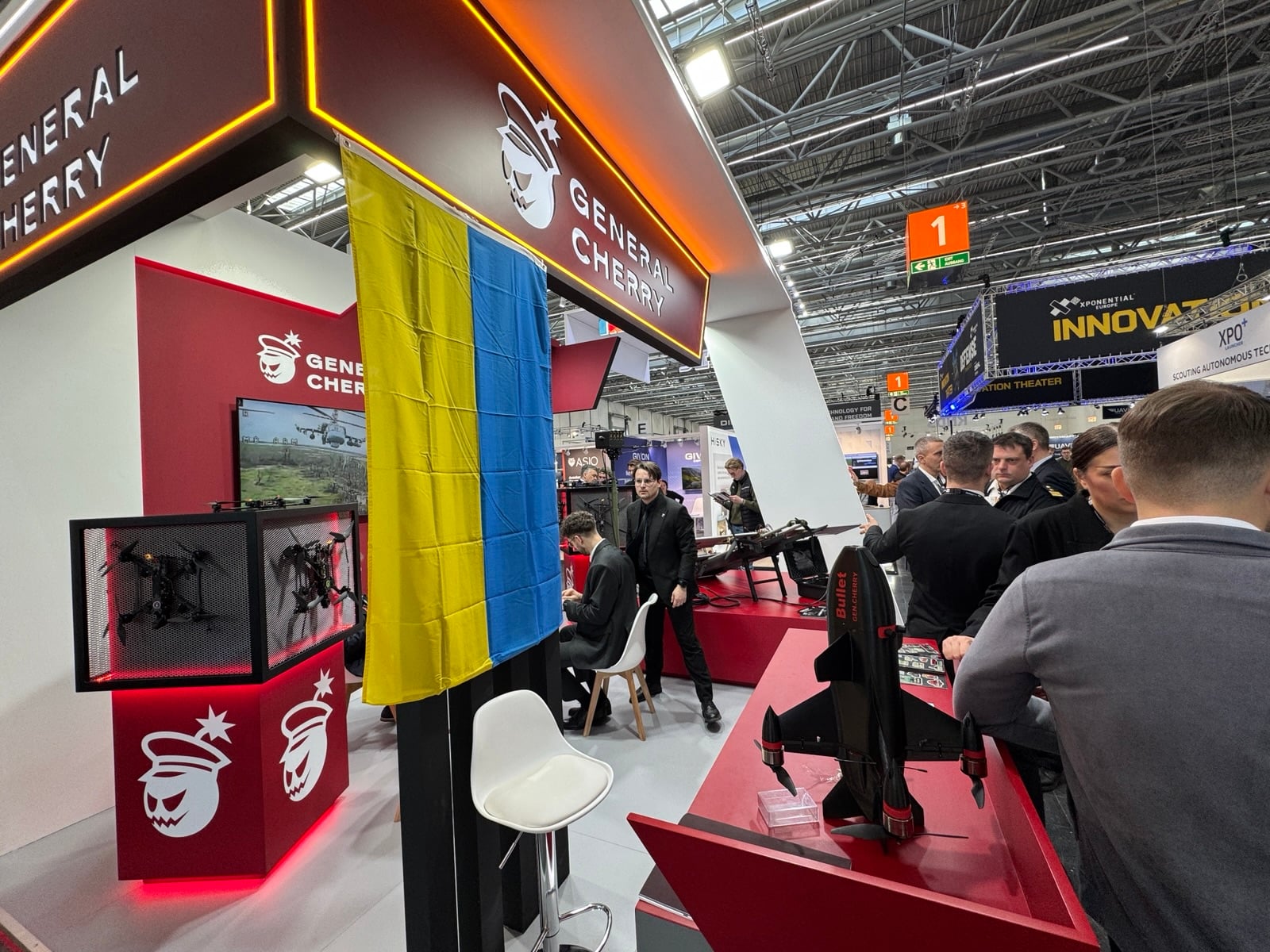
The business card on the table at XPONENTIAL Europe 2026 in Düsseldorf read “General Cherry / Vlad Polikashkin / Marketing Director.” The booth behind it was the largest standalone Ukrainian stand on the floor — backlit walls, Ukrainian military unit insignia, a Ukrainian flag in the corner, and a steady line of visitors that did not break for the three days of the show. On the display table sat the Bullet: a black fixed-wing VTOL interceptor with a bullet-shaped fuselage, four lift rotors, and a price tag of approximately $2,100. Four days before the show opened, one of General Cherry’s other drones had shot down a Russian Ka-52 attack helicopter worth $16 million. The team at the booth knew about it. They didn’t need to say much else.
Zero to Four Products in 18 Months
General Cherry — Ukrainian name General Chereshnya, co-founded by Yaroslav Hryshyn and Stanislav Hryshyn — did not exist as a defense manufacturer before Russia’s full-scale invasion. What the company has built since is one of the most complete counter-drone product stacks from any single Ukrainian manufacturer: four distinct interceptor platforms, each targeting a different threat class, all officially codified by Ukraine’s Ministry of Defense, all available through the Brave1 defense procurement marketplace.
That stack matters because Ukraine’s counter-drone doctrine is explicitly layered: no single interceptor handles every threat. A Mavic-class reconnaissance quad flies differently from a Shahed-136 attack drone, which flies differently from a Lancet loitering munition, which is a completely different problem from a Ka-52 flying close air support. General Cherry has a product for each one — though it is worth noting the company operates in an increasingly competitive Ukrainian interceptor market alongside firms like Wild Hornets and Skyfall.
The Four-Platform Lineup
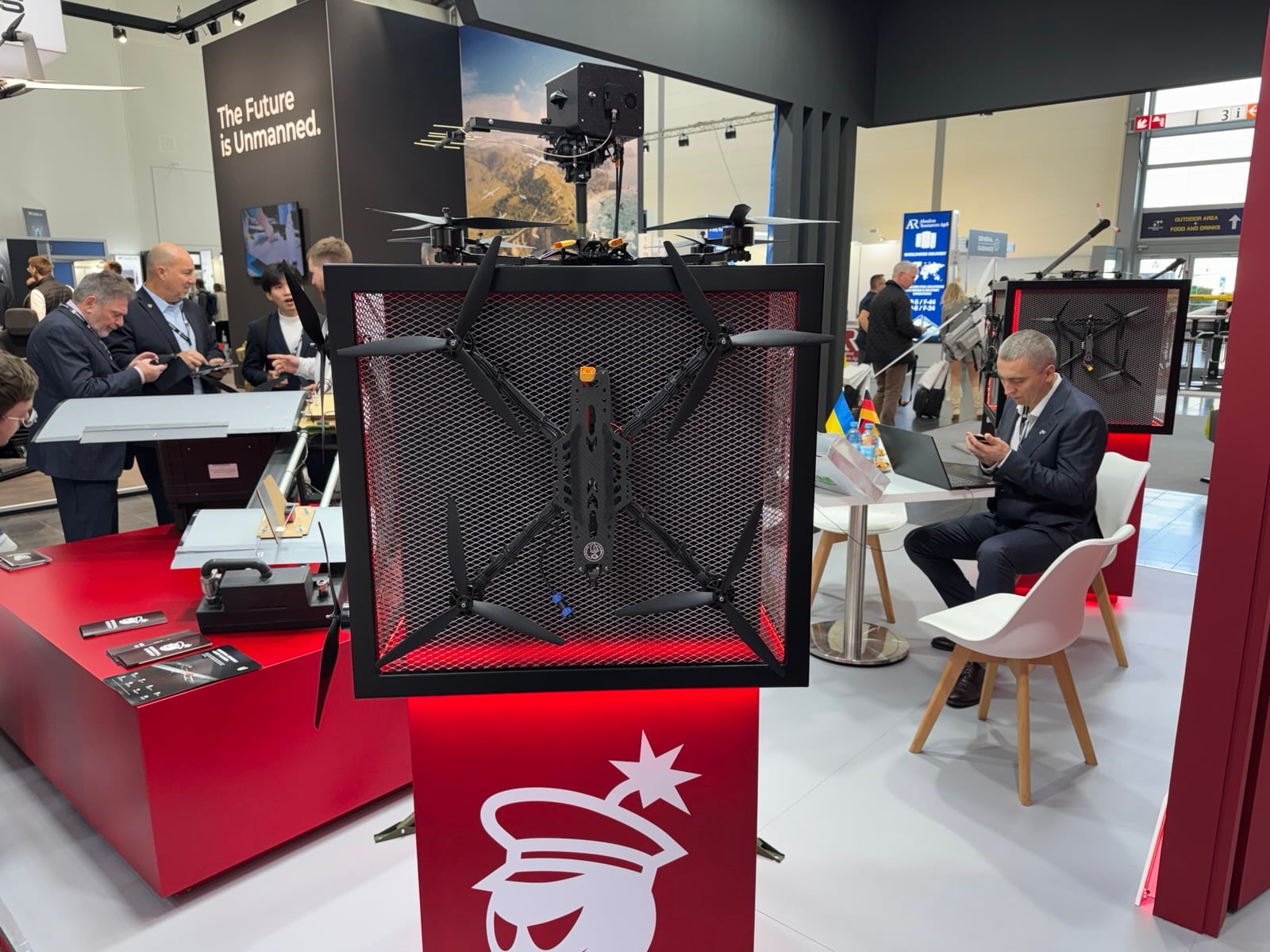
The AIR Speed sits at the fast end — an 8-inch frame, 236 km/h maximum speed, built specifically to chase small high-speed targets: commercial quadcopters adapted for battlefield use, Lancet loitering munitions, ZALA and Supercam reconnaissance platforms. As we reported in January 2026, AIR Speed is already deployed across multiple front-line sectors and available through Brave1.
The AIR Pro is the workhorse — 200+ km/h top speed, 35 minutes of endurance, a 6.8 km ceiling, and a 1.7 lb payload capacity. We covered the AIR Pro launch in December 2025: it costs $1,141 and has been used to destroy Orlan, ZALA, Lancet, Supercam, and Mavic-class targets. Frontline units used the AIR series to down 43 Russian Mavic drones in three days. In February 2026, a General Cherry AIR interceptor destroyed a rare Russian AI-powered Klin loitering munition on the Orikhiv front — the first confirmed interception of that system.
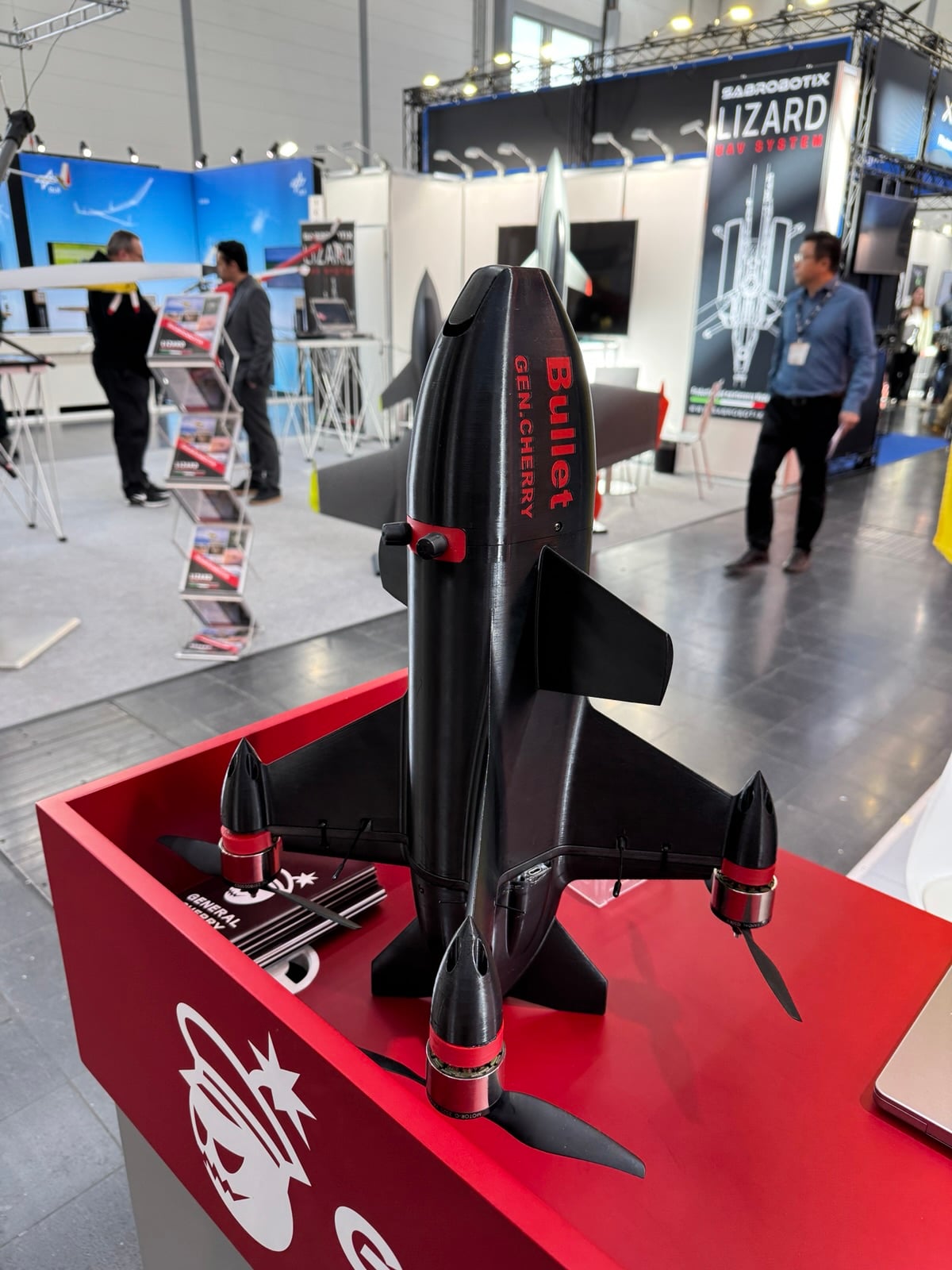
The Bullet addresses the hardest problem in Ukrainian air defense: the Shahed. Russia fires these Iranian-designed attack drones by the hundreds, at night, on evasive routes. According to General Cherry, the Bullet reaches 309 km/h during testing, has a tactical range of 17–20 km, a flight ceiling of 3,000 m, and carries a warhead of 0.4–0.8 kg depending on version. It comes in day, night, and homing variants, and its airframe has been 3D-printable since launch — a deliberate design choice that keeps unit costs around $2,100 and enables distributed production. Bullet was officially approved for armed forces service in October 2025 and has since been identified by the Pentagon and Gulf states as one of the most sought-after counter-Shahed platforms available. Ukrainian specialists deployed to Jordan, Saudi Arabia, Qatar, and the UAE are operating it against Iranian-designed drones — the same drones Russia has been launching against Kyiv for three years.
The OPTIX series is the fourth platform — a fiber-optic FPV drone that eliminates radio-frequency jamming from the equation entirely by using a physical cable rather than a wireless link. According to the company, the OPTIX was codified in December 2025. On March 20, 2026, operators from Ukraine’s 59th Assault Brigade used a General Cherry OPTIX to shoot down a Russian Ka-52 attack helicopter in flight near Nadiivka — believed to be the first confirmed case of a Ka-52 being downed by an FPV drone in this war. Ukraine’s General Staff has not independently confirmed the incident, but the claim is widely reported and corroborated by video evidence. The mission required a month and a half of tracking Russian aviation routes before the engagement. A $16 million helicopter, brought down by a cable-guided drone.
Scale, Components, and the Export Question
General Cherry currently produces thousands of drones per month across more than 14 codified models, with seven more in certification. The company is actively raising the share of Ukrainian-made components — to support domestic industry and reduce dependence on supply chains that still run partly through China.
The export picture is complicated. The Bullet has reached the Middle East through Ukrainian government-authorized channels. Zelensky has been explicit that private attempts to route around official approval will not succeed. Given that drone interceptors accounted for a dominant share of Shahed intercepts in January 2026, according to UNITED24 Media data, the pressure to keep production inside Ukraine is real and will not ease soon.

DroneXL’s Take
Standing at General Cherry’s booth in Düsseldorf six days after the Ka-52 shootdown, I kept thinking about the timeline. The OPTIX was codified in December 2025. Six weeks later a crew was tracking Ka-52 routes in Donetsk Oblast. By March 20 — barely three months into the product’s official service life — they had the first helicopter kill. That’s not a procurement cycle. That’s a war economy moving at a pace Western defense ministries literally cannot match contractually.
The broader pattern is one I’ve been watching since Ukraine’s interceptor drones were still dismissed as “Star Wars fantasy” by skeptical infantry in 2024. General Cherry is not an anomaly — it’s what the Ukrainian defense industry became when it had no other option: fast, layered, purpose-built, and financially accessible enough that frontline units can actually buy what they need. The question for Western buyers isn’t whether these products work. The Ka-52 answers that. The question is whether official procurement channels can move fast enough to matter.
My prediction: at least one formal government-to-government export agreement for General Cherry products will be signed with a Western or Gulf state before the end of 2026. The Düsseldorf booth wasn’t a trade show appearance. It was a sales call.
DroneXL uses automated tools to support research and source retrieval. All reporting and editorial perspectives are by Haye Kesteloo.
Discover more from DroneXL.co
Subscribe to get the latest posts sent to your email.
Check out our Classic Line of T-Shirts, Polos, Hoodies and more in our new store today!

MAKE YOUR VOICE HEARD
Proposed legislation threatens your ability to use drones for fun, work, and safety. The Drone Advocacy Alliance is fighting to ensure your voice is heard in these critical policy discussions.Join us and tell your elected officials to protect your right to fly.

Get your Part 107 Certificate
Pass the Part 107 test and take to the skies with the Pilot Institute. We have helped thousands of people become airplane and commercial drone pilots. Our courses are designed by industry experts to help you pass FAA tests and achieve your dreams.

Copyright © DroneXL.co 2026. All rights reserved. The content, images, and intellectual property on this website are protected by copyright law. Reproduction or distribution of any material without prior written permission from DroneXL.co is strictly prohibited. For permissions and inquiries, please contact us first. DroneXL.co is a proud partner of the Drone Advocacy Alliance. Be sure to check out DroneXL's sister site, EVXL.co, for all the latest news on electric vehicles.
FTC: DroneXL.co is an Amazon Associate and uses affiliate links that can generate income from qualifying purchases. We do not sell, share, rent out, or spam your email.

