Wing Sets the Record Straight on Five Drone Delivery Myths
Check out the Best Deals on Amazon for DJI Drones today!
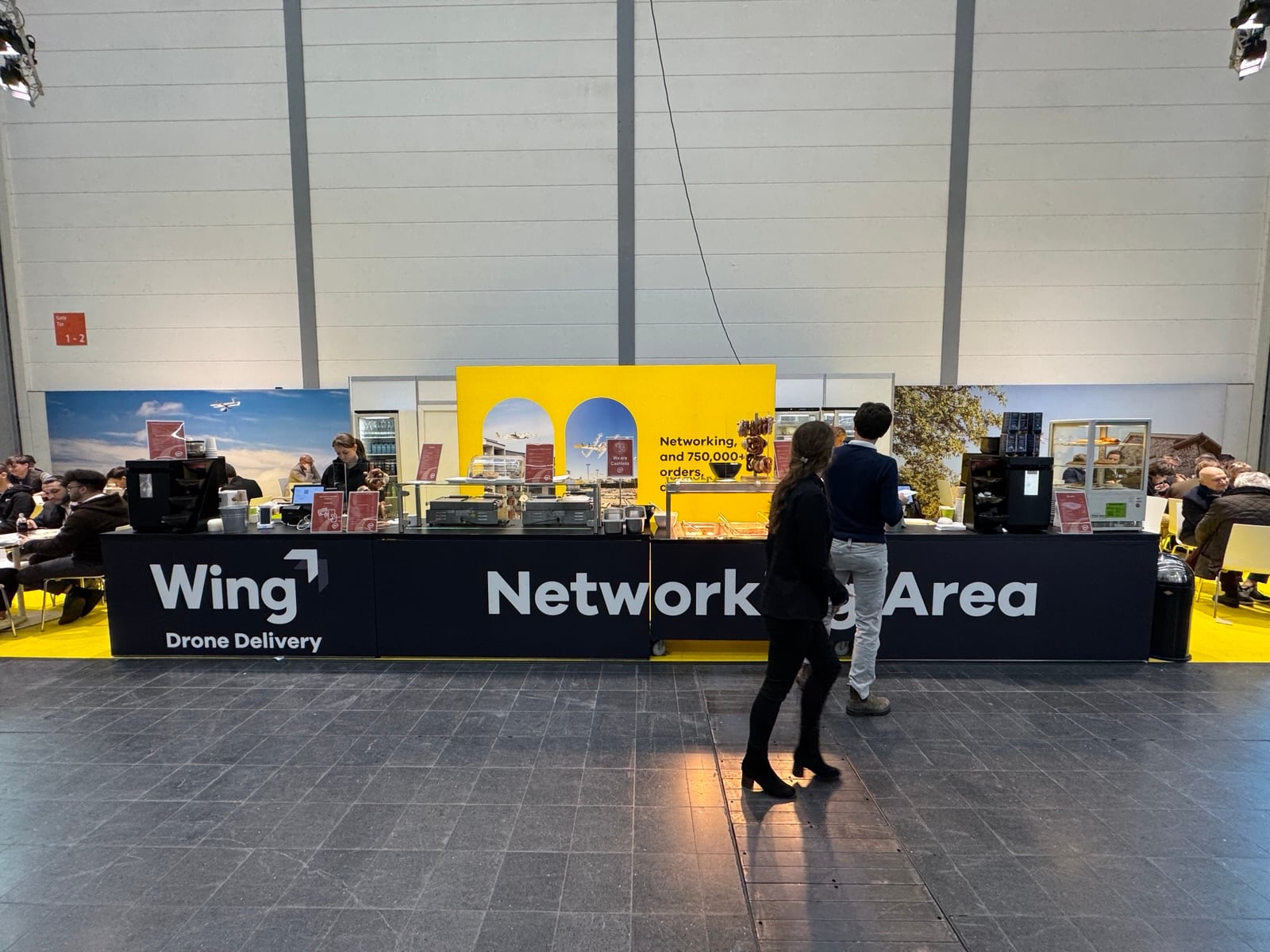
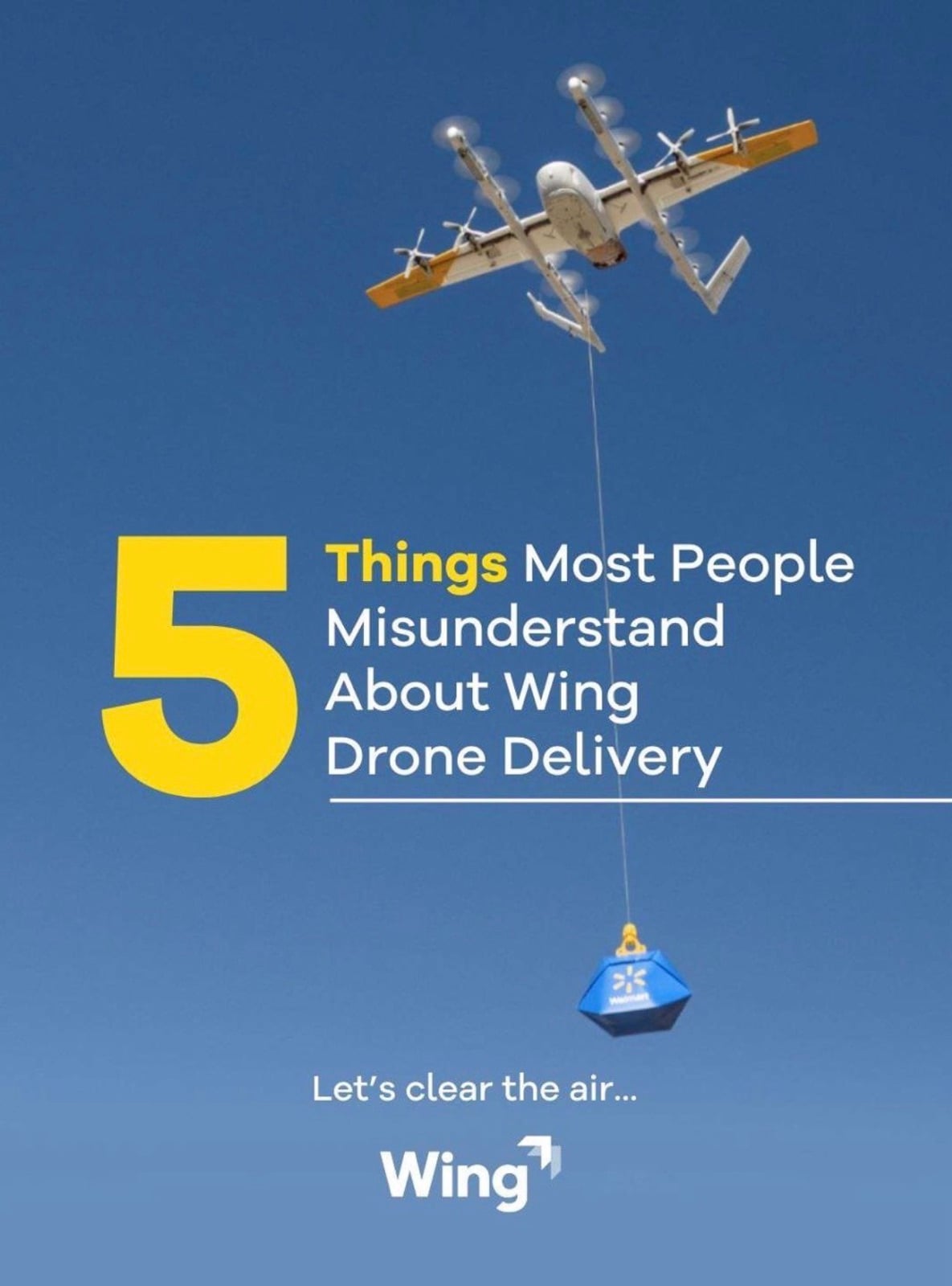
Wing, Alphabet’s drone delivery subsidiary, published a five-point myth-busting campaign on LinkedIn this week, pushing back on the most common misconceptions about commercial drone delivery. The post drew over 100 reactions and arrived the same week Wing sponsored the networking area at XPONENTIAL Europe 2026 in Düsseldorf, putting these arguments in front of European regulators and logistics decision-makers. Wing has now completed more than 750,000 commercial deliveries, a number the company is leaning on heavily as it makes its case to new markets.
Misunderstanding 1: Drones Are Just for Emergencies or Healthcare
Wing’s first correction targets the perception that drone delivery only makes sense for urgent medical cargo. The company’s reality: its drones deliver everyday essentials, a missing dinner ingredient, a morning coffee, not just defibrillators. This matters because the emergency-use framing often leads regulators to approve narrow, specialized operations while blocking broader commercial use. Wing’s DoorDash partnership in Charlotte delivering Panera Bread and Wendy’s to suburban backyards is the clearest counter-argument to this myth.
Misunderstanding 2: Drone Delivery Isn’t Safe or Regulated
Wing points to its FAA (Federal Aviation Administration) approval and 750,000-delivery track record as evidence that the safety-and-regulation objection is outdated. Every Wing flight is automated and monitored remotely by a certified pilot. The company received its Part 135 air carrier certificate from the FAA in 2019, the first drone delivery company to earn one, placing it under the same on-demand air carrier certification framework as charter operators rather than hobbyist rules. That credential does not transfer to European airspace, where U-space frameworks are still maturing across member states, but the safety record is real.
Misunderstanding 3: Drones Are Loud and Disruptive
Wing claims its aircraft are quieter than a delivery truck or car passing your house. The drones cruise at roughly 150 feet altitude during transit and descend briefly only to lower a package on a tether. Wing’s asymmetric four-blade propeller design distributes sound across multiple frequencies to reduce tonal noise, the single-pitch buzz that irritates people most. That said, Wing faced legitimate noise complaints during its early Canberra, Australia trials, which pushed the company to redesign its propellers. The current fleet is meaningfully quieter than the original. Whether it is quieter than a passing car depends on flight corridor density and local wind conditions, context Wing’s claim leaves out.
Misunderstanding 4: Drone Delivery Is Futuristic, Not Real
Wing’s answer here is blunt: it is live today, delivering to thousands of customers daily. Wing’s Bay Area expansion announced this week adds the San Francisco metro to a network already covering Houston, Atlanta, Dallas-Fort Worth, Charlotte, and parts of Australia, Finland, and Ireland. In Dallas-Fort Worth and Metro Atlanta, the top 25% of customers order three times per week. Delivery volume tripled in the second half of 2025 compared to the first half of the year. That is routine utility, not novelty.
Misunderstanding 5: Drone Delivery Is a Luxury, Not Practical
Wing’s efficiency argument is the most compelling and the most debated. The company claims its drones travel 14 times farther per unit of energy than an electric car. That is Wing’s own figure, not independently audited. Wing frames this as a traffic and emissions argument: fewer delivery vans on suburban streets, lower per-package energy consumption for short-distance orders. Whether that holds across diverse weather, terrain, and operational scales is the question the 750,000-delivery dataset is starting to answer.
DroneXL’s Take
Wing is right on most of these. The timing matters too. Publishing a myth-busting campaign the same week it sponsors the networking area at XPONENTIAL Europe, where the audience is European policymakers rather than American consumers, tells you exactly who Wing is trying to convince right now.
The noise myth is the one I’d push back on hardest. Wing’s drones are genuinely quieter than the first generation, and recordings from Dallas-Fort Worth operations back that up. But “quieter than a car” depends on how many drones are flying overhead, how often, and whether you live under a flight corridor. That context is missing from Wing’s framing, and European regulators will notice.
Europe is where Wing needs to win the argument. The U.S. is already converting. A European retail partnership announcement before the end of 2026 would be the real signal that this campaign landed. Until then, Wing is sponsoring coffee tables and posting LinkedIn carousels. Both are fine tactics. Neither is a delivery.
DroneXL uses automated tools to support research and source retrieval. All reporting and editorial perspectives are by Haye Kesteloo.
Discover more from DroneXL.co
Subscribe to get the latest posts sent to your email.
Check out our Classic Line of T-Shirts, Polos, Hoodies and more in our new store today!

MAKE YOUR VOICE HEARD
Proposed legislation threatens your ability to use drones for fun, work, and safety. The Drone Advocacy Alliance is fighting to ensure your voice is heard in these critical policy discussions.Join us and tell your elected officials to protect your right to fly.

Get your Part 107 Certificate
Pass the Part 107 test and take to the skies with the Pilot Institute. We have helped thousands of people become airplane and commercial drone pilots. Our courses are designed by industry experts to help you pass FAA tests and achieve your dreams.

Copyright © DroneXL.co 2026. All rights reserved. The content, images, and intellectual property on this website are protected by copyright law. Reproduction or distribution of any material without prior written permission from DroneXL.co is strictly prohibited. For permissions and inquiries, please contact us first. DroneXL.co is a proud partner of the Drone Advocacy Alliance. Be sure to check out DroneXL's sister site, EVXL.co, for all the latest news on electric vehicles.
FTC: DroneXL.co is an Amazon Associate and uses affiliate links that can generate income from qualifying purchases. We do not sell, share, rent out, or spam your email.