On Monday, Nassau County Police announced a $1 million first-responder drone program that turns emergency response on its head.
Instead of waiting for a drone to launch from a headquarters, Nassau is installing eight fully automated pods across the county that can get airborne in under 30 seconds. This is what happens when you stop thinking of drones as toys and start treating them as infrastructure.

How the Pods Work
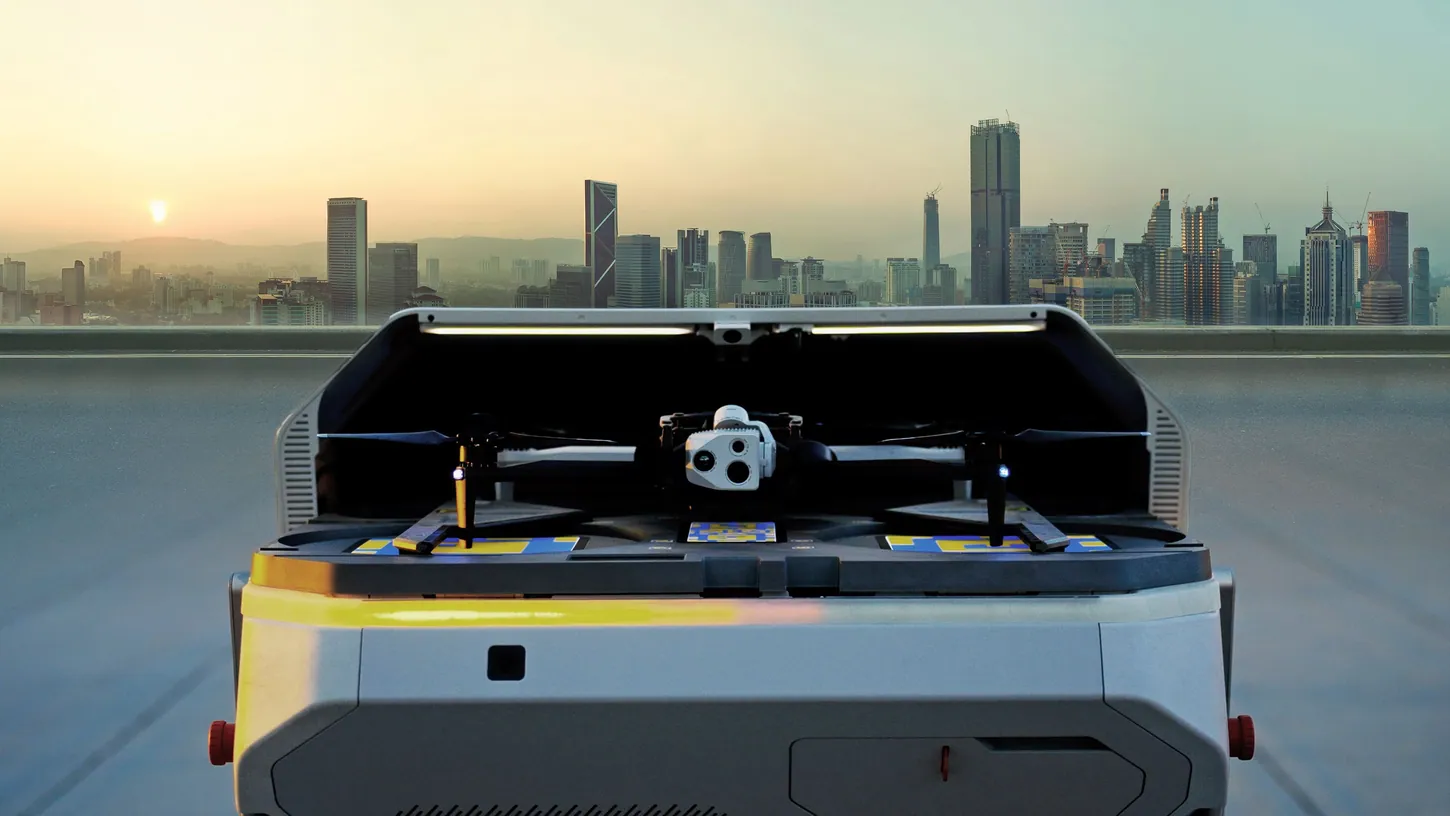
Nassau County’s approach relies on climate-controlled docking stations positioned across the jurisdiction, each housing a drone ready for instant deployment. When a 911 call comes in, the dispatcher sends coordinates directly to the pod, and the aircraft launches automatically without waiting for a pilot to walk across a parking lot.
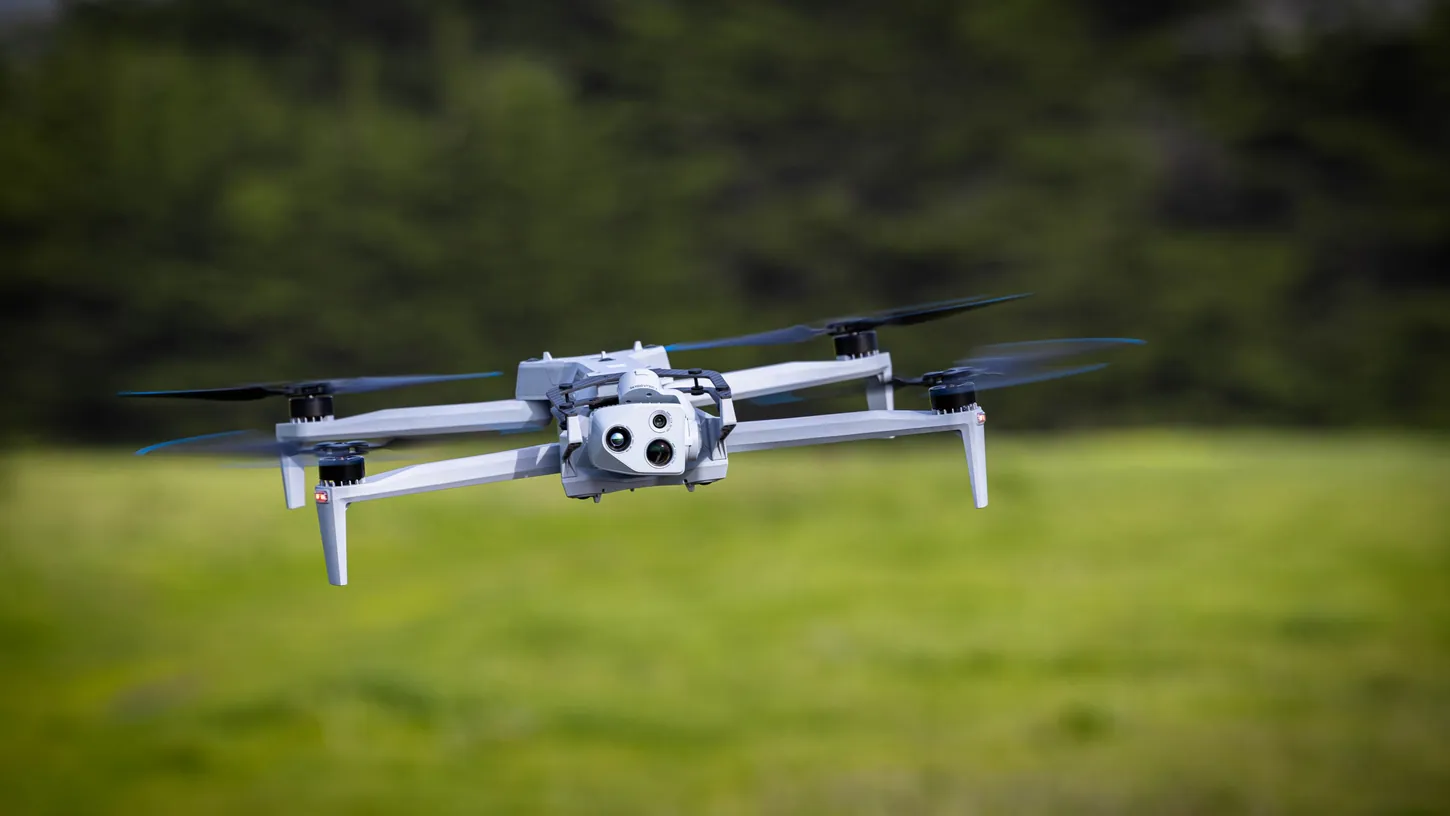
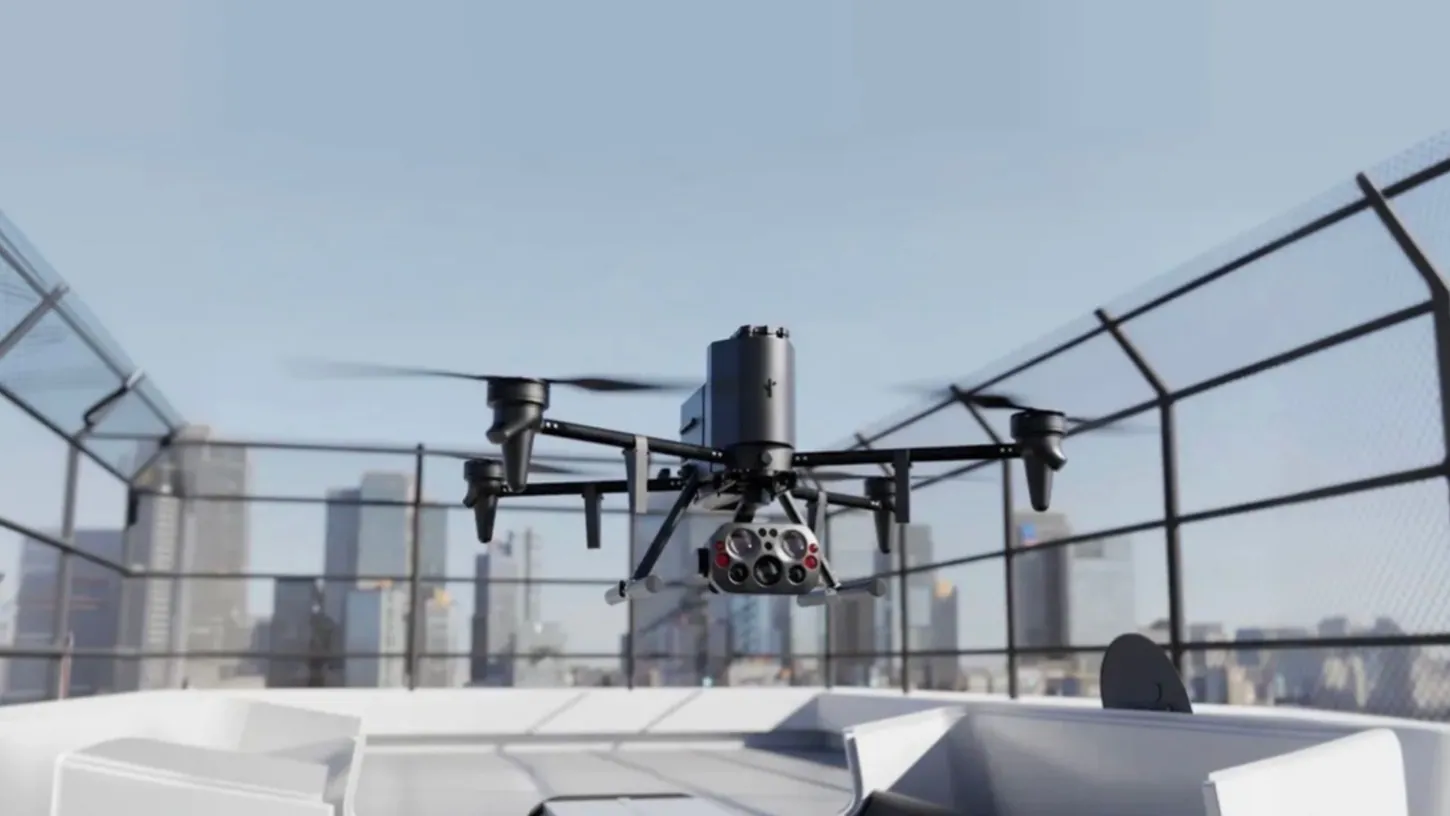
The drones themselves carry thermal imaging cameras and can cruise at 40 miles per hour (64 km/h) to reach a scene in seconds instead of minutes. Each pod operates independently, so multiple drones can launch simultaneously if calls stack up.

The physical infrastructure here is the real innovation. These aren’t drones sitting on desks. They’re mounted in climate-controlled enclosures designed for outdoor deployment, which means they can survive Long Island winters without degradation. The pods communicate directly with Nassau’s police intelligence center, feeding live video back to dispatch and to the patrol cars already rolling toward the scene.
More police departments are adopting DFR technology every year, and not just in the U.S. The same results are showing up globally. Once a department sees the response time numbers, the conversation moves quickly from “maybe” to “how do we fund it.”
Speed Wins in Life-or-Death Calls
The demo is stark. From Nassau County Police Training and Intelligence Center to Eisenhower Park, the flight took under 60 seconds. That same trip in a patrol car takes 5 to 7 minutes depending on traffic and time of day. Commissioner Patrick Ryder made the point directly: in 30 seconds, a thermal camera overhead can see what’s happening in a way no ground unit can from three blocks away.

Real-time intelligence changes officer behavior. If the drone sees multiple people fleeing a scene in one direction, responding units adjust their intercept point. If thermal shows heat signatures in a structure where none are supposed to be, officers know what they’re walking into. The intelligence center pushes live video directly to patrol car tablets, not through radio channels where half the officers can’t hear anyway.

This is particularly valuable in large-area emergencies: accidents on highways, missing persons in open areas, large gatherings where police need eyes first and bodies second. A missing elderly person in a wooded area is a perfect use case. The drone covers 1,000 acres per flight. Ground search teams take hours to check the same area.
What Gets Watched, What Doesn’t
As reported by ABC7, Nassau County Police clearly anticipated pushback on surveillance, which is correct. Ryder was explicit: these drones aren’t patrolling residential neighborhoods on general principle. They deploy to 911 calls, crime scenes, large gatherings, and areas of active concern. The pods won’t wake up on their own.
Most established DFR programs already have a transparency layer built in. The flight path goes public on a dedicated website the moment each mission ends. Anyone can check where the drone flew, when, and for how long. That’s not a small detail in the surveillance debate.

The authorization framework matters, and it’s not spelled out in the announcement. Who decides whether a 911 call is “drone-worthy”? Is it the dispatcher? A supervisor? Is there a checklist? Or do drones become the default response to any call involving an outdoor area? Those answers determine whether this is infrastructure or surveillance-creep.
Funding came from asset forfeiture seizures, which Executive Bruce Blakeman noted means “it’s not going to cost the taxpayers a nickel.” That’s one of the smartest lines in the announcement. Public-sector drone deployments often die because they look expensive at city council. When you can fund it from criminal assets already seized, opposition softens.
DroneXL’s Take
Here’s what nobody is saying out loud: what you’re seeing here is first-responder automation one step ahead of the policy conversations that usually choke these programs. Nassau County isn’t asking permission. It’s deploying, proving utility, and letting results shape the debate.
The eight-pod network matters because it breaks the bottleneck. Older first-responder programs kept one or two drones centralized with a dedicated pilot. Response times stayed in the 15-to-30-minute range because of logistics. Distributed pods with auto-launch cut that to under 60 seconds. That’s not optimization. That’s a different operating model.
The comparison point isn’t other police drone programs. It’s how infrastructure gets built. Power companies don’t run power lines on demand. Water agencies don’t turn on systems call-by-call. Nassau County just moved drone coverage from “asset you call for” to “infrastructure that’s always ready.” Scale a model like that across 500 municipalities and you’ve fundamentally changed what first responders can do in the field.
The limits are real. Eight pods can’t be everywhere. Small jurisdictions can’t justify the cost. And the automation itself (the moment a drone launches without a human explicitly pressing the button on an individual call) shifts the privacy math in ways that aren’t solved by saying “we only respond to 911 calls.” That’s still true, but it’s also a lower bar than it used to be.
Watch whether other counties on Long Island or in the Mid-Atlantic adopt the same model. If this becomes standard infrastructure, the cost per pod drops and the system gets tighter. If it stays as a Long Island novelty, it’s an interesting pilot that doesn’t scale.
Photo credit: Conroe PD, Nassau PD.