
The New Castle County Division of Police in Delaware has published six months of results from its Drone as First Responder program. Its drones flew 1,214 missions between May and October 2026 and were dispatched to 844 calls to 911. A drone was first on scene at 756 of those 844 calls, or 89.6%, and 195 of the 844 were closed without a patrol car.
County Executive Marcus Henry announced the dashboard on Wednesday, November 18, at a public safety town hall at Five Points Fire Company. It sits inside a new Technology Transparency Portal that also holds the department’s drone policy, its license plate reader policy and its agreements with Axon and Flock Safety. The county says it is the only agency in Delaware running a DFR program.
The plate reader policy on the portal deletes records after 30 days. The drone policy, dated the day of the town hall, tells pilots to record each flight from launch to landing and states no number of days for keeping the video.
New Castle County Drones Got There First Less Often in October
October was the program’s busiest month, with 250 missions and 183 dispatched 911 calls. It was also the month the drones were first on scene least often, at 83.6%, down from a high of 94.1% in June. The share of calls closed without a patrol car fell to 17.5%.
The county’s activity dashboard breaks the six months down by month. Calls closed without a patrol car ranged from 13.3% in August to 32% in June. The department says a pilot who is overhead can cancel the ground response when it is not needed, which frees officers for other calls.
The dashboard credits 1,152 flights, or 94.9% of the total, with providing helpful intelligence. It counts 999 flights that provided overwatch, 162 that located a person and 143 that located a vehicle, and one flight can report more than one of those.
The dashboard is a summary that does not list individual flights or response times. Its categories also overlap in a way the page does not explain: it counts 844 dispatched calls and 504 event overwatch flights, which add up to 1,348 against 1,214 missions. Lewisville, Texas posts each flight on a public dashboard. Knoxville police said they would log every flight when their program started on November 19, under a policy that lets some flights stay unlisted for 30 days.
The Axon Contract Lists Nine Skydio X10 Docks
The county’s dashboard and drone page do not name the aircraft, but the Axon contract posted on the portal lists nine Skydio X10 dock kits at $57,744 each, four X10 patrol kits and a DedroneBeyond radar kit at $469,850. The ten-year agreement is worth $50,566,405.15.
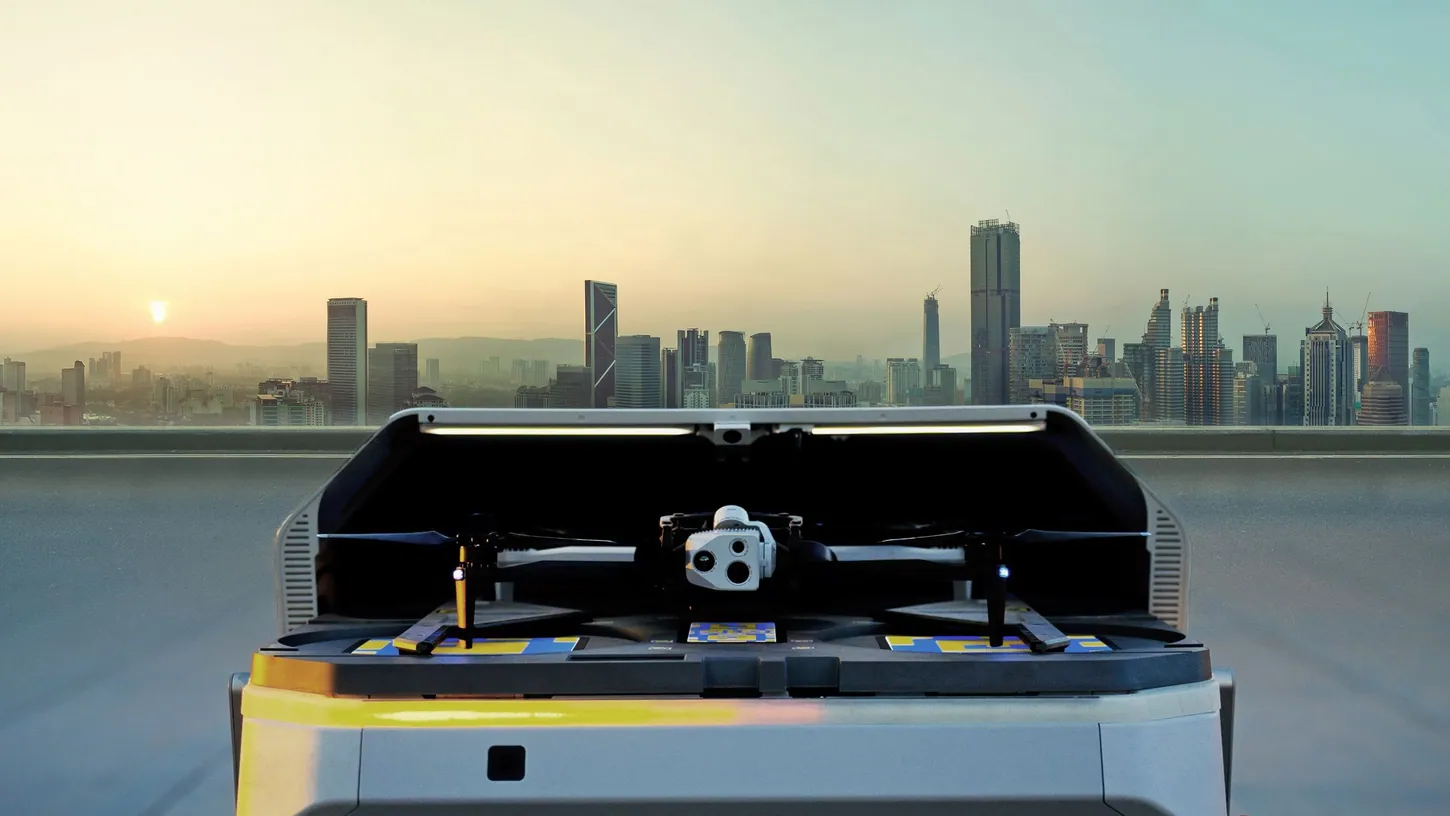
The drone page does carry a photo of a Skydio dock, but the badge on it reads Redmond Police, so it shows another agency’s unit.
The county’s transmittal sheet, dated October 30, 2025, describes the Axon agreement as hardware and software for body-worn cameras, Tasers, drones, the new Real-Time Information Center, in-car cameras, evidence storage and plate readers. Payments start at $750,000 in December 2025 and reach $6,045,200.66 a year from July 2028. That is more than twice the size of the $22 million Axon deal Lakeland, Florida approved in October, which bundles drones with body cameras in the same way.
The contract also covers 100 Axon Outpost cameras with plate reader licenses that start on May 1, 2026. Police Chief Col. James Leonard told the town hall the department has stopped using Flock cameras at sites outside county property and still uses them on county-owned sites, according to the county. The Flock document on the portal is a five-year data-sharing agreement that costs the county nothing.
The Drone Policy Orders Full Recording and States No Retention Period
The drone policy, dated November 18, 2026, requires pilots to record the main camera from launch to landing unless another policy or law requires them to stop. The video is kept under the division’s digital evidence retention policy, which the county’s drone page describes as similar to body-worn camera video.
The drone policy gives no number of days, and that retention policy is not among the documents posted on the portal. Requests for drone video under Delaware’s Freedom of Information Act are handled the way body camera requests are.
Pilots are told to point the camera away from areas unrelated to the call while the drone is in transit, when that is safe. The policy bans random or generalized surveillance of the public and bars using a drone to interfere with First Amendment activity. Thermal sensors cannot be used on a protected area without a warrant or a recognized exception to the warrant requirement. The drones may carry payloads such as Narcan or life jackets, and never weapons. Other agencies can be given video for a specific case, and the policy rules out bulk or self-service access.
The policy says the program will not be used as a routine patrol platform to watch people or activities unrelated to an authorized mission. Routine property checks of county parks and facilities are one of the authorized missions, and the county’s drone page says the drones proactively patrol them.
The plate reader rules are more specific. Under the plate reader policy, records are purged 30 days after capture unless they become evidence, and the system administrator audits use every month. Data is shared with police in Maryland, New Jersey and Pennsylvania, and the division will not sign sharing agreements with federal law enforcement. The same policy bars staff from disclosing where fixed cameras are and says plate data is exempt from the state’s Freedom of Information Act.
“We want residents to have a place to go to truly understand this technology,” Henry said in the county’s announcement.
The drone program’s coordinator has to review it once a year and document any policy violations and any air safety incidents that must be reported to the FAA. The policy does not say that review will be published.
DroneXL’s Take
New Castle County has posted more than most departments do. The contract is there with its prices and so is the policy, and the numbers include the months when the drones did worse. I like the 195 calls that never needed a patrol car, because those are officers who were free for something else. But residents can’t check a six-month percentage against individual flights. Lewisville posts its flights one by one, and Knoxville says it will. The retention period matters more to me than the log. A policy that records flights from launch to landing should say how long the video is kept, in days, the way the plate reader policy does. The county should put that number on the portal.
Sources: New Castle County, New Castle County Division of Police, Town Square Delaware
DroneXL uses automated tools to support research and source retrieval. All reporting and editorial perspectives are by Haye Kesteloo. Read our editorial standards.
Advertise with DroneXLYour company hereReach 200,000+ drone readers a month with a sponsored article, a banner on your beat, or a partnership.See the options →


