
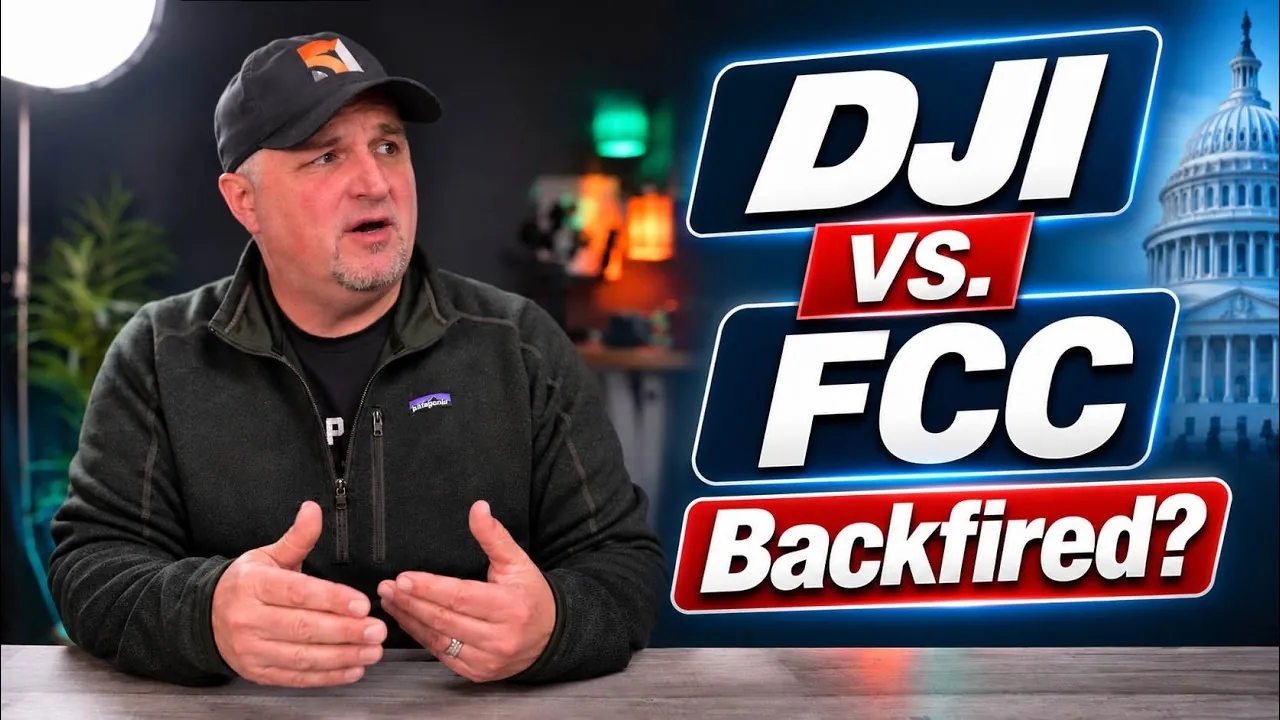
It’s been quite a while since we’ve talked about the DJI battle against the FCC. DJI is fighting back against the FCC restrictions that are preventing it from bringing new drones into the United States, but the latest developments in this legal battle are a little bit confusing, and I think a lot of people are misunderstanding what’s actually happening. DJI has now gone to federal court asking for help, and the FCC is basically telling the same court that DJI’s lawsuit shouldn’t even be allowed to move forward yet.
Now that might sound a little bit ridiculous, but there’s actually a legal explanation behind all of this. I want to break it down in plain English, without all of the complicated legal terminology, because this could have a significant impact on the future of DJI drones here in the United States. And more importantly, what does all of this mean for those of us who already own DJI drones, or anybody who’s hoping to purchase a new one, especially with the holidays coming?
I want to give full credit to Haye over at DroneXL, who published an excellent article about this on November 16. He does a really great job covering these developments. I’ve also gone through the actual court filings to help explain what’s happening.
The Covered List Blocks New DJI Models, Not the Drone You Own
First of all, we need a little bit of background. On December 22, 2025, the FCC added foreign-produced drones and certain critical drone components to what’s called the Covered List. That is basically a list of equipment that the government has determined poses an unacceptable risk to the national security or the safety of Americans.
When equipment falls under these restrictions, new models generally cannot receive the FCC authorization that they need to be legally marketed or imported into the United States.
And this is an important distinction. This wasn’t a decision to ground every DJI drone already flying in America. It was primarily a restriction on getting drone models into the American market. So your existing DJI drone didn’t suddenly become illegal to fly, but DJI was now facing a major obstacle when it came to selling its next generation of products.
DJI Went to Court Before the FCC Finished Its Own Review
DJI obviously wasn’t happy about that. So on January 21, 2026, they filed a petition asking the FCC to reconsider its decision. Essentially, DJI was saying, we don’t believe you handled this correctly and we want you to take another look. DJI has challenged whether the FCC followed the legal requirements for adding its equipment to the Covered List.
Then in February, DJI took another step and filed a lawsuit in the Ninth Circuit Court of Appeals challenging the FCC’s action. And that’s where it got pretty complicated. The FCC responded by arguing that the court couldn’t review the case yet, because DJI hadn’t completed the required process within the FCC itself.
Here’s an easy way to understand that. Imagine that you receive a decision from a government agency that you believe is completely wrong, and you appeal that decision within the agency. But before they finish reviewing your appeal, you decide to take the matter to court. You kind of jump the gun. The government then tells the judge, you can’t hear this case yet because we haven’t finished our own review. And the judge may very well agree, depending on the laws governing that particular agency.
That is essentially the argument the FCC is now making. The original Covered List announcement came from a bureau within the FCC rather than a final decision issued by the full Commission. The FCC says that distinction matters, because federal law generally requires the agency’s review process to be completed before a court can review that bureau’s action.
Nine Months Later, DJI Is Still Waiting on the FCC
DJI filed its request for reconsideration back in January. We are now in November, and according to DJI, more than nine months have gone by without a final decision. In the meantime, the restrictions remain in effect, and DJI says it’s losing an enormous amount of money because it can’t bring new products into the United States.
If you’re a DJI fan, you know this very well. In an earlier court filing, DJI claimed that 25 unreleased products and approximately $1.5 billion in anticipated 2026 sales were affected. Now, those are DJI’s numbers. They’re not independently verified losses, but at least they give you an idea of how significant the company believes this situation is. And remember, we’re not just talking about consumer drones. DJI manufactures cameras, gimbals and other equipment as well.
A Writ of Mandamus Asks the Court to Make the FCC Decide
With all this going on, DJI decided to take another legal step. On November 3, a new petition was filed with the Ninth Circuit Court of Appeals, and this one has a pretty unusual name. It’s called a petition for a writ of mandamus.
Don’t let that word scare you away, because the concept is actually pretty simple. A writ of mandamus is an extraordinary court order that can require a government official or agency to carry out a legal duty. In this situation, DJI is essentially asking the court to tell the FCC, you have to make a decision.
And here’s a really important part. DJI isn’t asking the court, through this new petition, to immediately overturn the Covered List restrictions. It’s asking the court to compel the FCC to act on the reconsideration request that DJI submitted back in January. DJI wants a decision from the full FCC because that could open the door for its legal challenge to move forward.
Think of it like waiting for a referee to make a call during a football game. You can’t challenge the call until the referee actually makes one. But what happens if the referee just stands there and never makes a decision? That is essentially the situation DJI says it’s facing. The company argues that it is suffering significant financial harm while waiting for the FCC to finish its review, and DJI believes the delay has become unreasonable. I think most of us can agree.
The FCC Says It Shouldn’t Be Forced to Move Faster
But here’s where we need to look at the other side of the argument. The FCC says this is a complicated national security matter involving a substantial record of information and public comments. It argues that the review is still ongoing and that DJI hasn’t established a legal basis for forcing the Commission to move faster.
The FCC also points out that DJI never formally asked the agency itself to expedite its reconsideration request.
So there are two different perspectives. DJI says the FCC has taken far too long to make a decision that’s affecting its business. The FCC says it is following the appropriate administrative process and should not be forced into a premature decision. Neither of those arguments has been finally resolved by the court in these latest filings.
The Government Says DJI’s New Petition Supports Dismissing Its Lawsuit
The really interesting part of this story happened on November 9. The FCC and the Department of Justice filed another response with the court, and they essentially argued that DJI’s new request for a writ of mandamus actually supports the government’s position in the original lawsuit.
Here’s what they mean. Remember, the FCC has been arguing all along that DJI can’t challenge the restrictions in court until the full Commission makes a final decision. Well, DJI has now filed a separate petition saying it needs the FCC to make that decision so it can pursue judicial review. The government is pointing to that request and saying, in effect, see? Even DJI recognizes that it needs a final decision before its original lawsuit can proceed. That’s why the FCC is asking the court to dismiss DJI’s original case.
DJI obviously sees things differently. They’ve asked the court to keep that original case on hold while the court considers its new request to force the FCC to act.
Winning on Timing Would Not Take DJI Off the Covered List
We’re talking about two separate legal proceedings. One is DJI’s original challenge to the Covered List action. The other is DJI’s new request to make the FCC reach a decision. Two different questions, even though they’re closely connected.
Even if the court dismisses DJI’s original lawsuit, that would not automatically mean that DJI loses its entire legal challenge. It could still pursue appropriate legal remedies after the FCC completes its review.
Likewise, if DJI succeeds in getting a writ of mandamus, that wouldn’t automatically remove DJI from the Covered List. It would be good news, but it would mean that the court has ordered the FCC to take some action, and the FCC could still decide against DJI.
That’s the biggest takeaway here. Winning a battle over the timing of a decision is not the same thing as winning the battle over the restrictions themselves.
Nothing Has Changed for the DJI Drones You Already Fly
I know that was a lot. So what does this mean for you and me as drone pilots, as drone fans, as people who want to get into drones?
As of right now, absolutely nothing has changed about our ability to fly the DJI drones that we already own. If you have a Mini, an Air, a Mavic or any other previously authorized DJI drone, this latest legal development doesn’t make it illegal to operate. You can continue flying it, assuming you’re following the normal FAA regulations that apply to your flights.
Previously authorized models can also continue to be sold under the FCC’s existing rules. You can go on Amazon right now and find almost every single DJI model that you want to buy. They are there.
But new models that require FCC authorization and fall under the Covered List restrictions still face that barrier, and this latest court filing doesn’t change that. So if you’re hoping that this lawsuit means DJI is about to start releasing all of its newest drones here in the US, we are just not there yet. There are still some very significant legal hurdles to overcome.
The Court and the FCC Each Have a Move to Make Next
There are a few things we have to watch. First, the Ninth Circuit could decide whether DJI’s original lawsuit can continue or whether it must be dismissed for now.
Secondly, the court will have to determine how to handle DJI’s request for a writ of mandamus. It could ask the government to formally respond to that petition, although that wouldn’t necessarily mean that DJI is going to win.
And thirdly, the FCC could issue its long-awaited decision on DJI’s reconsideration request. That development could be particularly important, because it would help determine what legal options DJI has going forward.
But I want to be clear about something. There is no guarantee that any of these steps will result in the restrictions being removed. The FCC could uphold its original action. DJI could pursue additional legal challenges. Or the situation could continue through further proceedings. In my opinion, that’s probably what’s going to happen. This is just going to drag on and on. Right now, we don’t have a reliable timeline for when this will all be resolved, if it ever will be.
What Most of Us Want Is a Little Bit of Clarity
I think most of you know my opinion, but I think it’s reasonable to ask whether a government agency should be able to impose restrictions that have an immediate financial impact on a company while that company waits months for a final agency decision. At the same time, national security reviews can involve complicated issues, and a court is going to have to consider the law governing the FCC’s decision-making process.
Ultimately, I think what most of us want is at least a little bit of clarity. If the government has sufficient grounds to restrict these products, then those grounds need to be supported through the appropriate legal process. And if DJI believes the FCC acted improperly, then DJI deserves the opportunity to present its arguments through that same process.
For now, though, the important thing to remember is that this is a procedural legal battle, not a final court decision on whether DJI drones should be allowed into the United States. Until that changes, the current FCC restrictions remain in place.
I’m going to continue to follow this case very closely, as I always have. When something actually changes that affects American drone pilots, I’ll make sure to break it down for you.
But I want to know what you think. Do you believe the FCC should be required to make a decision within a certain amount of time, especially when that decision has such significant consequences for a business? Or do you think the government should be allowed as much time as it needs when dealing with potential national security concerns? Thank you once again to Haye over at DroneXL for his reporting on this story. Fly safe and fly smart.
This article is based on a video from our YouTube partner Russ. Watch the full video on the 51 Drones YouTube channel, and find more of Russ’s work on his DroneXL author page.
Advertise with DroneXLYour company hereReach 200,000+ drone readers a month with a sponsored article, a banner on your beat, or a partnership.See the options →


