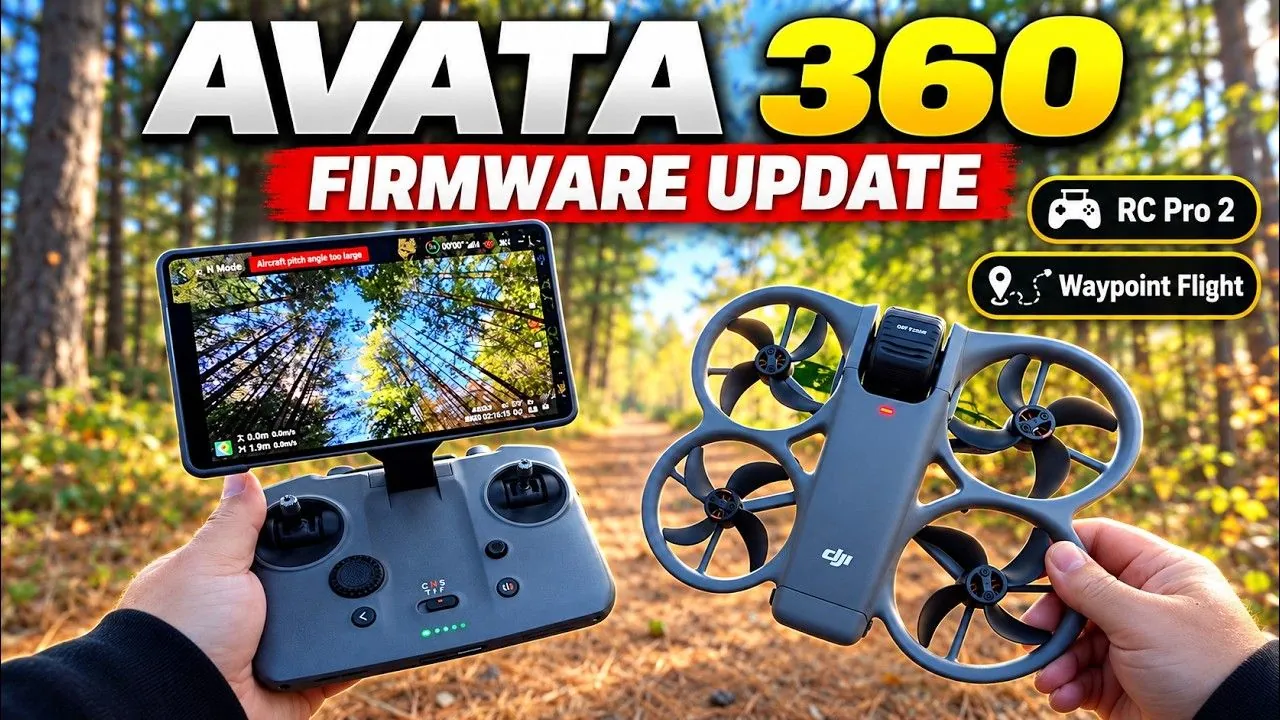
DJI has pushed a new Avata 360 firmware update, version v01.00.0500, after users reported sudden black-screen video loss while flying in FPV. According to the firmware details shown in user screenshots and reporting from Italian outlet Quadricottero, the new release is dated July 16 and fixes the video-feed failure that appeared after the earlier v01.00.0300 update.
That is the kind of bug FPV pilots do not shrug off. Losing the live view in goggles is not a minor annoyance. It is the whole flight experience going dark at the worst possible moment. DJI reportedly paused the earlier rollout and recommended users downgrade while it worked on a fix. With v01.00.0500 now out, early user feedback cited by Quadricottero says the video return is stable again at 1080p and 60 fps.
The bug hit the one system FPV pilots cannot afford to lose
The issue traces back to firmware v01.00.0300, released on June 23. Users began reporting sudden in-flight loss of the video feed, leaving a completely black screen in the goggles. Quadricottero says DJI moved quickly, halted the release as a precaution, and pushed users toward a downgrade until the cause was isolated.
That timeline feels familiar to anyone who has flown DJI’s FPV gear through a shaky update cycle. Firmware problems can be annoying on a camera drone. On an FPV platform they are much more serious, because the aircraft is built around live immersion, close-range movement, and confidence that the feed will stay locked in. When the screen goes black, the aircraft may still be flying, but the pilot is suddenly not.
Avata 360 is being pitched as a more ambitious FPV platform
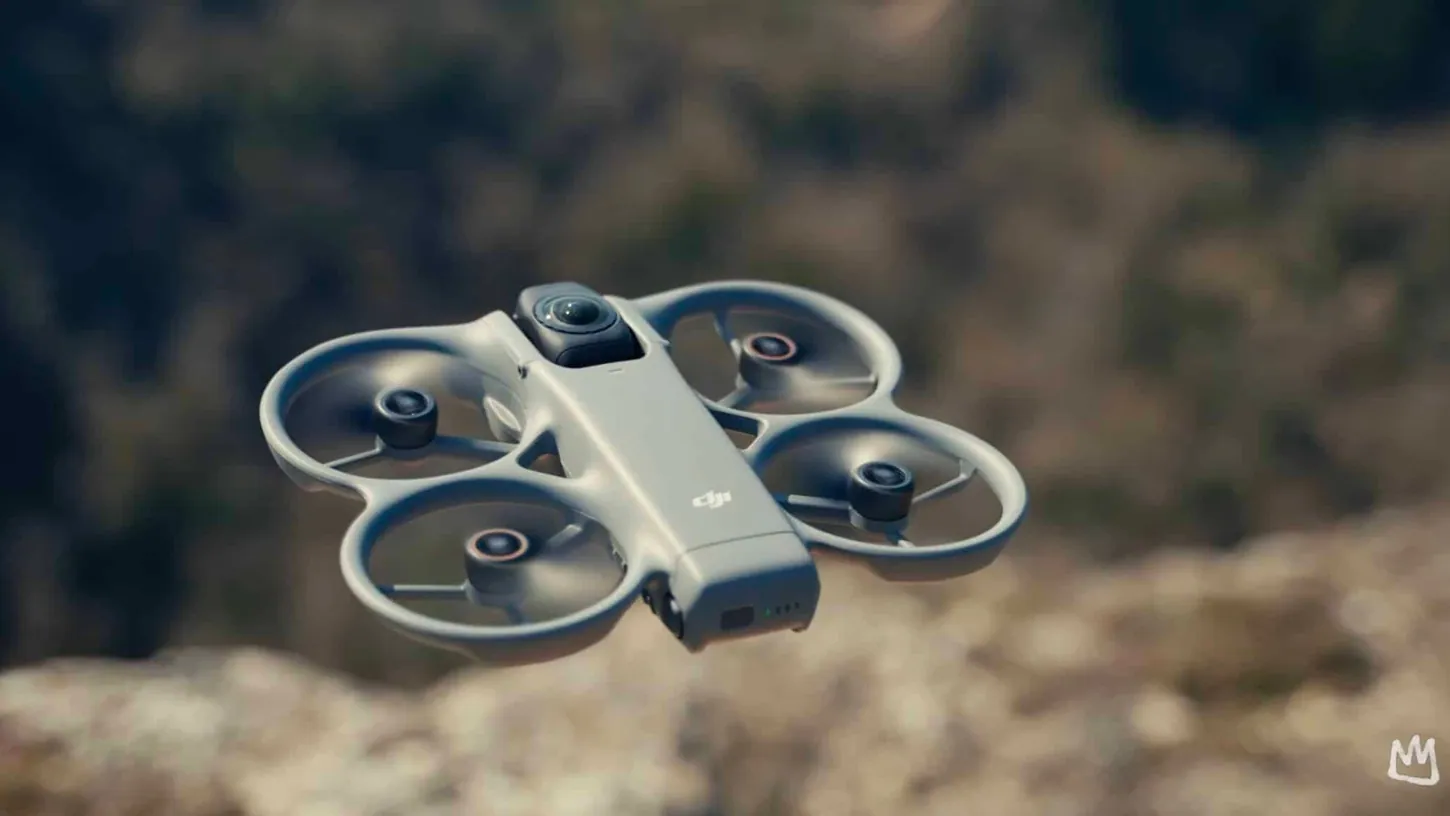
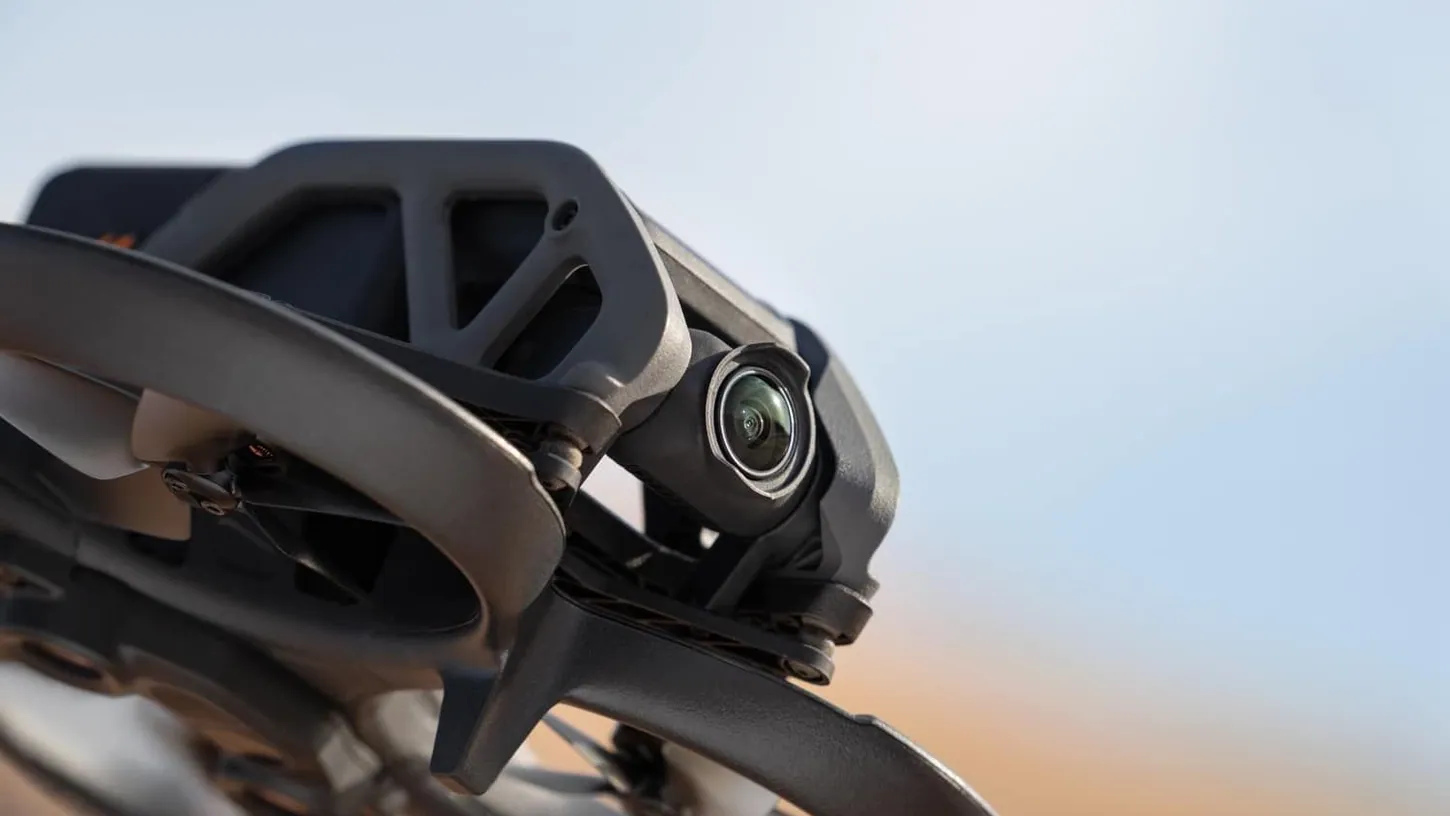
The firmware story matters more because of what the Avata 360 is supposed to be. The material visible in the screenshots and the Quadricottero article describes it as a hybrid FPV platform built for immersive 360-degree capture, not just a standard cinewhoop with ducts. The claimed setup includes a dual-optic system using 1-inch sensors, panoramic recording up to 8K at 60 fps in HDR, 120 MP spherical stills, and a Single Lens mode for flat video up to 4K at 60 fps.
The larger promise is reframing. Fly once, capture the entire sphere, and decide the final angle later in post. That is a much bigger pitch than “here is another FPV drone.” It puts Avata 360 closer to a tool for creators who want immersive footage without giving up the tight, close-in flying style that made the Avata line attractive in the first place.
The spec list reads like DJI is trying to merge FPV and creator workflows
Quadricottero’s write-up and the screenshots also point to a feature set that goes well beyond basic stabilized FPV. The reported package includes omnidirectional obstacle sensing, front-facing LiDAR support for low-light obstacle detection, 23 minutes of claimed flight time, 42 GB of internal storage, RockSteady, HorizonSteady, ActiveTrack 360°, and Spotlight.
If even most of that holds up in real use, DJI is clearly aiming beyond pure FPV hobbyists. This looks like an attempt to pull together creator features, obstacle sensing, smart tracking, and immersive capture into one machine. That makes firmware reliability even more important. A drone sold on advanced capture modes cannot afford a reputation for unstable video in goggles.
DroneXL’s Take
This is exactly the sort of firmware story that looks small until you think about the product it is attached to. A black-screen bug is bad on any drone. On a platform being sold as a hybrid FPV and 360 capture machine, it cuts right into the core promise. If pilots do not trust the feed, they do not trust the aircraft, and all the 8K, LiDAR, and ActiveTrack marketing in the world stops mattering.
What interests me more is what this says about where DJI appears to be heading with Avata 360. The screenshots describe a machine that wants to collapse several categories into one: ducted FPV, immersive camera, creator drone, and smart-tracking platform. That is ambitious. It also means the software stack has to be a lot tighter than what FPV pilots tolerated a few years ago. The faster DJI fixed this, the better. But the real test is simple: whether pilots now update without wondering if the goggles will go dark again.
For context, we have seen DJI use firmware updates to expand or stabilize product capabilities long after launch, whether that meant adding goggles support elsewhere in the lineup or ironing out platform quirks that mattered in real flight. Avata 360 now joins that familiar DJI story, except this time the stakes are more immediate because the bug hit the pilot’s eyes, not just a menu item.
Sources: DJI firmware release materials shown in user screenshots, Quadricottero
DroneXL uses automated tools to support research and source retrieval. All reporting and editorial perspectives are by Haye Kesteloo.