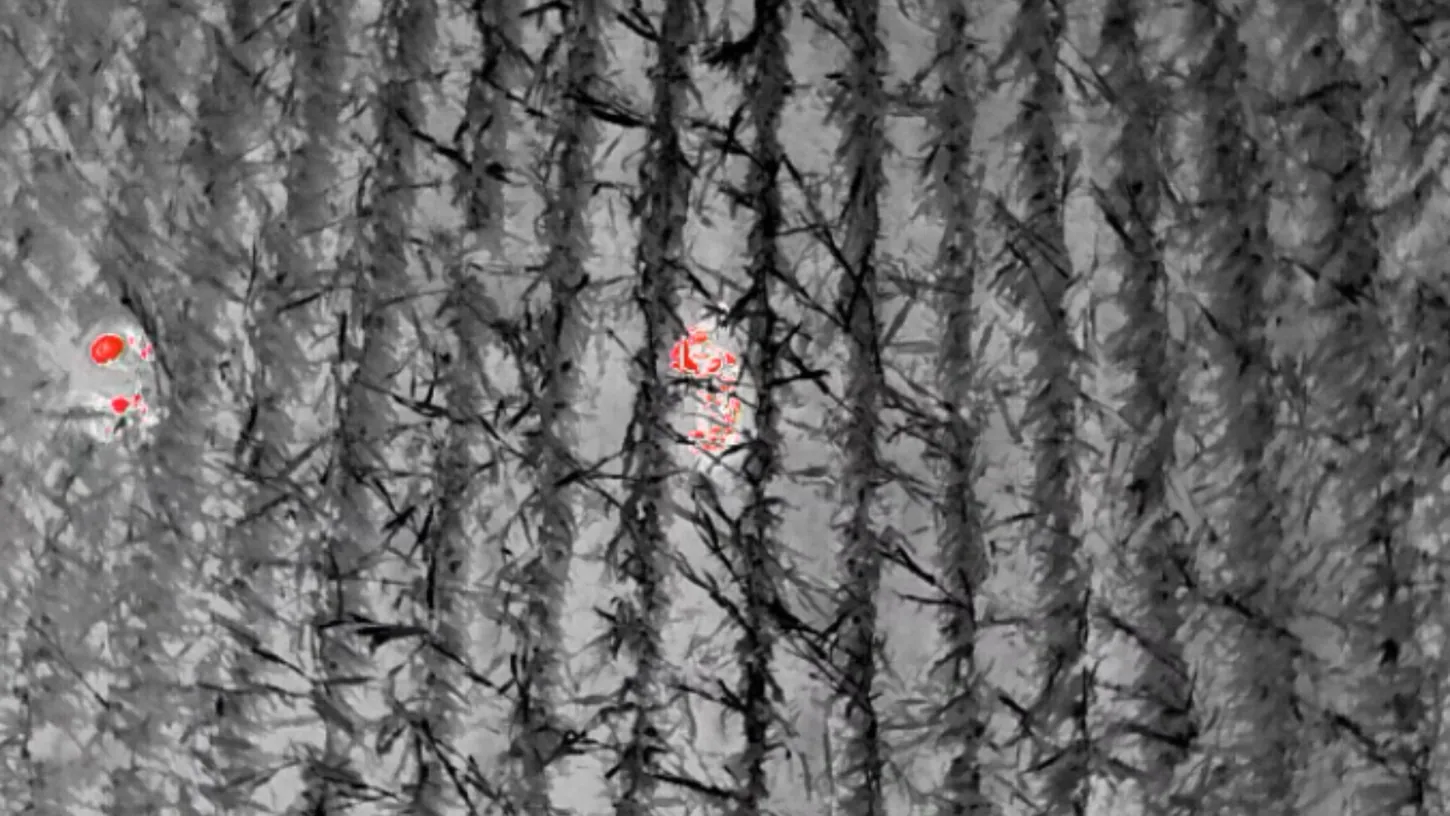
Two hikers stuck on the Continental Divide near Loveland Pass heard help arrive before they saw it. On July 20, the Summit County Rescue Group and Alpine Rescue Team flew a drone with a camera and a speaker over the pair while a lightning storm rolled across the ridge, making contact before any ground team could reach them. I have covered rescue drones at DroneXL for years, and the interesting part of this one is not the search. They knew exactly where the hikers were.
A Speaker In The Sky Reached Them First
The July 20 call came in near the border of Summit and Clear Creek counties, which is why two rescue organizations answered it together. While ground teams worked their way up in storm conditions, the drone went ahead and did the job that usually costs rescuers the most: closing the gap between “someone called for help” and “help is actually here.”
Mission coordinator Ben Butler put it plainly: “Having that drone in the air on scene above the hikers really helped them to understand that help was on the way.”
That understanding is not a soft benefit. Stranded people who believe rescue is coming stay put, conserve energy, and stop improvising. The camera confirmed their condition, the speaker delivered instructions, and both hikers came down safely.
Butler’s larger point covered the whole operation: “We pool our resources together, we problem solve together, all in an effort to help.”

Quandary Peak Kept The Whole Toolbox Busy
The Loveland Pass flight capped a stretch where Summit County’s rescuers used nearly every tool they own. On July 15, a sick hiker above treeline on Quandary Peak drew a half-dozen rescuers while lightning storms sat 10 to 12 miles (16 to 19 km) away over Copper Mountain, Frisco and Silverthorne. A Flight For Life helicopter shuttled rescuers to the saddle to cut their exposure time.
Three days later, a hiker fell 30 feet (9 m) on Quandary’s West Ridge. Flight For Life again moved rescuers to the saddle, and a National Guard helicopter extracted the injured hiker by hoist.
The division of labor matters here. Helicopters carry people and haul the injured out, but they are exactly the aircraft you think twice about when lightning is working the ridgelines. A small drone risks nothing but itself, which makes it the natural first aircraft over a scene the weather has turned hostile.

Butler said the group has handled “quite a few” lightning calls this summer. His prevention advice is the oldest in the book: start early and be below treeline by early afternoon during storm season.
The Same Team Dropped A Flashlight In January
Summit County’s drone program has been building toward flights like this all year. In late January, the same group used a drone with night vision and thermal imaging to find a 19-year-old stranded on Quandary Peak in darkness and snow, then dropped a flashlight within 100 feet (30 m) of him. “This was probably the first time we attempted delivering equipment via drone,” incident commander Brian Binge said then. “It worked.”
Colorado has quietly become the proving ground for this kind of flying. The state’s Keep Colorado Wild Pass now funds search and rescue drone programs, a pipeline DroneXL covered last June. At Roxborough State Park, a drone’s speaker let a father talk directly to his missing teenage son during a 2025 search.
Across the state, backcountry teams have described the aircraft as indispensable, using them to drop care packages to stranded people and to lift gear that would otherwise ride on a rescuer’s back, according to reporting from the Aspen Times and Steamboat Pilot. The payload list keeps growing: thermal cameras, night vision, speakers, spotlights, and drop mechanisms have all moved from experiments to standard kit in the span of a few seasons.

The pattern extends well past Colorado. Just last week I covered the AI-equipped drone that found two lost hikers in Australia’s Kosciuszko National Park in five hours, after ground crews had searched far longer.
DroneXL’s Take
The Loveland Pass flight is the cleanest example of it I have seen this season: the rescue drone’s most underrated payload is time.
Nobody needed to find these hikers. The search part was done. What the drone delivered was presence, minutes before any human could, in weather that grounds the aircraft we usually send. A camera to assess, a speaker to steady two scared people, and suddenly the ground team is climbing toward a stable scene instead of a deteriorating one.
Watch the progression inside this one team, because it tells you where mountain rescue is going. January: thermal finds a kid in the dark and drops him a flashlight. July: a speaker talks two hikers through a lightning storm. Each flight teaches the next one, and none of it required a helicopter to gamble with weather.
The open question, and I mean this as a question rather than a prediction, is when the drone stops being only the rescuer’s tool. Hikers already carry satellite messengers. The day the drone rides in the backpack too, launched by the person in trouble instead of the team coming to help, the response clock starts at zero. The technology for that exists in pieces today. The Loveland Pass rescue shows why somebody will eventually assemble it.