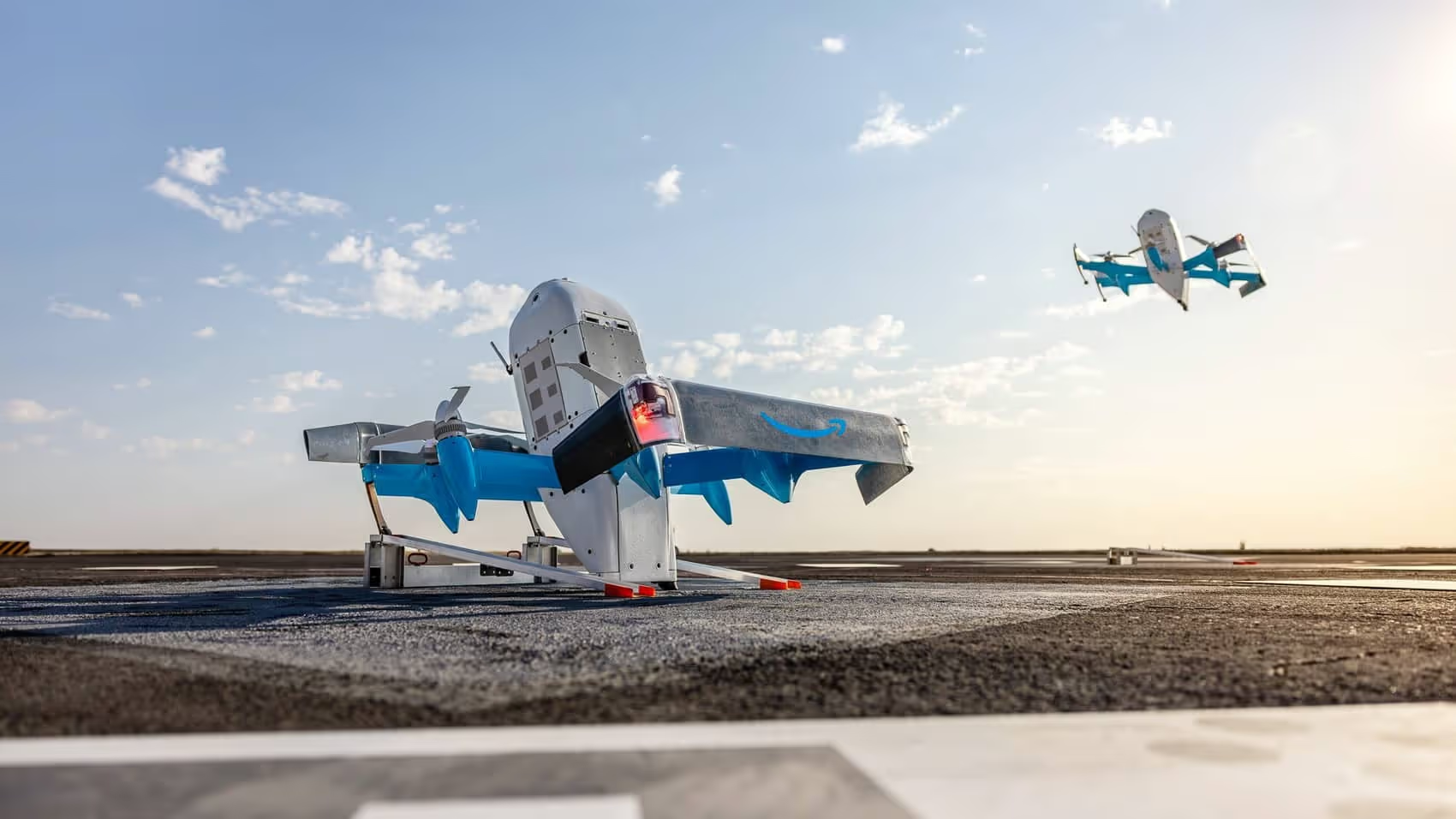
Dexa, the Dayton, Ohio drone delivery operator that used to trade as Drone Express, is one of 200 companies TechCrunch selected for its Startup Battlefield 200. The company will exhibit and pitch at Disrupt 2026 in San Francisco from October 13 to 15.
TechCrunch published the cohort on August 20. Dexa sits in the logistics and supply chain group, one of six companies in it. The top 20 finalists are named on stage the first morning of the conference.
DroneXL has been covering this company since August 2020, back when Beth Flippo was its principal engineer and the operation was testing a ground-based radar system at Springfield-Beckley Airport in Ohio so its aircraft could fly out of sight of a pilot. Flippo is now founder and CEO of a certificated air carrier.
TechCrunch Picked 200 Companies Out Of Thousands Of Applications
Startup Battlefield 200 is TechCrunch’s handpicked cohort of early-stage companies, drawn from thousands of applications worldwide. Selection buys exhibit space and investor access at Disrupt. Twenty finalists get named live on October 13, and the winner takes $100,000, equity-free, plus the Disrupt Cup.
Dexa appears on the published list between Destro AI and NuPort. It will run a table for all three days and deliver its pitch on the showcase stage set aside for the 200. The Disrupt Stage is a separate slot, and TechCrunch has not yet named the companies that get it. Past Battlefield companies include Dropbox and Cloudflare, which is the line every organizer of every pitch contest reaches for, and in this case it happens to be true.
Dexa Holds Aviation Authority Most Of The Cohort Will Never Need
Most companies in the 200 sell software. Dexa runs an airline. It holds an FAA Part 135 air carrier certificate, the authority a company needs to fly cargo for compensation in the United States, plus a waiver to fly beyond visual line of sight without spotters posted along the route.
DroneXL covered the Part 135 award in October 2025 and the BVLOS waiver before it. Dexa says it is one of four U.S. companies that both build and fly delivery aircraft under full FAA approval, a count Reuters repeated in March. The certificate is the hard part of this business. DoorDash’s own air unit only picked one up in July, and DroneXL’s drone delivery tracker lists how few operators have cleared that bar.
Dexa Has Been Flying Paid Deliveries Since 2021
Kroger signed as the first customer in 2021, and Papa Johns and construction supplier Winsupply came on later. In March, Dexa began flying Wonder orders booked through the Grubhub app in Green Brook, New Jersey, inside a 2.5-mile (4-kilometer) radius at no surcharge to the diner.
Those flights use the DE-2020, a hexacopter that carries about 5 pounds (2.3 kilograms) at roughly 40 mph (64 km/h) and lowers the box on a tether rather than landing. Last November the company certified a larger airframe with fewer rotors and up to 20 pounds (9 kilograms) of payload. Dexa builds the aircraft in Dayton and closed a $15 million seed round in September 2025.
The New Jersey program was scheduled to run three months, which put its end in June. Neither Grubhub nor Dexa has announced what happened next. Grubhub said at the outset that it would review results before deciding whether to expand to other restaurants. The Grubhub logo still sits on Dexa’s customer page, which is not the same thing as a renewal.
Dexa Says More Announcements Are Coming Before October
The company says it will put out product and corporate updates in the weeks running up to Disrupt, without saying what they cover. Flippo frames the pitch around scale rather than prize money, citing years of work to move drone delivery past demonstration flights.
“We believe the future of delivery is in the air,” Flippo said, adding that the company is just getting started.
DroneXL’s Take
The $100,000 is not why Dexa is going. Maintaining an air carrier certificate costs more than that, and no restaurant chain signs a logistics contract because a vendor won a cup in San Francisco. Pitch contests do not move unit economics.
What Disrupt has is roughly 10,000 attendees, a large share of them investors, and Dexa reached Part 135 on $15 million when Amazon Prime Air, Wing and Zipline spent orders of magnitude more to stand in the same place. That is the pitch, and my read is that this is a Series A walking onto a stage rather than a startup looking for a trophy.
I wrote about this company in August 2020, when it was a Telegrid division parked at a radar test site in Springfield with a grand total of one good idea and no authority to fly it. Six years to an air carrier certificate is fast for aviation and glacial for a startup conference, which is the tension Dexa carries into October. Watch the top 20 announcement on October 13 for whether TechCrunch’s editors rate a certificated operator above another AI demo, and watch those pre-Disrupt announcements: a company that spent five years collecting FAA approvals does not tease marketing news.
Source: TechCrunch, Dexa press release
DroneXL uses automated tools to support research and source retrieval. All reporting and editorial perspectives are by Haye Kesteloo. Read our editorial standards.