A retail box for the DJI Neo 3 surfaced on Tuesday, and the most interesting thing printed on it isn’t the drone. The Fly More Combo label names a “DJI RC Mini,” and a DJI controller by that name already holds a U.S. FCC grant issued before the December 2025 cutoff.
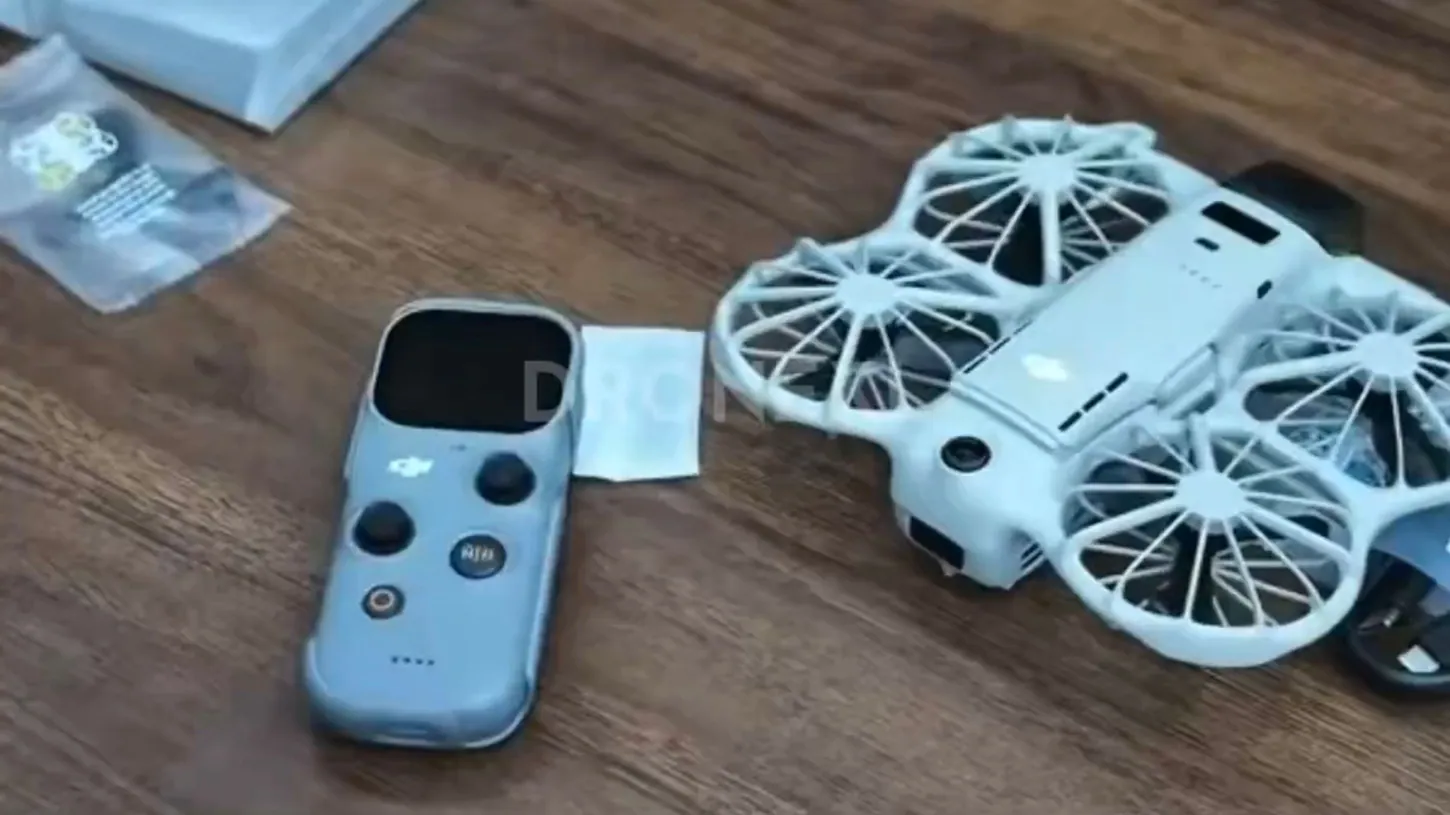
The drone in the same box shows fully enclosed propellers and a remote with its own screen. It looks like the safest beginner drone DJI has drawn, and it is very unlikely to reach American shelves through DJI.
DJI Neo 3 Box Shows Spoked Guards and a Top Sensor
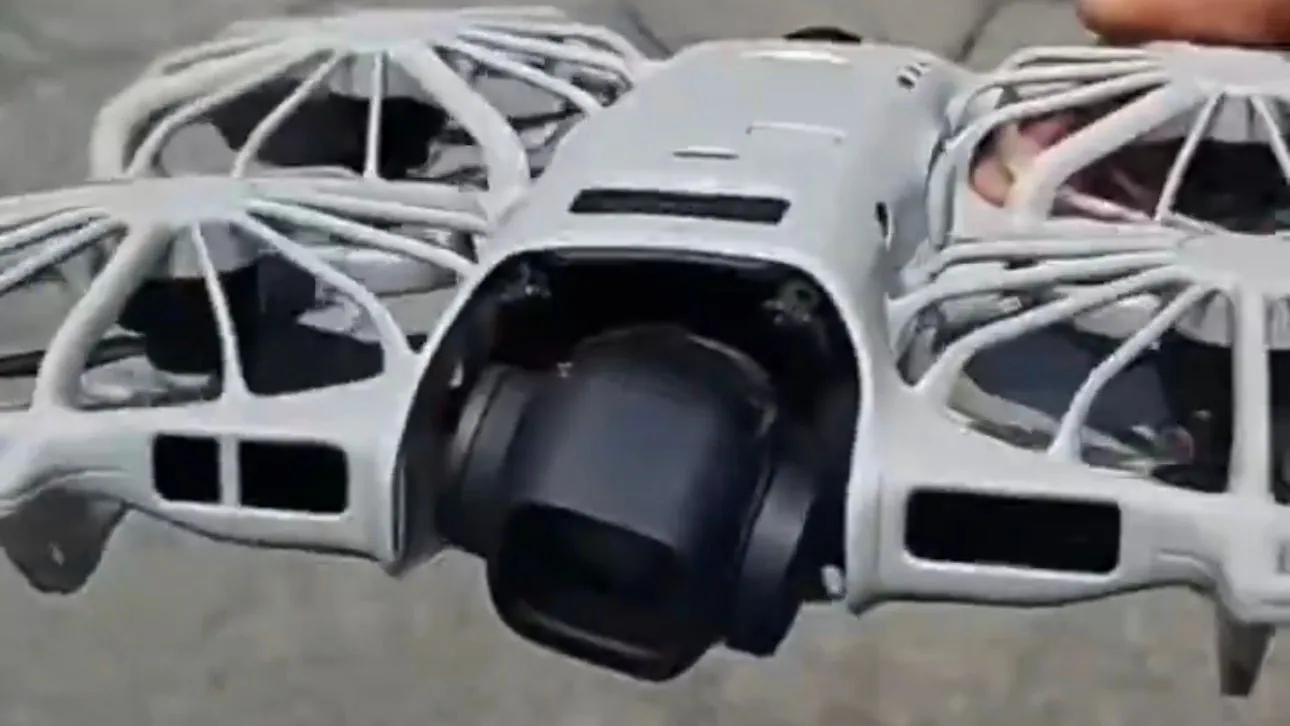
The box art shows the Neo 3 inside full propeller guards rebuilt around a hub-and-spoke pattern, with rows of vent slots along the body and a sensor dome on top of the fuselage. A gimbal-mounted camera sits in the nose, as it does on the Neo 2.

Leaker Igor Bogdanov shared the photo on X on September 15. A partly cropped red sticker in the corner appears to begin with “Not for sale.”
Enclosed props are the whole point of a Neo: a beginner can fly indoors and bounce off a wall without a crash. The Neo 2 already pairs forward LiDAR with omnidirectional vision sensing, as DroneXL covered at launch. The box art doesn’t label the Neo 3’s sensors or list a weight. The Neo 2 weighs 151 g.
DJI RC Mini Brings a Built-In Screen to the Neo Line
The controller on the box has two sticks, a record button, four status LEDs, and a small color screen of its own. Today’s Neo 2 combos use the RC-N3, which needs a phone clipped in for live video, so a screened remote removes the phone from the setup.
The name echoes the RC Mini AG, a pocket controller DJI launched in China in November 2025 for its T55, T70S and T100S spray drones. DJI’s launch details, as reported at the time, gave that unit a 1.97-inch, 800-nit display and up to three hours per charge, with OcuSync 4 video out to 6.2 miles (10 km). The T55 has since launched globally. DJI tried a small remote once before with the RC Track, which leaked and never shipped.
DJI RC Mini Cleared the FCC Before the Covered List Cutoff
A DJI RC Mini received FCC equipment authorization on December 19, 2025, under FCC ID SS3-TKMI2507, according to UAV Coach’s roundup of DJI’s late-2025 grants. Three days later, the FCC put foreign-made drones and critical components on its Covered List, blocking new authorizations for DJI and other foreign drone makers.
Reuters reported that the listing doesn’t stop sales of models authorized earlier, which is why the DJI Avata 360 still reaches U.S. buyers. DroneXL covered the FCC action when it landed.
But a controller grant isn’t an aircraft grant. That same roundup lists five DJI products approved in the final weeks before the deadline: the Avata 360, Lito 1, Lito X1, Agras T55 and RC Mini. No Neo 3 is among them. Without its own pre-cutoff grant, the drone can’t be authorized for U.S. sale now. The Neo 2 never got an official U.S. launch either.
DroneXL’s Take
The Neo 3 is the drone I’d hand a first-time pilot: caged props and a screen on the remote, on a line that has shipped obstacle sensing since the Neo 2. We just ran a year-later look at the Neo 2, and Americans never got that one through DJI either.
Keeping the Neo 3 out doesn’t make American airspace safer. It leaves new pilots on older hardware or cheap toys with no sensing at all, and the guy flying over a stadium was never shopping for a cautious beginner drone. The DJI ban hurts hobbyists more than it hurts DJI, which will sell this box everywhere else.
DJI’s reconsideration petition, which the Pentagon has urged the FCC to reject, and its Ninth Circuit case are the only paths I can point to that change this. Until one does, American pilots may end up with an FCC-approved controller and no approved drone to fly with it.
Igor Bogdanov (@Quadro_News), September 15, 2026
Sources: Igor Bogdanov on X, Reuters, UAV Coach
DroneXL uses automated tools to support research and source retrieval. All reporting and editorial perspectives are by Haye Kesteloo. Read our editorial standards.