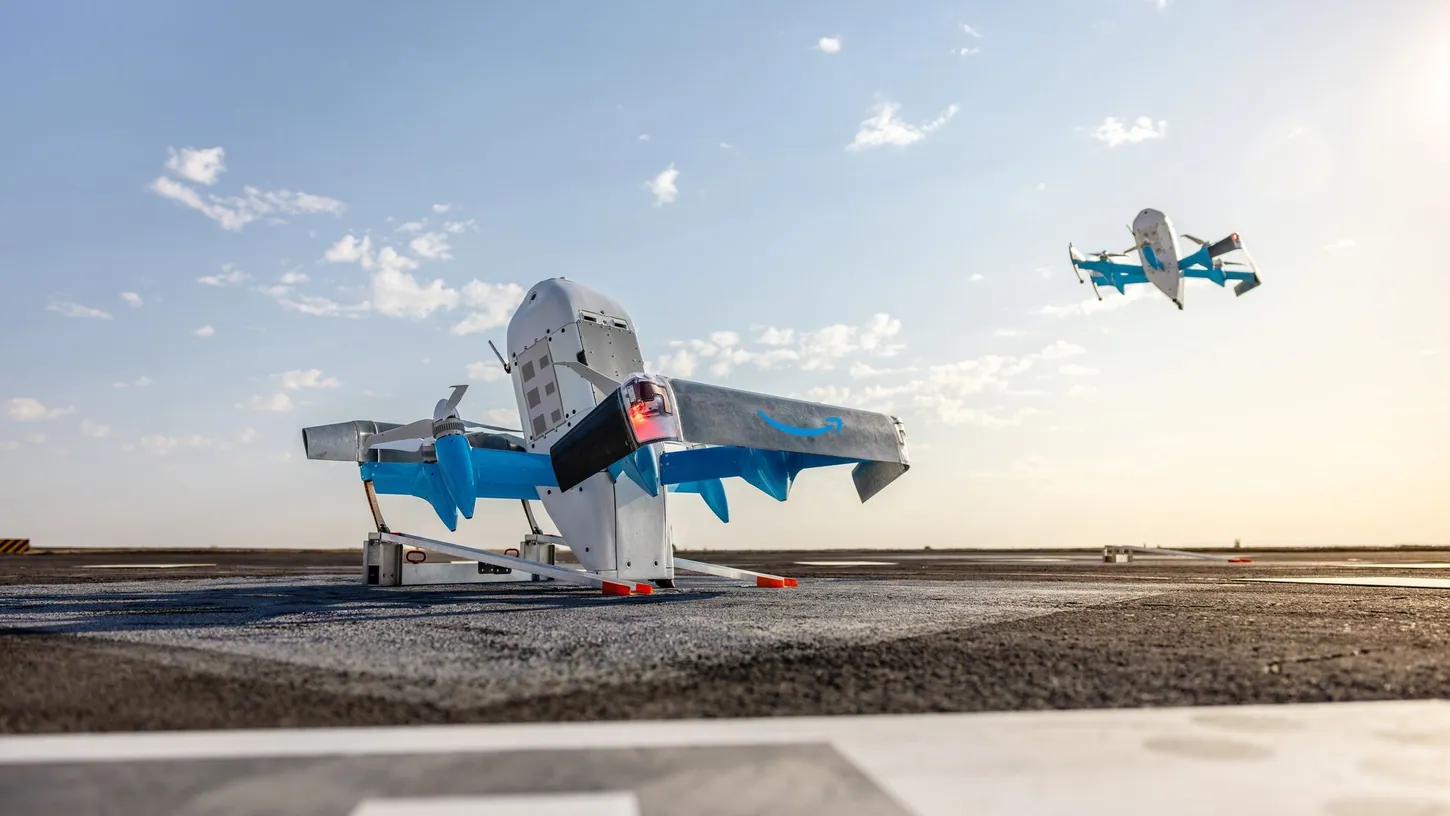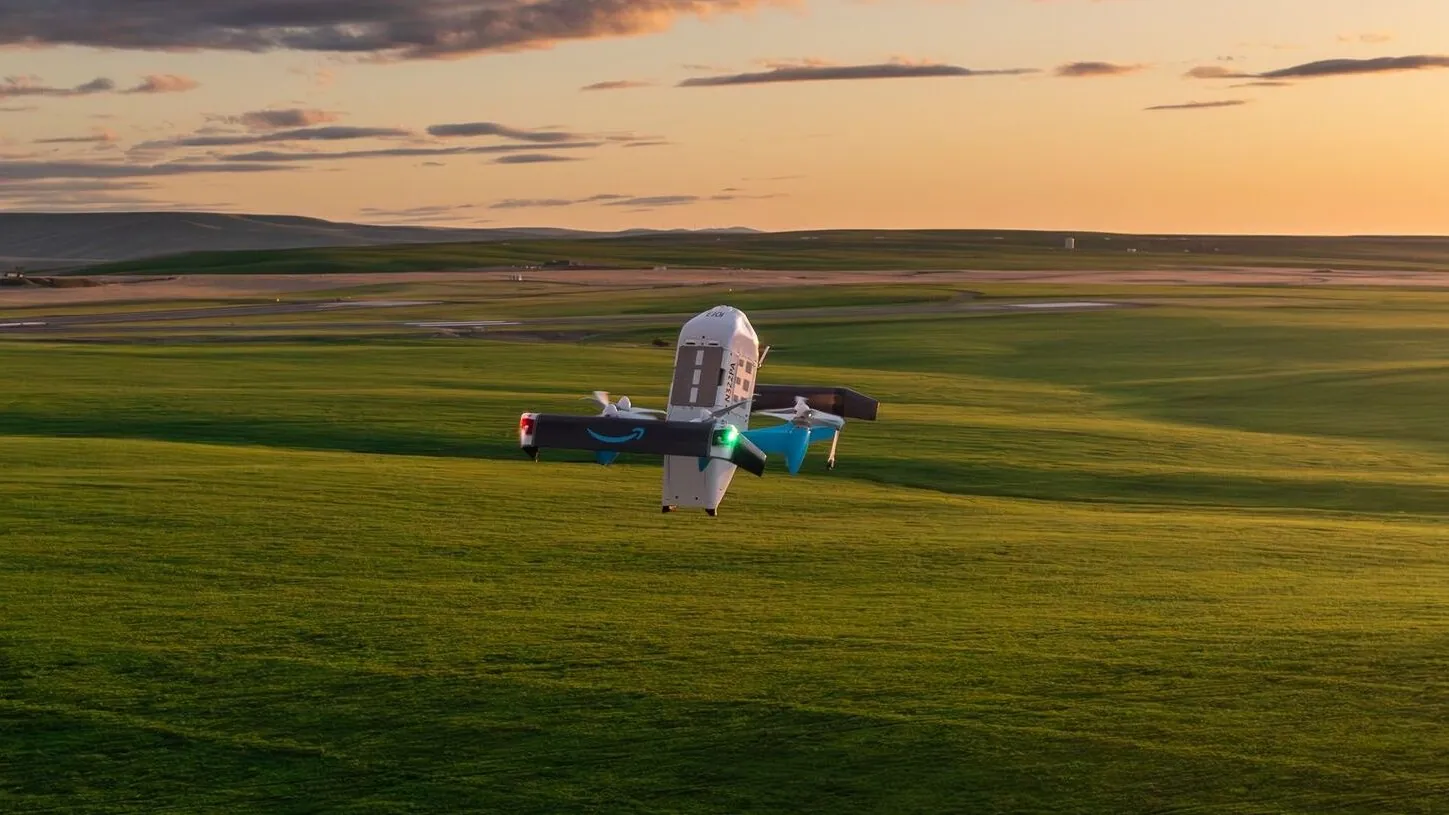
Amazon has adjusted how high its delivery drones fly over Baton Rouge and spread their routes out, the Wall Street Journal reported on Sunday, November 15. The change followed an October 1 meeting at Broadmoor United Methodist Church, where about 100 residents sat through more than two and a half hours of presentations and public comment and told Amazon, the FAA and parish officials what living under the Prime Air hub is like.
Amazon also gave the Journal a flight figure. About 30 drones an hour leave the hub beside the Cortana Place fulfillment center every day, the company said. When Amazon’s Baton Rouge operations manager spoke to the Rotary Club on September 9, she declined to give a daily delivery count, saying the number moves with demand, and an Amazon spokesperson in the room said flying higher would take Federal Aviation Administration approval. The Journal’s report does not say how high the drones fly now or whether the FAA signed off on the change.
Amazon Adjusted Heights and Routes After the October 1 Meeting
Amazon adjusted flying heights and dispersed its traffic after hearing residents’ concerns, the Wall Street Journal reported on November 15. Many residents now describe quieter skies, the paper said, and some say air traffic increased in other areas. The report gives no new altitude and no date for the change.
The Journal’s story, by Kris Maher, takes its headline from Broadmoor resident Rick LeCompte, a retiree and photographer who said the drones are “stealing the sky.” His wife counted 18 of them on one dog walk. A couple across town who used to watch birds in their yard now log drones, and told the paper that three passed in 30 minutes, quieter than before the route change.
The meeting itself was covered by Baton Rouge outlets at the time. Metro Council member Cleve Dunn Jr. organized it, and The Advocate counted about 100 people in the room. Mike Limburg of Amazon’s economic development team said the drones typically fly out at 200 to 250 feet (61 to 76 meters) and return at 300 to 350 feet (91 to 107 meters), WBRZ reported. Residents said the aircraft were brushing their treetops. “We are looking at options in order to better distribute our flight patterns,” Limburg told them.
Richardson, Texas, is the nearest precedent. Residents there complained in January, and by March Amazon had raised its average outbound altitude to 225 feet (69 meters) and moved some departures over commercial land. A Richardson resident still logged 52 overflights in one day in September.
Thirty Drones an Hour Is About Half of What the FAA Filing Analyzed
Amazon’s figure of about 30 drones an hour compares with roughly 60 an hour in the FAA’s draft environmental assessment for Baton Rouge. That document analyzed up to 1,000 MK30 flights a day between 6 a.m. and 10:30 p.m., a window of 16 and a half hours.
The arithmetic is mine, and the Journal’s report does not say which hours the 30 covers. Held across the whole window, 30 an hour would come to about 495 flights a day. In September a Broadmoor resident told the Rotary Club they heard about 20 an hour. At the October meeting, Bob Storer said he had counted 18 overflights in 21 minutes on a Sunday morning.
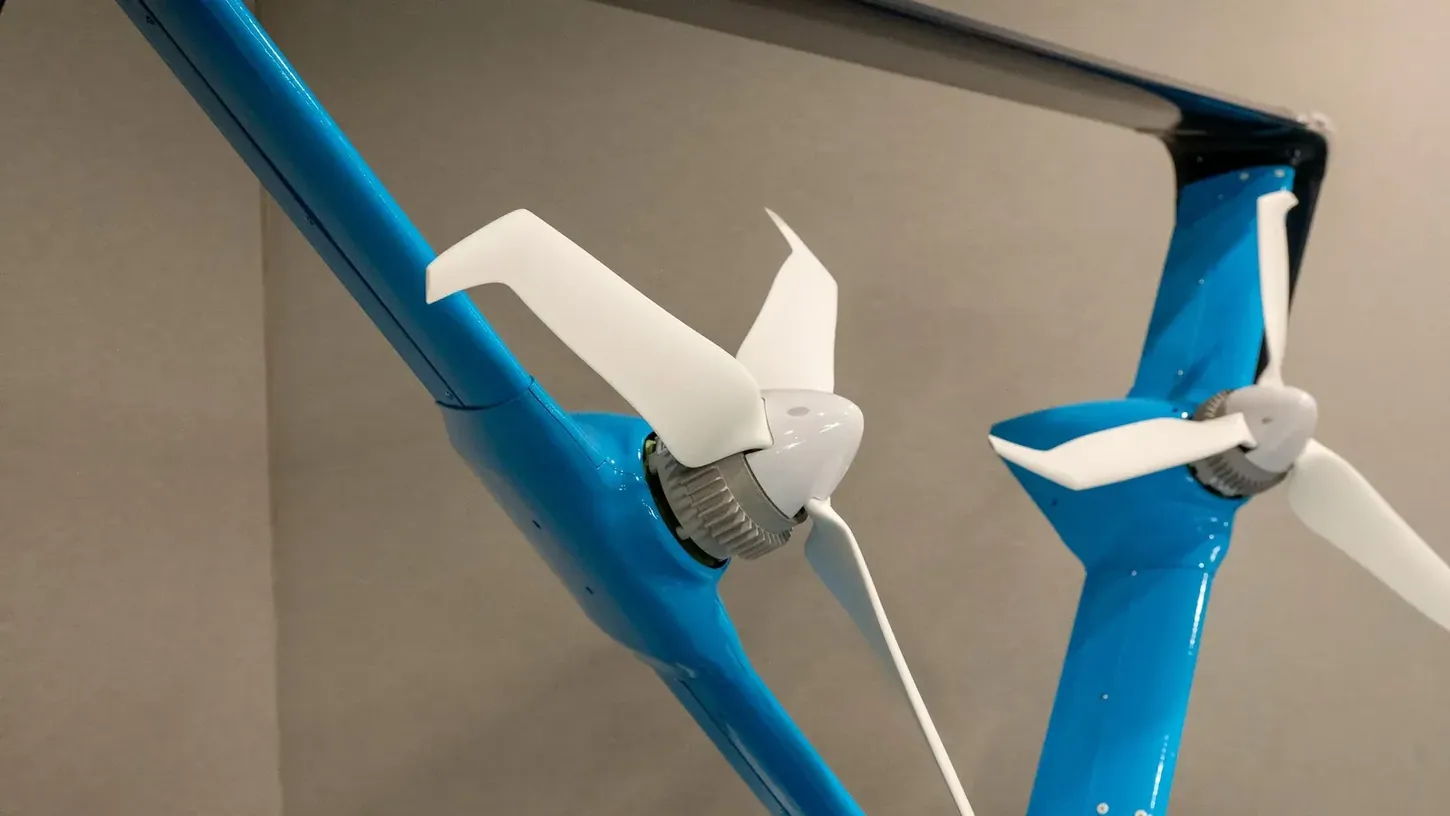
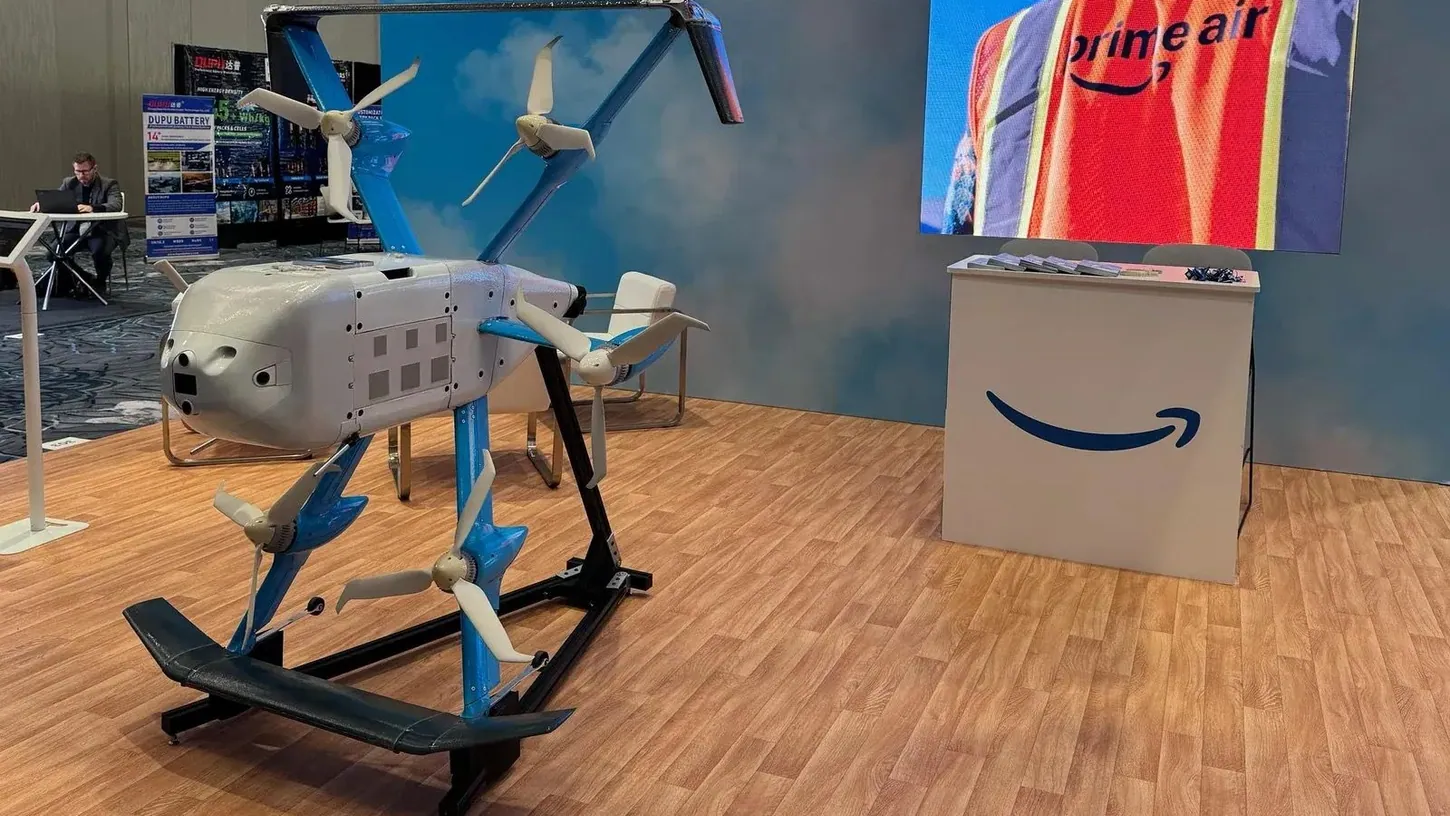
The noise numbers still do not meet. Michael Cole, who designs sound equipment, told the Journal he measured drones over his backyard at up to 87 decibels, and the paper gives no distance for that reading. Limburg told the October meeting a delivery measures about 68 decibels in the backyard where the package is dropped. Amazon told the Journal its drones make a short-lived sound comparable to a passing car. The FAA’s draft filing for the hub puts a delivery at 92.1 decibels SEL at 25 feet (7.6 meters) and a cruising drone at 63.7 decibels SEL at 200 feet (61 meters). It lists the MK30’s maximum takeoff weight at 83.2 pounds (37.7 kilograms). SEL packs a whole pass into one second, so it does not line up with a backyard meter.
That filing belongs to a review the FAA’s public index still lists as a draft. The index was last updated November 9, and when I read it on November 15 it showed the Baton Rouge comment period as closed on July 22 and no final decision for the site. Deliveries began July 7. The index tracks environmental documents and not Amazon’s operating authorization, which is not public. The Advocate reported that Amazon secured FAA approvals before it flew in Baton Rouge.
The FAA and the Parish Each Pointed Residents Somewhere Else
An FAA spokesman told the Wall Street Journal that drone operators and local leaders have primary responsibility for addressing community concerns. At the October 1 meeting, Parish Attorney John McLindon said the city and the parish have no jurisdiction over the drones at all.
“It is completely FAA,” McLindon said, according to The Advocate. FAA officials at the meeting told residents to take requests for rule changes to their federal elected officials. Dunn said the parish could look at ordinances, or negotiate when Amazon’s 10-year tax abatement expires in a few years. He told the Journal that Amazon spent $200 million on the fulfillment center and created 2,000 jobs on the site of a former mall, and that supporters have asked his office not to let a vocal minority shut the hub down. The same handoff played out in North Myrtle Beach in October.
On privacy, Amazon told the Journal its employees do not watch live feeds of deliveries and that the drones do not identify people, use facial recognition or record audio. It said it shares images with government agencies, law enforcement included, only when the law requires it or when needed to protect safety and rights, and that it does not sell the images or use them for advertising. On birds, Amazon said its operations go through environmental review. The national finding the FAA signed in July expects disturbed birds to leave and come back, as DroneXL reported from Nampa, Idaho.
The Journal puts Prime Air at 18 sites in 10 states. Amazon’s own location list still showed 11 sites in seven states when I read it on November 15, and DroneXL’s Amazon Prime Air tracker follows each hub. In Westborough, Massachusetts, Amazon withdrew its drone pad application on October 30 and said a revised plan is coming.
Amazon takes drone complaints at 1-888-280-4331 and through its customer service chat under “Something Else” and then “Amazon Drone Delivery.” DroneXL’s guide for residents covers what to write down before calling.
DroneXL’s Take
Baton Rouge got much the same answer Richardson got, and it got it the same way. In September, an Amazon spokesperson told a Rotary Club audience that altitude changes need FAA approval. Three weeks later about 100 neighbors filled a church hall, and by November the heights and the routes had changed. The Journal does not say whether the FAA signed off. Either way, I read it as a sign that the lever is in Amazon’s hands, and that a full room moves the company faster than a call to City Hall or a letter to the FAA.
The 30-an-hour figure worries me more than the decibels do. Broadmoor reached this point at about half of what the FAA’s draft analyzed, and I don’t think spreading the same flights over more rooftops solves much if the count doubles. A customer in the Journal’s story had pens, notebooks, a power cord and under-eye patches flown to her yard. I’d rather see an 83-pound aircraft with no parachute make that trip for insulin. Residents who want the routes to stay changed should keep counting, and keep showing up.
Sources: The Wall Street Journal, The Advocate, WBRZ, FAA NEPA and Drones, Amazon
DroneXL uses automated tools to support research and source retrieval. All reporting and editorial perspectives are by Haye Kesteloo. Read our editorial standards.