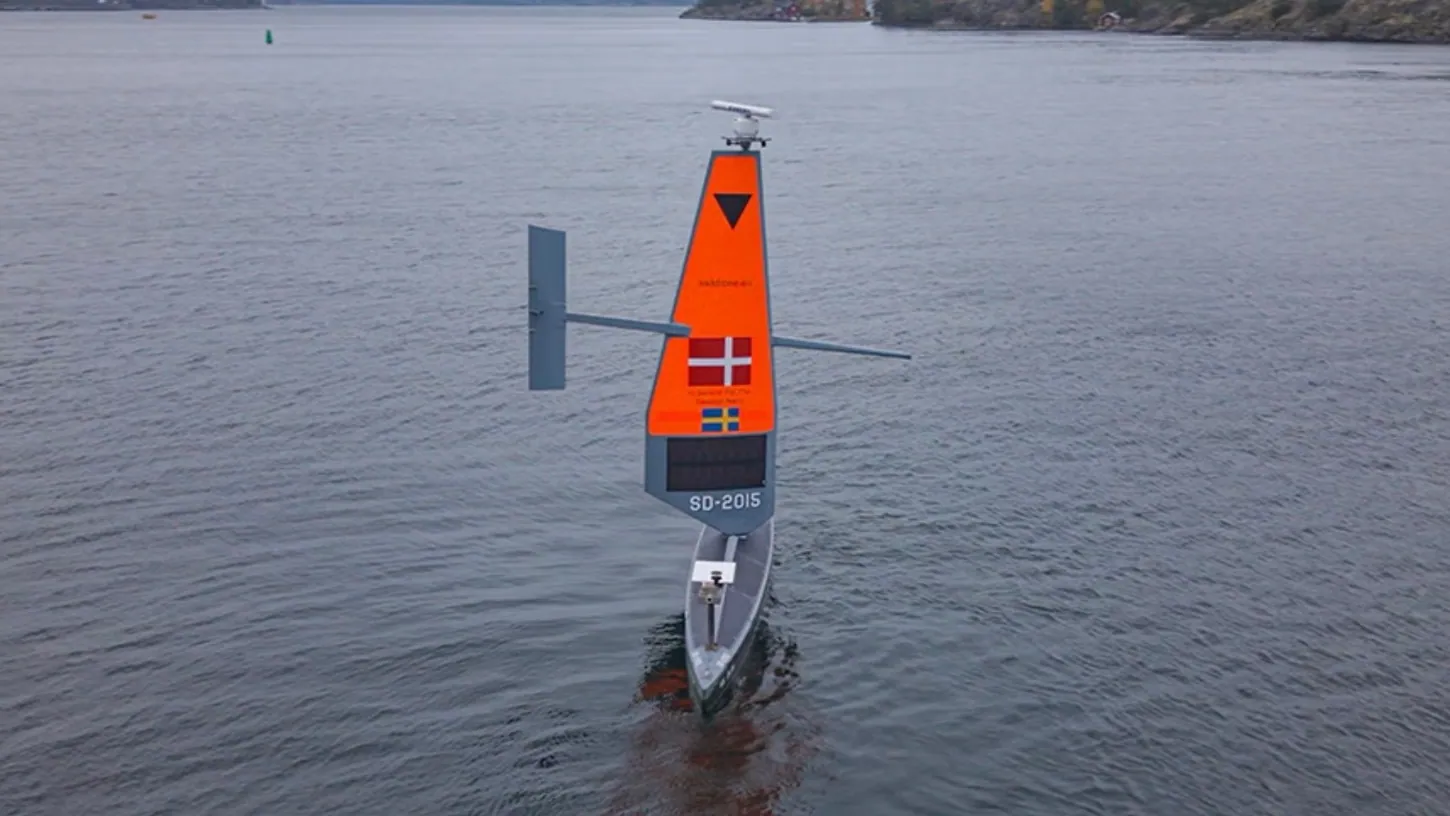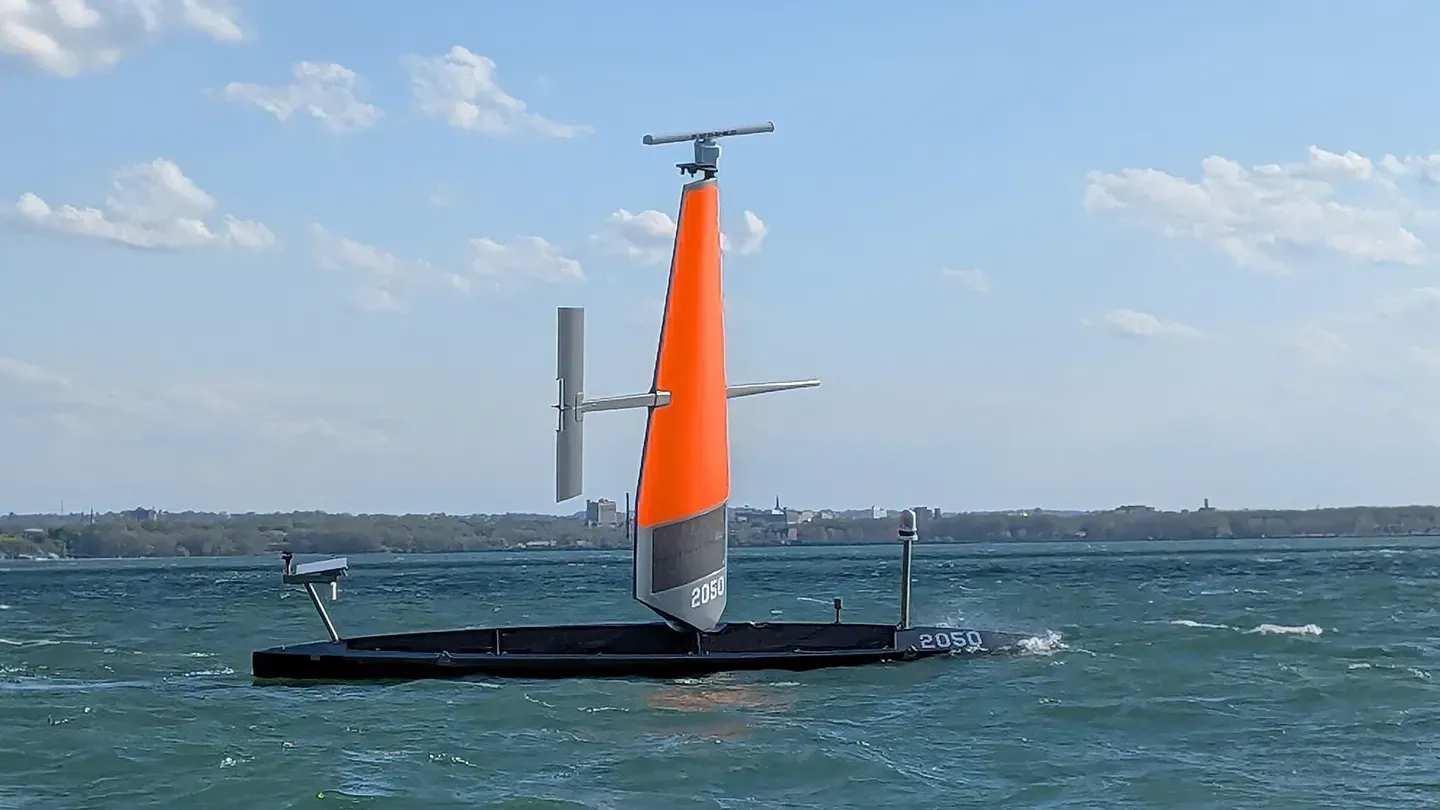
The US Coast Guard is pulling six Saildrone Voyager uncrewed surface vehicles off the Great Lakes ahead of winter ice. The agency announced the end of its first season of autonomous patrols on Monday, November 9, and said the 33-foot (10-meter) boats will be back for a second test period in spring 2027.
The boats spent the season feeding weather data, radar tracks and still photographs to Coast Guard command centers along the Canadian border. When DroneXL covered the start of the deployment in May, its last paragraph opened with the line “The conversation about privacy will come later.” It took about a month.
The Coast Guard now says it is the only party allowed to use what the boats collect. The boats themselves belong to a California contractor, are piloted by that contractor, and show up on a public ship-tracking site as pleasure craft.
The Season Ran Longer Than The Coast Guard Announced In May
The six Voyagers operated from April through November, according to the Coast Guard’s November 9 release. The Great Lakes District’s May 4 announcement had described a May to October deployment. A second test and evaluation period is planned for spring 2027.
Rear Adm. Russell Dash, who commands the Great Lakes District, said the season provided “valuable insight into how autonomous platforms support Coast Guard missions in a freshwater environment.” The release describes the boats as a supplement to crewed boats and aircraft. They measured wind speed, wave height, water temperature and barometric pressure for search and rescue crews, and they watched recreational and commercial traffic across lakes that cover about 94,000 square miles (243,000 square kilometers).
Each Voyager is mainly wind-driven, with solar power for its electronics and a 4-kilowatt auxiliary electric motor. It carries marine radar, an Automatic Identification System (AIS) transceiver, weather instruments and an optical camera. Human operators pilot the boats around the clock from mission control centers in three time zones.
The six boats are part of a larger order. Saildrone says its $15.5 million contract, signed in March, covers 16 Voyagers split between the Great Lakes and the Northeast coast. Wisconsin Public Radio reports the boats worked four of the five lakes, Lake Superior among them.
The Coast Guard Says Only It Can Use The Data
The Coast Guard says it alone may use the data, keeps the rights after the contract ends, and bars Saildrone from selling or sharing it. Its November 9 release adds that the cameras take periodic still photographs, record no continuous video and run no facial recognition.
The cameras are also not designed to target, track or process recreational boat hull numbers, the release says. Its full text does not say how long the photographs are stored or where.
Those gaps are what Michael Zimmer, director of Marquette University’s Center for Data Ethics, raised with WPR. “Where is this data? Who else has access to it?” he asked. Zimmer compared the boats to Flock license plate cameras and warned about what he called function creep, where a system deployed for one stated purpose picks up others over time.
The release lists no enforcement results from the season. Phoebe Wall Howard, who reported on the boats for The Detroit News and went out on Lake Erie with a Coast Guard representative, told WPR the agency said the program had not identified any wrongdoing or suspected wrongdoing in its first six months. In June the Coast Guard declined to give The Guardian figures on drug seizures or unlawful crossings on the lakes, citing operational security.
The Patrol Boats Are Listed As Pleasure Craft
The Voyagers did not clearly identify as Coast Guard-operated this season, WPR reports. On the ship-tracking site MarineTraffic they are classified as pleasure craft, a detail The Guardian reported in June. One of them appears there as “SD 2050 UNCREWED.”
Ryan Weekes, commodore of the InterCity Yacht Club in Cleveland, told The Guardian he understands the security case but that “there should be transparency whenever new surveillance technology is deployed.” About 210,000 recreational boats use the five lakes, by The Guardian’s count.
Saildrone also builds armed vessels. Lockheed Martin put $50 million into the company in October 2025 to arm its larger Surveyor class, and one of those fired two JAGM missiles during this summer’s RIMPAC exercise. A Coast Guard official told The Guardian the agency does not envision such systems on the Great Lakes.
A Canadian Border Mayor Heard About The Patrols From Reporters
Mike Bradley, the mayor of Sarnia, Ontario, told CBC Radio’s As It Happens that he learned about the Saildrone program only when journalists working on the story called him, in a city that sits where Lake Huron drains into the St. Clair River, across from Port Huron, Michigan.
“I don’t have the trust down the road,” Bradley said, pointing to the worsening relationship between the two countries. He said he doubts the boats will stay limited to their current use.
The Coast Guard told WPR by email that the program “does not alter” its daily partnership with the Canadian Coast Guard and the Royal Canadian Mounted Police, and it told CBC that Canadian authorities are aware of the program. Its release says the data can also support coordination with Canadian maritime partners.
DroneXL’s Take
The Coast Guard, as I read this season, has the better argument on usefulness and the worse one on openness. A 33-foot boat that reports wave height before a rescue crew launches is the kind of drone work DroneXL has always backed, and the limits in the release are the right ones.
But those limits exist as sentences in a press release. WPR reports the boats don’t clearly identify as Coast Guard, a public tracker calls them pleasure craft, and a mayor on the border found out from a reporter. Each of those is cheap to fix, and each one left alone turns an argument about a weather boat into an argument about trust.
The Coast Guard has until spring. Before the six Voyagers go back in, it should publish how long the photographs are kept and list the boats as its own on AIS.
Sources: US Coast Guard, Wisconsin Public Radio, The Guardian, Saildrone, CBC Radio
DroneXL uses automated tools to support research and source retrieval. All reporting and editorial perspectives are by Haye Kesteloo. Read our editorial standards.