
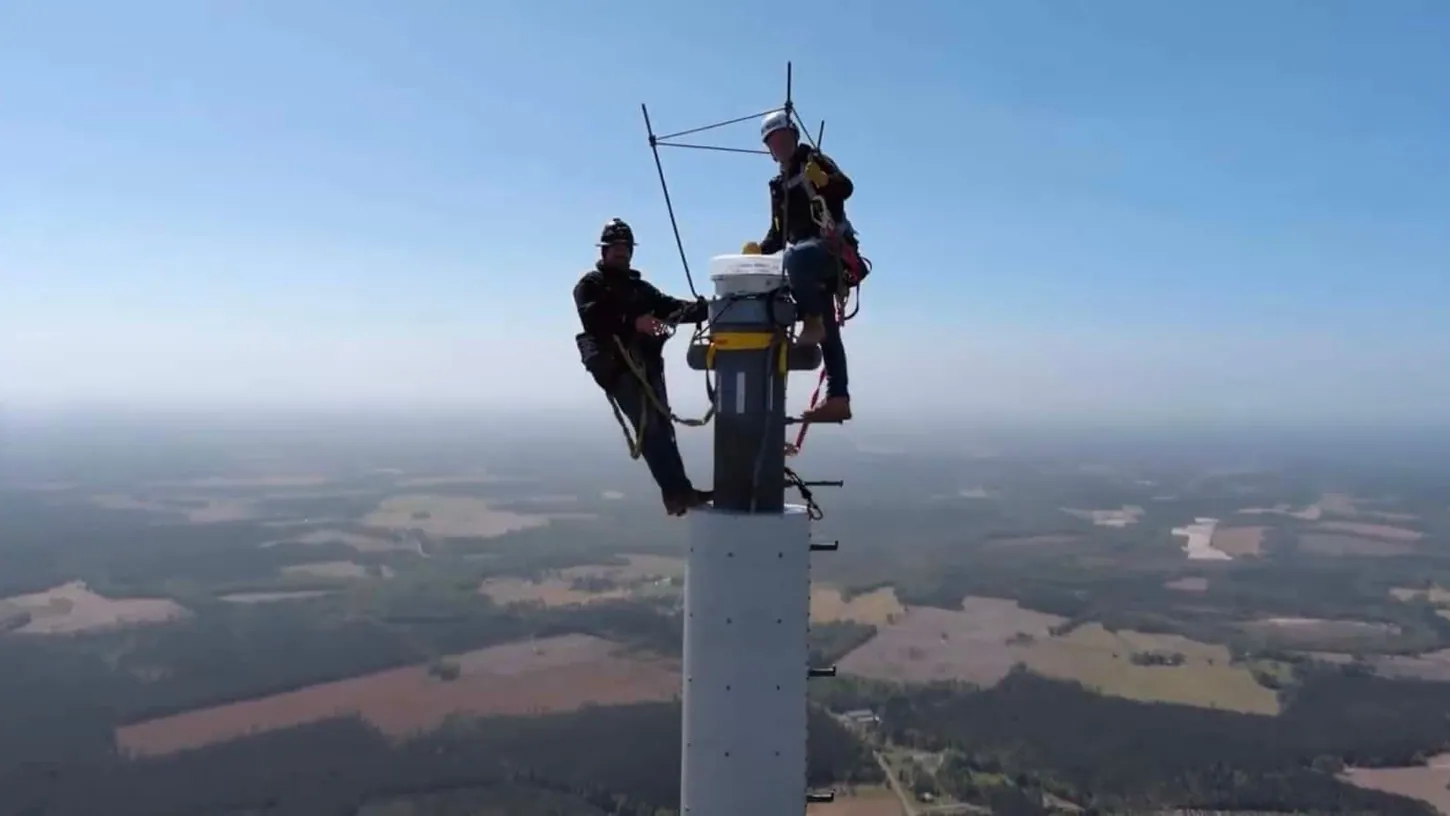
The Federal Communications Commission (FCC) will vote on October 29, 2026 on a draft order that lets drones use the 800 MHz Cellular band, 50 MHz of licensed spectrum that carriers have held nationwide since the 1980s. Chairman Brendan Carr announced the item on October 7 and the agency published the draft text the next day. The rule it rewrites was written to keep passengers from using cell phones on airplanes. The draft carves drones out of that ban and leaves the airline part in place.
The band sits at 824 to 849 MHz and 869 to 894 MHz. Drones already fly on carrier spectrum at 700 MHz and in the PCS band at 1.9 GHz, because those bands carry no airborne restriction. The FCC first asked whether to drop the 800 MHz ban in January 2023, and the question sat unanswered for three years and nine months.
FCC Finds a 1991 Airplane Phone Rule Has Blocked Drones for 35 Years
The draft order says the 800 MHz airborne ban began as a 1984 policy, was codified in 1991, and targeted fast-moving handsets in airplanes that could see many towers at once. The FCC finds that premise no longer holds for drones, so it adds a drone exemption to section 22.925.
The draft Report and Order, circulated as FCC-CIRC2610-03, adds a paragraph (b) to the rule stating the prohibition “shall not apply to uncrewed aircraft or uncrewed aircraft systems” using Cellular Radiotelephone Service frequencies. It also adds a primary mobile allocation for drones in the band to the U.S. Table of Frequency Allocations. The rule takes effect 30 days after publication in the Federal Register if the commission adopts it.
The question came back to life through the “Unleashing American Drone Dominance” public notice, DA 26-314, which DroneXL covered when it was released on April 1 and again ahead of its May 1 comment deadline. Replies closed May 18. The draft order cites that record, plus the 2023 rulemaking in WT Docket 22-323, and says the FCC “received overwhelming support” for opening the band.
Carriers Told the FCC Their Networks Already Handle Drones
AT&T, Verizon, T-Mobile and the trade group CTIA filed in favor. Ericsson and Qualcomm supplied the engineering case. The draft leans on 3GPP Release 15, which added drone identification, height reporting and interference management because a drone in the air sees many base stations at once.
The order’s cost-benefit section states there are no added interference costs for licensees from the change, and that the FCC is “not aware that drone operations have led to interference issues” in the 700 MHz and PCS bands where they already fly. AT&T told the commission that manufacturers have been reluctant to build drone radios that work around band-by-band airborne prohibitions, or to customize firmware to strip prohibited bands out of existing modules. So a modem that cannot legally transmit at 400 feet gets left out of drone designs.
Zipline and one individual commenter asked the FCC to permit drone use at reduced power or below a set altitude. The draft declines both, stating the record “supports eliminating the restriction for UAS entirely.” Skydio, Lockheed Martin, the Choctaw Nation of Oklahoma, the Commercial Drone Alliance, the Small UAV Coalition and AUVSI also filed in support. The order cites no commenter opposing the change.
The Order Opens a Carrier Band, Not Your Controller’s Link
Opening 800 MHz changes what AT&T and Verizon can sell to drone operators and leaves the 2.4 and 5.8 GHz unlicensed links on consumer drones alone. Drones in the band fly under Part 22 rules, inside licensed carrier service areas, and under every FAA rule.
The draft spells out the limits. A drone acting as a mobile station communicates “with and through base transmitters only” under section 22.923, and a drone carrying its own base station is bound by the band’s power and field-strength limits. In the 890 to 894 MHz slice, international allocation rules mean drone operations cannot claim protection from interference or cause it. The order also states its interference analysis “does not speak to any airborne restrictions in other bands,” because some of those were adopted to protect specific incumbents, so every other airborne ban stays where it is.
The use cases the order names are the networked ones: precision agriculture, utility and pipeline inspection, search and rescue, wildfire monitoring and last-mile delivery. Those are BVLOS operations that ride on carrier networks, which is why Zipline and Skydio filed and DJI’s consumer customers have no stake in this item. The 5030 to 5091 MHz band the FCC set aside for drone control links in 2024 is a separate proceeding, and as of the April notice the commission had still not taken the steps needed to put it into service.
DroneXL’s Take
This is the easiest yes the FCC has had on its drone docket all year, and it says something that it took from January 2023 to October 2026 to get here. The order cites no one opposing it. The carriers and the drone companies wanted it, the chipmakers wrote the interference analysis, and the spectrum next door at 700 MHz has carried drone traffic for years without the FCC noticing an interference problem. The commission asked the question in January 2023, issued its 5 GHz drone order in the same docket in September 2024 without resolving it, and had to ask again in April 2026. I think the April notice gave the Wireless Bureau political cover to clear old business, and the 800 MHz item was the one with a finished record and no enemies.
The harder items are the ones that still have none of that. The 5 GHz drone band is the harder item, and it is still waiting. The airborne bans in every other band get one footnote saying this order does not reach them. And the one group with the most to gain from a cheap, long-range licensed link, the hobbyist and small operator flying a DJI aircraft, has been cut off from new hardware by the same commission’s Covered List since December. Carr’s statement puts “consumer drones” on the list of beneficiaries, but the order’s own use cases are farm fields and pipelines. Watch October 29 for the vote, then watch what the Bureau does with 5 GHz, because that is the band that would reach a pilot who does not have a carrier contract.
Sources: FCC draft Report and Order, FCC-CIRC2610-03, FCC October 2026 Open Meeting agenda, Chairman Carr statement, October 7, 2026, FCC Public Notice DA 26-314
DroneXL uses automated tools to support research and source retrieval. All reporting and editorial perspectives are by Haye Kesteloo. Read our editorial standards.


