

Amazon representative Tareq Wafaie told the North Myrtle Beach Planning Commission on Wednesday, October 7, that whether its delivery drones fly over a neighborhood is the Federal Aviation Administration’s decision, not the city’s and not his. The same day, the FAA told WPDE that drone operators and local community leaders carry the primary responsibility for addressing community concerns about those flights.
The workshop at City Hall was the public session the commission asked for after it withdrew an approval motion on September 22, as DroneXL reported in North Myrtle Beach Amazon Drone Vote: Staff Ask Oct. 20, Forum Oct. 7. No vote was taken. The commission takes up the drone paddock behind Amazon’s Water Tower Road warehouse again on October 20, when it can approve, deny or postpone the application again.
Wafaie also told the room the drones never go above 68 decibels, according to the Island Packet’s account. The FAA’s noise filing for Amazon’s Baton Rouge hub, built on readings Amazon took of the same aircraft, puts takeoff at about 82 decibels 20 feet from the pad.
Amazon Puts Overflights on the FAA, and the FAA Hands Them Back to the Operator and the City
Wafaie said towns inside the circle other than North Myrtle Beach have no say on the land use, because the pad sits in North Myrtle Beach, and that the FAA controls all of the airspace. “That is a matter of the FAA, not me,” he said of stopping overflights.
Asked whether that meant no say at all, he told the Island Packet he would not couch it that way, because Amazon will do outreach across the service area and take the feedback. The FAA’s statement to WPDE said Amazon Prime Air operates under an FAA exemption with specific conditions and limitations, and that “operators and local community leaders have primary responsibility” for raising awareness and addressing community concerns, with the agency’s own role limited to safe integration and compliance. No FAA representative attended. One resident asked the commissioners whether they felt disrespected by that, and said they should.
The FAA’s drone environmental review index listed Amazon documents for Baton Rouge, Chicago, Detroit, Florida and the other existing hubs when DroneXL checked it on October 9, and none for South Carolina.
Amazon Says 68 Decibels. Its Own Measurements in the FAA File Say 82 Up Close
Amazon’s slide gives 65 dBA at departure and 68 at arrival at the pad, 55 and 53 at 500 feet (152 meters), and 68 dBA in the backyard and 61 from the front yard during a delivery. It gives no distance for the pad or backyard figures and no metric.
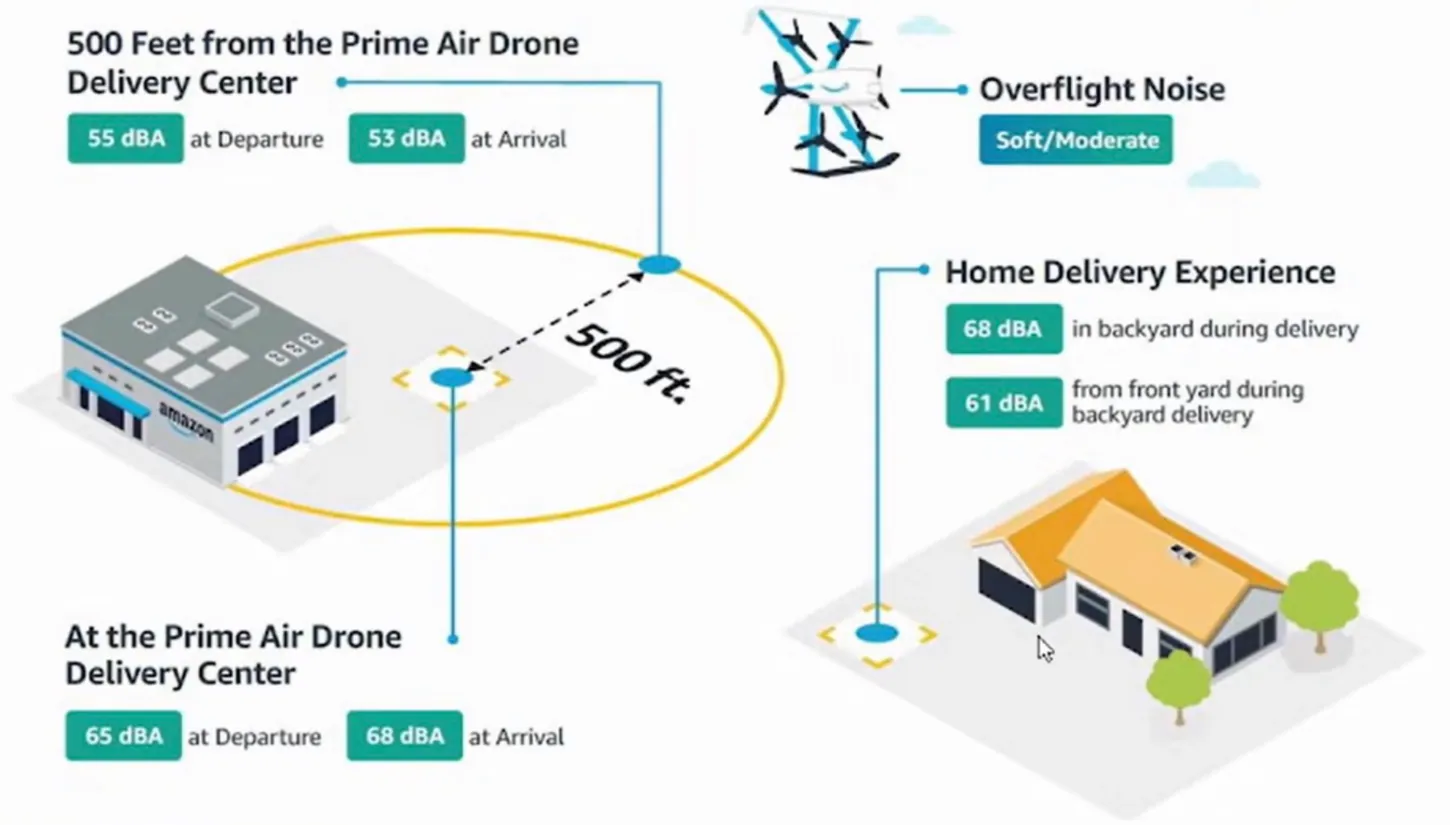
The FAA’s Baton Rouge filing gives both. Its technical noise report is built on measurements Amazon’s own Prime Air team took at its Pendleton, Oregon test range in October 2024, analyzed by the FAA’s consultant ESA. It lists the MK30’s maximum level at takeoff at 82 decibels 20 feet (6 meters) from the pad and about 70 decibels at 75 feet (23 meters). Its sound exposure levels, which fold the whole event’s duration into one number and run higher than the peak, are 90.5 decibels for takeoff at 20 feet, 92.1 for the delivery hover at 25 feet and 63.7 for a cruise pass at 200 feet (61 meters). DroneXL laid those figures out in Amazon Says Quieter Than a Truck. Its FAA Filing Says 92 Decibels, after Amazon’s Baton Rouge manager, Tyra Jones, made the comparison Wafaie repeated Wednesday: a delivery van on your street is louder than the drone overhead.
The two sets describe the same aircraft at different distances, because a decibel figure without a distance and a metric is not a measurement. Amazon’s 68 at arrival sits close to the FAA’s 70 maximum at 75 feet. The 92.1 is the sound of a box being dropped 13 feet (4 meters) above a lawn, measured from the next lawn over, and the FAA’s comparison for it is a diesel truck at 50 feet. Its vacuum cleaner at 10 feet is for the 69 decibels you would hear 75 feet from the drop. Wafaie’s comparison for hearing the drone from a quiet yard was an electric toothbrush held at arm’s length.
The MK30 Amazon Showed: 83 Pounds, a 5-Pound Box, 100 to 400 Feet and No Landing
Amazon’s spec slide lists the MK30 at 5 feet 5 inches (1.65 meters) tall, up to 83 pounds (38 kilograms), a 5-pound (2.3-kilogram) payload, a 7.5-mile (12-kilometer) range, about 15 minutes of flight, a 60 to 74 mph (97 to 119 km/h) cruise and operation from 14 to 113°F.
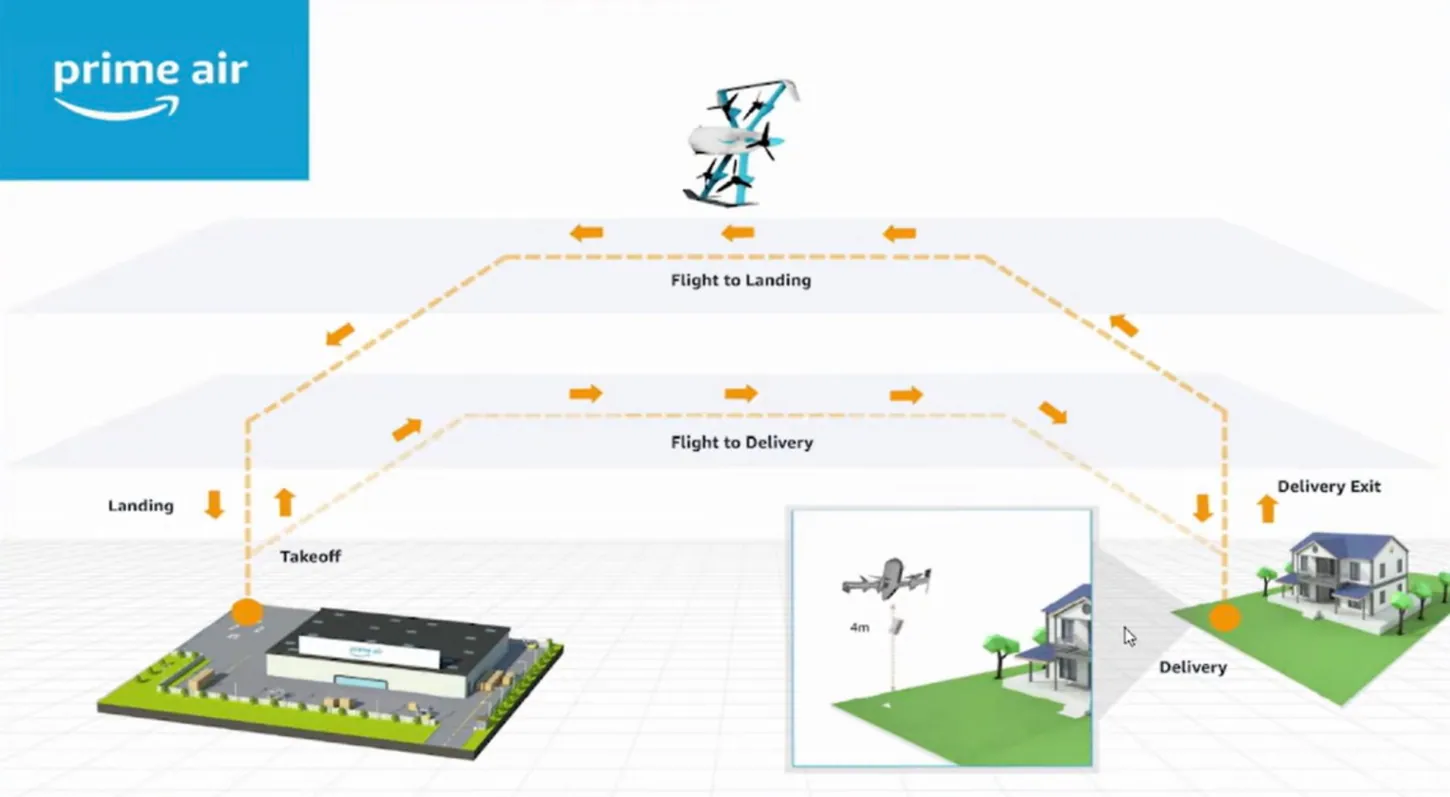
The plan calls for 12 drones and Amazon is limited to 1,000 deliveries a day, WMBF reported, the same ceiling Amazon’s FAA environmental assessments carry for its other hubs. Flights run between 100 and 400 feet (30 to 122 meters), the drone never lands at a house, and the yard needs an 18-foot (5.5-meter) clear circle with no sheds or overhanging wires. Wafaie said the aircraft returns with 70 to 80 percent of its battery and cannot fly in anything beyond very light wind.
Customers opt in through Amazon, which checks the address with GPS and lidar and accepts single-family homes only. The fee is $2.99 for Prime members and $4.99 for everyone else, and the pitch is 60-minute delivery of diapers, batteries and tablets. Wafaie told residents worried about the cameras that nothing is recorded unless a flight has a problem, that the file is overwritten by the next flight, and that the system is “completely different” from Flock’s because the cameras are used only to navigate. Human monitors can ground a drone but cannot watch its camera in flight.
Resident Lisa Watts told the commission the drops looked indiscriminate: “based on maybe some type of GPS.” Wafaie said anything other than a clear yard disqualifies the address.
The Commission Votes Oct. 20 With No Drone Ordinance and Its Lawyers Still Researching One
Chairman Silvio Cutuli told WPDE the decision “stays with the Planning Commission,” because the paddock is a minor amendment to the industrial park’s planned development district. Assistant planning director Suzanne Pritchard told the Island Packet the commission could postpone again on October 20, or vote either way.
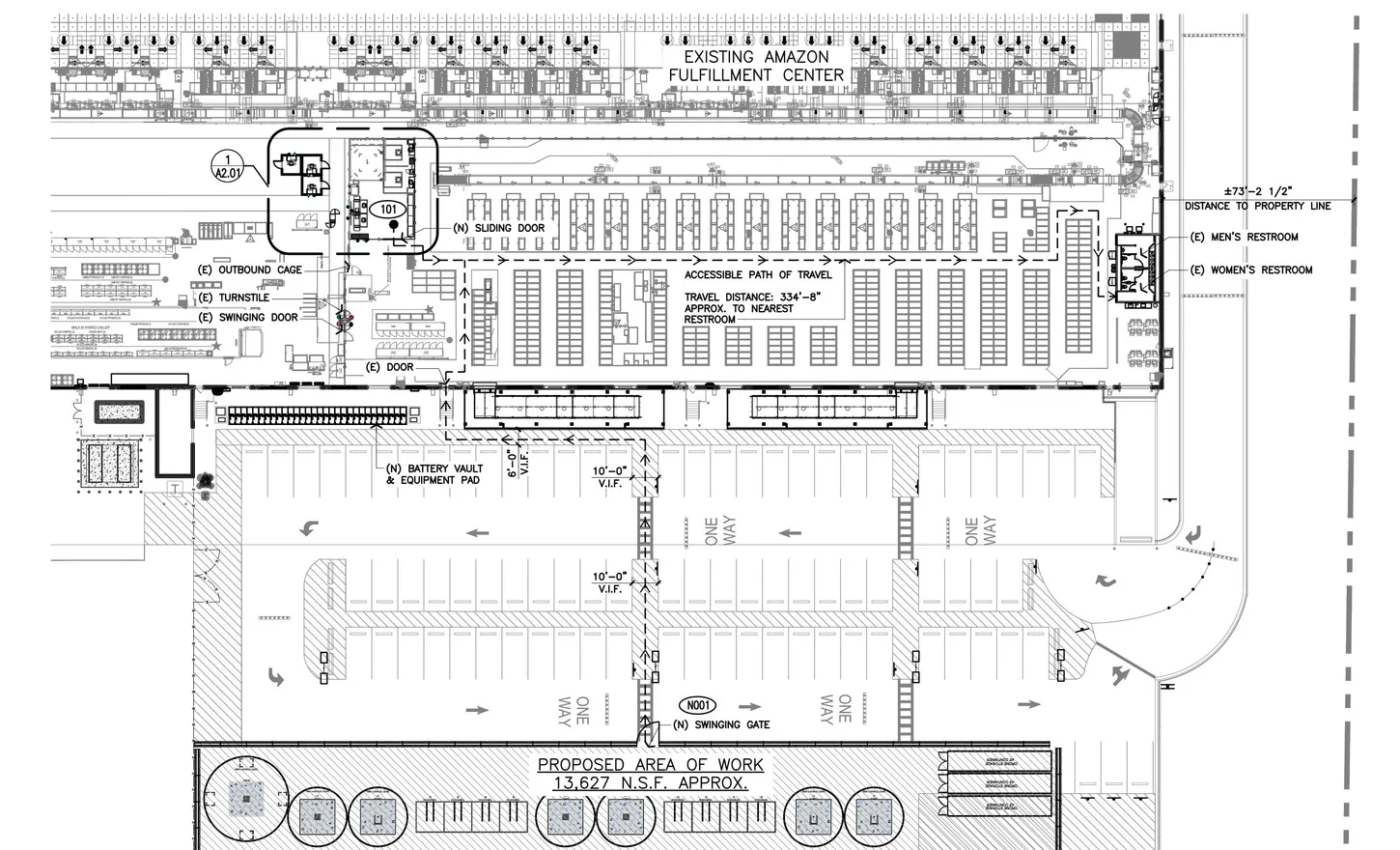
The workshop packet repeats the staff finding that approval of the pad authorizes no flight, and that Amazon is separately pursuing its federal authorization. Pritchard told the Myrtle Beach Sun News the resident feedback so far has been almost overwhelmingly negative, on safety, noise, property values, wildlife and the coastal environment. City spokesperson Lauren Jessie said the legal department is researching whether the city can write an ordinance covering operating hours or noise, which is the preemption question DroneXL’s October 2 guide said the city attorney should answer in public before the vote.
South Carolina’s Act 150, in force January 1, 2027, leaves takeoff and landing sites to municipalities. The DroneXL Amazon Prime Air tracker lists no other South Carolina site, and the Island Packet reported this would be Amazon’s first delivery area in the state. Amazon’s drone line is 1-888-280-4331, and the customer-service chat reaches the drone team through “Something Else” and then “Amazon Drone Delivery.” For the levers that apply in any town Amazon enters, see DroneXL’s residents’ guide.
DroneXL’s Take
Amazon and the FAA spent Wednesday pointing at each other. If the operator says overflights are the FAA’s call and the FAA says community concerns are the operator’s and the city’s, then the only document anyone in North Myrtle Beach will ever sign is the one in front of the Planning Commission on October 20. Richardson approved its pad in 2025 with hours but nothing on flight counts, and by this April its council had dropped a rezoning threat on legal advice and was pointing residents at the FAA and Congress.
The 68-decibel slide is the reason to attach something. It is not a false number, as far as I can tell: it matches the FAA’s 70 at 75 feet. But it is a number with its distance removed, and the FAA file for this aircraft puts the peak at 82 decibels 20 feet from the pad, with exposure levels of 90 to 92 for takeoff and the drop. A city that has Amazon’s slide and not that table in its file has half the record.
My position on the aircraft hasn’t changed since Parachute Shmarachute: 83 pounds with no parachute is the wrong machine for a shoebox over Barefoot. The commission doesn’t need my view to act. It needs Jessie’s legal answer on hours and noise in writing before October 20, and the FAA’s Baton Rouge table in the file next to Amazon’s slide.
Sources: The Island Packet, WMBF News, WPDE, Myrtle Beach Sun News, City of North Myrtle Beach, Planning Commission workshop packet, Oct. 7, 2026, FAA, Baton Rouge draft EA Appendix B, FAA, Baton Rouge technical noise report, Appendix E.
DroneXL uses automated tools to support research and source retrieval. All reporting and editorial perspectives are by Haye Kesteloo. Read our editorial standards.


