
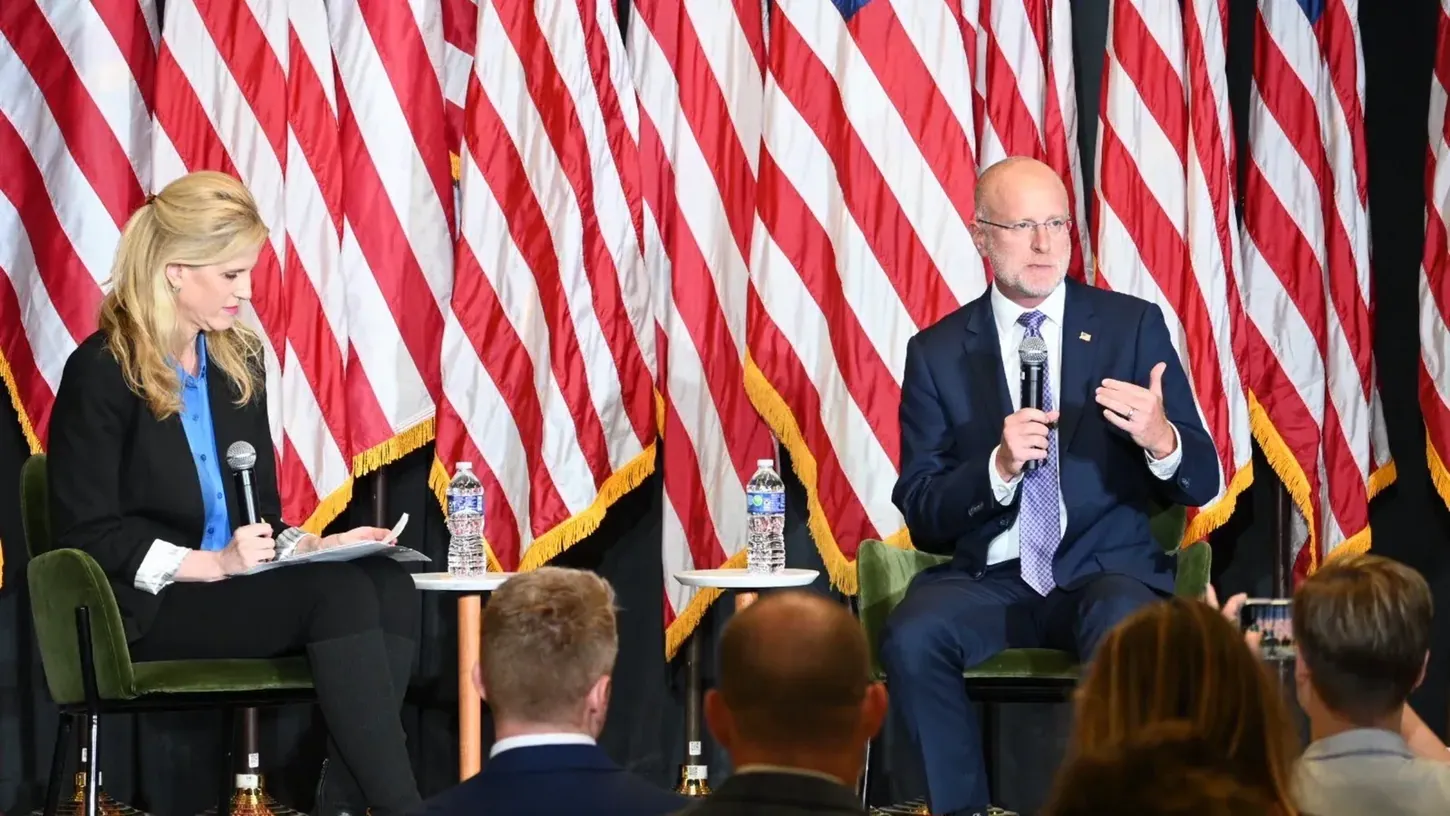
The Federal Communications Commission (FCC) will vote on October 29, 2026 on an order that ends FCC recognition of every test lab in mainland China on December 1, 2028. Chairman Brendan Carr announced the item on October 7 and the agency published the draft the next day. Labs in China tested 82% of the devices that applied for FCC authorization in 2025. Labs inside the United States tested less than 4%.
Every phone, camera, router and drone sold in the US needs FCC authorization before it ships, and the testing behind that authorization is done by private labs the FCC recognizes. The draft limits that recognition to labs in the United States and in economies that have a mutual recognition agreement or a reciprocal trade deal with Washington.
Hong Kong is on the reciprocal list. Mainland China, where DJI’s Osmo Pocket 4P was tested, is not.
The Order Gives Mainland Labs 25 Months and Keeps Hong Kong and Taiwan
The draft Third Report and Order in ET Docket 24-136 stops FCC recognition of test labs and certification bodies in non-reciprocal economies on December 1, 2028. Its Appendix D lists more than 60 reciprocal economies, Hong Kong, Taiwan, Vietnam and Japan among them. Mainland China is not on it.
The draft order, circulated as FCC-CIRC2610-05, counts 609 FCC-recognized test labs. It puts 25.1% of them in China, 18.4% in Taiwan and 17.9% in the United States. In 2007, US labs handled about 31% of FCC applications and Chinese labs about 13%. By 2025 those shares stood at 82% and under 4%.
Labs in China keep their recognition until the transition date, and the FCC’s Office of Engineering and Technology will keep issuing new recognitions to them, all of which expire on December 1, 2028 whatever day they were issued. Grants issued before that date stay valid, and applications filed before it are processed under the old rules. The draft declines to create a waiver process for individual labs, and it declines a broader ban, backed by the Foundation for Defense of Democracies, on labs anywhere that are owned by non-reciprocal entities.
China’s WTO Technical Barriers to Trade enquiry center filed against the rule and called it discriminatory under Article 5.1.1 of the Agreement on Technical Barriers to Trade. The Consumer Technology Association, ITI and the Alliance for Automotive Innovation opposed it too, and several industry commenters asked for three to five years. The Commission gave them roughly two years and wrote that the reliance claims “generally lack evidentiary support.” Carr’s own line in the October 7 announcement was that the FCC will “insist on fair and reciprocal treatment in international commerce.”
DJI’s Handheld Cameras Still Get FCC Grants, and a Shenzhen Lab Tests Them
The FCC filing for the DJI Osmo Pocket 4P lists SGS-CSTC as its test firm, reached at a Shenzhen phone number, with SGS North America issuing the grant. Three other SGS-CSTC branches, in Shanghai, Xi’an and Guangzhou, already lost FCC recognition under the 2025 Bad Labs rules.
DJI’s aircraft were cut off on December 22, 2025, when the FCC put every foreign-made drone and UAS critical component on the Covered List, and the draft order cites that notice as background. A Mini 5 Pro cannot get a new grant whoever tests it, so this rule changes nothing for the ban. It reaches the DJI products that can still get a grant, which is the Osmo line DroneXL has been tracking through the FCC database, and every Chinese-made charger, camera and accessory that falls outside the Covered List. It also reaches every American and European brand that ships its hardware to Shenzhen for testing, which one US lab owner, Compliance Testing CEO Michael Schafer, told the FCC happens because mainland labs price 30 to 70% below what a US lab can charge.
The Bad Labs rules adopted in May 2025 have stripped recognition from 29 labs the FCC found to be owned or controlled by a foreign adversary. In June the agency found 33 incorrect or false test reports from SLG-CPC Test Laboratory, some of them identical reports filed for different products, and the draft counts that lab and Shenzhen STS Test Services among the recognitions it has since withdrawn. In August it told every certification body to tighten its screening after one of them approved the HOVERAir Versa, a Chinese flying camera the Covered List prohibits.
The lab item shares the October 29 agenda with the 800 MHz drone spectrum order DroneXL covered on October 9.
DroneXL’s Take
This is the first Carr order aimed at China this year that I would sign. The Covered List ban took hardware away from American pilots on a national security determination the FCC has kept out of the public record, and I have said so since December. This order asks that the lab testing a device sit in a jurisdiction where the FCC can audit it, it gives everyone 25 months, it leaves every existing grant alone, and it keeps Hong Kong and Taiwan in the system. Reciprocity is a trade principle I can defend to a DJI owner, and the SLG-CPC case, 33 grants on copied test reports, is more evidence than the drone ban’s public record ever showed me.
Carr’s release blames offshoring for gutting American labs, but the order’s own figure says US labs hold 17.9% of recognitions and win under 4% of the work. That tells me the capacity exists and the prices don’t compete. Twenty-five months is enough time for Shenzhen to put its hardware on a plane to Taipei or Hong Kong, and I’d bet that is exactly what DJI and every other mainland manufacturer will do. Nothing in the 76 pages explains why a national security rule trusts Hong Kong, a jurisdiction Beijing has run under its National Security Law since 2020, on the strength of a 1999 APEC arrangement. Watch the October 29 vote, then watch the Further Notice that goes out with it, because the question it asks, how to get testing capacity back into the United States, is the one this order does not answer.
Sources: FCC draft Third Report and Order, FCC-CIRC2610-05, Chairman Carr announcement, October 7, 2026, Reuters via The Business Standard
DroneXL uses automated tools to support research and source retrieval. All reporting and editorial perspectives are by Haye Kesteloo. Read our editorial standards.


