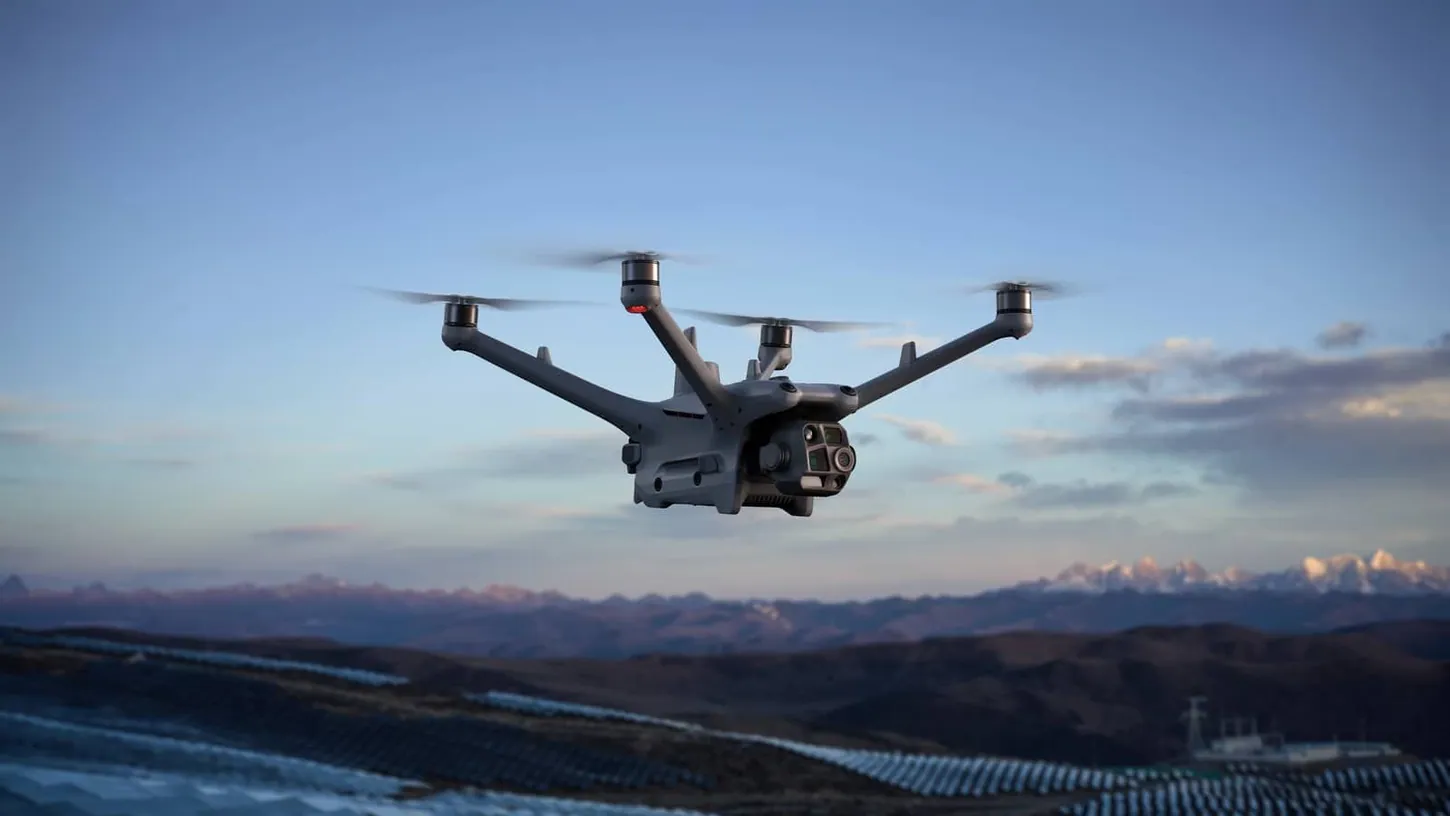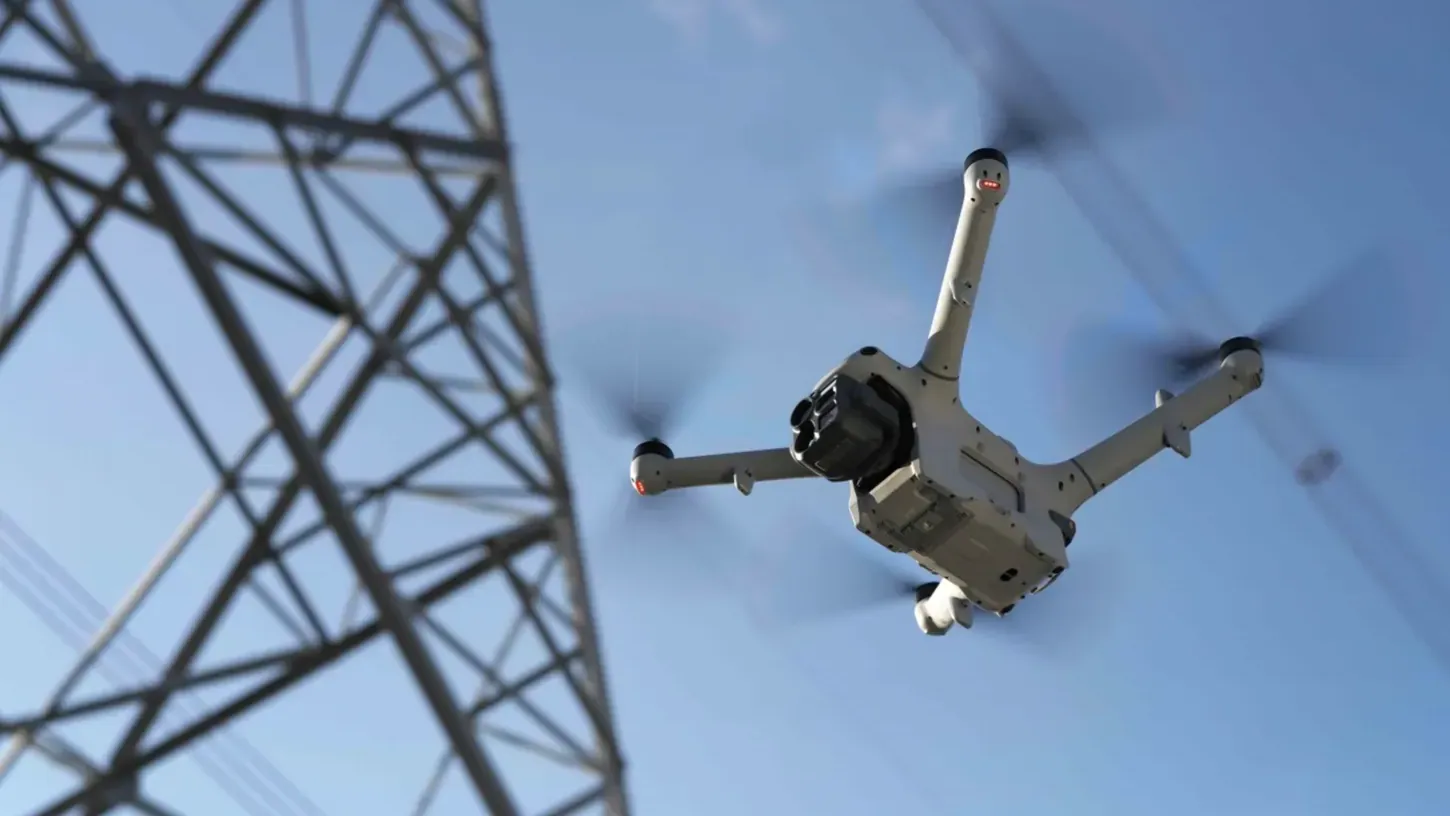
DJI launched the Matrice 5TD with Dock 4 on October 14, 2026, with a native 1280 by 1024 thermal camera that has four times the pixels of the 640 by 512 detector in the Matrice 4T and the Skydio X10. On November 5, DJI Enterprise launches a folding drone whose teaser shows the same gimbal. Dealers in Canada, Europe and Japan can sell the 5TD today. No dealer in the United States can, because the FCC put foreign-made drones on its Covered List on December 22, 2025, and no new DJI model has received an FCC grant since.
FCC Chairman Brendan Carr said that day that the FCC would work with US drone makers to “unleash American drone dominance.” Those drone makers now sell into a market where their largest rival cannot ship a new product. Economists have studied what that does to an industry for 90 years, in cars, washing machines, ships and motorcycles, and the findings are consistent enough to fill a textbook chapter. John Hicks wrote the short version in 1935, that the best of all monopoly profits is a quiet life.
Firms Shielded From Their Strongest Rival Innovate Less, the Research Shows
Philippe Aghion, Nick Bloom, Richard Blundell, Rachel Griffith and Peter Howitt found in a 2005 paper in the Quarterly Journal of Economics that innovation and competition trace an inverted U. Competition pushes firms close to their rivals to innovate and pull ahead, and where competition is weakest, innovation is lowest.
Competition discourages only the firms already far behind, the same paper found. Stephen Nickell reached a matching result from about 670 British companies in 1996: firms facing more competitors, or earning lower rents, posted markedly higher productivity growth. Bloom, Mirko Draca and John Van Reenen then measured what Chinese imports did to firms in 12 European countries between 1996 and 2007. The firms hit hardest by Chinese competition raised their patenting, their IT spending and their productivity the most, and the authors put Chinese competition behind around 15% of European technology upgrading between 2000 and 2007. The same competition cut those firms’ employment, profits and prices. Imports from rich countries had no such effect.
The US record cuts the other way, and the ban’s defenders can point to it. David Autor, David Dorn, Gordon Hanson, Gary Pisano and Pian Shu found in 2020 that US sectors facing more Chinese import competition produced fewer patents, because the competition cut sales and R&D spending first. The effect was largest at firms that were already less profitable. That is the Aghion finding seen from the other end, where a laggard that cannot catch up stops trying, and the US consumer drone makers that folded against DJI, 3D Robotics and GoPro among them, fit it. Removing the rival does not move a laggard to the frontier, and the one protected American firm that did reach it, Harley-Davidson, did so under a tariff with an expiry date.
Washing Machines, Cars and Tires Priced Protection at Six Figures a Job
Aaron Flaaen of the Federal Reserve and Ali Hortaçsu and Felix Tintelnot measured the 2018 safeguard tariff on imported washing machines. Washer prices rose nearly 12%, consumers paid just over $1.5 billion a year, and the roughly 1,800 jobs the tariff created cost more than $815,000 each.
Dryers rose in price by about the same amount although they were never tariffed, and the $815,000 figure is net of the roughly $82 million a year the tariff raised. Flaaen and Justin Pierce then took apart the 2018 and 2019 tariffs across US manufacturing for the Federal Reserve Board. Moving an industry from low to high tariff exposure cut its employment by 1.4%: the protection itself added 0.3%, and dearer inputs and foreign retaliation took away 1.8%. Mary Amiti, Stephen Redding and David Weinstein found the same year’s tariffs passed through to US prices in full, so the whole cost landed on American buyers, at $1.4 billion a month in lost real income by the end of 2018.
The pattern is older than the trade war. Steven Berry, James Levinsohn and Ariel Pakes studied the 1981 restraint on Japanese car exports and found it pushed the price of a Japanese car up by about $1,200 in 1983 dollars, lifted Detroit’s profits by about $2 billion a year, and cost American consumers some $13 billion. Gary Hufbauer and Kimberly Elliott priced the US tariffs and quotas in place in 1990 at about $70 billion a year to consumers, nearly half of it from 21 heavily protected sectors, and put the average consumer cost per job saved at $170,000, with a range from $100,000 to over $1 million. The 2009 tariff on Chinese tires saved at most 1,200 jobs at over $900,000 each.
The Jones Act, which has reserved US coastal shipping for US-built ships since 1920, is the longest-running American test. After a century of that protection, the Congressional Research Service counted five large oceangoing ships on US order books at the end of 2022, against 1,794 in China, 734 in South Korea and 587 in Japan. US yards build about 0.2% of the world’s tonnage, at four or more times the world price.
The US Drone Market Already Shows the Pattern
An internal government memo from January 2021, obtained by the Financial Times, put the Pentagon’s Blue sUAS drones at 8 to 14 times the price of the DJI aircraft they replaced. Flying only Blue drones had cut the Interior Department’s sensor capability by 95%. That figure was the memo’s own.
The memo was written for the incoming Biden administration. Five years on, the Department of Homeland Security’s own lab tested six Blue UAS with 26 public safety pilots and priced them between $13,964 and $56,195. Three of the five it flew in Manhattan could not hold position there. The Skydio X10D cost $28,382 as tested and carries a 640 by 512 thermal camera.

The sensor is not the gap. Teledyne FLIR OEM launched the Boson SX8 on June 8, 2026, a 1280 by 1024 uncooled core on the same 8 μm pixel DJI uses, NDAA-compliant and ITAR-free, in what the company calls a similarly sized package to its 640 by 512 modules, and in high-volume production in the United States. Teledyne FLIR OEM’s public relations agency pointed DroneXL to it after our October 26 report. DroneXL found no announcement of a Blue UAS drone carrying it, and the X10 still ships with the 640 by 512 Boson+.
A purchase record from Geneva, Illinois, prices a Skydio X10 starter kit at $16,464 on a GSA contract in November 2023. Dealer listings put the Matrice 4T, with its own 640 by 512 thermal camera, at about $7,100 to $7,700 this month, and that is the DJI drone US departments can still buy because it was authorized before the Covered List action.
The costs of switching are now counted at state level. Florida’s 2023 ban idled public safety drones that the bill’s sponsor, Senator Tom Wright, estimated had cost at least $200 million, against $25 million the Legislature set aside for replacements. He told the Miami Herald that American manufacturers had doubled their prices in the preceding months. DroneXL reported in November 2025 that the state’s security analysis of the seized drones was never published. Oregon’s aviation department surveyed 25 state transportation departments over the winter and counted 467 restricted airframes in the 23 that gave numbers, with national exposure of up to $2 billion.
The protection is widening rather than ending. The FCC’s Docket 26-189 proposal would bar the import and sale of foreign drones with any of seven capabilities, thermal imaging among them, which would reach the Matrice 4T. A domestically made drone with the same sensor stays on sale under the proposal. The Blue UAS exemptions the Pentagon granted in January expire on January 1, 2027.
Harley-Davidson Is the Exception, and It Asked to End Its Own Tariff Early
Harley-Davidson is the exception protection’s defenders cite. Reagan’s Proclamation 5050 in April 1983 raised the duty on imported motorcycles over 700 cc by 45 percentage points, falling to 10 over five years. Harley retooled and in March 1987 asked for the relief to end a year early.
The schedule stepped down to 35, 20, 15 and 10 points, and Reagan terminated it on October 9, 1987, six months early, after the International Trade Commission found the early end would not hurt the domestic industry. Réka Juhász found the same effect in the Napoleonic blockade. Parts of the French Empire cut off from British trade between 1803 and 1815 built more mechanized cotton spinning, and they kept that advantage into the second half of the 19th century.
Both cases came with an end. Harley’s tariff declined every year by law and Harley still faced Honda and Kawasaki building bikes in Ohio and Nebraska, and the blockade lifted in 1815. The DJI ban has no sunset. The Covered List designation stands for as long as the national security agencies say it does, the exemptions expire rather than the ban, and Docket 26-189 would add a second layer. The Concise Encyclopedia of Economics sums up Anne Krueger’s decades of work on the infant-industry argument as the finding that the infant never grows up.
DJI Took Chinese State Help, and the US Already Taxes That at 100%
DJI has taken Chinese state money, and the record sits in two court rulings and the company’s own filing. Four state-owned or state-run funds held DJI shares, the Washington Post and IPVM reported in February 2022, after DJI had said in 2020 that it received no Chinese government investment.
The funds were China Chengtong, which sits under the state asset supervisor SASAC, the Shanghai Venture Capital Guidance Fund, Guangdong Hengjian and SDIC Unity Capital. DJI’s October 2024 complaint against the Pentagon puts all state-owned enterprise holdings at 5.4% of its shares and 0.6% of its votes, says Chengtong had sold out by June 2023, and says the founder and three early investors hold 99% of the voting rights. Judge Paul Friedman ruled in September 2025 that the record did not show DJI is owned or controlled by the Chinese state. The same ruling, and the D.C. Circuit in August, upheld the Pentagon’s finding that DJI knowingly receives Chinese government assistance through its December 2020 recognition as a National Enterprise Technology Center, a status the Pentagon’s report says carries tax breaks, cash subsidies and support from state-owned capital funds. The appeals court noted that DJI did not dispute the recognition or its eligibility for the benefits, only that it had used them.
Lee Branstetter and Guangwei Li studied the Chinese listed firms targeted by Made in China 2025 and found more subsidies flowing to them and little evidence of higher productivity, R&D spending, patenting or profit. The Bloom result above does not separate subsidized Chinese goods from the rest. The European firms innovated against the competition in front of them, whoever paid for it.
Trade law also has a specific answer to a subsidized rival, and it is a tariff sized to the subsidy, not a ban. The WTO’s subsidies agreement lets a government levy a countervailing duty to offset a foreign subsidy, which is what the European Commission did to Chinese electric cars in October 2024: 17% on BYD, 18.8% on Geely and 35.3% on SAIC, for five years, with the cars still on sale. No countervailing duty case on drones appears in the International Trade Commission’s list of antidumping and countervailing investigations. The House Select Committee on the CCP asked Commerce in March 2024 to open one itself or to start a Section 232 investigation, in a letter whose only footnoted evidence for “highly subsidized” Chinese drone makers was the IPVM and Washington Post reporting. Commerce took the 232 route. Chinese drones already carried a 25% Section 301 tariff, per that letter, and since September 3 a Section 232 tariff adds 100% on any drone with a thermal camera and on docking stations, on top of every other duty. A Matrice 5TD would owe at least 125% of its import value at the border if it could be imported at all, so the subsidy had been priced in twice before the Covered List did what no tariff does and stopped the next model at any price.
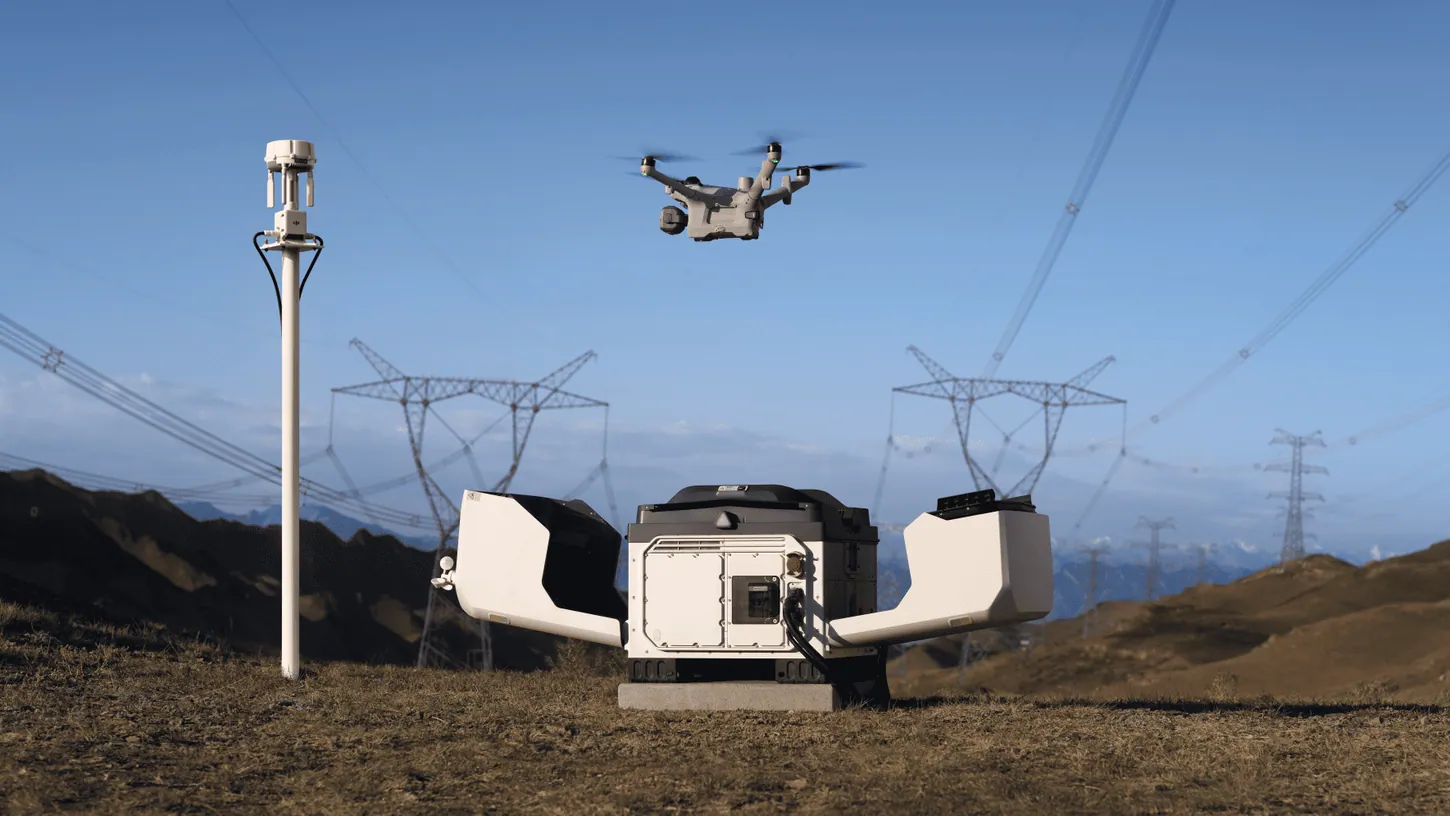
DroneXL’s Take
I’d argue the ban’s authors want American drone dominance and picked the one policy the research says prevents it. DJI has that dominance, and it got it by selling against Parrot, Yuneec, 3D Robotics, GoPro and Autel in open markets for a decade and beating them on price and product. From Aghion to Bloom, the record says a firm whose strongest rival has been removed raises prices and ships what it has, and Skydio and the rest of the Blue list are now that firm.
DJI took state help in China, and two courts say so. The remedy every trading nation uses for that is a duty sized to the subsidy, and Washington had already stacked at least 125% on a thermal drone before it banned the product. The subsidy is a case for the tariff that was already in place.
I have not found the security case written down in anything a fire chief can read. Florida never published its University of South Florida analysis, and DHS withheld the Chinese drone scores from its own report. The FCC’s fact sheet sums up the determination behind the Covered List in one bullet point about what foreign drones “could be used for.” The same bullet says reliance on them “unacceptably undermines the U.S. drone industrial base,” which is an industrial policy goal, and the research above is the record of how that goal fares behind a wall. The Arizona fire chief who warned last December that the ban would cost lives and the El Paso Police Department, with its 22 DJI dock sites, keep a 640 by 512 camera while a department in Toronto or Munich orders four times the pixels, and the American firms that could close that gap have just been told they don’t have to. The 1280 core they would need has been in volume production in Goleta, California, since June.
Sources: DJI Dock 4 and Matrice 5TD specifications, DJI Enterprise teaser page, FCC Covered List fact sheet, Aghion et al. (2005), Nickell (1996), Bloom, Draca and Van Reenen (2016), Autor et al. (2020), Flaaen, Hortaçsu and Tintelnot (2020), Flaaen and Pierce (2019), Amiti, Redding and Weinstein (2019), Berry, Levinsohn and Pakes (1999), Hufbauer and Elliott (1994), Hufbauer and Lowry (2012), Congressional Research Service IF12534, Proclamation 5050, Proclamation 5727, Juhász (2018), Miami Herald via GovTech, City of Geneva, Illinois, SZ DJI Technology v. Department of Defense, D.C. Circuit opinion, DJI complaint, October 2024, Branstetter and Li (2022), WTO Agreement on Subsidies and Countervailing Measures, European Commission, October 29, 2024, House Select Committee on the CCP letter, March 19, 2024, Teledyne FLIR OEM press release, June 8, 2026, DHS Blue UAS comparative assessment
DroneXL uses automated tools to support research and source retrieval. All reporting and editorial perspectives are by Haye Kesteloo. Read our editorial standards.