
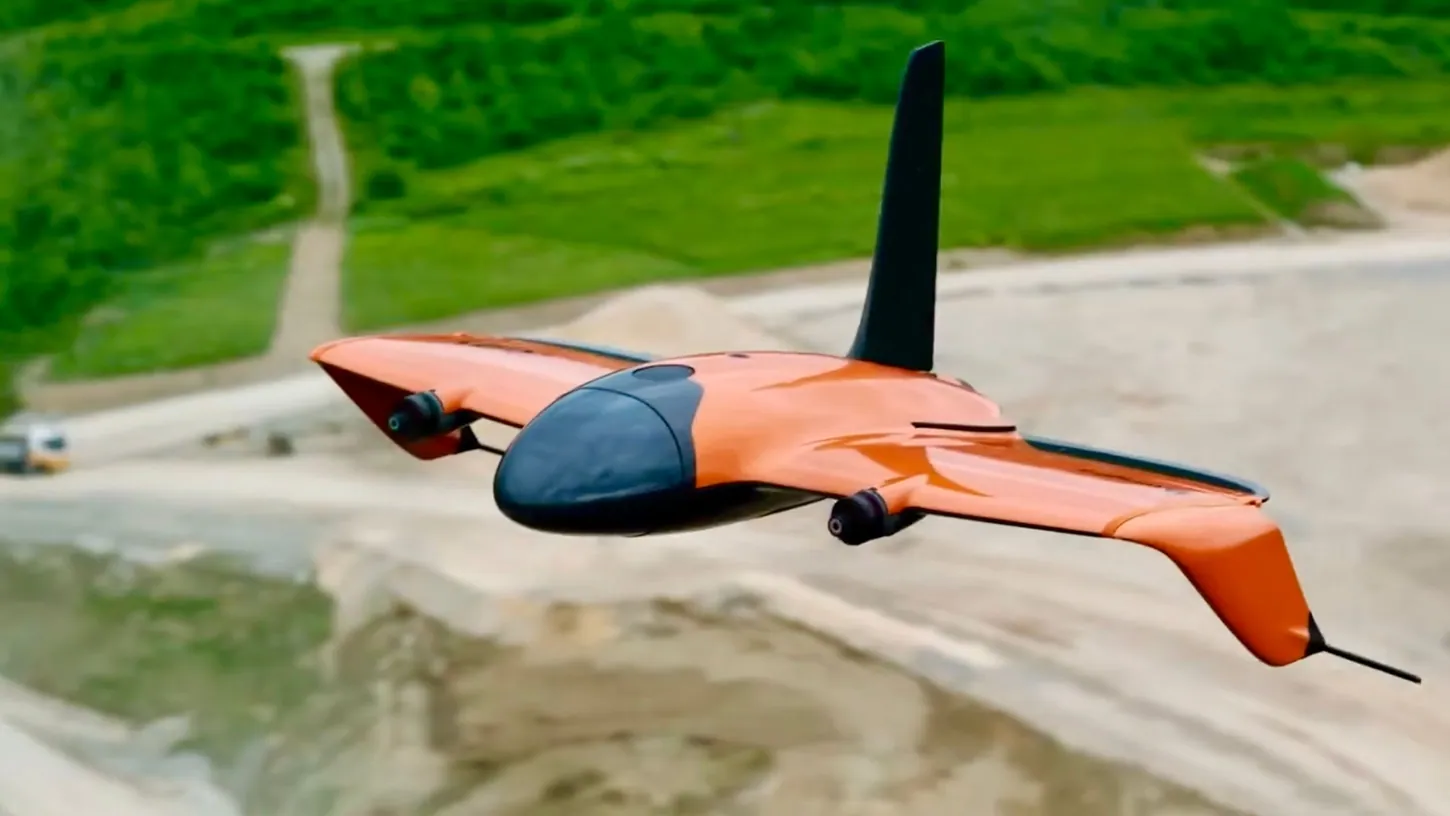
Swiss drone maker Wingtra ran 180 aerodynamic computer simulations in six months to get from the WingtraOne to the WingtraRAY, according to a video AirShaper published on October 7, 2026. AirShaper is the Belgian cloud simulation company whose software ran those tests, and the video is its own case study of the project.
The video puts the result at 56% more payload capacity, 12% more aerodynamic efficiency and 20% more of what AirShaper calls fuel efficiency than the WingtraOne, plus a wider operating envelope. Wingtra’s own RAY product page lists none of those three figures. It sells the drone on 59 minutes of flight time and 550 hectares (1,360 acres) covered per flight instead.
Wingtra Traded Wing Span for a Drone That Fits in a Case
Wingtra limited the RAY’s wing span so the drone fits in a standard transport case, even though AirShaper says a glider-sized wing would have been more efficient. A tailsitter takes off on propeller thrust, then tips over so the wing carries the aircraft and the propellers only overcome drag.
The drone assembles on site without a runway, with the GPS modules mounted on magnets for quick access. The RAY carries several interchangeable sensors, and each one moves the center of gravity, so the airframe had to stay stable across a range of weights rather than at one tuned point. AirShaper says a shift of a few centimeters on a drone optimized for a single set point can put it in a dangerous part of its flight envelope.
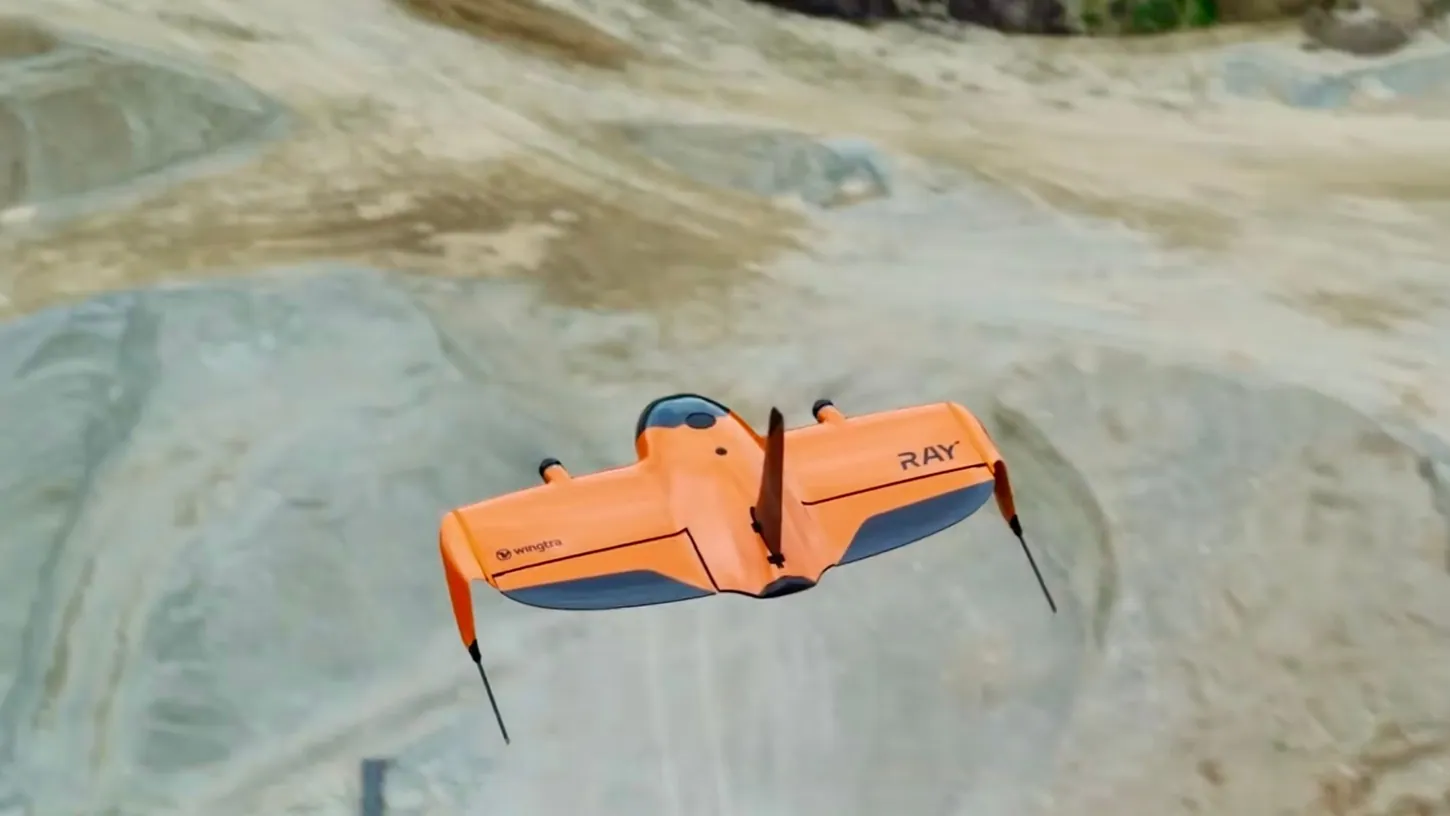
The airfoil thickness sat in the same trade. AirShaper says a thinner wing is slightly more efficient but stalls sooner and loses lift more abruptly, which makes it less predictable in gusts, and that was one of the compromises weighed in the design. The optional parachute, which DroneXL covered at launch as the route to FAA Category 3 operations over people, came out of the safety requirements rather than the aerodynamics.
Wingtra Skipped Prototypes Because the WingtraOne Had Already Been Wind Tunnel Tested
Wingtra modeled all 180 candidates in 3D and simulated them on AirShaper instead of building prototypes. It could do that because it had already checked the same software against a wind tunnel. The finished WingtraOne went into a tunnel, and the video says lift, drag and pitching moment all matched.
The team mapped every candidate against cost, weight, stability, looks and aerodynamic efficiency, picked the strongest and iterated from there. AirShaper’s platform accepts surface models that are not watertight, so sketch-stage geometry could go straight into a simulation. Setting one up took about five minutes: the software detects the propeller axis, the engineer enters the RPM, and the solver builds a moving reference frame around each propeller to compute thrust, power and torque, including the swirl the propwash puts across the wings.
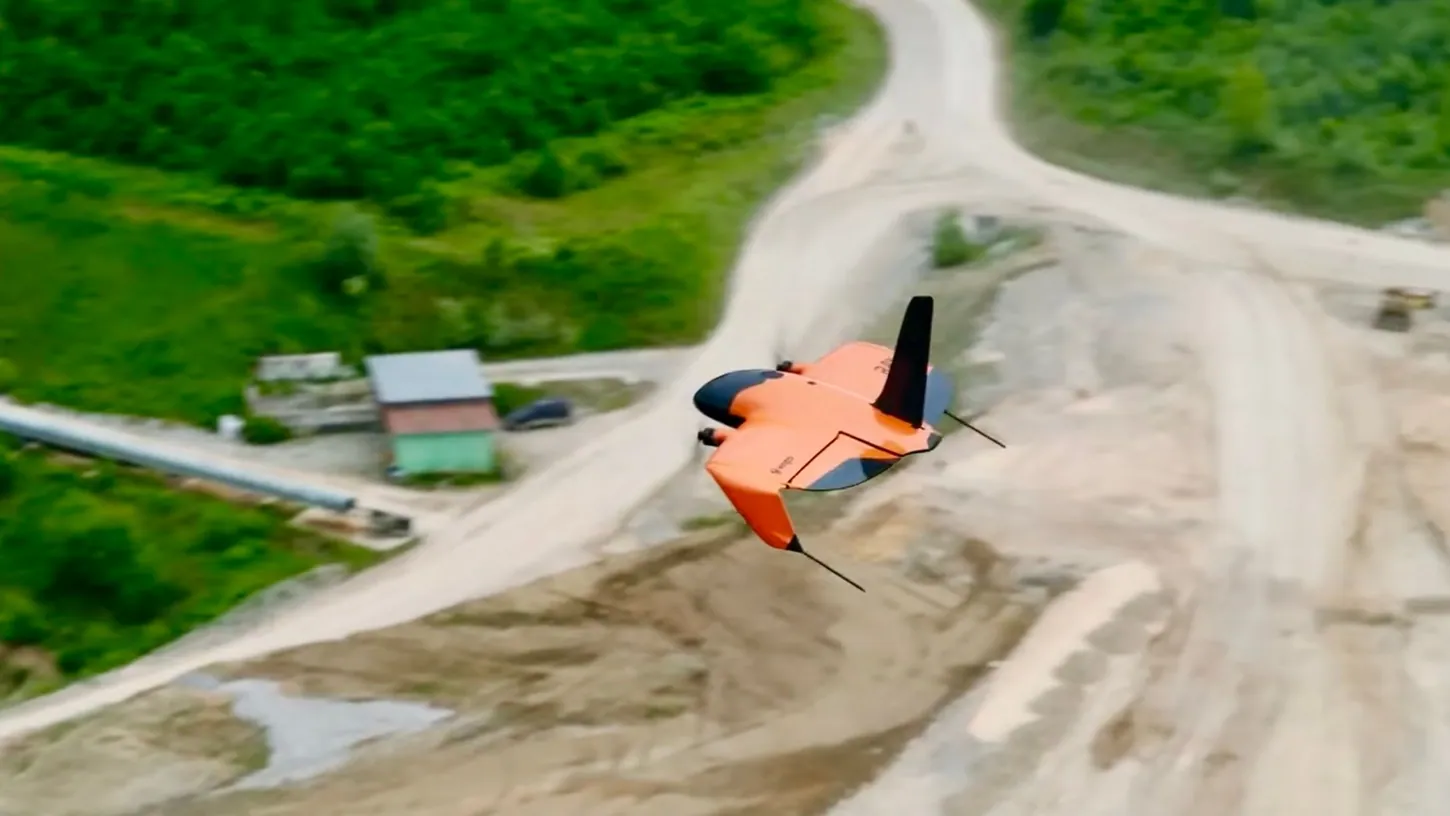
Wingtra ran quick low-accuracy comparisons across wildly different concepts and detailed runs for the geometries with propellers, panel gaps and flap deflections. AirShaper’s argument is that field and wind tunnel testing belong at the end, where prototypes and tunnel time get expensive, and the video says the RAY has since been validated in use. Wingtra itself has not published the simulation story or the three performance figures. This is the same workflow Luke Bell used on his solar-powered drone and his endurance build, at a hobbyist’s scale.

DroneXL’s Take
The wind tunnel check matters more than the 180 number. Wingtra could iterate that fast because it had spent money earlier on measuring the WingtraOne in real air and comparing the result against the software, and plenty of drone startups skip that step and trust the pretty flow pictures. The performance figures deserve more skepticism than the process does. They come from the vendor whose software is being sold, and Wingtra does not repeat them on its own product page. I believe the direction, because Wingtra’s published 40% faster coverage over the GEN II points the same way, but coverage speed mixes in cruise speed and sensor choice and does not isolate aerodynamics. The 56% payload gain is the figure a surveyor would buy on, and Wingtra should confirm it on its own spec page before anyone does.
Source: AirShaper on YouTube
DroneXL uses automated tools to support research and source retrieval. All reporting and editorial perspectives are by Haye Kesteloo. Read our editorial standards.


