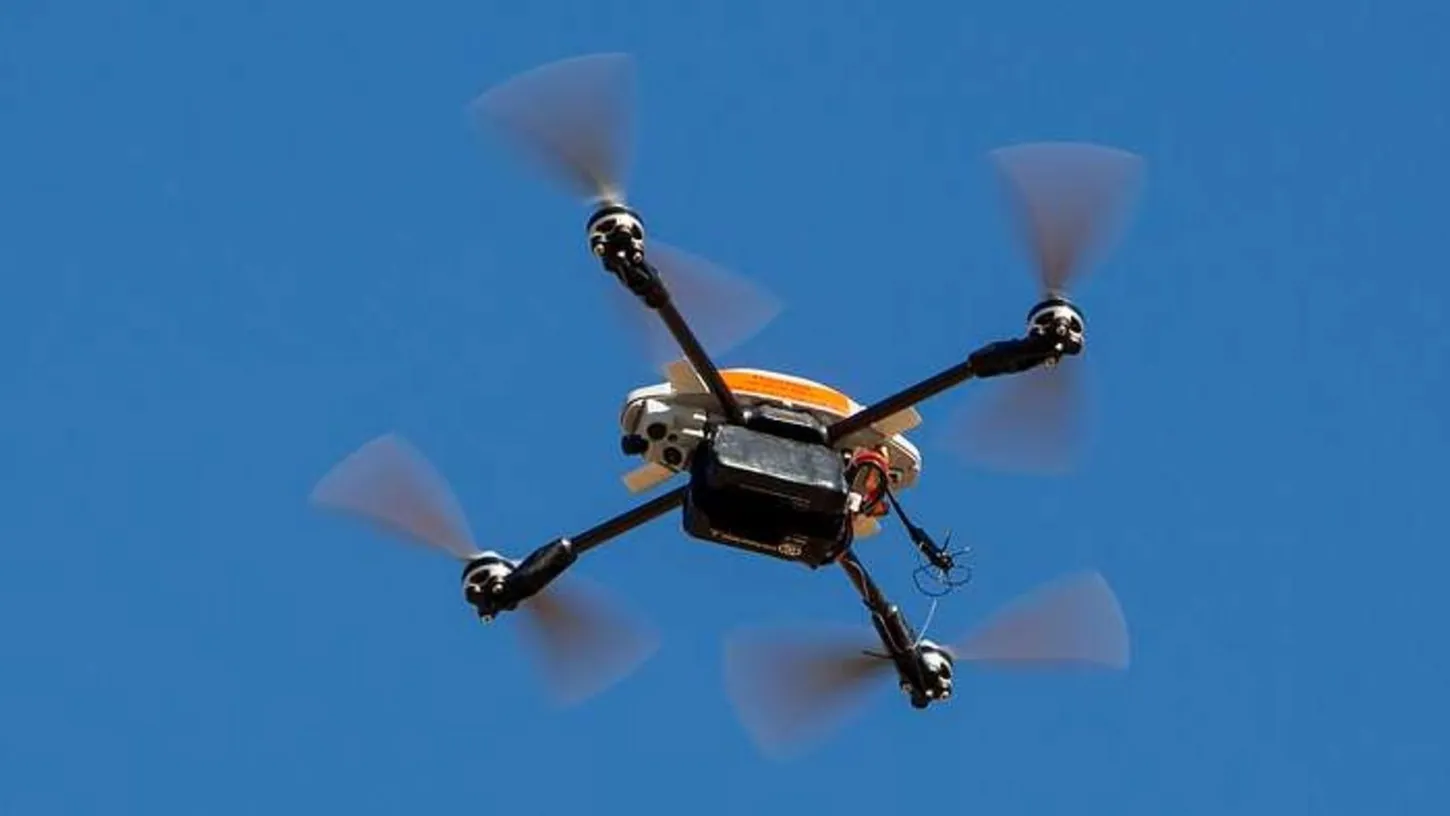
Canada’s Department of National Defence is seeking counter-drone systems that can detect, track and identify micro and mini drones in a city. Chosen entrants demonstrate in downtown Ottawa from July 26 to 30, 2027, competing for $1.75 million in prizes. Proposals close December 1, 2026.
The release, as issued by the Department of National Defence, Canada
Counter uncrewed aerial systems (urban) sandbox 2027
IDEaS is seeking solutions that can detect, track, and identify micro and mini uncrewed aerial systems (UAS) in an urban environment. From July 26 to 30, 2027, demonstrate your cutting-edge technology in the heart of downtown Ottawa, Ontario.
Compete for “Diamond in the Rough” prizes! Game-changing solutions may be eligible for $1.75 million in total prize money
What IDEaS provides
- five days of access to a full counter uncrewed aerial systems (CUAS) urban test environment in Ottawa, Ontario.
- on-site interaction with representatives from the Department of National Defence (DND) and the Canadian Armed Forces (CAF) as well as security partners from the United States Secretariat for Special Operations, Royal Canadian Mounted Police (RCMP) and others.
- $1.75 million in total prizes for the most promising solutions.
What innovators bring
- advanced prototypes capable of detecting, tracking; and identifying our micro and mini UAS
- high calibre solutions to outsmart our team’s drones
The challenge
Background and context
The rapid increase in the availability, affordability, complexity, and capabilities of UAS continues to pose growing threats to the Department of National Defence (DND), the Canadian Armed Forces (CAF), and our defence and security partners. Proposed counter-UAS solutions to address this challenge must consider not only current threats, but also emerging ones, as well as the means to detect, track, and neutralize them
Desired outcomes
The objective is to identify solutions capable of detecting micro and mini uncrewed aerial systems (UAS) in an urban environment, with the potential to be integrated into broader command and control systems.
Areas of interest
We are open to receiving all types of solutions; however, technologies and concepts that are new, different, and show strong potential for future development will be of greater interest than those that largely duplicate existing solutions. Detection methods that are substantively different from existing approaches are preferred, to fill a niche within a layered, multi-capability CUAS approach. Current known detection methods include, but are not limited to:
- radar-based detection
- acoustic detection
- radio frequency (RF) signal detection
- optical detection
Priority may be given to the following technology areas, based on demonstrated performance. However, solutions that improve existing technologies are also of interest.
- beyond visual line-of-sight capabilities
- low-cost sensor networks
Applicant Guide for the Counter Uncrewed Aerial Systems (CUAS) Urban Sandbox 2027
July 26-30, 2027. Ottawa, Ontario. Seeking innovative CUAS solutions for urban environments
The Department of National Defence (DND) and the Canadian Armed Forces (CAF) are seeking CUAS solutions capable of detecting micro and mini uncrewed aerial systems (UAS) in urban environments, with the ability to integrate into broader command and control systems.
Drone threats continue to evolve, requiring ongoing advancement in countering capabilities.
Multiple CUAS initiatives are currently underway within DND/CAF. Companies that have applied to or participated in previous DND/CAF-led CUAS exercises remain eligible to apply. The selection process will consider potential overlaps between activities.
Applicants are encouraged to review this guide in full prior to preparing and submitting their application.
How to apply
Important, new application process: IDEaS is transitioning to the Defence Innovation Portal (DIP) for the submission of applications to this challenge.
All applications must be submitted through the DIP. Applications submitted by any other means will not be accepted.
A DIP account is required before you can submit an application. If you do not already have a DIP account, you are encouraged to create one well in advance of the application deadline to allow sufficient time for account registration and access.
Application process
Step 1, Review the Applicant Guide. Read the Applicant Guide before preparing your application. It explains the challenge requirements, eligibility criteria, evaluation criteria, submission requirements, and the application process.
Step 2, Complete the following required documents:
- Application and participant agreement for the counter uncrewed aerial systems (CUAS) 2027 (urban) sandbox (DND 6069)
- Company and solution overview
- Test plan
- Application for spectrum supportability (DND 552)
- Instructions, how to fill the DND 552 form
- Photograph of your solution in its operational configuration: high-quality JPEG, maximum 15 MB, 16:9 aspect ratio
- Video demonstrating your solution in operation (to substantiate your TRL level): maximum 3 minutes, real footage (no simulations or virtual renderings), format MP4 or MOV, resolution 1080p
Step 3, Submit your application. Log in to your Defence Innovation Portal (DIP) account, complete the required information, upload the documents listed in Step 2, and submit your application before the deadline.
Eligibility
Eligible applicants include: individuals, academia, not-for-profit organizations, industry, provincial, territorial, and municipal organizations, companies outside of Canada.
Not eligible: federal government departments and agencies, federal Crown corporations.
Companies from outside of Canada: Sandboxes are not limited to Canadian-made products or solutions; however, the level of Canadian content in each application will be considered during the strategic selection process.
As part of the application process, applicants must declare any affiliations with Named Research Organizations to comply with the Government of Canada’s Policy on sensitive technology research and affiliations of concern.
The IDEaS program applies this policy, along with its tools related to Sensitive technology research areas and Named research organizations, to ensure that selected companies comply with its intent. Companies that do not meet these requirements may not be eligible to participate.
Deadline
Proposals must be submitted no later than December 1, 2026, at 2:00 PM EDT.
Advertise with DroneXLYour company hereReach 200,000+ drone readers a month with a sponsored article, a banner on your beat, or a partnership.See the options →