Jovistar Inc., the California company DroneXL flagged as a suspected DJI shell in September 2025, has asked for its drone’s FCC approval to be thrown out. In a September 24 letter to TÜV Rheinland of North America, the certification body that issued the grant, CEO Haifeng Ding wrote that Jovistar never imported, marketed, sold or shipped the drone, inside or outside the United States.
The FCC’s correspondence file shows a “Dismissal By TCB Request” notice dated October 8. TÜV approved the drone on September 25, 2025, three months before the FCC added foreign-made drones to its Covered List, and Jovistar held the grant for just over a year. The letter gives no reason for dropping it.
Jovistar Asked TÜV To Dismiss Grants For The Drone And Its Controller
The request covers two FCC IDs: 2BRGW-FKAWZJO for the unmanned aircraft and 2BRGW-YZAWZJO for its remote controller. TÜV Rheinland’s Shenzhen lab tested both, and TÜV’s North American certification arm granted both on September 25, 2025. Jovistar sent a separate letter for each, identical except for the device named.
The aircraft letter is addressed to Andy Yan at TÜV’s office in Pleasanton, California. It says Jovistar “no longer intends to maintain the FCC certification” and asks TÜV to pass the notice to the FCC’s Office of Engineering and Technology. It replaces an earlier surrender request dated September 15, 2026, and cites no rule at all.
A year-old grant is not TÜV’s to cancel. Under 47 CFR 2.962(f), a certification body can set aside a grant at the applicant’s request only within 30 days. After that, only the FCC can revoke one, and the public file does not say which authority the agency applied here.
The Verge’s Sean Hollister reported the dismissal on October 16, writing that TÜV Rheinland asked the FCC to block Jovistar’s applications and that the FCC agreed. TÜV did file the notice, which is why the FCC logs it as a “TCB Request.” The exhibits posted for both FCC IDs, which DroneXL checked on fccid.io on October 17, show TÜV acting on Jovistar’s own written request.
Jovistar was not among the eight suspected front companies the FCC proposed fining $25,000 each in July, or among the nine companies whose existing approvals the FCC proposed cutting off in a July 17 notice. The FCC’s letters of inquiry are not public, so whether Jovistar received one is unknown.
The company’s paperwork has also moved. Jovistar’s 2025 filings list a Sacramento address and a compliance director named Ryan Hu, who signed the September 22, 2025 attestation that the drone was not covered equipment, three months before any drone was on the Covered List. The FCC grantee registration for code 2BRGW now shows an El Monte address with Ding as the contact.
Jovistar’s FCC Files Share Details With Skyany And Fikaxo
Jovistar’s quick start guide, public since its 180-day confidentiality period ran out in March 2026, prints skyanydrone.com as the website under Jovistar’s name and Sacramento address. Its aircraft label exhibit is titled with FKABZFI, the model code of a drone certified by Fikaxo Technology, another suspected DJI front.
Skyany was selling the Skyany X1, a near-twin of the DJI Mini 4 Pro, on Amazon when DroneXL reported on it in October 2025.
The Fikaxo ties run deeper. Jovistar’s technical contact phone number on its FCC record is the same number Fikaxo lists for its own responsible party. Fikaxo’s FKABZFI drone went through the same TÜV Shenzhen lab and the same TÜV certification body, and was granted on September 19, 2025, six days before Jovistar’s. DroneXL reported Fikaxo as a suspected DJI proxy a day before the Jovistar story, and the FCC’s July 17 notice, which named Fikaxo among the nine, cited that reporting in its footnotes.
Security researcher Konrad Iturbe’s tracker of suspected DJI front companies lists both Jovistar IDs. His scanner flags FCC filings whose radio bands match the pattern of DJI’s proprietary OcuSync link, and that match is why Jovistar is on the list.
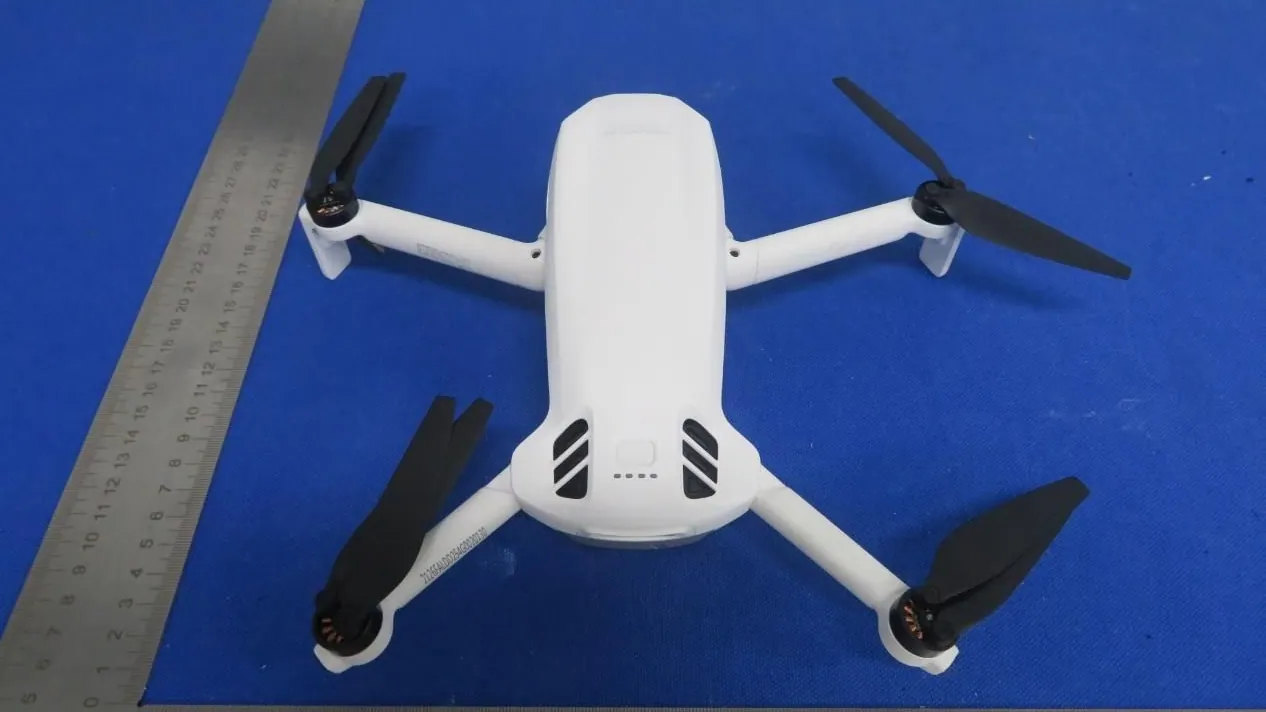
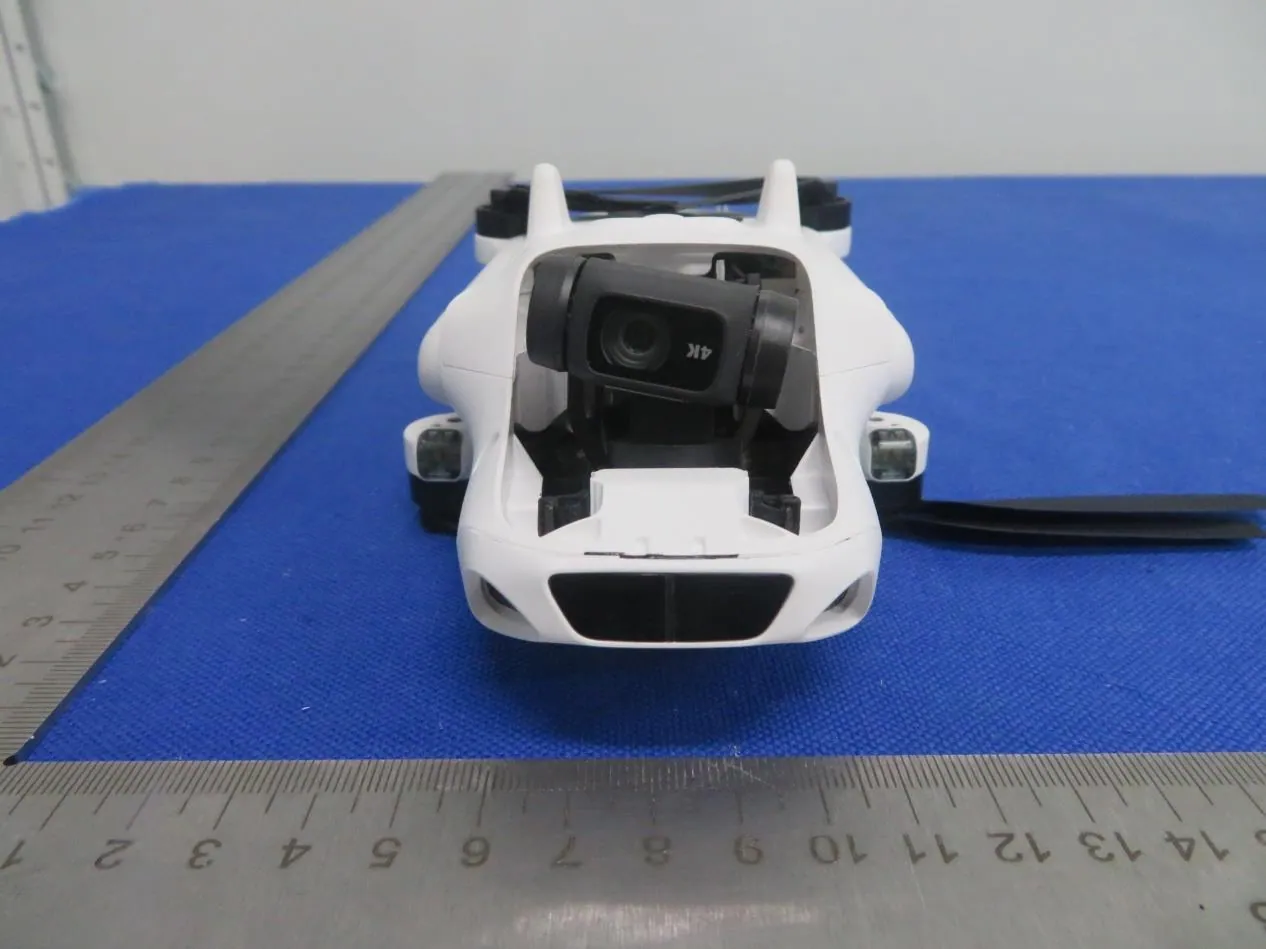
The photos also correct DroneXL’s own 2025 read. We called the filing a likely DJI Mini 5 Pro clone, based on the battery figures and a “Class 1 Consumer Laser Product” marking on the label exhibit. The external photos show a small folding drone with a gimbal camera marked “4K” and a 2,560 mAh, 7.3 V battery made by Shenzhen Xindong Energy Technology. To my eye that camera is far too small to be the Mini 5 Pro’s 1-inch-sensor unit.
DroneXL’s Take
I’m glad this grant is gone, but no public enforcement action forced it out. My read is that grants like this one stopped being worth holding once the FCC gave itself a way to cut off sales of equipment it had already approved, proposed using it against nine suspected front companies, and opened a revocation case against Odyssey Robot over what it says was a false made-in-USA claim. If the drone never sold, as Jovistar says, the certificate was earning it nothing and could only draw a regulator’s questions. The FCC is already moving on Fikaxo, and Jovistar’s own manual points to Skyany next.
Sources: Jovistar dismissal request to TÜV Rheinland, FCC ID 2BRGW-FKAWZJO, FCC equipment authorization correspondence, 47 CFR 2.962, FCC Covered List fact sheet, The Verge
DroneXL uses automated tools to support research and source retrieval. All reporting and editorial perspectives are by Haye Kesteloo. Read our editorial standards.