
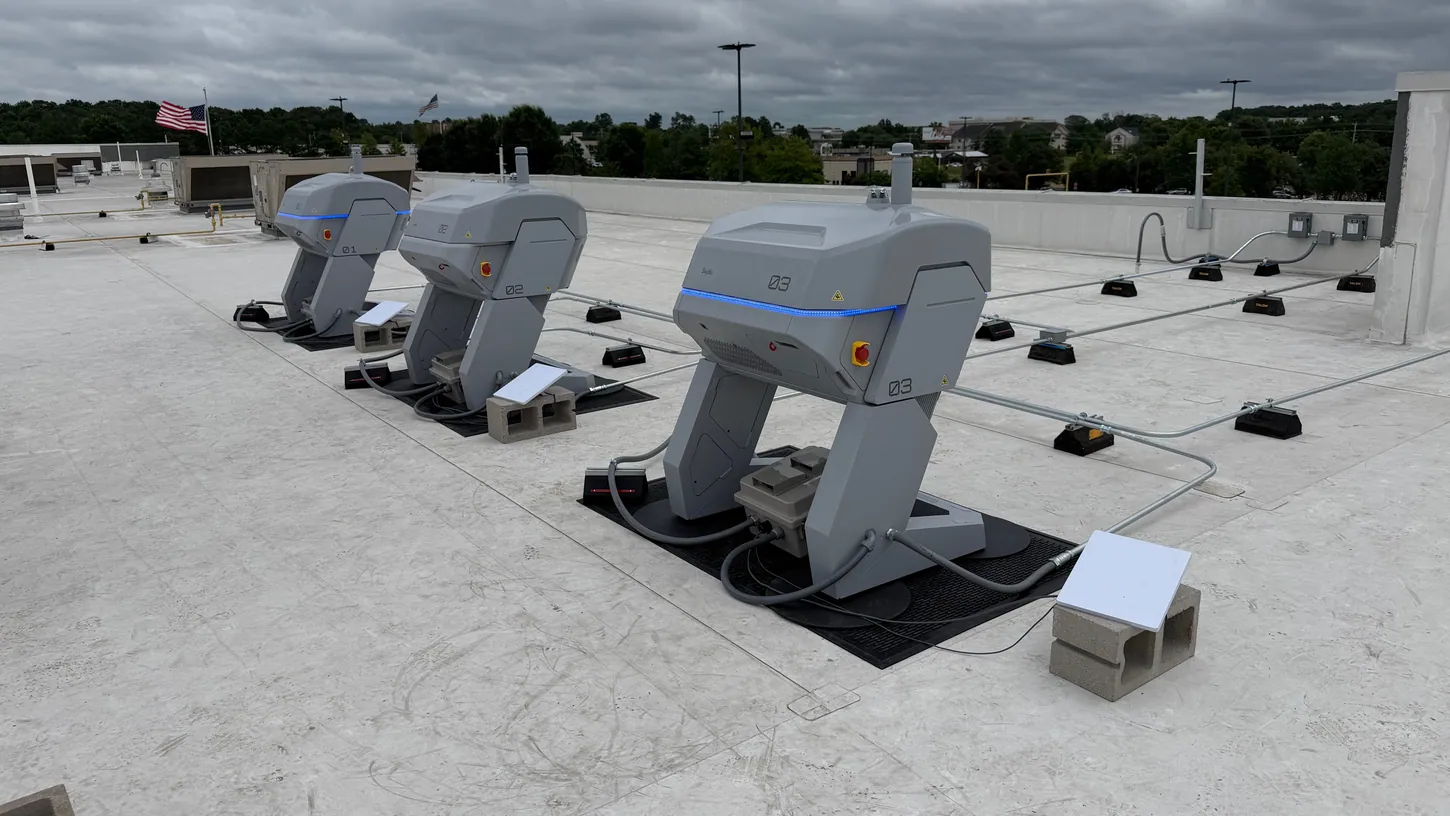
Axon announced a $1.2 billion investment in Skydio on Thursday that will lift its fully diluted stake in the drone maker from about 15% to about 37% once every tranche closes, at a $5.2 billion pre-money valuation. The same agreement makes Axon the exclusive distributor of Skydio drones to public safety agencies in the United States and Canada. Axon calls it the largest single investment in its history.
The deal lands six months after Skydio’s $110 million Series F at a $4.4 billion post-money valuation, the round CEO Adam Bry kept small on purpose while existing investors asked to put in more. Most of the new money does not go to Skydio. Axon is buying shares from those investors, and Axon’s own stock was down about 18% in Friday trading.
Only the $255 Million Primary Purchase Is New Money for Skydio
Axon’s filing with the Securities and Exchange Commission puts the mix at about 60% cash, roughly $720 million, with the rest in Axon stock. The one tranche that closed Thursday was a $254.9 million purchase of 25 million new non-voting Series G preferred shares at $10.19617 each.
That first tranche was paid half in cash and half in stock. The rest is a tender offer for up to 68.45 million more Series G shares held by existing Skydio shareholders, plus further secondary purchases, which Axon expects to close in the fourth quarter of 2026 and the first quarter of 2027. The 8-K describes every remaining tranche as a purchase from existing stockholders. In April, Bry turned away most of the investors who wanted to put more money in. The filing now gives the ones already on his cap table a buyer, at a $5.2 billion pre-money valuation, about 18% above the Series F’s $4.4 billion post-money.
Axon pre-funded the purchase. It priced $1.15 billion of zero-coupon convertible notes due 2031 on September 15, and chief financial officer Brittany Bagley told analysts on Thursday’s call that the proceeds add cash to the balance sheet and fund part of the Skydio investment. The shares are non-voting, and Bagley said Axon has neither control nor the kind of influence that would make it consolidate Skydio’s results. Asked whether the deal is a path to full ownership, founder and CEO Rick Smith said the two sides looked at other structures and settled on this one for now. “We’ll see what the future holds,” he said.
Axon Becomes the Only Way for US and Canadian Police to Buy Skydio
Skydio’s public safety sales in the United States and Canada now run through Axon alone. Skydio counts more than 1,500 public safety customers and expects about $1 billion in bookings this fiscal year. It says 28 million Americans live within two miles of a Drone as First Responder dock.
Axon sizes the DFR market in both countries at $13 billion, and the dock count has moved fast. At the Series F in April, Skydio put the figure at 16 million Americans within two miles of a dock. Axon’s shareholder letter says the docks deployed through its Axon Air program more than doubled year over year, and its press release credits Skydio DFR with cutting priority response times by as much as 65%, with the drone arriving before officers on roughly 80% of the calls it flies. Those are the companies’ own figures.
Axon has sold Skydio drones through Axon Air since 2021 and added the docked DFR package in June 2024, so Thursday’s exclusivity formalizes a channel that already existed and shuts the others. Axon president Josh Isner called the exclusivity one of the most valuable parts of the deal on the earnings call. “Whenever Skydio is in a deal, they generally don’t lose it,” he said. Axon books the drone revenue on a net basis in its Software & Services line, which its shareholder letter calls “pure-margin revenue.” Goldman Sachs analyst Michael Ng asked whether the take rate beats the low-to-high single digits typical of IT distribution. Nobody answered with a number.
Neither company has said what happens to agencies that bought Skydio directly or through another reseller. The press release, the SEC filing and the earnings call do not mention existing channels, and Skydio’s blog listed no post on the deal as of Friday morning. Bry’s statement in the release says only that Axon is “becoming our exclusive channel for U.S. and Canadian public safety.”
Bry’s statement describes the existing partnership as bringing drones to customers across the U.S., and the new agreement adds Canada. Vancouver Police launched Canada’s first docked DFR program in June with six Skydio X10 aircraft, and Skydio’s public safety sales in Canada now run through Axon as well. The deal also hardens three camps, and Utica’s choice last week of Axon and Skydio over a free Flock pilot shows how they line up. Motorola Solutions backs BRINC Drones, where it led a $125 million round in July, and Flock Safety builds its own after buying Aerodome in 2024.
Axon Shares Fell 18% After Three Federal Dedrone Deals Slipped Out of 2026
Axon reported record third-quarter revenue of $909 million, up 28% but below the $934 million analysts expected, and cut its full-year outlook to $3.61 billion to $3.63 billion. Dedrone counter-drone orders worth $130 million slipped out of 2026, and the stock closed at $382.56 Thursday before trading near $314 Friday.
Isner said the three deployments were worth $200 million in bookings, one $30 million order expected in the third quarter and two more totaling $100 million in the fourth, and blamed federal procurement cycles around funding and elections. Bagley said demand for the product is intact. “It truly is just a timing piece,” she told analysts. Adjusted earnings came in at $1.72 a share against the $1.89 analysts expected, per MarketScreener, and UBS cut its price target to $380 from $470 while Craig-Hallum downgraded the stock to Hold.
Axon bought Dedrone in 2024. The Q3 shareholder letter now sells the two drone businesses as a pair, Dedrone for airspace security and Skydio to answer the call, and Smith told analysts Axon now covers both sides of the airspace.
DroneXL’s Take
The “non-voting minority stake” language is for the accountants. A company that will own 37% of Skydio and holds the only sales channel to US police controls Skydio’s public safety business in everything but the org chart. Smith told analysts the exclusivity protects Axon’s core market. I believe him.
For a city, the practical change is that a Skydio DFR program is now an Axon contract. Lakeland’s $22 million Axon deal already bundled drones with body cameras and Fusus, and that bundle is the sales motion: once an agency runs Axon Evidence, the sole-source justification for the drones writes itself. The bundle also works. Orlando’s trial drone beat officers to the scene on a third of calls, and agencies are buying that outcome, not an aircraft.
The price of that outcome depends on something neither the release, the letter nor the call mentioned. An X10 costs $16,000 to $25,000, and the comparable DJI Matrice 4TD sells for a fraction of that. My read is that a large share of Skydio’s $1 billion in bookings exists because federal and state restrictions on Chinese-made drones, now including the FCC’s Covered List, keep DJI out of much of American police procurement. Axon, as I see it, just paid $1.2 billion for the only door into a market those bans built. If DJI’s Ninth Circuit challenge to that designation, Case 26-1029, narrows it, that door is worth less, and so is every DFR contract a city signs at today’s prices between now and then.
Sources: Axon press release, Axon Form 8-K, Axon Q3 2026 shareholder letter, Axon Q3 2026 earnings call transcript, MarketScreener.
DroneXL uses automated tools to support research and source retrieval. All reporting and editorial perspectives are by Haye Kesteloo. Read our editorial standards.


