
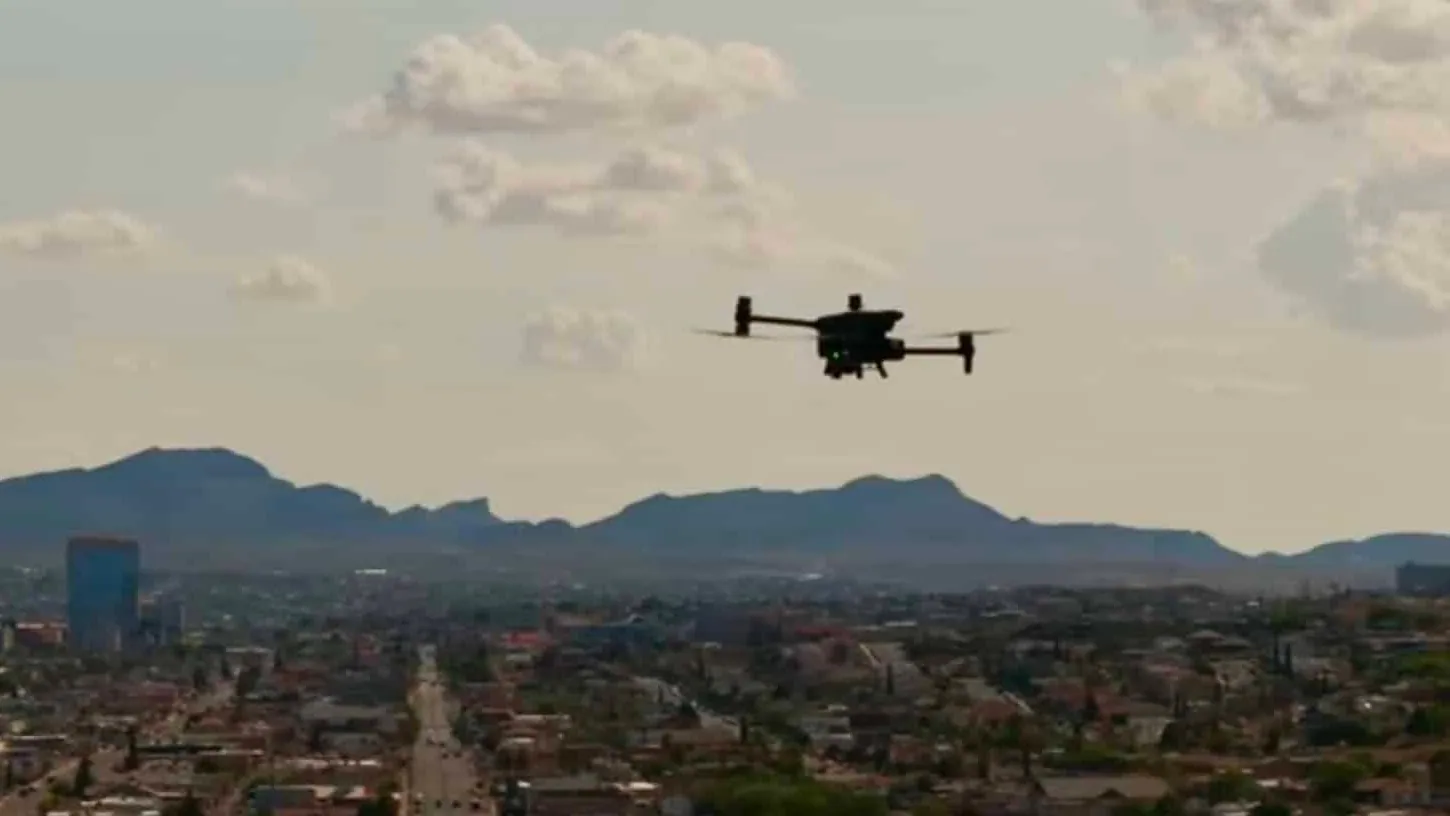
Houston City Council approved the city’s application for FEMA’s second $250 million counter-drone round on Wednesday, as Ordinance 2026-0982. The item sat on the 47-item consent agenda and passed in the block vote, with no council member tagging it, according to the city secretary’s agenda with notes of action taken.
KPRC 2 reported the vote on Wednesday evening as Houston getting “one step closer to putting drone technology in the hands of public safety officials,” with the money going toward aerial monitoring at large events. The vote authorizes an application, not a purchase. The filing behind the ordinance says the grant’s purpose is to “enhance law enforcement detection and mitigation capabilities.”
Houston’s Filing Describes Gear That Finds Drones, Not Drones That Watch Crowds
The request for council action behind item 36 says the money will pay for detection, identifying, monitoring, tracking and mitigation technology for every SEAR-rated special event in the Houston region. It lists the amount as unknown and projects a performance period from December 2026 to December 2029.
That matches the federal program. FEMA’s program page defines the Counter-Unmanned Aircraft Systems Grant Program, created by the One Big Beautiful Bill Act, as funding to “detect, identify, track, or monitor unmanned aircraft systems.” The equipment list DroneXL went through when Houston’s bid first surfaced on Monday runs to radar, radio-frequency direction finders, cameras, acoustic sensors and Remote ID receivers on the detection side, and jammers and takeover systems on the mitigation side. Neither the city’s filing nor FEMA’s program page mentions buying drones.
Larry Satterwhite, who runs the mayor’s public safety office, described the purchase to KPRC 2 as a way to see more and cover more ground, and his office told the station officers cannot watch a large event from every angle. “Houston is a big city, and we do big things here,” Satterwhite said. Much of the operational capability, he told the station, would end up with the Houston Police Department.
The Use Policy Comes After the Vote, and the Awards Land December 10
City officials are still working to establish guardrails for how the technology is used, KPRC reported on Wednesday, hours after the vote it said the guardrails waited on. The agenda shows no amendment, no tag and no pulled item on 36, so the application goes to the state as written.
The sequence repeats Houston’s first round. Council approved the World Cup application in February as Ordinance 2026-0135, the prior action the new filing cites, and in May agreed to reimburse the Harris County Sheriff’s Office up to $1,254,000 for detection and mitigation systems. Texas DPS seized eight drones around Houston’s World Cup venues in the first week of the tournament, and a church videographer who flew a DJI Mavic 3 near the downtown fan festival faces federal charges.
The rules on the mitigation side are federal. Only an accredited law enforcement or correctional agency may operate a jammer, through officers certified at the FBI’s counter-drone school, under the Safer Skies Act. Any agency that buys detection gear with this money must give DHS access to its flight tracks and Remote ID data, a condition DroneXL reported when FEMA opened the round in October. Texas has $10,508,140 to split among local agencies, less up to 20% the state may keep for its own equipment, and the governor’s Public Safety Office files one package with FEMA by November 16, and FEMA expects to issue awards on December 10.
DroneXL’s Take
Wednesday was the moment to ask what Houston is buying, and the consent agenda is built to skip that moment. The item passed in a block with a cold-case DNA grant and five landmark designations. The vote commits no money, and Satterwhite’s office says the use rules are coming, so the city can fairly call the order normal. The detection gear is easy to defend. Radar and a Remote ID receiver find the pilot, and the Houston cases from the World Cup were a videographer and a real estate pilot, so finding the pilot fast is the whole job. My problem is the framing, and I’d put it to Satterwhite directly. “Eyes in the sky” sells this as drones for officers, and the filing says sensors and jammers. The council members who let item 36 through should ask Satterwhite for the written policy before December 10, because once the award lands the city spends the money on FEMA’s terms.
Sources: City of Houston council agenda with notes of action taken, November 4, 2026, City of Houston request for council action, item 36, KPRC 2, FEMA C-UAS Grant Program.
DroneXL uses automated tools to support research and source retrieval. All reporting and editorial perspectives are by Haye Kesteloo. Read our editorial standards.


