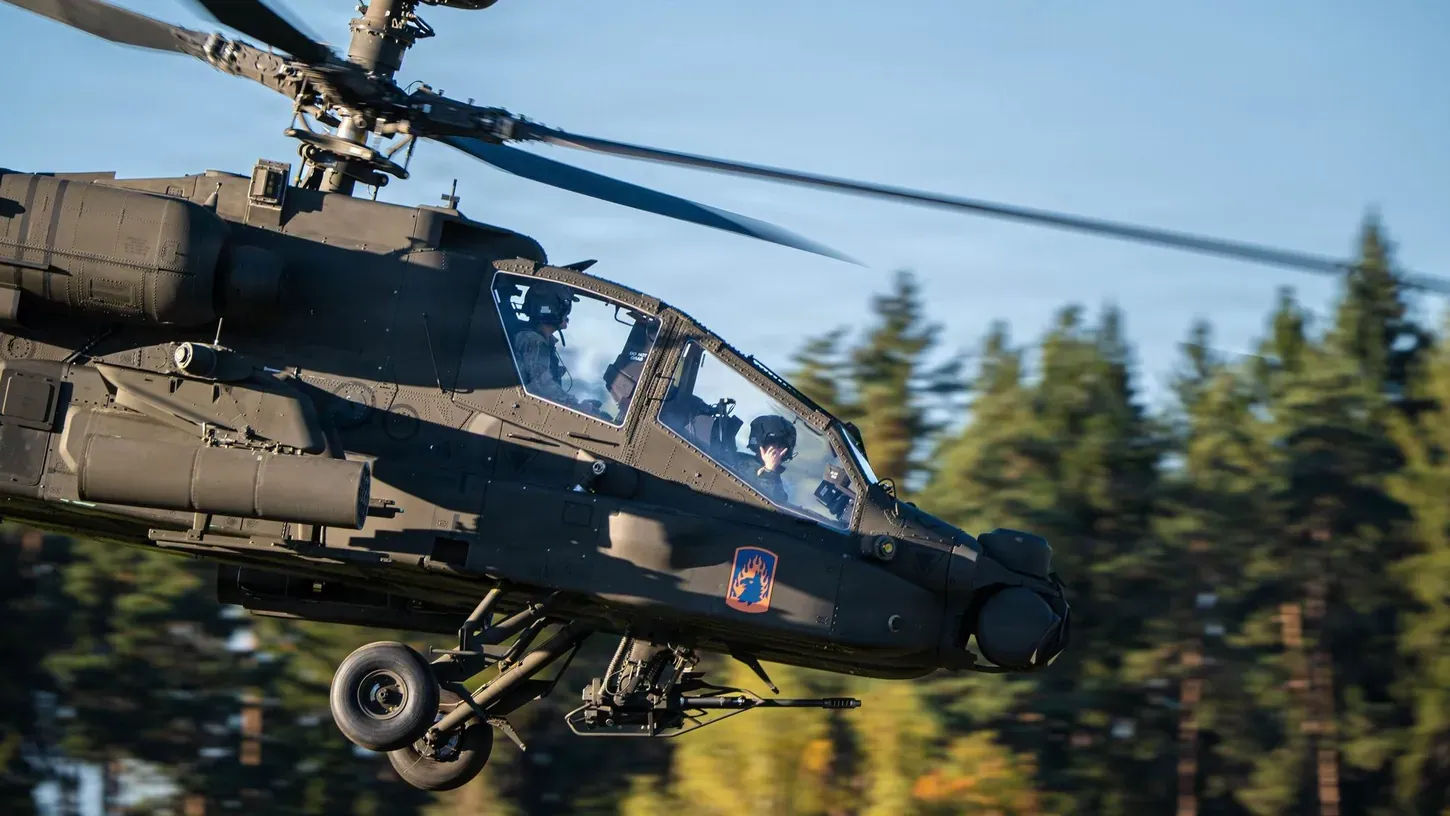
U.S. Army AH-64E Apache crews from the 2-159th Attack Battalion, the “Gunslingers,” spent October 5 and 6 shooting target drones out of the sky over the Grafenwoehr Training Area in Germany. The exercise, Operation Skyfall II, trained attack helicopter crews to hunt the propeller-driven one-way attack drones known as Shaheds. The New York Times reported on the drills Monday.
In June an Apache went down over the Strait of Hormuz after an Iranian drone struck it, and a Navy sea drone pulled both crew from the water. The crews who flew Skyfall II say a jet-powered Shahed is out of their reach.
A Ground Radar Found the Drones Before the Apaches Fired
In Skyfall II, a ground radar found the drones and the helicopters killed them. An AN/MPQ-64 Sentinel radar from the 5th Battalion, 4th Air Defense Artillery Regiment tracked MQM-170 Outlaw drones and passed each track through a tactical operations center to the crews, who destroyed three on October 6.
That handoff was the point of the test, according to the Army’s account of Skyfall II. The first Skyfall, in March, showed an Apache could engage a drone using ground sensor data, and the second gave crews more shots at it. The Sentinel sees threats farther out than the Apache’s own sensors, which gives the helicopter an earlier warning and lets the air defenders’ operations center confirm each kill. Lt. Col. John Verwiel, who commands the air defense battalion, said his crews send the track’s position in time and space “so the Apache pilot knows exactly where the track is.”
The Outlaw, built by Griffon Aerospace, is a propeller target with a wingspan of about 11 feet (3.3 meters), flown from the ground by a pilot with a radio controller. On one flight, the Times reports, a single crew took out all four drones launched.
The Apache’s 30mm Gun Is the Cheap Shot Air Defenders Want
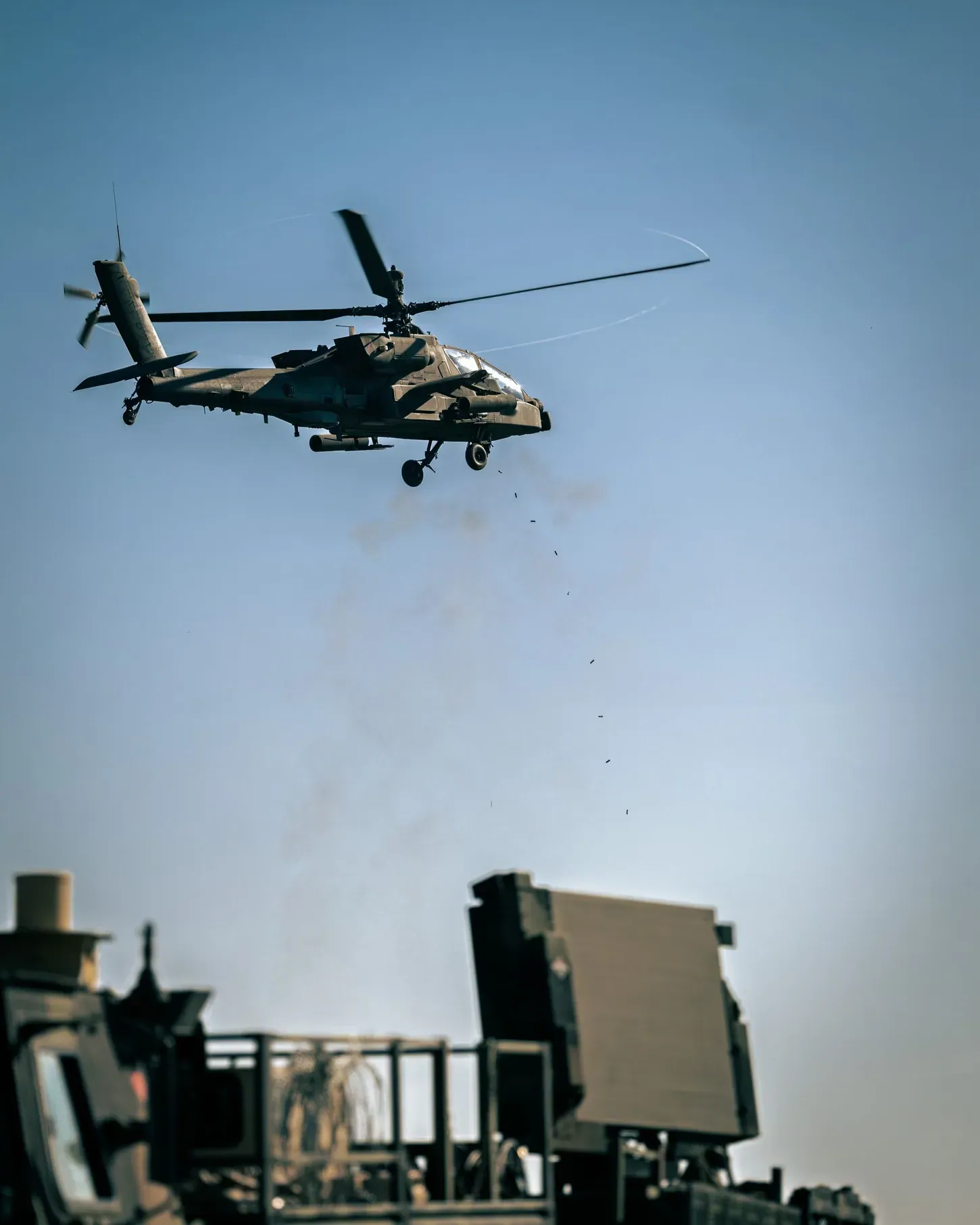
The Apache’s 30mm cannon rounds are among the cheapest ammunition in Army inventories, the Times reports. Verwiel said nations are building drones and the ability to launch them all at once. His answer to that mass is to bring every system he can, the helicopter included.
The crews fired in 20-round bursts, Stars and Stripes reported, and the Times says they used steel training rounds, not the explosive rounds they would carry into combat. “If we had our go-to-war load, it would be a lot easier,” Chief Warrant Officer 4 Jarrad Walter, one of the pilots, told the Times. A round designed for this job already exists. The Army live-fire tested the proximity-fuzed XM1225 APEX for the Apache’s M230 cannon at Yuma Proving Ground last December, as DroneXL reported in February. It bursts near a drone instead of needing a direct hit.
A Drone Struck the Apache Lost Over Hormuz
An Iranian drone struck the Army Apache that crashed near the Strait of Hormuz on June 8, a U.S. investigation found, Axios reported the next day. The investigation had not determined whether the drone targeted the helicopter or collided with it by accident.
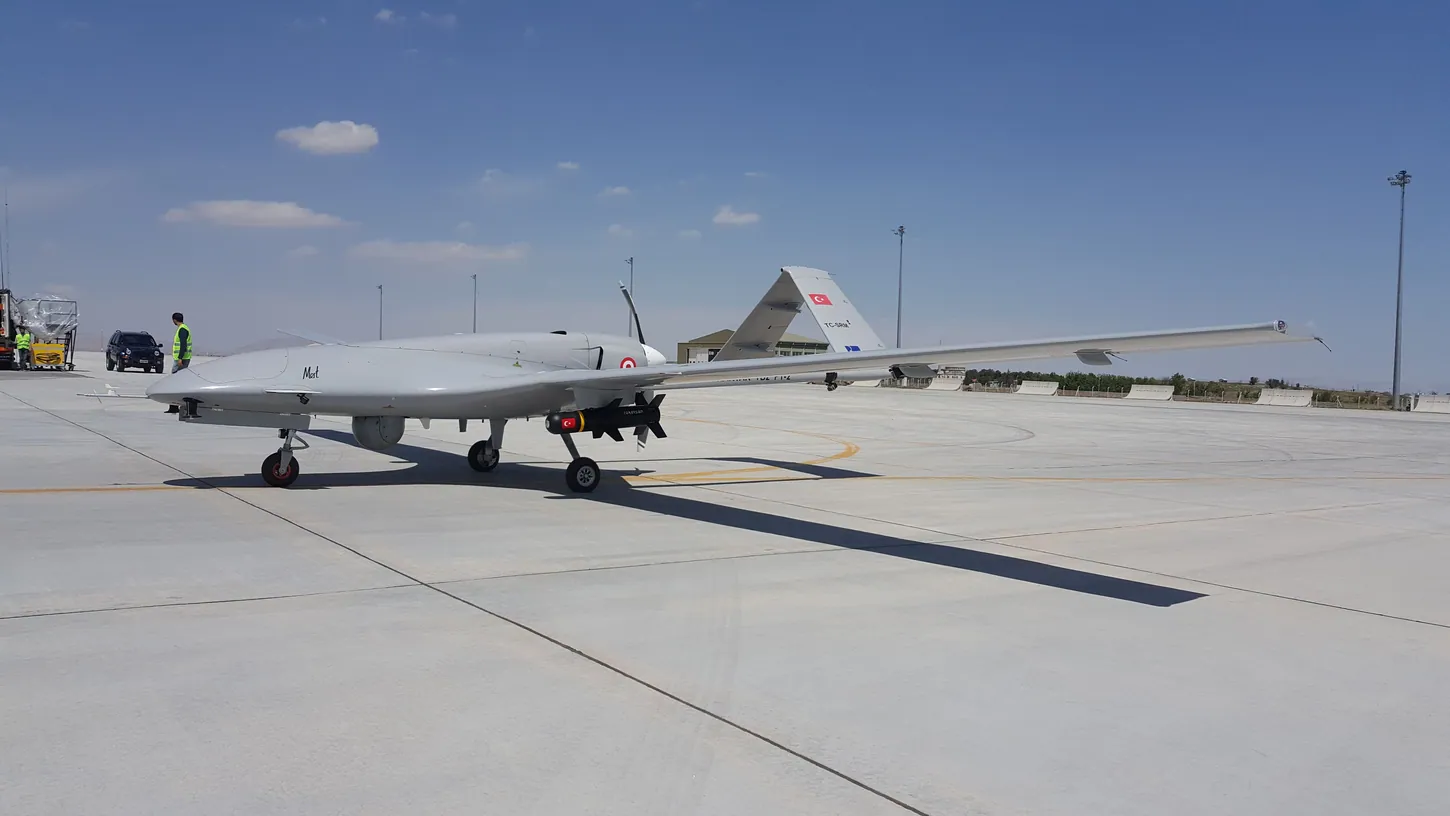
Experts have debated whether that Shahed could hunt a moving helicopter, the Times reports. It may have carried targeting technology like that on Russia’s more advanced drones. The boat that pulled them out was a Saronic Corsair, in a rescue that took years of preparation. The Times also reports that Iranian Shaheds have caused almost all American deaths in the war with Iran to date.
Jet-Powered Shaheds Fly Faster Than the Apache Can Chase
Speed sets the Apache’s limit against the newest Shaheds. Boeing lists the AH-64E’s top level speed at just over 150 knots (173 mph), while Russia’s jet-powered Geran-4 flies at up to 310 mph (500 km/h), according to Ukraine’s military intelligence agency. A radar track does not close that gap.
“It’s really the speed that’s a factor for us,” said Chief Warrant Officer 4 Cody Schoonover, the battalion’s master gunner, who told the Times a jet-engined drone is out of the ballpark for a helicopter. Russia built the Geran-4 because Ukraine’s $2,000 interceptor drones got good enough to force a redesign, Ukrainian intelligence said in May. Ukraine still flies Soviet-era Mi-8 helicopters against the propeller Shaheds, the Times reports, and it has started testing helicopters as launchers for drone interceptors aimed at the jet variants.
The pilots expect a smaller job for the Apache. In Iraq and Afghanistan, Chief Warrant Officer Michael Weisskopf said, Apaches could loiter over a battle for hours. Now they would have to rush in undetected, hit a target and leave. “We’re not envisioning these at the front,” he said. The front is where a Ukrainian unit this month released video of an FPV drone hitting a Russian attack helicopter, the Times reports.
DroneXL’s Take
I’d put the Army’s counter-drone money behind the Sentinel and the handoff it runs. Skyfall II showed a ground radar can pass a track to a shooter in the air, and that handoff can feed any shooter the Army has. The Apaches are already in Europe and their 30mm rounds are cheap, so turning them on slow propeller Shaheds costs little extra, and Apaches have already flown against one-way attack drones over the Strait of Hormuz this year. Jet drones are a harder problem for everyone. Ukraine’s quad interceptors top out around 196 mph (315 km/h), well short of the Geran-4’s 310 mph. Russia will keep redesigning, so the shooter at the end of the chain will keep changing, and the sensors and data links are the part worth building to last. The Apache is one of those shooters for now, in the role its own crews describe, away from the front.
Sources: The New York Times, U.S. Army via DVIDS, Stars and Stripes, Boeing, Axios.
DroneXL uses automated tools to support research and source retrieval. All reporting and editorial perspectives are by Haye Kesteloo. Read our editorial standards.