
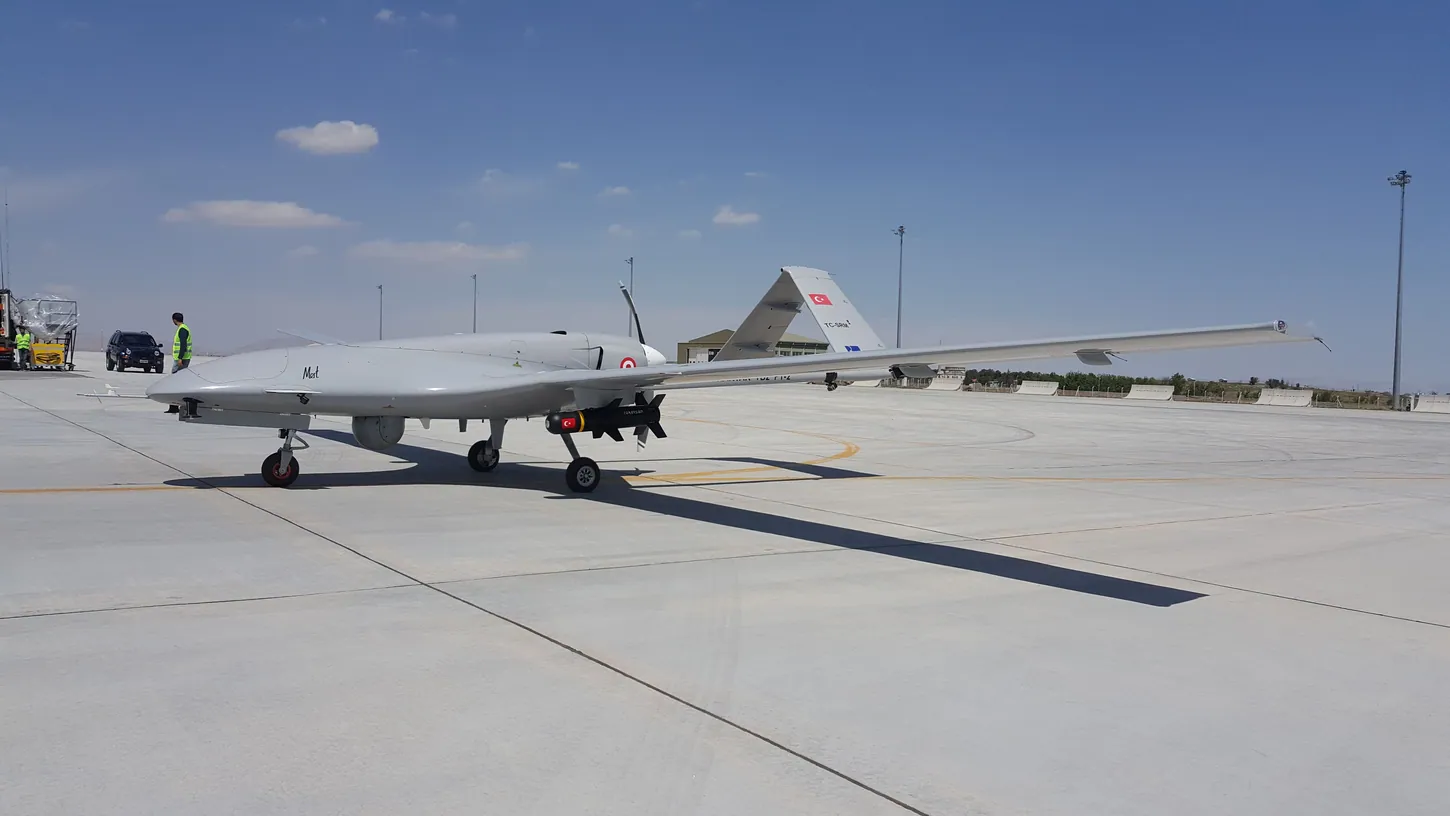
Robi Sen, who has been a senior partner at Department 13, the company behind the MESMER counter-drone system, published a paper on LinkedIn on October 10 warning that drug-trafficking networks could become suppliers of weaponized drones and drone expertise to armed groups in Africa. The paper is titled “Drone Warfare in Africa.”
His argument is about incentives. Sen writes that states often restrict sensitive capabilities to keep a military edge and insurgents may hide their methods from rivals. A profit-driven trafficking network, in his words, may instead sell access to aircraft and technicians when the return beats the risk.
The paper’s verification note says the most specific version of that warning, that African drug markets trade weaponized drones directly for drugs, could not be verified and “remains an investigative lead, not a confirmed finding.”
Armed Drones Killed More Than 940 Civilians in Six African Wars
SIPRI’s 2025 Yearbook says armed drones were confirmed in at least six sub-Saharan conflicts, in Burkina Faso, Ethiopia, Mali, Nigeria, Somalia and Sudan, killing more than 940 civilians between November 2021 and November 2024, a figure Sen cites with the warning that it is not a running total.
The SIPRI chapter matches the count in Drone Wars UK’s Death on Delivery report from March 2025: more than 943 civilians killed in at least 50 incidents across the same six countries. Five of those six states fly Turkey’s Bayraktar TB2, and the report also names China’s Wing Loong II and Iran’s Mohajer-6. Its Nigeria cases include the December 2023 army strikes on a religious gathering in Tudun Biri, which killed at least 85 people.
Sudan is Sen’s lead case, and the paramilitary Rapid Support Forces (RSF) have stepped up their strikes there. Reuters reported on September 24 a drone hit a crowded courtroom in government-held Um Ruwaba, North Kordofan, on September 8, killing about 10 people according to the monitor Emergency Lawyers. Another struck a college in al-Obeid the next day. The RSF did not comment to Reuters but says it does not intentionally target civilians. The UN says drone attacks by both sides killed more than 1,000 civilians in the first half of 2026. In May 2025, satellite images showed the RSF had long-range attack drones at Nyala airport.
Sen Builds the Trafficker Case on Mexico, Colombia and a Spanish Workshop
Sen’s evidence for traffickers as drone operators comes from Latin America. NCITE, funded by the Department of Homeland Security, counted 221 weaponized drone incidents attributed to Mexican cartels from 2021 to 2025, and ACLED has logged about 670 weaponized drone events there since 2018.
Sen cites both. The NCITE study at the University of Nebraska Omaha, first covered by DroneXL in February, found 27 of those attacks were fatal and killed 77 people. The attacks were concentrated in Michoacán and Guerrero. The ACLED analysis shows how fast it is spreading: more than 72% of its events happened between January 2025 and August 2026, and the number of armed groups using drones went from 5 in 2024 to 19 this year. Colombia holds 97 of the 182 municipalities where drone attacks were recorded.
The Spanish case is closest to the business model Sen describes. In July 2022, Spain’s Policía Nacional arrested eight people and broke up a workshop in Castellar de la Frontera, Cádiz, that was building underwater drones for other drug gangs. The drones were built to cross the Strait of Gibraltar with drugs aboard. Police seized three of them, each designed to carry up to 200 kg (441 lb), and six large aerial drones. Sen’s paper calls it a business model in which specialist fabricators build uncrewed technology for criminal customers.
The Paper’s Verification Note Sets Aside Its Unsourced Figures
Beyond the barter claim, the paper’s verification note says the draft it reviewed cited UNODC, the Africa Center, AllAfrica, ACLED and Small Wars Journal in brackets without bibliographic entries, so manufacturing figures and 2024 strike counts tied to them were not retained as verified facts.
Sen treats the Latin American record as a mechanism to investigate, not proof of a pipeline to Africa, and he lists the reasons a cartel might not sell. Arming a rival threatens market control, drone attacks bring enforcement, and conspicuous violence disrupts profitable routes. He writes that there is not yet enough evidence to say traffickers are more likely to spread armed drones than states, insurgents or other brokers. His research priorities start with documented transactions rather than claims of affiliation.
Two Documented Cases Link Africa to Iranian and Russian Drone Programs
Two cases with paper trails link Africa to state drone programs. A federal criminal complaint accuses Shamim Mafi of brokering an Iranian drone deal worth more than $70 million for Sudan’s army, and GI-TOC documented Russia recruiting young African women into drone production.
Mafi, a Woodland Hills resident, was arrested at LAX in April. Prosecutors allege she brokered the Mohajer-6 contract with Sudan’s Ministry of Defense through Atlas International Business, an Oman-based company they say she ran. She is charged with one sanctions count and is presumed innocent.
The Russian case is in the Global Initiative Against Transnational Organized Crime report from May 2025. It found that the Alabuga Start program recruited women aged 18 to 22, first from African countries, for jobs at the Alabuga Special Economic Zone in Tatarstan without telling them they would work in weapons production. DroneXL has reported on the Alabuga recruits since October 2024. Sen includes the case in his paper and says it shows the cost of fast drone production landing on vulnerable people far from the war.
DroneXL’s Take
I think the verification note is the most useful part of Sen’s paper. It treats a drugs-for-drones trade in Africa as a lead to chase rather than a trend, and the record in this story backs that call. The criminal drone workshop in his own paper, in Castellar, was building for drug smugglers crossing the Strait of Gibraltar, not for armed groups. The drones Drone Wars UK names in Africa’s civilian toll are Turkish, Chinese and Iranian, and the one drone broker here facing a US courtroom is accused of trafficking arms on behalf of Iran’s government. My read is that cartel supply to African wars is plausible and unproven, while state supply is on paper. Until a named trafficker transaction shows up in a court file, the attention belongs on sanctions cases and the brokers who move state-built drones into African wars.
Sources: Robi Sen, “Drone Warfare in Africa”, SIPRI Yearbook 2025, Drone Wars UK, Reuters via The Star, NCITE, ACLED, Diario Bahía de Cádiz, GI-TOC
DroneXL uses automated tools to support research and source retrieval. All reporting and editorial perspectives are by Haye Kesteloo. Read our editorial standards.


