
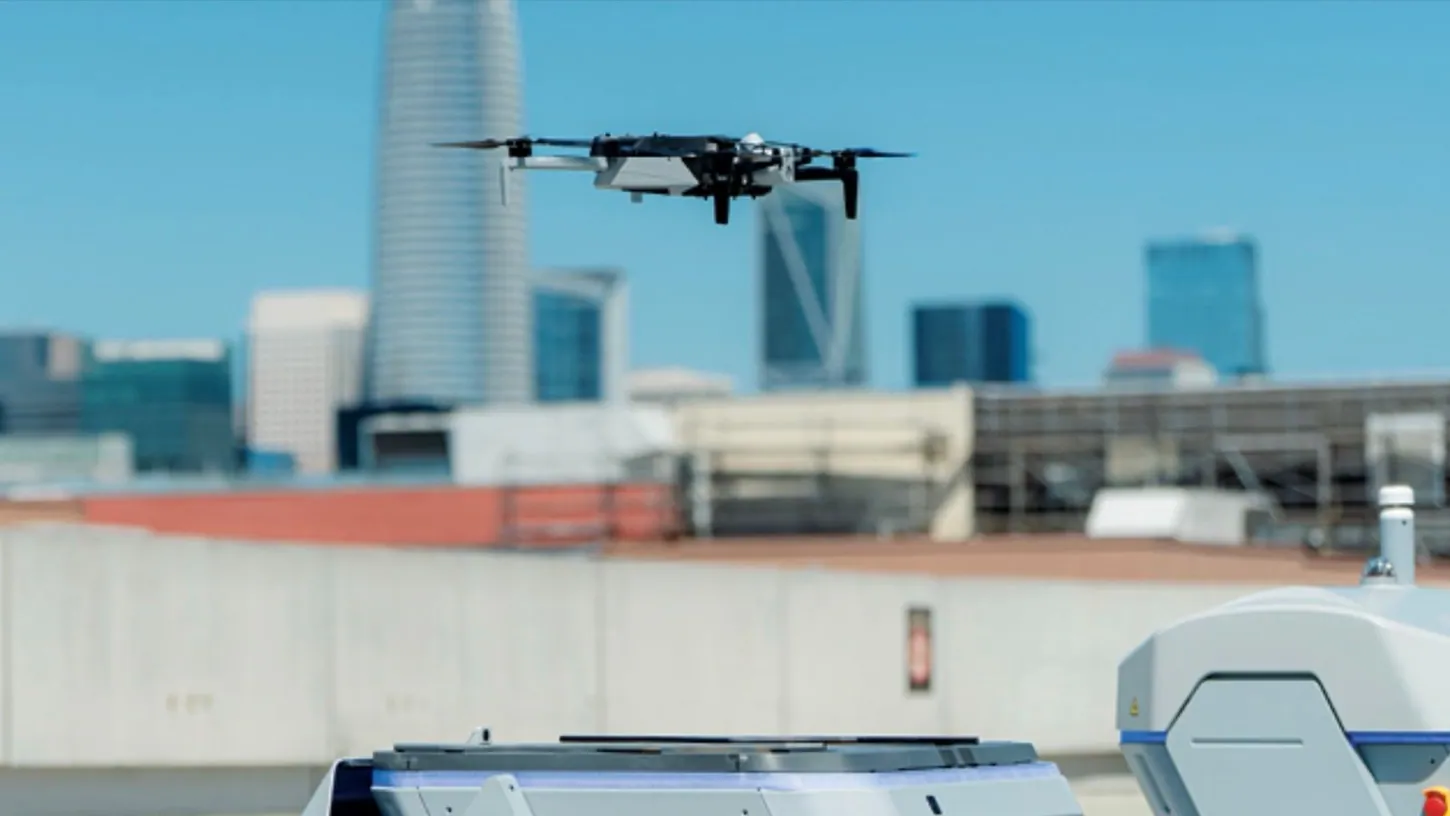
San Francisco’s Police Commission voted 5-1 on October 14 to advance the rules for the San Francisco Police Department’s 98 drones, without the broader warrant requirement public speakers asked for. Six weeks earlier, Sonoma County settled an ACLU lawsuit over drones its code inspectors had flown over private homes. DroneXL covered that lawsuit when it was filed in June 2025.
CalMatters reported this week that fights like these are now playing out across California, where police departments are pushing to expand drone use from emergency calls to everyday patrols.
Under the Sonoma settlement, county code inspectors need a warrant or a resident’s consent before a drone watches or records a home or its yard. San Francisco’s proposed order requires a warrant, or a recognized warrant exception, only when an operator intentionally focuses on the inside of a home or on an enclosed yard not visible from a public spot at ground level.
Sonoma’s settlement also makes the county tell residents when a drone watched them
The ACLU of Northern California announced the Sonoma settlement on September 2. Beyond the warrant-or-consent rule, which has an emergency exception, Permit Sonoma must tell residents when a drone has surveilled their home, delete footage after 30 days and keep images of homes away from third parties.
That 30-day clock runs from collection, or from the close of the investigation the footage belongs to, and images of homes can still go to third parties where the law requires it, according to the ACLU’s announcement. The county hands its flight logs to the ACLU for two years, and a revised drone policy goes to the Board of Supervisors for public comment. Each of the three residents who sued gets $50,000, KQED reported.
The program started in 2019 to target illegal cannabis grows and, the ACLU says, spread to routine code cases. A Permit Sonoma spokesperson told KQED the agency disagrees with the ACLU’s characterization, has defended its drone use successfully before, and is settling to avoid an expensive legal process, with no admission of fact. ACLU senior attorney Nick Hidalgo said the deal will “protect everyone’s right to privacy in and around their homes.”
San Francisco’s order bans general surveillance but has no notice rule
General Order 10.12 passed the commission 5-1 with Commissioner Kevin Benedicto voting no, and it still needs the Board of Supervisors. The four-page amended proposal contains no resident notification provision, though it bans general surveillance and caps retention of public footage at 30 days, the same clock Sonoma agreed to.
A captain or higher can extend that limit for an open criminal investigation. Benedicto, Mission Local reported, wrote that “the public has expressed serious concerns about surveillance.” About 50 people showed up, where the commission usually draws a handful, and after the vote most of those still in the room chanted against Skydio on their way out. A member of the privacy group DeFlock SF had asked commissioners to cancel the Skydio contract and write in a warrant requirement, CalMatters reported, and the commission sent the policy to labor negotiations instead.
The order DroneXL read the day before the vote still leaves “public safety response,” which I read as the broadest reason to launch a drone, undefined. Police policy director Asja Steeves told Mission Local the language is written so officers can understand it, and that public safety uses won’t differ from current practice. She said a data protection policy covering drones and license plate readers will reach the commission in several months.
That policy would arrive for a fleet of 98 drones, 14 of which launch remotely from the department’s Real Time Investigation Center, according to SFPD spokesperson Evan Sernoffsky. The department’s Skydio drone feeds sat on the open internet for about six months, DroneXL reported in July.
California has no comprehensive police drone law, so each city sets its own limits
California has no comprehensive state law on police drones, Holland & Knight attorney Katie Inman told CalMatters. The 2021 law AB 481 requires a city or county governing body to approve a police “military equipment” policy at a public meeting. Drones count, and agencies must file annual reports.
That leaves departments to apply Fourth Amendment case law built on manned aircraft. Inman, who previously worked at the FAA, said the Supreme Court has allowed aerial observation of what’s visible from lawful altitudes, but drones are different: “With drones, you can fly at much lower altitudes.”
Nearly 60 California law enforcement agencies run drone programs, CalMatters reports, citing the Los Angeles Police Department. Santa Ana’s council approved a $682,900 Drone as First Responder program on a 4-3 vote on February 3. Stockton’s council voted 7-0 on March 31 to add $3.15 million to its Flock Safety contract for a drone program tied to about 120 Flock license plate cameras, Stocktonia reported. CalMatters puts the fleet at six drones. Police Lt. David Padula projected response times of 30 seconds to about four minutes. Outside California, a 6-6 Minneapolis council vote in July killed a free 75-day Skydio trial after members cited the company’s ICE and Israeli military ties.
Berkeley’s drone review is a slide deck that found no proof of a safety payoff
The UC Berkeley Criminal Law & Justice Center review CalMatters links to is a February 2026 presentation to Berkeley’s Police Accountability Board. It found no empirical basis for drone claims on staffing, de-escalation or safety, and urged the City Council to reject the police department’s proposal as written.
The presentation leans on SFPD clearance rates from 2023 to 2025. Crime types with heavy drone use improved 0.6 percentage points more after drones arrived than before, while low-drone categories improved 5.9 points more, a gap its authors attribute largely to swings in arson numbers. They call their own comparison descriptive, not causal. The fleet Berkeley police proposed was DJI hardware, including the Avata 2 and Matrice 4T, and the deck warns that three of the four proposed models were caught by the FCC’s December 2025 Covered List action. Berkeley has since put its public safety technology package out to competitive bids.
DroneXL’s Take
I back Drone as First Responder, and California police departments should copy Sonoma’s terms before a lawsuit forces the same ones on them. Sonoma had not published its drone policy, and a settlement now makes it publish and revise one, pay $150,000 and hand two years of flight logs to the ACLU. San Francisco flies 98 drones over a far denser place, and its proposed order would hold its police to looser warrant and notice rules than Sonoma’s code inspectors now face.
My read is that resident notification is the cheapest fix on that list. It costs a department a letter. If DFR works as well as its backers say, nothing about the program breaks when residents find out a drone was over their house.
Sources: CalMatters, ACLU of Northern California, KQED, Mission Local, San Francisco Police Department General Order 10.12 (amended proposal), Stocktonia, UC Berkeley Criminal Law & Justice Center
DroneXL uses automated tools to support research and source retrieval. All reporting and editorial perspectives are by Haye Kesteloo. Read our editorial standards.


