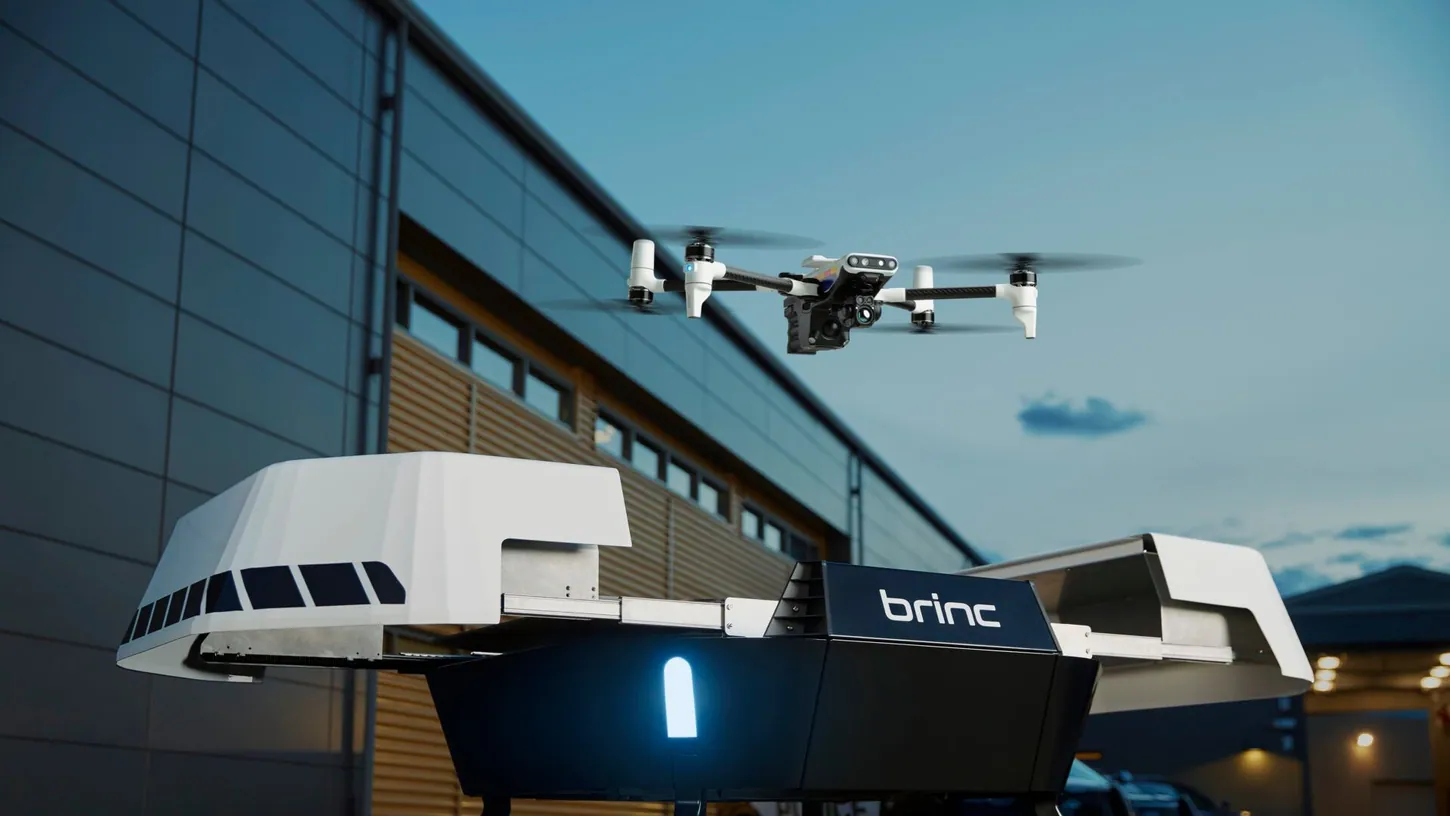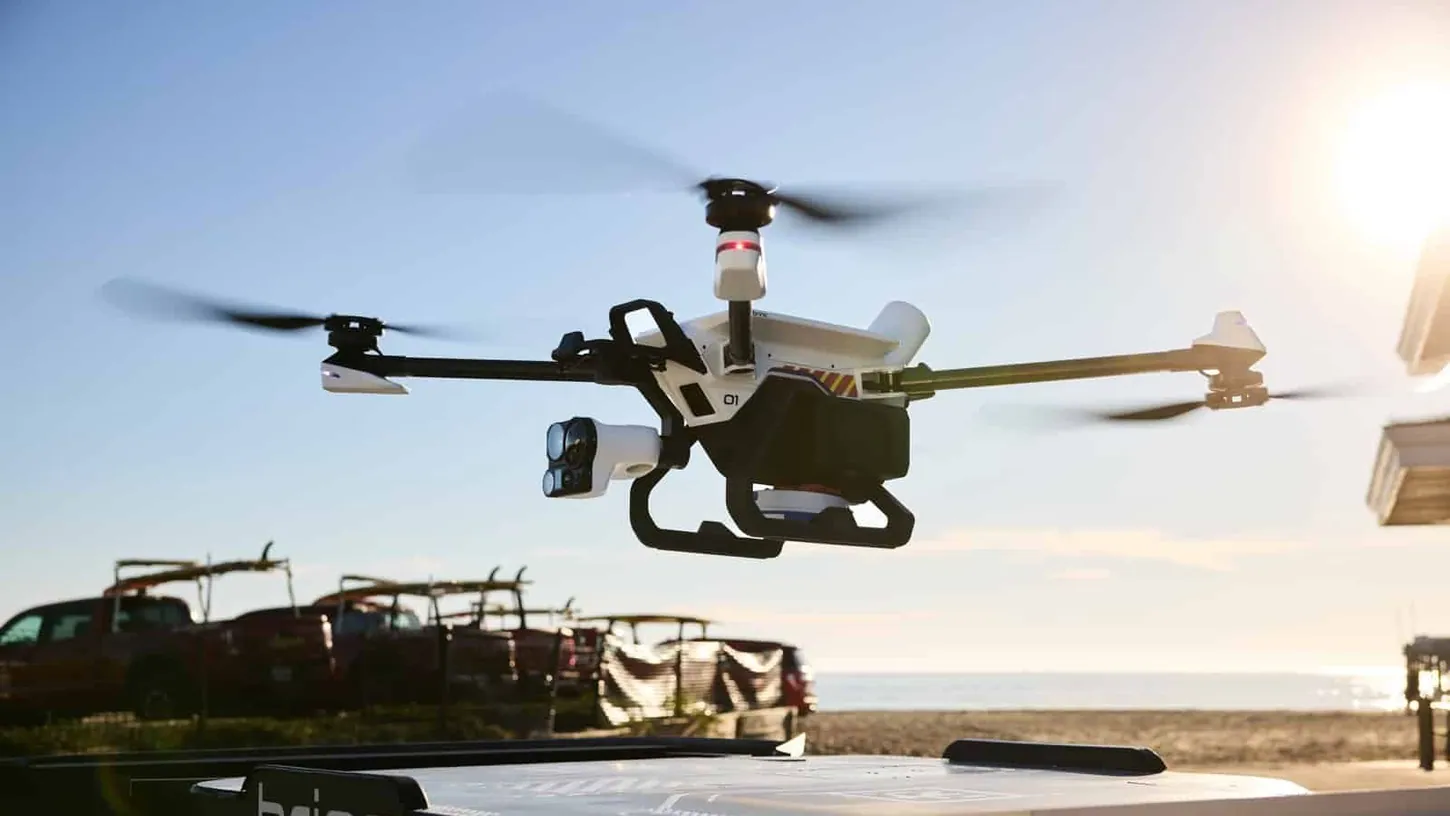
The West Valley City Council votes Tuesday, November 10, on a deal with Motorola Solutions that would give the Utah city’s police department three BRINC drones for a year at no cost. The package covers a docked drone dispatched directly to calls, a tactical drone officers launch from their vehicles, and a small indoor drone for SWAT work.
Police Chief Colleen Jacobs told the council on October 27, according to draft minutes, that the drones are meant for emergency response, not surveillance. Her issue paper lists the price if the program continues, $174,997 a year for five years, and says the city can cancel at any point in the first year at no cost.
Motorola’s quote totals $874,985, and the contract attached to it starts those paid years automatically unless the city cancels.
Motorola’s Contract Starts the Paid Years Unless West Valley Cancels
The $874,985 is the paid part of a six-year BRINC subscription Motorola quoted on September 15: nothing in year one, then $174,997 a year for years two through six. Under Motorola’s customer agreement, the paid years begin on their own unless the city gives notice that it is leaving.
Motorola’s paperwork states that exit two ways. The quote’s term note gives the city a “right to exercise termination for convenience at any point within the first year,” which matches Jacobs’s issue paper. The TAKEOFF Program Addendum attached to the same quote says the city “has agreed to a multi-year Subscription” and may terminate without penalty “up to 30 days prior” to the first paid year. Under either reading, ending the deal during the free year costs West Valley nothing if it gives notice in time. The council slide adds that the city “may terminate for non-appropriation,” which the customer agreement allows on 30 days’ written notice.
The aircraft stay BRINC’s property during the trial, and the city pays for any damage the support plan does not cover. Title passes to West Valley when the first paid year starts. Motorola is selling the package through a Sourcewell cooperative purchasing contract that the issue paper says Motorola won through competitive bidding. The quote expires November 14, four days after the vote.
The three aircraft on the quote are a station-based BRINC Guardian, a BRINC Responder and a Lemur 2, BRINC’s indoor drone. League City, Texas, approved a similar free-first-year structure in July, with up to $1,759,980 over six years.
The Trial Makes BRINC West Valley’s Only DFR Supplier
For the 12 free months, the addendum makes BRINC the city’s sole Drone as First Responder provider. West Valley may not deploy or buy any autonomous docked drone or DFR product from another company until the paid years begin. If it does, Motorola can end the deal immediately.
BRINC also runs the trial’s checkpoints. The quote commits it to quarterly check-in calls with the department and a mandatory review meeting with police leadership “to confirm trial results and determine next steps.” The latest date the quote allows for that meeting is the same 30-day mark as the addendum’s deadline for the city to cancel.
Motorola has a stake in the supplier it is selling. It led BRINC’s $125 million funding round in July, and the quote pitches integration with Motorola’s CommandCentral software, radios and license plate readers.
West Valley Has Held an FAA BVLOS Waiver Since April
The FAA’s Certificate of Waiver 91.113-2026-00385, effective April 1, 2026, through April 30, 2030, waives the 14 CFR 91.113(b) right-of-way rule and other Part 91 sections for the department’s public aircraft flights. It allows BVLOS flights without visual observers, generally at or below 200 feet (61 meters).
If West Valley flies the Guardian under this waiver, the document sets the conditions. On BVLOS flights the pilot must use a detection system that picks up aircraft broadcasting ADS-B Out. On every flight the drone needs anti-collision lighting visible for 3 statute miles in twilight and at night.
Motorola’s statement of work makes FAA approvals the city’s job, with help from Motorola’s managed services if agreed, along with Part 107 certified pilots, 30 Mbps of bandwidth at each launch site and an LTE fallback. West Valley’s waiver took effect more than five months before Motorola wrote the quote.
The department is not new to drones: the issue paper says the city “currently employs drones in law enforcement activity.” According to the draft October 27 minutes, posted with the November 10 study agenda, Councilmember Scott Harmon noted that these drones cost more than the ones in the city’s previous trial. Jacobs said earlier demonstrations had cut response times and avoided unnecessary officer dispatches, because staff could assess a call remotely first.
West Valley’s Camera Promise Is Not in the Council Packet
Jacobs told the council the dispatched drone’s camera faces upward in transit. The drone descends only at the scene. Neither that rule nor a retention period appears in the Resolution 26-141 documents posted with the November 10 agenda, which DroneXL reviewed on November 9.
Those documents are the issue paper, the draft resolution, a presentation slide, Motorola’s quote with its statement of work and addendum, and Motorola’s customer agreement. The statement of work leaves retention periods to a city project manager. Its data-handling clause says data “will not be intentionally deleted prior to termination; however, certain media (e.g., video/images >30 days) may be deleted per platform policy (adjust to your policy).” The packet does not say what West Valley’s policy is. Under the customer agreement, the city owns its data.
During a city meeting, West Valley City police said “These are not surveillance drones, but response drones,” FOX 13 reported. Jacobs’s own issue paper says the newer drones can provide “rapid response, surveillance,” and deliver AEDs and Narcan before responders arrive. St. Louis police make a similar camera promise in their drone FAQ, not in the order officers follow.
Indoor flights worry David Ferguson, executive director of the Utah Association of Criminal Defense Lawyers, who told FOX 13 he fears “a person in crisis reacts terribly to a mechanical device.” Police said indoor flights would be limited to legal entries, such as with a warrant, consent or an emergency.
DroneXL’s Take
I want West Valley to fly these drones. A Guardian that reaches a cardiac arrest with an AED before the first patrol car is the best case for public safety drones, and Jacobs told the council earlier demonstrations saved officer trips. I think the trial’s review is too thin. The only review the contract writes down is a meeting BRINC schedules to confirm trial results, and the exclusivity clause keeps the city from testing a rival dock alongside it. The council should set its own scorecard on Tuesday, starting with response times against patrol cars and calls cleared without sending an officer, and put the camera and retention rules in writing. Then it should publish the results before the cancellation deadline. If nobody cancels in time, the paid years start on their own and add up to $874,985. That decision should rest on numbers West Valley collected itself.
Sources: West Valley City Council (Resolution 26-141 packet: issue paper, presentation slide, Motorola quote 3818036 with statement of work and TAKEOFF Program Addendum, Motorola Customer Agreement; draft minutes of the October 27, 2026 study meeting), Federal Aviation Administration (Certificate of Waiver 91.113-2026-00385), FOX 13
DroneXL uses automated tools to support research and source retrieval. All reporting and editorial perspectives are by Haye Kesteloo. Read our editorial standards.