
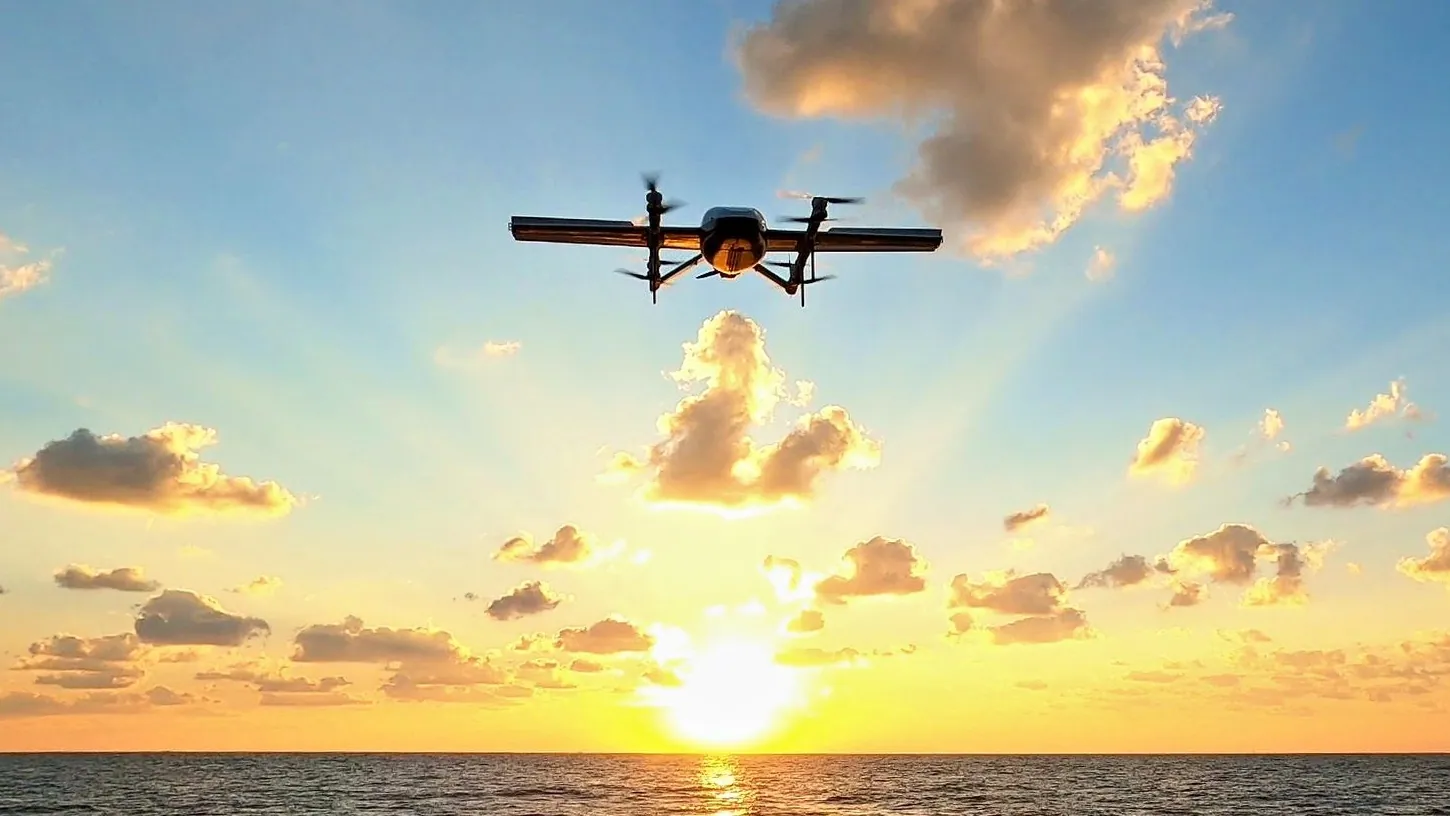
The FAA said on Monday, November 9, that it has issued its first authorization for a drone to fly beyond the operator’s visual line of sight from the U.S. coastline out over the Gulf. The operator is Skyways, the Austin, Texas company that flew cargo to a Baltic Sea wind farm for RWE last year.
Skyways will fly its autonomous V2 vertical takeoff and landing aircraft from a Shell Pipeline Company facility in Gibson, Louisiana, to a Shell platform in the Gulf. On the way out it will inspect a pipeline right-of-way. At the platform it will fly a simulated equipment delivery. The FAA approved it as a Section 927 waiver, not under the BVLOS rule the industry is still waiting for.
Skyways says it expects the approval to lead to regular inspections and paid cargo runs across the Gulf. The FAA’s announcement describes a single flight with a simulated delivery, and neither release gives a date or a distance for it.
Section 927 Lets the FAA Approve Gulf Flights Before Part 108 Is Final
Section 927 of the FAA Reauthorization Act of 2024 lets the agency approve some drone operations by waiver instead of rulemaking or an exemption. The FAA applies its exemption safety test, but a Section 927 applicant does not have to show the relief is in the public interest.
The FAA’s Section 927 waiver page spells out the over-water route. The agency says it is considering near-term approvals for operations more than 12 nautical miles from the United States, as long as they stay out of another country’s territorial airspace and meet the Section 927 criteria. Skyways describes its own waiver as covering flights from the U.S. coastline over the high seas.
Part 108, the FAA’s rule for routine BVLOS flight, is still not final and has sat at the White House Office of Information and Regulatory Affairs since July 10. The 2024 Reauthorization Act gave the agency 16 months from its August 7, 2025 proposal to finish it, which runs out on December 7. Until then, every long-range flight like this one is a one-at-a-time approval. The White House framed this one as a preview anyway. Michael Kratsios, director of the Office of Science and Technology Policy, said in the FAA’s announcement that the administration wants a future where “advanced drone operations are routine.”
Skyways V2 Combines Electric Lift With a Heavy-Fuel Cruise Engine
The V2 takes off and lands on electric motors, then switches to a heavy-fuel engine for cruise, according to Skyways’ announcement. It flies on satellite-based command and control, so the link does not depend on line-of-sight radio. Skyways plans and monitors missions through its own SkyNav software.
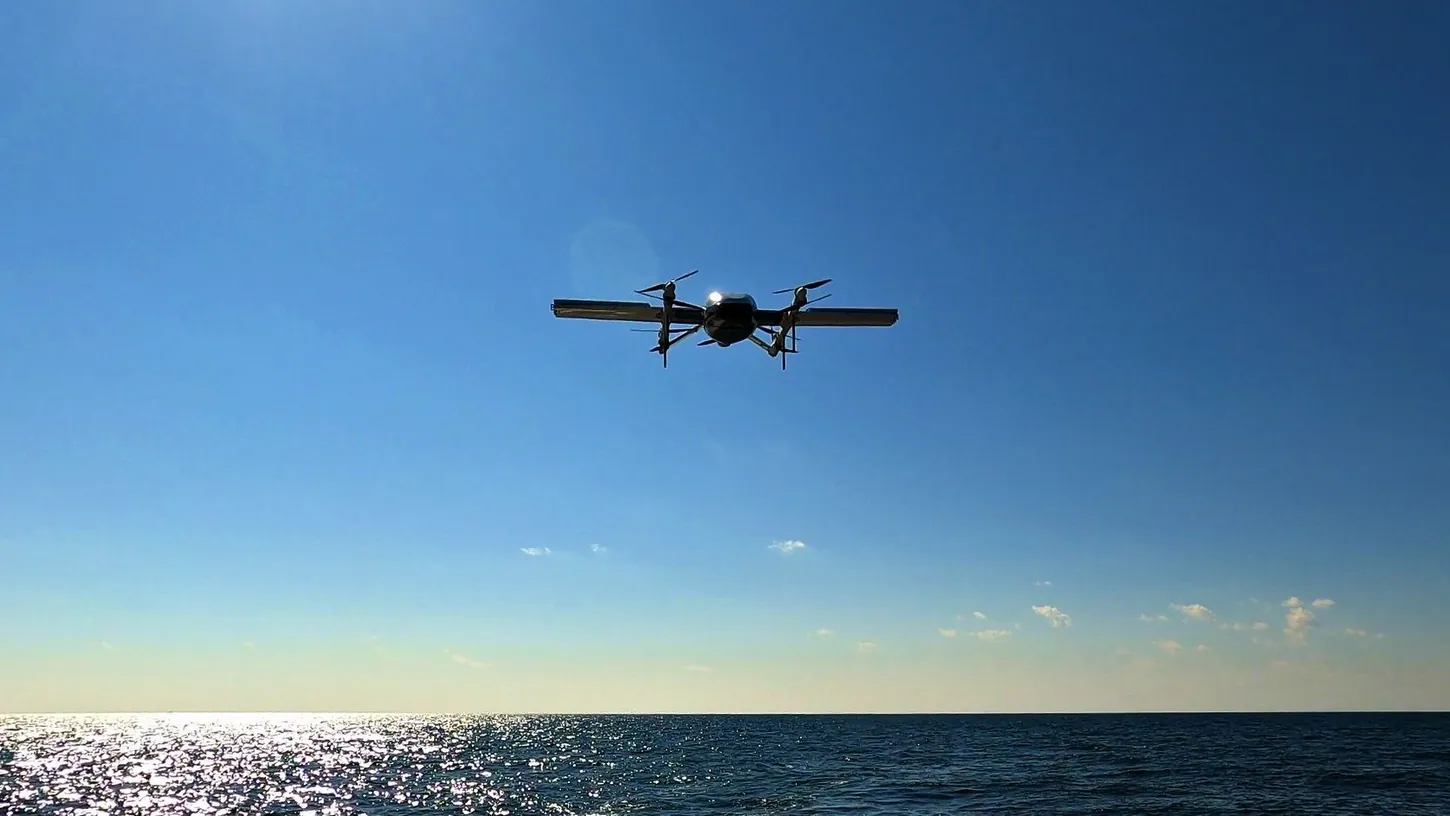
Skyways puts its record at 3,500 autonomous flights and about 90,000 kilometers (roughly 56,000 miles) flown for customers that include the U.S. Navy, Japan’s Ministry of Defense, DSV, Skyports Drone Services and All Nippon Airways. Those are the company’s own totals. When the Austin American-Statesman profiled the company in February, Skyways said the V2 carries 30 pounds over 450 miles.
CEO Charles Acknin said the approval “opens up a much larger operating envelope for us in the US.” Its Arkona flights in Germany ran about 50 miles round trip from a port base. Europe has flown shore-launched offshore missions as well. In October, Glasgow’s Airspection announced beach-launched BVLOS flights to a Liverpool Bay wind farm inside the UK CAA’s BVLOS sandbox, an 8.7-mile round trip.
Shell Already Runs Its Own Drone Flights From Gulf Platforms
In September, the Journal of Petroleum Technology reported that Shell had become the first Gulf operator with FAA approval to self-authorize BVLOS drone flights from any of its Gulf facilities. Its team ran 44 drone-in-a-box flights from the Mars platform in April.
Those flights launch from the platform itself, while the FAA’s first covers a flight that starts on the coast. Skyways says Shell Pipeline Company already works with it on pipeline right-of-way inspection across the Gulf. Shell Pipeline Company president Wesley Stewart said the waiver will help “streamline offshore inspections, maintenance and logistics.”
Ross Doak, Shell’s senior robotics engineer, told JPT the company has been testing DJI and Skydio drones for its platform program. DJI’s is the most common system in use inside Shell, and the team is still building trust in the Skydio. He told the journal: “We’ve got very high confidence in the DJI system.” The aircraft on this waiver is built by Skyways in Austin, but the FAA headlined its release “American drone dominance” for a customer whose most common drone is a DJI.
DroneXL’s Take
Section 927 is the most useful tool the FAA has handed long-range drone operators this year, in my view, and this approval shows why. Skyways and Shell brought an aircraft with a flight record and a concrete mission, and they got a yes without waiting for Part 108 to clear the White House. That is how BVLOS should work while the rule is stuck. But one demonstration flight with a simulated delivery is not a Gulf drone network. Skyways says paid cargo comes next, and neither release says this waiver covers it. If Part 108 misses its December 7 deadline, I want to see the FAA issue these waivers by the dozen, because operators should not have to wait on OIRA to fly over open water.
Sources: FAA, Skyways, FAA Section 927 waiver guidance, Journal of Petroleum Technology.
DroneXL uses automated tools to support research and source retrieval. All reporting and editorial perspectives are by Haye Kesteloo. Read our editorial standards.


