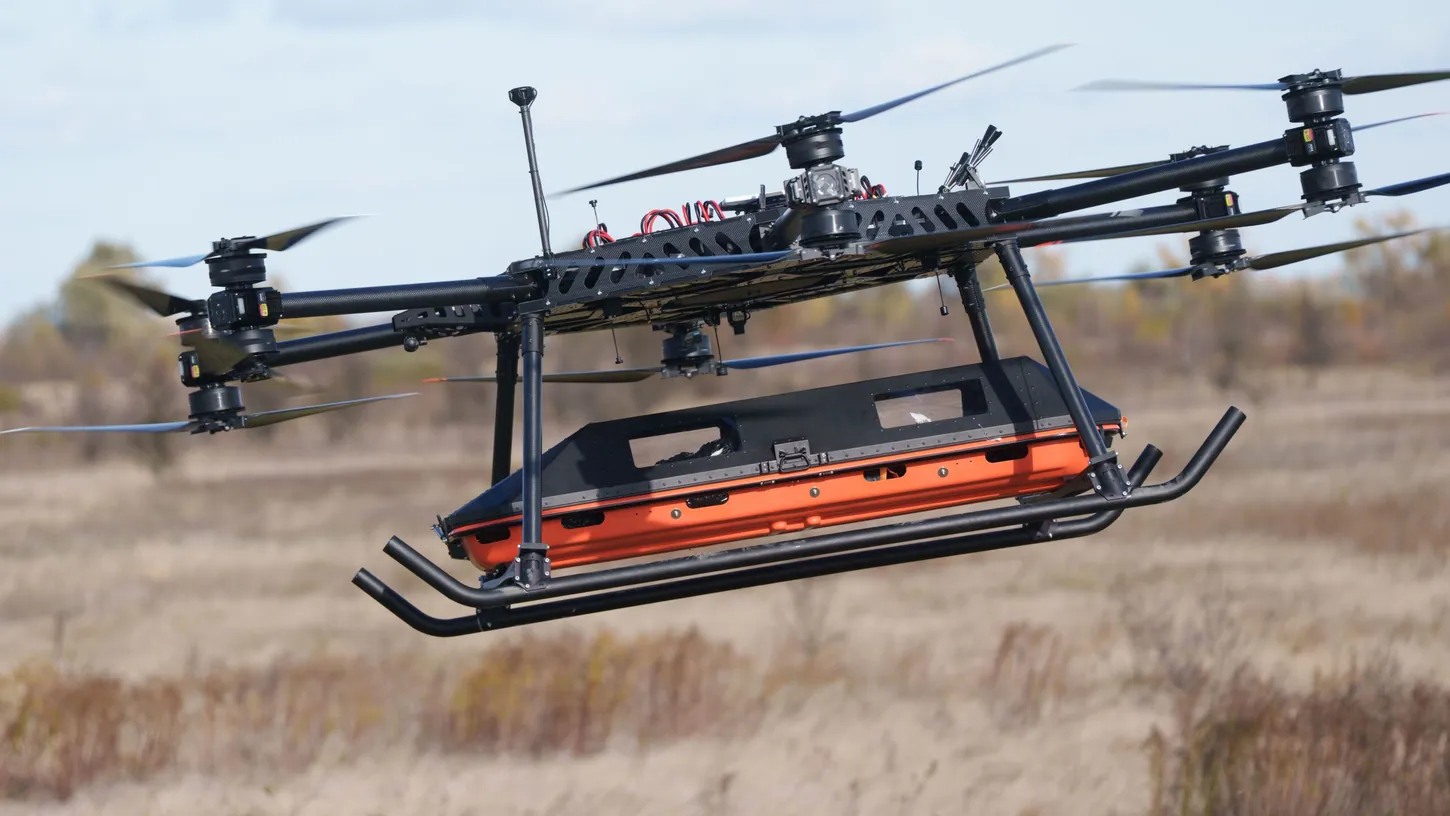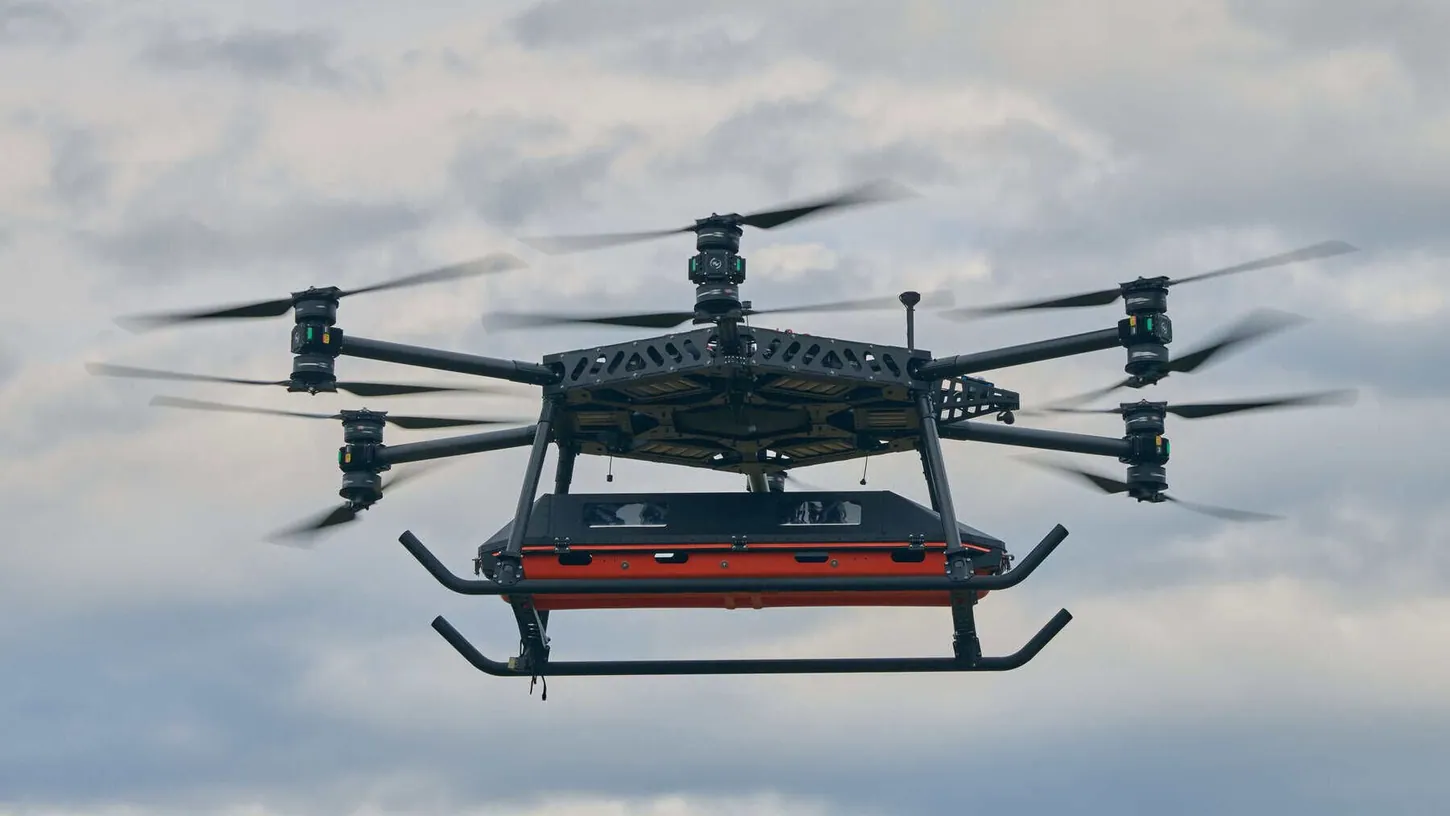
Ukraine’s 475th Separate Assault Regiment has flown six wounded soldiers out of the kill zone on SkyFall’s StarGate drone since late October, by SkyFall’s count, and the regiment is now forming platoons dedicated to drone airlifts. Its pilot KVN says the first rescue took seven days to prepare. A similar mission two weeks later came together in 12 hours.
DroneXL covered StarGate on October 16, when SkyFall had just handed the six-rotor stretcher drone to a combat unit for evaluation. The 475th, known as Code 9.2, had asked SkyFall to build it. SkyFall gave the Associated Press a range of about 9 miles (15 kilometers) one way at the time. Ukraine’s defense ministry now says one of the regiment’s first rescue flights covered 37 miles (60 kilometers), half of it with a wounded soldier aboard.
KVN Now Sets Up a StarGate Rescue With Four or Five Phone Calls
KVN, 33, told Reuters he now needs four or five phone calls to line up the escort drones and partner battalions a rescue requires. He has flown four StarGate missions. The latest lasted an hour and a half, and he spent his first two years as a strike-drone pilot.
The regiment reported its first two rescues on October 26. Yevhen, 25, call sign Izium, and Artem, 24, call sign Kolobok, both had severe limb wounds and were lifted from gray-zone positions about 3 miles (5 kilometers) from the Russian border that ground vehicles could not reach. The third soldier, a 54-year-old with the call sign Donbas, stepped on a mine on September 2 and waited 57 days at a position 1.2 miles (2 kilometers) from the border. Two more rescues followed, and on Thursday SkyFall told Militarnyi about the sixth. Serhiy had been hit in the arm and leg by an FPV drone and could not move, so another soldier dragged him to the aircraft. KVN calls the airlifts “the peak of responsibility in the army.”
One StarGate Rescue Flew Twice the Range SkyFall Gave AP
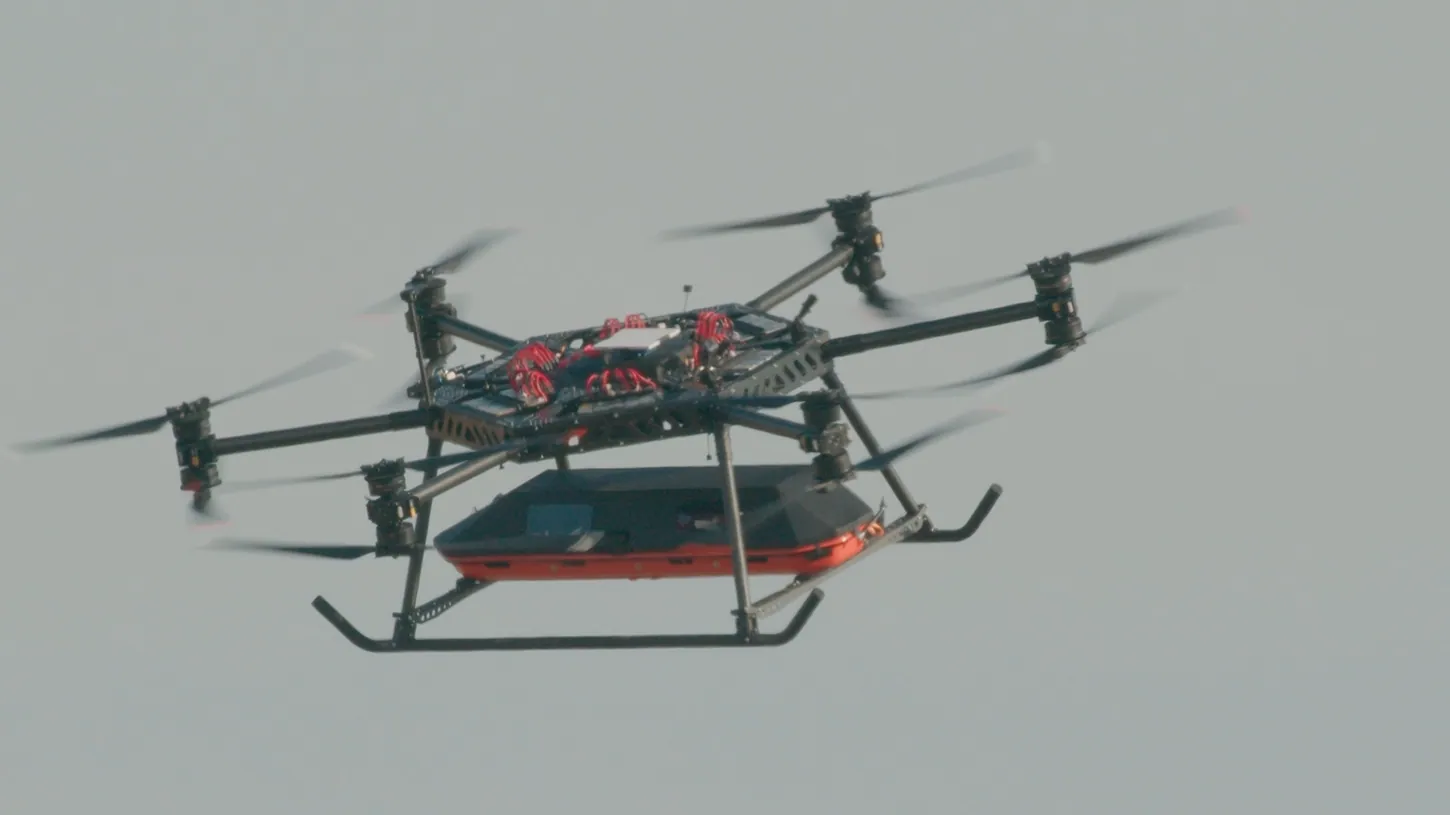
The 37-mile flight was a round trip of nearly 19 miles (30 kilometers) each way, the regiment told Militarnyi, about double the range SkyFall gave AP. Russian jamming was trying to shut down GPS, and the regiment credits StarGate’s onboard AI navigation and its pilots’ skill.
The third rescue went a little more than 9 miles each way, which matches the October figure. The published accounts from the regiment and SkyFall do not say what was different on the longer flight.
No StarGate flies alone. Heavy Vampire strike drones, which SkyFall also builds, hit Russian positions during the first two rescues. A SkyFall spokesperson told Reuters that every mission needs companion drones, electronic warfare and other assets. The spokesperson, who was not named for security reasons, said drone airlifts are not “a panacea” and that each evacuation carries its own risk.
In October, KVN told AP his unit would need at least a month of flying before it had meaningful numbers on success rate, and SkyFall declined to share results. SkyFall’s count of six is a count of soldiers brought out. Reuters reports no figure for aborted flights or lost aircraft.
Code 9.2 Is Building Airlift Platoons and a Medical Aviation Unit
Cherry, 28, heads the regiment’s medical service. She told Reuters the 475th is forming platoons dedicated to drone airlifts and working on coordination between pilots and medics. Regiment commander Oleksandr Nastenko, call sign Flint, said in October that a separate medical aviation unit would sit inside the medical company.
Cherry says the big hexacopters are faster and more evasive than the ground robots Ukraine normally sends into the kill zone for the wounded. “The less the enemy sees us, the better,” she said. In August, a 475th company commander had to drive two wounded soldiers out by car after Russian drones struck the ground robot carrying them, Reuters reports. Eduard Khoroshun, who heads a major military hospital in the Kharkiv region, said after the first evacuations that faster retrieval could mean fewer complications and disabilities.
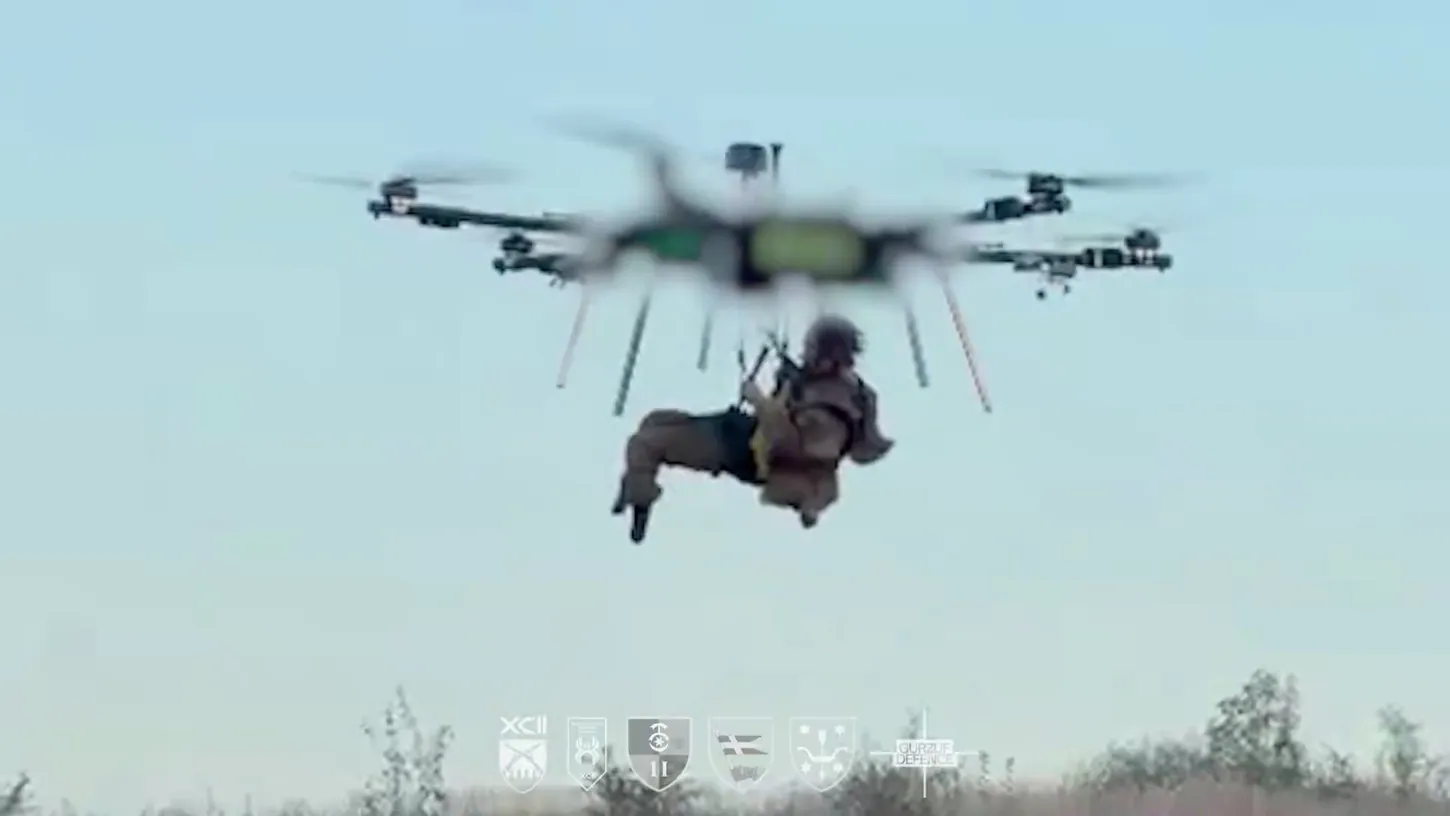
SkyFall told Reuters it expects to build about 1,000 StarGates a month by the end of 2026 and that other units and brigades want the drone. In October it put the price at $50,000 or more per system. Other armies and units are working on the same mission. Ukraine’s 92nd Assault Brigade flew the first known airlift in October with a soldier in a harness under a Gurzuf Defence bomber, and U.S. soldiers tested a Flowcopter medevac drone with a dummy in Poland in May.
DroneXL’s Take
On October 16 I wrote that SkyFall should publish StarGate’s combat numbers before it built 1,000 of these a month. Six soldiers brought out is the first real number, and I’ll take it. The number I’d watch is KVN’s 12 hours, because the airframe was never the scarce part of this mission. Every flight needs strike drones, jamming cover and partner battalions, and two weeks after its first rescue the regiment got that package together in half a day. SkyFall expects to build 1,000 drones a month, but they will only fly as often as units build the kind of platoons Cherry describes. I still want the failures published, because the next regiment will learn more from an aborted flight than from a rescue video.
Sources: Reuters, Militarnyi, Militarnyi, Rubryka.
DroneXL uses automated tools to support research and source retrieval. All reporting and editorial perspectives are by Haye Kesteloo. Read our editorial standards.