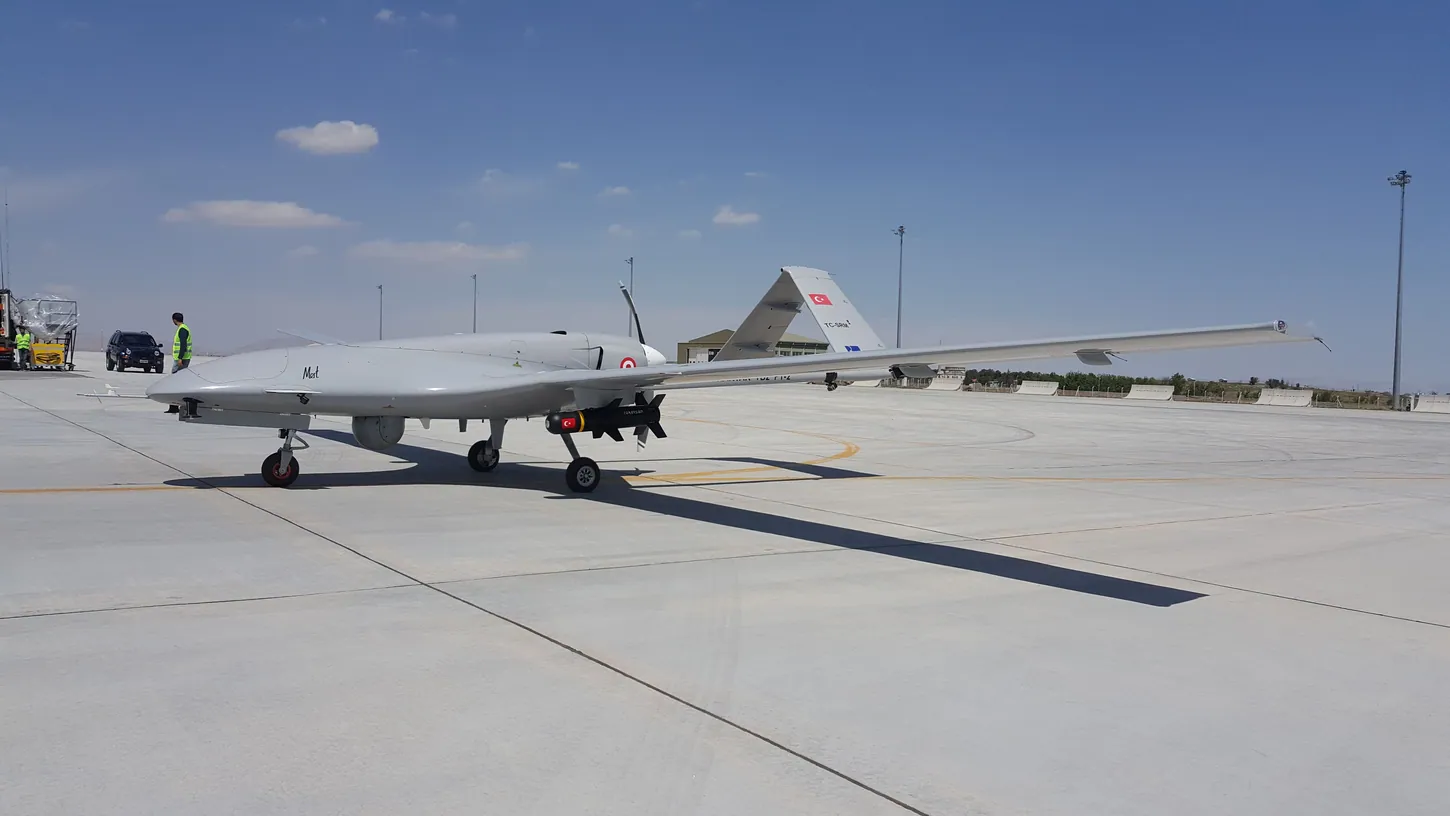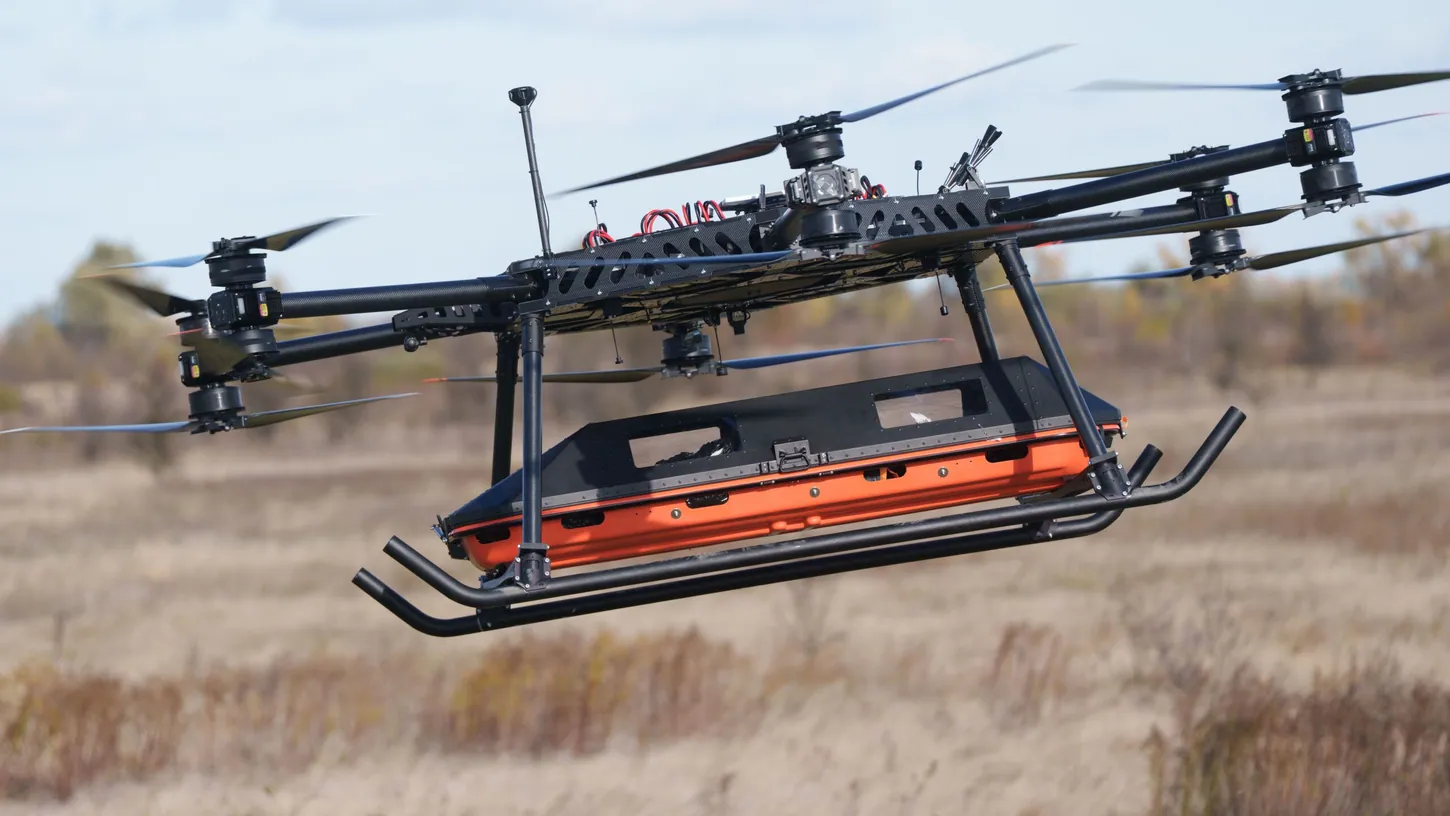
Ukrainian drone maker SkyFall has handed StarGate, a six-rotor drone built to carry a wounded soldier on a stretcher, to a combat brigade for evaluation under front-line conditions. The Associated Press watched a field demonstration on October 14, at a test site in Ukraine it was not allowed to disclose. SkyFall says StarGate lifts up to 330 pounds (150 kilograms), enough for a soldier in body armor with combat gear.
SkyFall builds the P1-SUN interceptors DroneXL covered in June and the Vampire heavy-lift drone that Russian troops call “Baba Yaga.” On the test field, StarGate flew through active jamming and fired a net that knocked an attacking FPV drone off course. SkyFall also says the drone kept flying after losing one of its arms. AP notes the company has not provided data on how reliably it survives damage in combat.
Code 9.2 Asked for StarGate Because Ground Robots Take Hours
StarGate grew out of a request from Flint, commander of the 475th Separate Assault Regiment, known as Code 9.2. For his troops, reaching a wounded soldier can mean going in on foot. KVN, another Code 9.2 commander, says ground robots need two to three hours to reach a position.
In some sectors the kill zone, the strip under constant drone and artillery threat, runs 6 to 9 miles (10 to 15 kilometers) or farther. The Financial Times mapped that zone in February and found that an unmanned ground vehicle is sometimes the only way to get a wounded soldier out. Ground robots struggle through mud and craters, and rivers, mines and drones can stop them outright. KVN told the Associated Press that same-day retrieval is not always possible in his unit’s area. “Covering 10 kilometers in minutes would be a drastic change on the front line,” he said. Both commanders are identified only by call sign, in line with Ukrainian military protocol.
SkyFall Built StarGate to Fly on Starlink and AI When GPS Is Jammed
SkyFall rates StarGate at a 40 mph (65 kph) cruise and a 65 mph (105 kph) top speed. A pilot flies it by hand over Starlink and SkyFall’s own L-Link system, and SkyFall says AI functions keep it navigating when GPS is jammed, spoofed or unavailable.
If both links drop, SkyFall says the drone plots its own route back to a safe area. It carries thermal cameras for night missions and is built to fly in rain and snow. Preparing it for flight takes about 10 minutes. The range is about 9 miles (15 kilometers) one way, and SkyFall gave AP no round-trip figure.
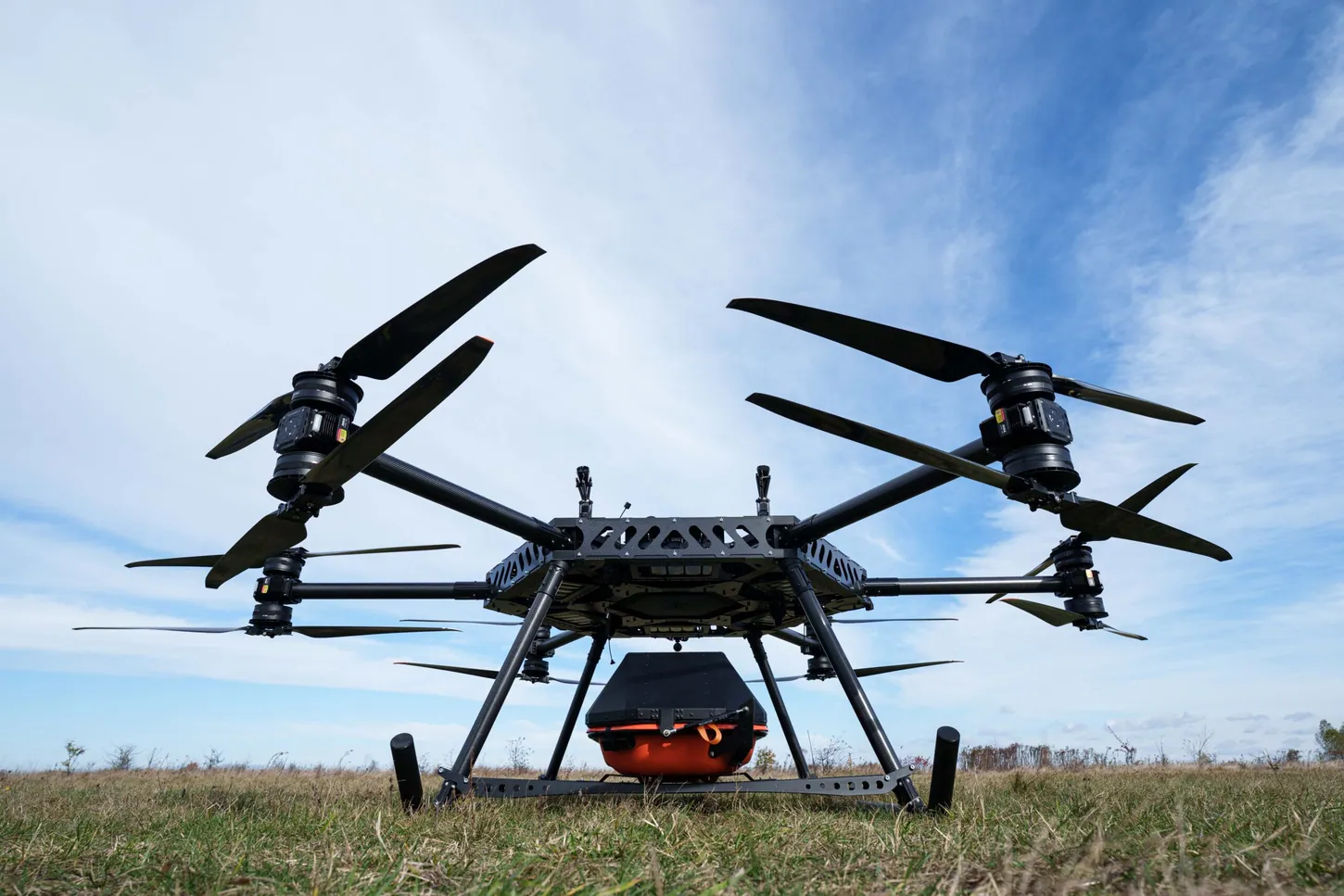
The design changed several times over the year of development. The arms now detach for transport, and the cabin is built around a medical-grade stretcher. A Western comparison is the gas-hydraulic Flowcopter FC-100, which U.S. soldiers from the 2nd Cavalry Regiment tested with a full-weight dummy at Sabre Strike 2026 in Poland in May. That test was an exercise, while StarGate goes to a unit in combat.
StarGate’s Real Test Is a Month of Combat Data SkyFall Won’t Share Yet
KVN says his unit needs at least a month flying StarGate before it can produce meaningful numbers on its success rate. He calls it a completely new method of evacuation and says it is too early to judge. SkyFall confirmed the evaluation but declined to disclose results.
SkyFall estimates each system will cost at least $50,000, depending on configuration, and wants to build up to 1,000 a month by the end of 2026, about 11 weeks from now.
AP’s headline, as syndicated to member papers, called StarGate Ukraine’s first aerial drone to evacuate wounded soldiers. In May, Militarnyi reported that Ukrainian forces were testing an unnamed heavy multicopter carrying a person playing a casualty, and neither the unit nor the maker was identified. Soldiers who spoke to Euromaidan Press about that test called aerial evacuation a niche option that would need heavy cover from FPV attacks. “How long will this thing survive, with a person on board?” asked Electric, a drone expert with the 93rd Brigade.
DroneXL’s Take
I want this drone built even if the first month goes badly. A wounded soldier in the kill zone can wait weeks for a ride out, and a $50,000 aircraft that brings back even a handful of them has earned its price. But the bar for StarGate is higher than for anything else SkyFall makes, because a shot-down StarGate takes the soldier on the stretcher down with it. In May, Electric put the working life of SkyFall’s own Vampire at about 10 flights. So far StarGate has netted one FPV on a test field with a weighted stretcher aboard, and the lost-arm flight is SkyFall’s own account. KVN’s month of data will be the first combat evidence either way. SkyFall should publish it, good or bad, before it starts building 1,000 of these a month.
Sources: Associated Press, Militarnyi, Euromaidan Press.
DroneXL uses automated tools to support research and source retrieval. All reporting and editorial perspectives are by Haye Kesteloo. Read our editorial standards.