
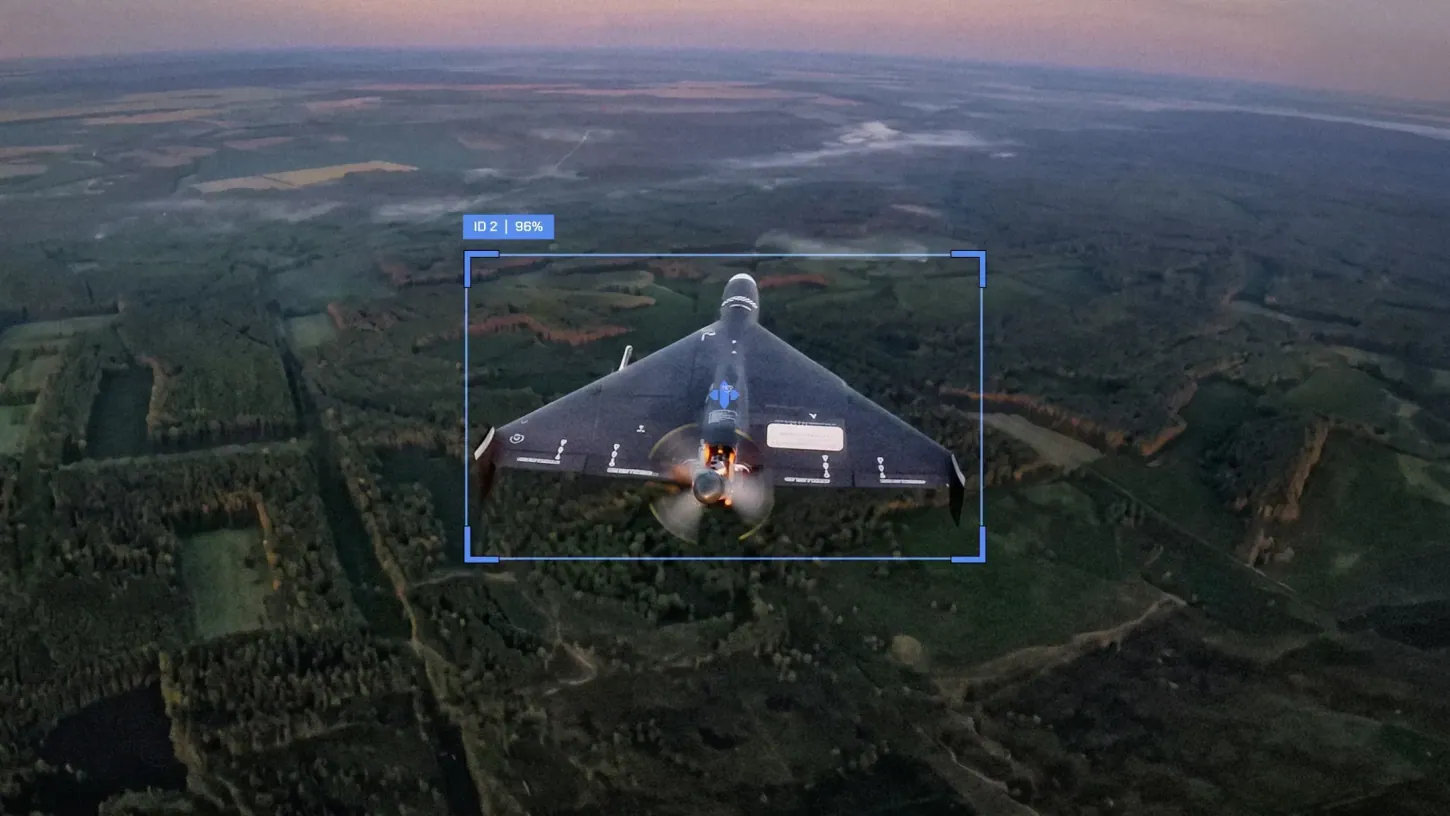
Ukraine is opening Avengers Labs, the Defense Ministry archive of battlefield footage that trains its AI weapons, to defense companies in allied countries at no charge. Up to 12 British companies are first in line under the only agreement reached so far, and Kyiv is in talks with other governments, The New York Times reported on Thursday, November 12.
The companies pay in software. Any firm that trains a model on the archive has to license what it builds back to the Ukrainian military. And the archive is mostly drone footage, by the ministry’s own description.
When Britain signed up in August, I wrote that this data belonged inside accountable militaries with rules of engagement. The licence that carries it abroad has no human rights clause, the Times reports.
Avengers Labs Is Built Mostly From Drone Footage
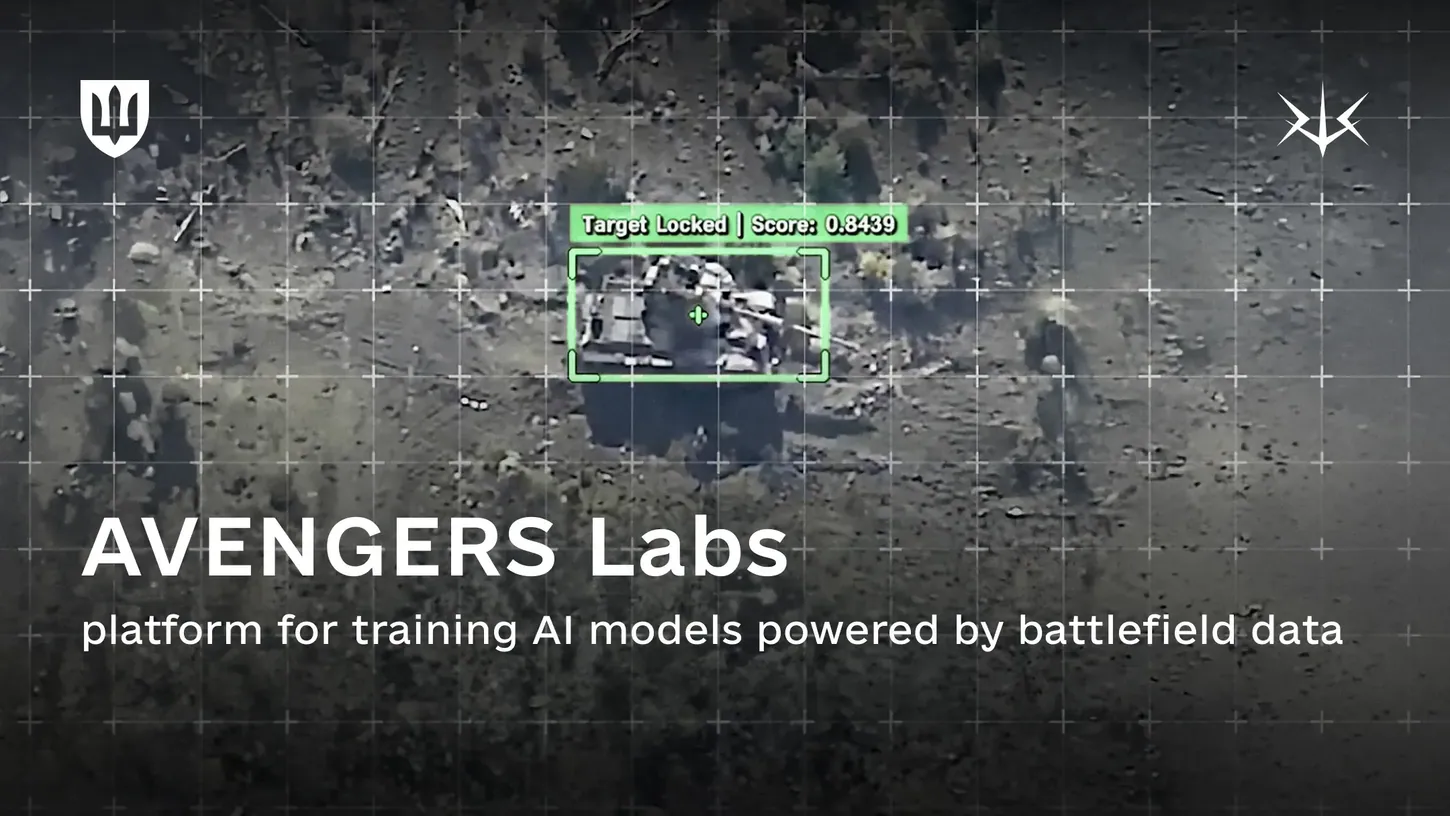
Avengers Labs holds more than five million annotated battlefield frames, and Ukraine’s Defense Ministry says most come from unmanned systems through the Delta battlefield system. The Times, shown the platform by the ministry, describes more than five million drone surveillance and strike videos. Both figures are the ministry’s.
A frame and a video are different units, and the ministry’s own September 25 release uses frames. Fedorov’s first offer to allied companies, in March, spoke of millions of drone videos. Whichever is right, the supply keeps growing. The detection system trained on this data processes more than 100,000 drone video streams a month inside Delta, the ministry said in August.
Much of the archive is raw footage of small drones chasing Russian soldiers, the Times reports. A menu bar sorts thousands of annotated clips by target: tanks in winter, trucks at night, Russian drones exploding in a thermal camera’s view. The ministry counts more than 30 Ukrainian companies training models on the platform and three resulting products in combat use.
Companies Train Inside A Sandbox And Never See The Videos
Companies cannot view or download the footage, which sits encrypted with a cloud service outside Ukraine, the Times reports. They run models against it in an isolated system, and one that scores well on false positives and false negatives gets loaded onto an aerial drone, ground robot or sea drone.
The target menu travels with the model. A soldier picks an item on the weapon, tanks for example, and releases the drone to hunt for one on its own. The ministry’s August release describes two uses for these models. In the first, an operator picks the target and the drone steers itself through the last stretch. In the second, the drone is sent into an area to find a target itself.
One executive whose model is now flying in combat told the Times that training statistics showed false positives below 5 percent. The executive spoke anonymously because of a secrecy agreement with Avengers Labs, so that number comes with no way to check it.
The ministry’s September release adds safeguards the Times does not mention. The data is anonymized and delayed so it cannot endanger troops still fighting, and foreign companies get in only after Ukraine completes export control procedures. The UK Ministry of Defence picks the British firms, up to 12 of them, in a competition for models that keep unmanned systems working when the link to the operator or satellite navigation is limited.
Most AI drones in this war still need a pilot to confirm the target. Both armies have also used small numbers of fully autonomous strike drones, the Times reports, including the Russian one that killed three civilians at a Zaporizhzhia gas station in July. Mykhailo Fedorov, the former defense minister who directed the platform’s development, has formed an investment fund that aims to field a fully autonomous AI weapon next year, the Times reports. Alex Karp, the chief executive of Palantir, is a lead investor. CNBC reported in September that the money is Karp’s own and not Palantir’s, as DroneXL noted at the time.
The footage has a limit that Kateryna Bondar of the Center for Strategic and International Studies pointed out to the Times: it is not clear how useful images of Russian equipment are in a war somewhere else. The paper’s example is a Middle East conflict where a weapon would need to recognize Iranian missile launchers in a desert.
The Licence Leaves The Laws Of War To Each Government
The licensing agreement contains no human rights clause, the Times reports. Ukraine opens access through government-to-government agreements, and Ukrainian officials say each receiving government must make its military follow the Geneva Conventions and other treaties. No treaty yet says how those laws apply to weapons that pick their own targets.
A decision on that treaty comes next week. Russian and US diplomats opposed a requirement for “meaningful human control” of lethal autonomous weapons at UN talks in Geneva last month, according to the Times. Human Rights Watch’s account of the expert session that closed on September 5 names Russia and the United States among the states that weakened its final report. That report still affirms that human control and judgment are required to comply with international law, and HRW counts 76 states in favor of negotiating binding rules. The Convention on Conventional Weapons Review Conference meets in Geneva from November 16 to 20 and will decide whether to open those negotiations.
Anna Bacciarelli, who analyzes AI and conflict at Human Rights Watch, told the Times that the opaque reasoning inside these models is a problem because the “black box obscures accountability” when a weapon selects its own target.
Oleksandra Matviichuk, the Nobel Peace Prize laureate who directs the Center for Civil Liberties in Kyiv, pointed to the Rome Statute. Countries that ratified it, Ukraine among them, must hand over for trial officers responsible for war crimes, whatever weapon was used. She told the Times that Ukraine should be cautious about sharing the data with countries that have not accepted that principle, and she named the United States.
DroneXL’s Take
Ukraine should write a human-control condition into the Avengers Labs licence. It already attaches one condition, the software licence back to its own military, so the paperwork exists. It also holds more of this data than anyone else, and the ministry says a set like it is close to impossible for a company, or a country without a modern full-scale war, to collect.
In August I argued that allies would be negligent to leave this archive unread, and I still think so. That argument assumed the footage would land inside militaries that answer for what their weapons do. The licence hands that job to the receiving government. The United States, the ally whose absence from this archive I pointed out in August, is one of the governments Human Rights Watch names for weakening the Geneva report.
Kyiv is short of soldiers and running out of air defense missiles, and it wants autonomous weapons sooner. A clause requiring a human to confirm a strike on a person would also bind the software that comes back to Ukraine under the licence, so it has a cost. I’d still write it, because buyers have no larger archive to turn to. The Times names no country in the current talks, and I’d watch whether the next agreement carries a clause like that.
Sources: The New York Times, Ministry of Defence of Ukraine, Human Rights Watch
DroneXL uses automated tools to support research and source retrieval. All reporting and editorial perspectives are by Haye Kesteloo. Read our editorial standards.


