The United States has asked the United Nations weapons conference that opened in Geneva on Monday, November 16, to spend five more years writing a voluntary document on lethal autonomous weapons, with a first version in 2029, instead of negotiating a treaty. A draft from the chair of the committee handling the issue would have a new treaty protocol on the table by 2028. Decisions there need consensus, so any one of the 128 member states can stop either plan.
The meeting did not get as far as that argument. Russia refused to adopt the agenda until observers such as the European Union and campaign groups were barred from speaking in most sessions, and the Swiss president of the conference suspended the opening session. The American delegation spoke against Russia on that point.
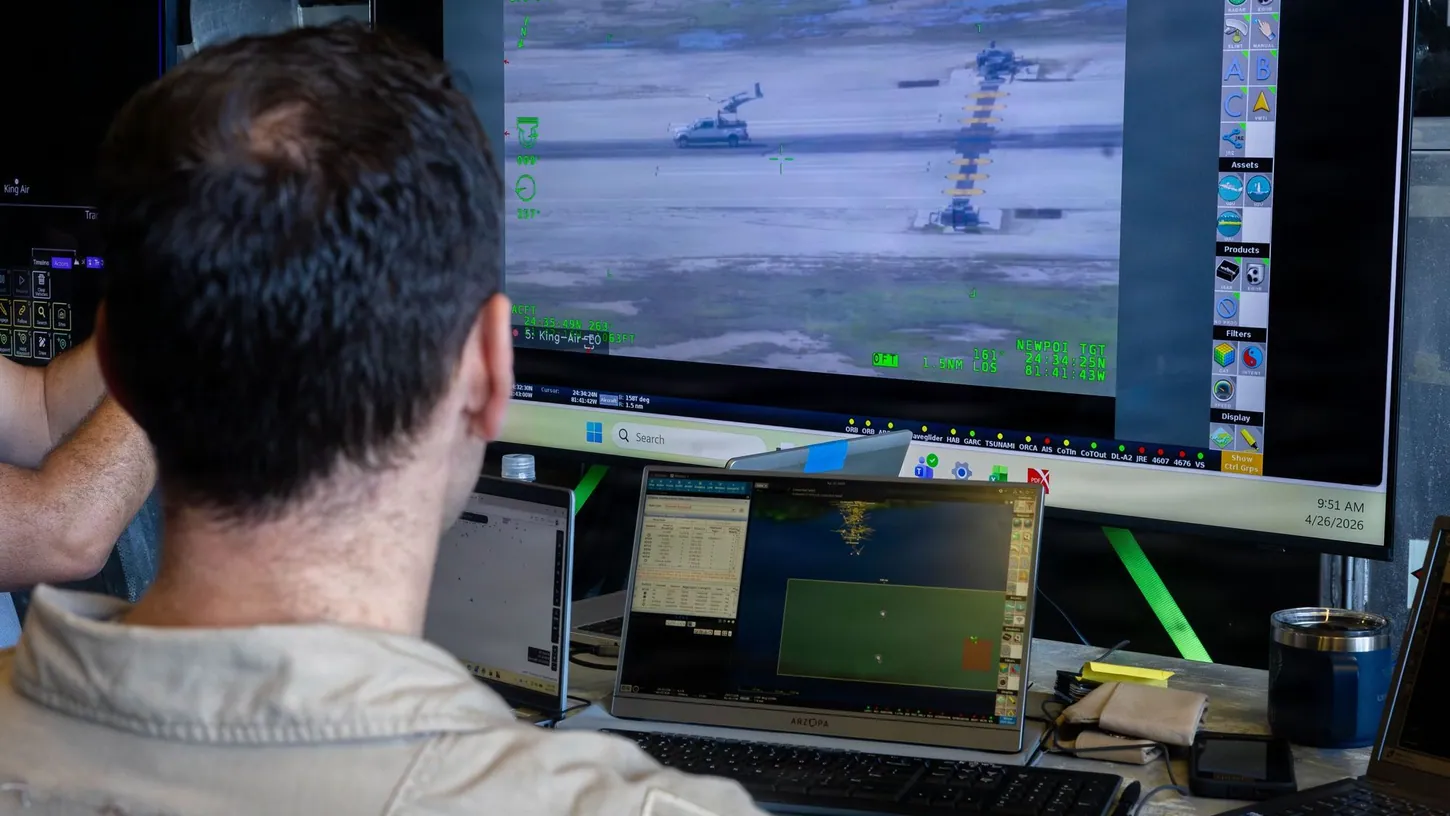
Washington moves faster at home. In June, President Trump gave the Pentagon 90 days to rewrite its own autonomous weapons directive, and in September Defense Secretary Pete Hegseth ordered a four-star Autonomous Warfare Command to be standing by October 1, 2027.
The US Paper Puts A Voluntary Text In 2029 And A Report In 2031
The American working paper, dated November 4, asks for a five-year mandate in which experts meet 10 days a year and write a non-binding instrument by consensus. It wants version 1.0 by 2029, updates in 2030 and 2031, and a report to the next review conference in 2031.
The four-page paper argues that a voluntary text can be updated as the technology changes and applies to every state at once, while a protocol binds only the states that ratify it, and only after it enters into force. It says the laws of war already cover attacks by autonomous systems. It also says a lethal autonomous weapon system is not a “certain” conventional weapon in the convention’s sense, because “autonomy is a capability” that can be built into many weapon systems, including ones the convention already covers. The paper adds that nobody has shown these systems to be inherently indiscriminate, and that autonomous functions can reduce risk to civilians. It leaves a later protocol open, saying the voluntary text would be “without prejudice” to a future consensus decision to change its nature.
The chair of the committee handling the issue, Peru’s Ambassador Elmer Schialer Salcedo, circulated a competing draft on October 23. His one-page proposal tells the expert group to “negotiate a new Protocol to the Convention,” meet 15 days a year, and hand a draft protocol to the 2028 meeting of member states. Seven countries (Austria, Belgium, Brazil, Ireland, Mexico, New Zealand and Panama) submitted their own proposal last month to launch negotiations on a legally binding agreement, the Associated Press reported. Their text is not among the documents the UN has posted for the conference.
Russia Stopped The Meeting Before The Agenda Was Adopted
Russia told the opening session it would adopt the agenda and the rules of procedure on one condition. Non-state observers would get a single speaking slot, after states had finished every substantive item. The president found no agreement and suspended the meeting until 3 p.m. Geneva time.
The UN’s machine transcript of the session shows the Russian delegate blaming the European Union’s delegation for the dispute. Ireland answered that the proposal broke the rules and would also silence observer states and the International Committee of the Red Cross. The United States said it “strongly supports the full participation of observers.” Britain, Canada, Norway, Panama, Mexico and Austria also spoke against the Russian proposal. Belarus backed Russia, and Cuba and Peru asked for informal consultations. Russia made the same demand at the convention’s annual meeting in November 2024.
Moscow’s view of the substance came from the foreign ministry last week. Spokeswoman Maria Zakharova called it “premature” to say the time has come for restrictions or bans on such systems, according to the Associated Press. Two diplomats told Reuters that a compromise may still be found by the end of the week, with binding, non-binding and hybrid outcomes all on the table.
UN Secretary-General António Guterres had opened the day by video with the opposite request, a legally binding instrument with clear prohibitions. “Take action to prevent the use and spread of these merciless weapons,” he told delegates.
The Experts’ Report Defines The Weapon And Leaves The Human Role Loose
Three years of expert talks ended on September 4 with a consensus report. It describes a lethal autonomous weapon system as one that can identify, select and engage a target, with loss of life, without intervention by its human operator. Programming target types in advance does not exempt a system.
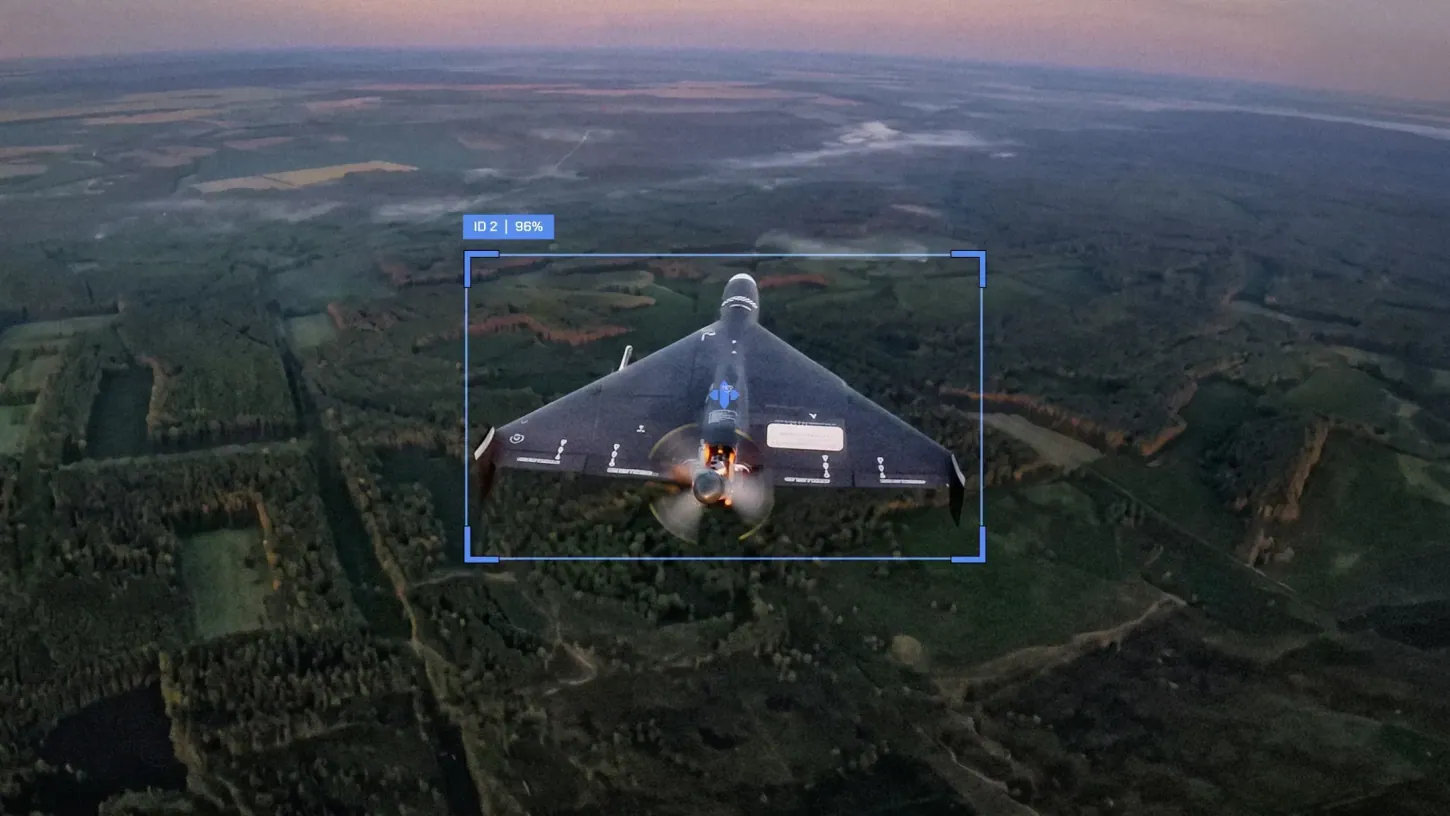
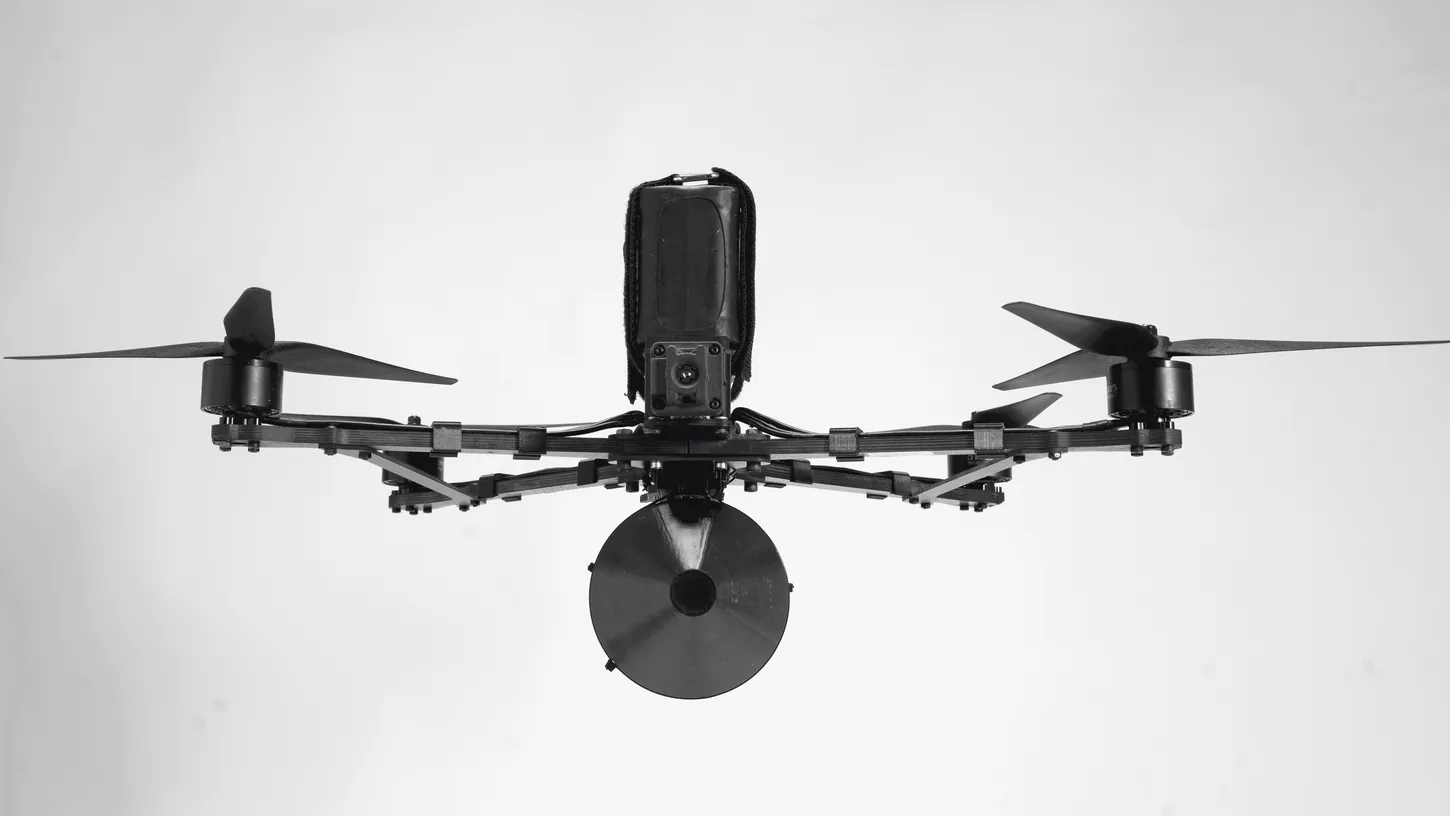
The report says “control and human judgement” are needed and that people may exercise that control “directly or indirectly,” including through measures taken before the weapon is used. A weapon whose operators pick the specific target and the timing falls outside the description. Developers in the Ukraine war are working on both sides of that line. In trials that Ukraine’s Brave1 defense cluster reported in September, six of seven companies passed a hands-off strike on a moving ground target that the pilot had locked first, which DroneXL covered in its piece on The Fourth Law’s autonomy modules. The same month, Anthropic said it had caught a Russian freelance team coding a drone swarm that picks its own targets with its tools.
Human Rights Watch says the United States and Russia weakened the report in its final week. Its account of the session says the final text dropped references to design and development, to ethics, and to predictability, reliability, explainability and traceability. The scope narrowed to international humanitarian law alone. The group counts 76 states in favor of negotiations, 70 of them parties to the convention, which is a majority of the 128.
The General Assembly’s disarmament committee voted on October 29 to call on those parties “to advance to negotiations on an instrument,” in the words of the draft resolution. The tally was 163 to 5, with the United States, Russia, Belarus, North Korea and Israel against and China among nine abstentions.
The Pentagon Got 90 Days To Rewrite Its Own Autonomy Rule
The American rule on autonomous weapons is Department of Defense Directive 3000.09, last reissued in January 2023. On June 5, a presidential memorandum gave the Pentagon 90 days to update it and ordered annual reviews after that, which put the deadline on or about September 3.
The directive requires weapons to be designed so that commanders and operators can exercise “appropriate levels of human judgment over the use of force.” The Congressional Research Service notes in its primer on the policy that this does not require manual control and that US policy does not prohibit developing or using lethal autonomous weapons. The memorandum, NSPM-11, says the update should “ensure the deliberate adoption of AI systems that respect the chain of command.” Its policy section speaks of “eliminating unnecessary barriers to rapid deployment.” DroneXL flagged the September deadline in August when Northern Command said it could not stop a drone swarm over the homeland.
Senator Ruben Gallego of Arizona wrote to Hegseth on June 12 asking how a rewrite on that schedule would guard against friendly fire and civilian harm. His letter asked for answers by June 26. The deadline for the directive has passed, and no revised version has been reported in the defense trade press since.
DroneXL’s Take
The American paper is right about the engineering. Autonomy is software, and the same terminal guidance module that lets a Ukrainian FPV finish its run through Russian jamming would be a “killer robot” under a loosely written ban. I’ve covered that technology all year, and I don’t want a treaty that Ukraine and its suppliers would obey and Russia would sign and ignore. Moscow showed on Monday how it treats this convention’s rules when it held up the agenda over who gets a microphone.
But the timetable gives the game away. The Pentagon was told to rewrite its own directive in 90 days and to stand up a four-star command in a year. Ten meeting days a year until 2029, for a first voluntary draft, is the pace of a government that wants no document at all. I suspect Washington would rather write the rules alone, in a directive it can revise every year, than with 127 other states.
If that is the plan, the price is publishing the directive. The United States asks Geneva to trust that existing law and American practice are enough, and no revised 3000.09 has been made public since June’s order to change it. Friday’s closing session will show whether the chair’s 2028 date survives. The directive will govern the autonomous drones the Pentagon buys whatever Geneva decides, so American operators and manufacturers should care more about the day it is published.
Sources: United States working paper CCW/CONF.VII/WP.2, chair’s draft mandate, UN Web TV transcript, expert group report CCW/GGE.1/2026/3, Reuters, Associated Press, Human Rights Watch, NSPM-11
DroneXL uses automated tools to support research and source retrieval. All reporting and editorial perspectives are by Haye Kesteloo. Read our editorial standards.