
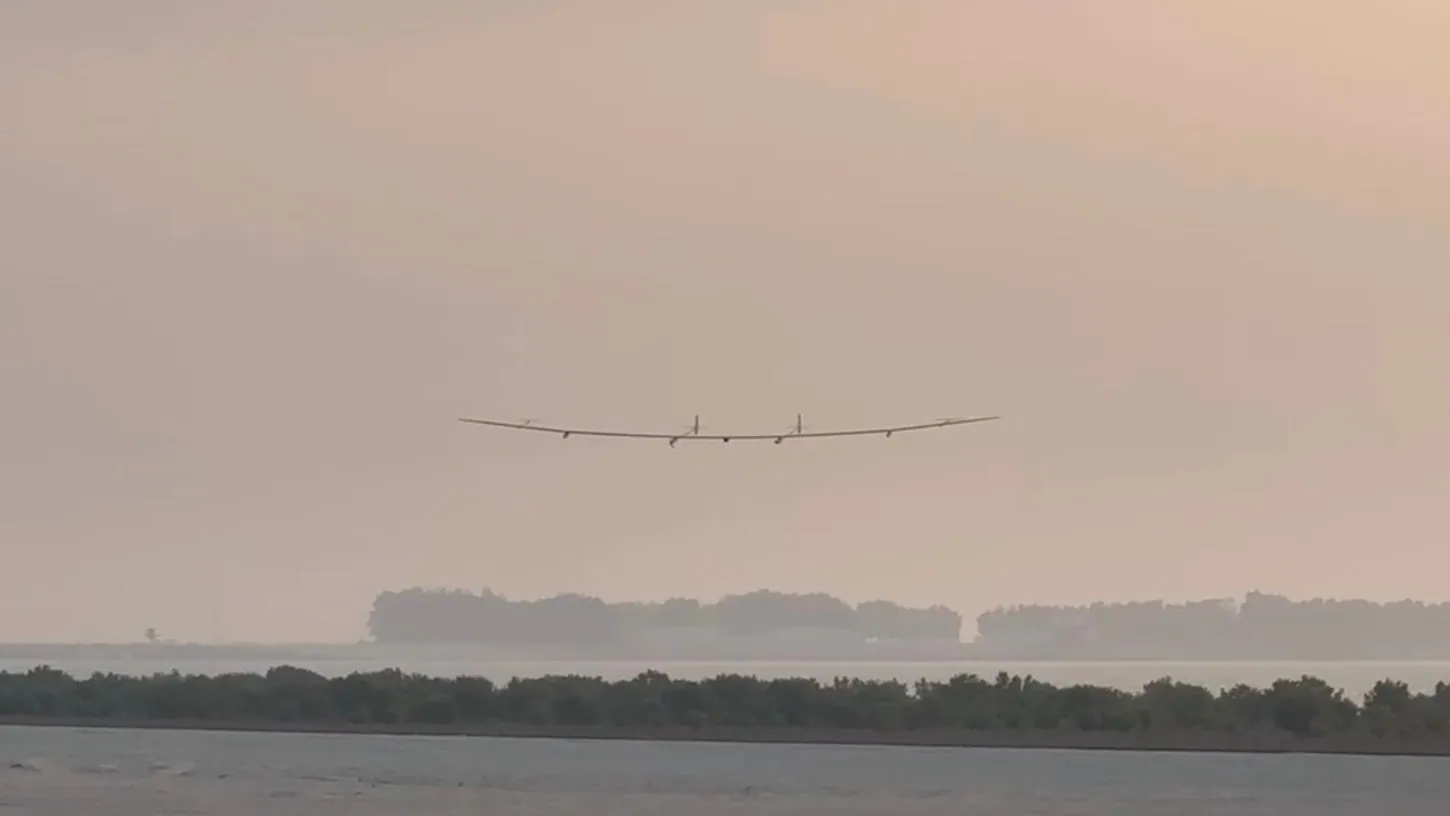
UAVOS says its ApusNeo high-altitude platform station stayed airborne for 100 hours and 50 minutes over the Canary Islands, taking off from Fuerteventura on November 2 and landing on November 6. The company says the solar aircraft reached a maximum altitude of 14,500 meters, or 47,600 feet.
The release, as issued by UAVOS
ApusNeo HAPS Completes Record-Breaking 100-Hour Flight in European Airspace
UAVOS, a founding technology partner of Mira Aerospace, announces the successful completion of a record-breaking flight campaign by its ApusNeo HAPS (High-Altitude Platform Station) aircraft, achieving a total flight duration of 100 hours and 50 minutes. The flight demonstrated the aircraft’s endurance, structural resilience, and ability to operate in challenging meteorological conditions.
The aircraft took off from the Canarias Stratoport for HAPS & UAS, located at Fuerteventura Technology Park in the Canary Islands, Spain, on November 2 at 00:15 and successfully landed on November 6 at 05:05. The flight was conducted as part of the ISSEC R&D project, led by Telespazio Ibérica in collaboration with Pegasus Aero Group, which focuses on HAPS-based wildfire monitoring and environmental protection in Spain.
Operating at various altitudes, the aircraft reached a maximum altitude of 14,500 meters (47,600 ft) and encountered turbulence, dense high-altitude cloud formations, and strong winds while maintaining excellent flight performance. A key factor behind its resilience is its flexible wing, designed to adapt to changing aerodynamic loads through controlled bending and torsional deformation. This design helps the aircraft withstand turbulence, wind gusts, and thermal currents.
The aircraft was also equipped with an ultra-lightweight protective coating for its solar panels, specially designed to provide corrosion resistance in high-humidity and high-temperature environments, particularly during low-altitude flight operations.
Its current configuration incorporates UAVOS autopilot systems and avionics specifically designed for the HAPS program, supporting the demanding requirements of long-endurance autonomous operations.
“The success of this flight campaign was made possible by close cooperation with our partners, including ENAIRE, Spain’s air navigation service provider, Telespazio Ibérica, and PTFUE (Fuerteventura Technology Park). It gave us a valuable opportunity to strengthen coordination with aviation authorities and test ApusNeo HAPS at different altitudes and in challenging weather conditions. This experience is essential for advancing our HAPS technology and supporting future R&D projects,” said Aliaksei Stratsilatau, CEO of UAVOS.


