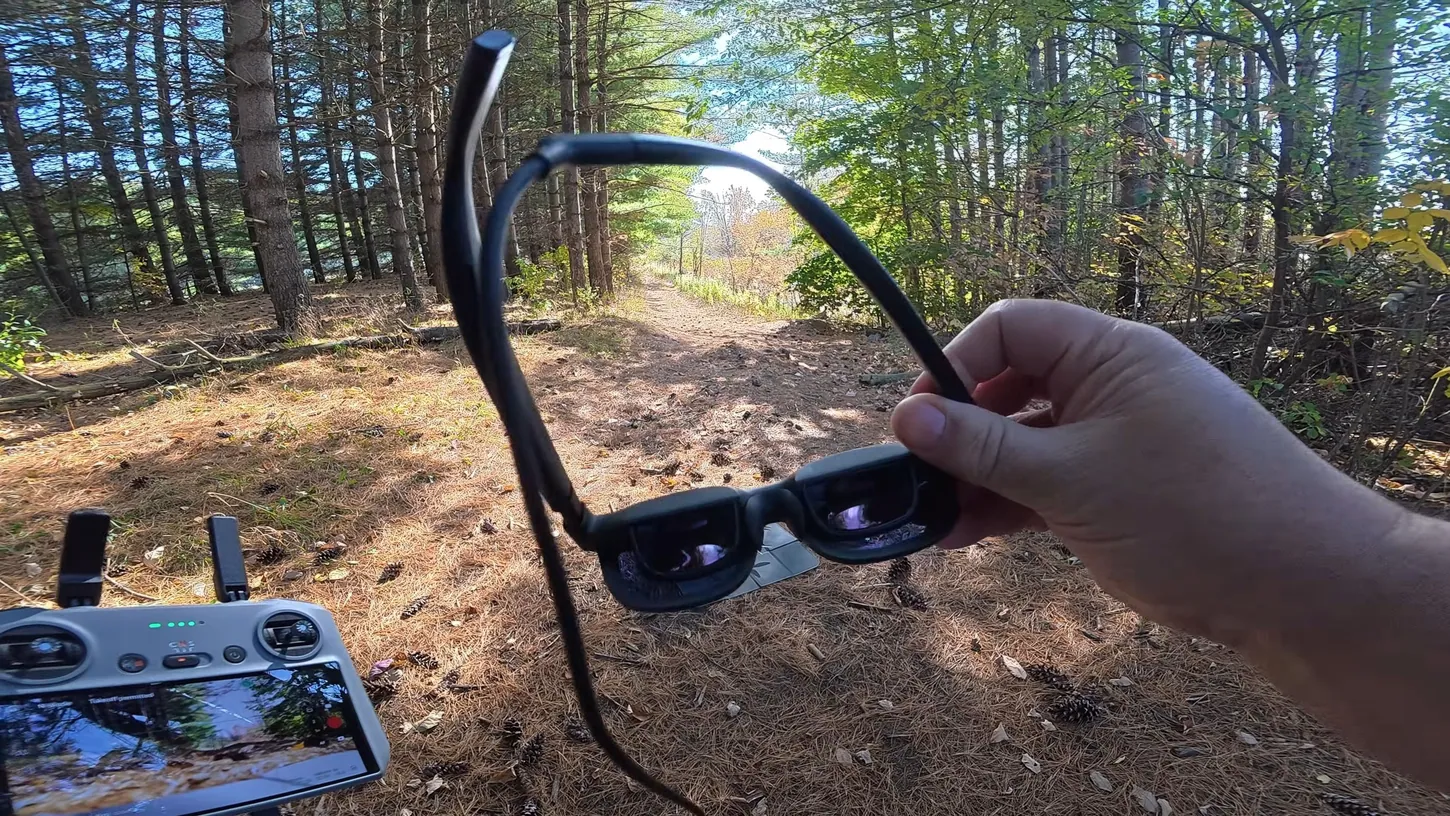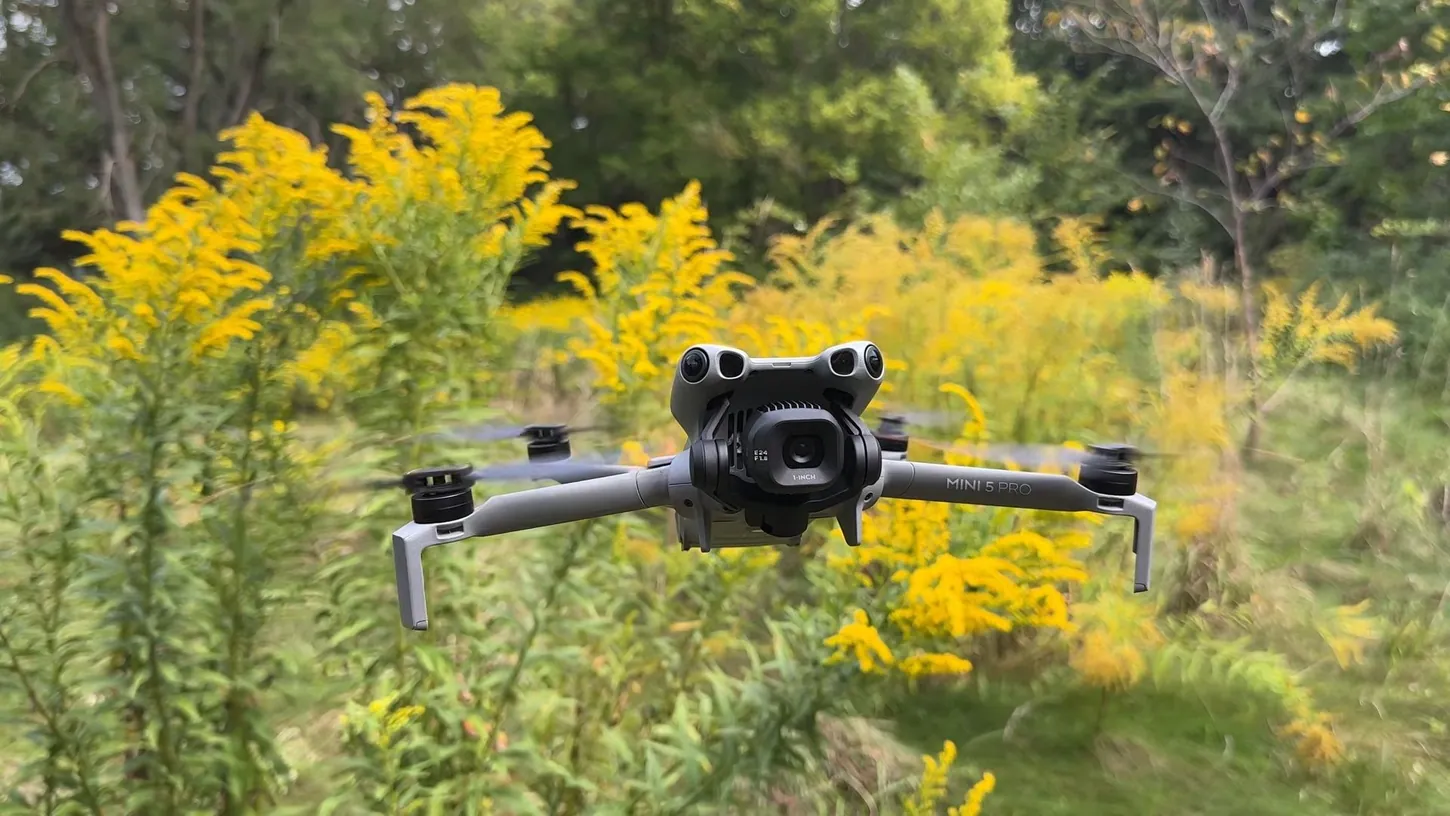
Good day, folks. Shawn here from Air Photography. The DJI Mini 5 Pro has been out for a little over a year now. I think it was around the middle of September that it launched, and I like to follow up with these long-term reviews going over my user experience.
Usually when I do these reviews, I start with the positives, what the drone is really good at, and save the things that need improvement for the end. With the Mini 5 Pro, we’re going to do it backwards. I’m going to start with the negative, because in all reality there’s not a lot negative with this drone. It’s actually pretty incredible for what it is.
The Mini 5 Pro’s weight is still its one real drawback for some pilots
The negative isn’t going to be negative for everybody, but it has to do with the weight of the Mini 5 Pro. It was a controversy at launch last year: most people’s drones weighed over 250 g. Depending on where you fly, that can be a substantial issue.
Here in Canada, when a drone is under 249 g, we don’t need a drone pilot certificate and we don’t have to register it with Transport Canada. On top of that, these sub-250 g drones can be flown beyond visual line of sight, a little bit higher, and in areas where you can’t fly a more traditional drone. You still have to do it in a responsible manner. You can’t put anybody or any aircraft at risk.
So it was a little concerning when the Mini 5 Pro came in over 250 g. Every country’s regulations deal with it a little differently, and some countries still classify it as a sub-250 g drone even though it is a few grams heavier. With Transport Canada there were a lot of conflicting reports about how it would be addressed, but basically the consensus is that 249 g is the rule, and there’s no exception.
Not everybody buys a drone like this because of its weight, though. Some people buy it for its small, compact size. It’s easy to pack if you need to travel light, it fits in a small bag, and it’s not a burden to bring along. Because of its pro features, you don’t have to sacrifice video quality or capabilities to get a small, compact drone.
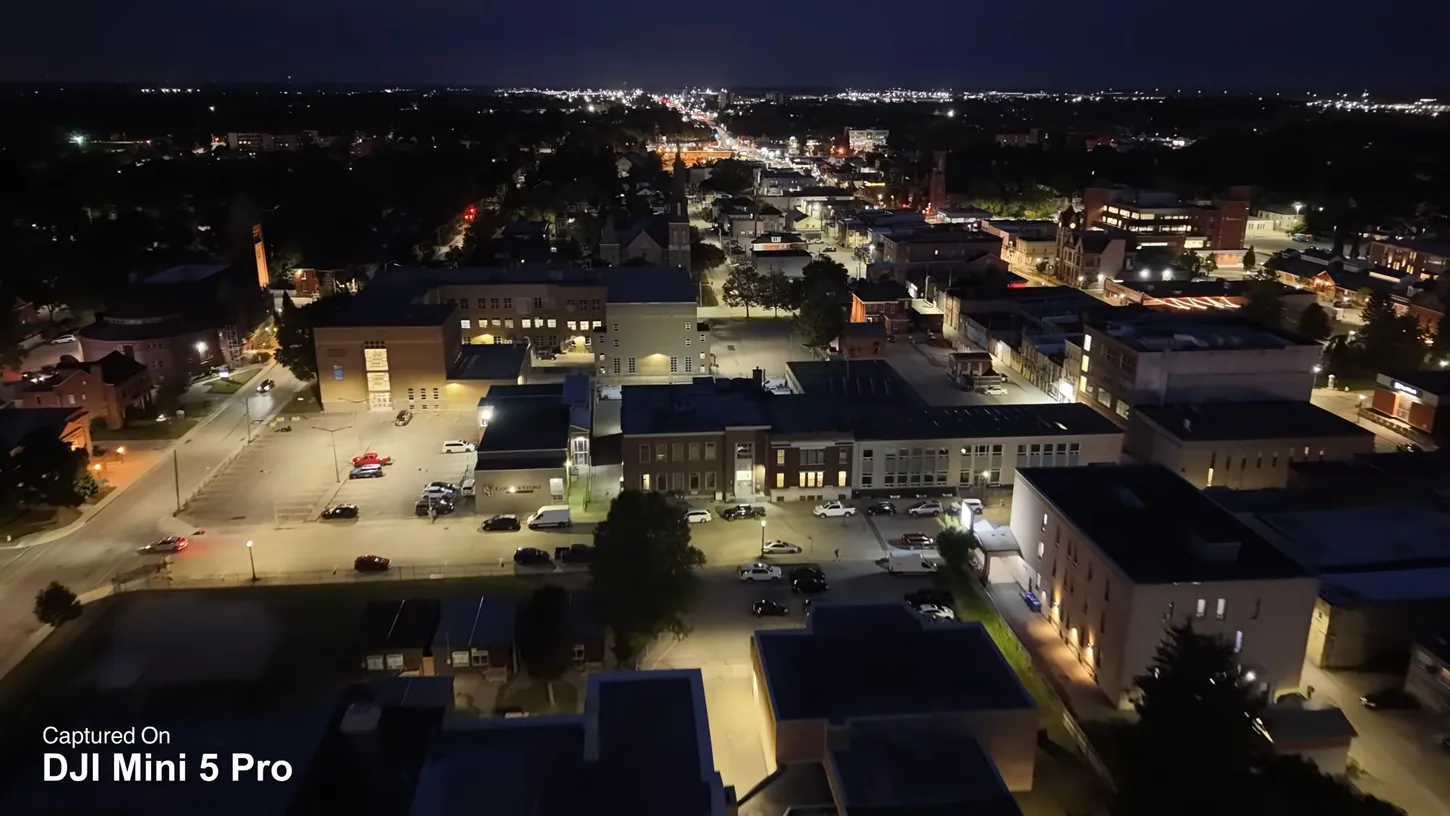
The 1-inch sensor holds up at night, sunset and on overcast days
The Mini 5 Pro was a big move forward for small drones, introducing a 1-inch sensor, the very first 1-inch sensor on a mini drone from DJI. It has 14 stops of dynamic range, and you can capture 10-bit color in a normal color profile.
Pair that sensor with the new camera’s capabilities and you get beautifully exposed footage when the lighting conditions are not ideal, and not just at night. Of course it does a really good job filming at night, but even at sunset, or sunrise on an overcast day, that large sensor makes a really big difference. That’s the nice thing about the Mini 5 Pro: you don’t have to sacrifice image quality. You can have a nice large sensor on a small, compact drone.
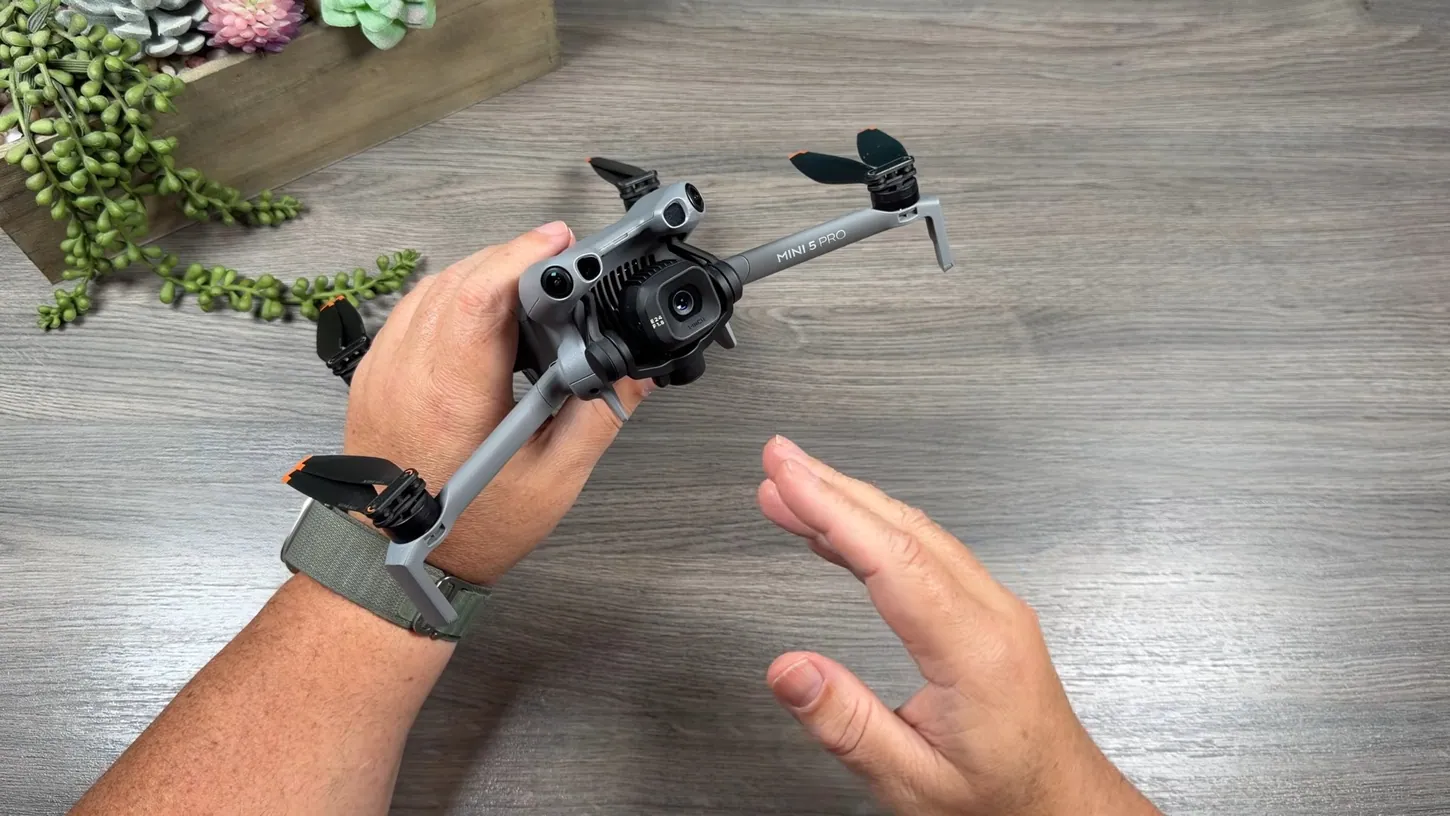
Another upgrade over the DJI Mini 4 Pro is that the camera can now rotate, just like on the Mavic 4 Pro. To be honest, that’s a feature I never use and probably never will. I did some testing with it just to check it out, but for the way I capture, there’s no practical application where I need the camera to rotate. There are people who make use of it, though, and I’ve seen some really interesting work. It’s nice that it’s there if I decide I want to get a little bit creative.
It also shoots true vertical video. Not everybody films in vertical, but for people capturing strictly for social media it makes a big difference, because you’re using the full sensor and capturing vertical video in full resolution. You don’t have to crop it later. It’s already in the proper format, using the whole sensor.
Flight time, speed and wind resistance reach pro-level numbers
The whole performance of the Mini 5 Pro got a big upgrade, too. With the Plus battery it’s rated at 52 minutes of flight time, and it flies faster: 18 m/s (about 40 mph) on the standard battery and up to 19 m/s (about 42 mph) on the Plus battery.
It also gets a boost in wind rating. The Mini 5 Pro is rated for wind speeds of 12 m/s (about 27 mph). Combine all of that, the extra flight time, the higher wind rating and the faster flight speed, and you’re getting some really pro-level capabilities from a small, compact drone.
Front LiDAR and advanced RTH make the Mini 5 Pro safer to fly home
I also like that the obstacle sensing got an upgrade. Not only were the visual sensors updated for low-light capability, DJI added LiDAR to the front. That makes it safer overall at detecting obstacles, even when the lighting conditions are not ideal.
That can be really important during a failsafe disconnect, when the drone is returning home on its own. It can more accurately recognize obstacles even in dimly lit environments.
The Mini 5 Pro also has the advanced return to home that DJI has introduced on a lot of its recent drones. Return to home on DJI drones has been extremely accurate and quite reliable over the years, but this advanced version lets the drone return home even without a satellite connection. If you lose satellite connection, or you’ve taken off before getting a good satellite lock, it can still navigate safely back to your home point, whether it’s a failsafe return to home or one you initiate manually.
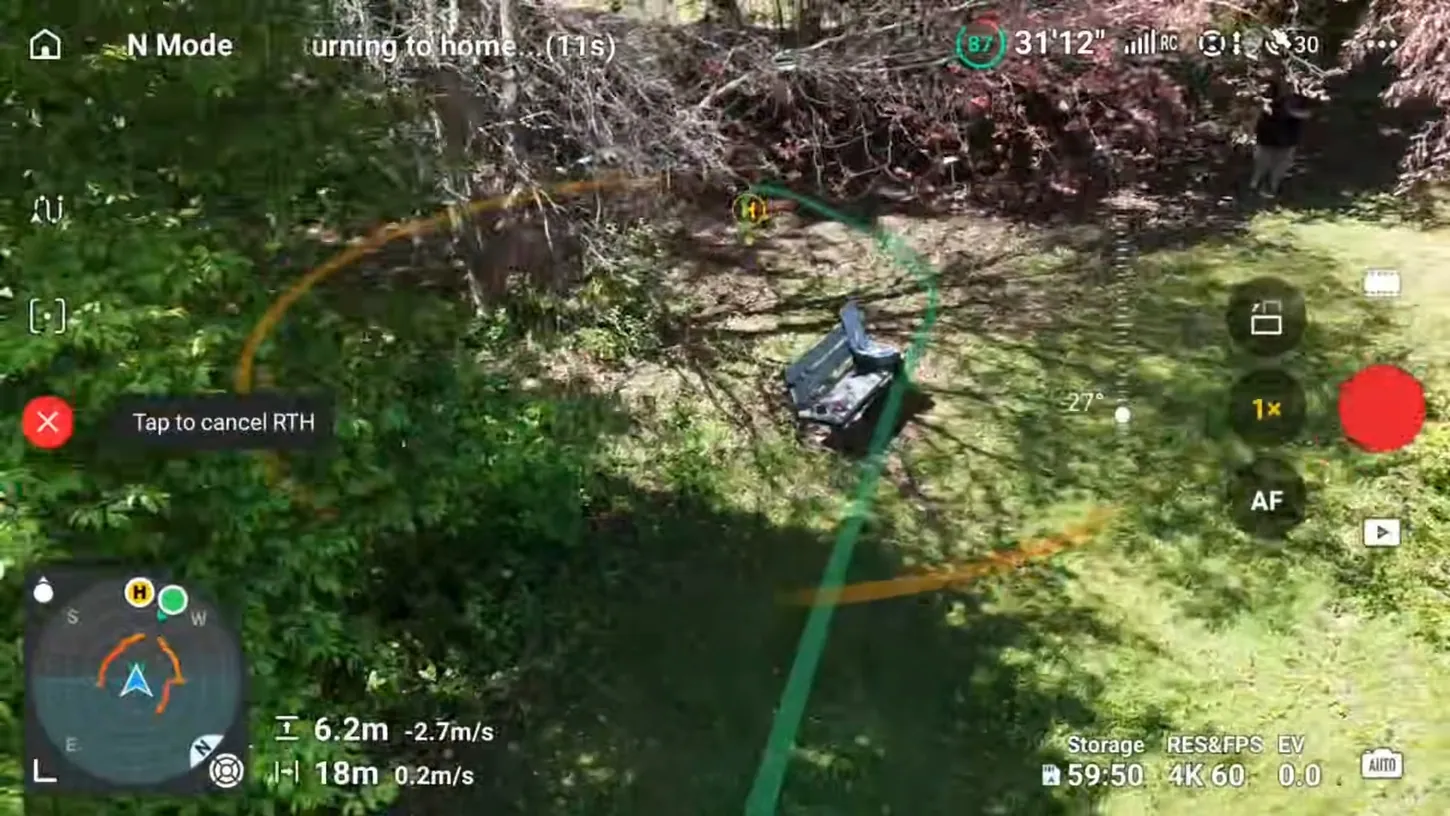
While it does that, it can navigate extremely complex environments. It can bypass trees and go under obstacles, and it lets you take off and land on things like balconies, or even out of a garage. It’s actually pretty impressive to watch in action.
42 GB of internal storage and quick-release props save a day in the field
The Mini 5 Pro has 42 GB of internal storage. That’s not a huge amount, but it can be really important if you forget a memory card, which many of us have done, or fill one up before you’ve transferred everything over.
In the past I would have said I’d like to see DJI increase the internal storage. With the cost of memory skyrocketing over the past year, I don’t think they should, because that’s just going to inflate the overall cost of the drone. I think 42 GB is a reasonable amount as a backup storage location.
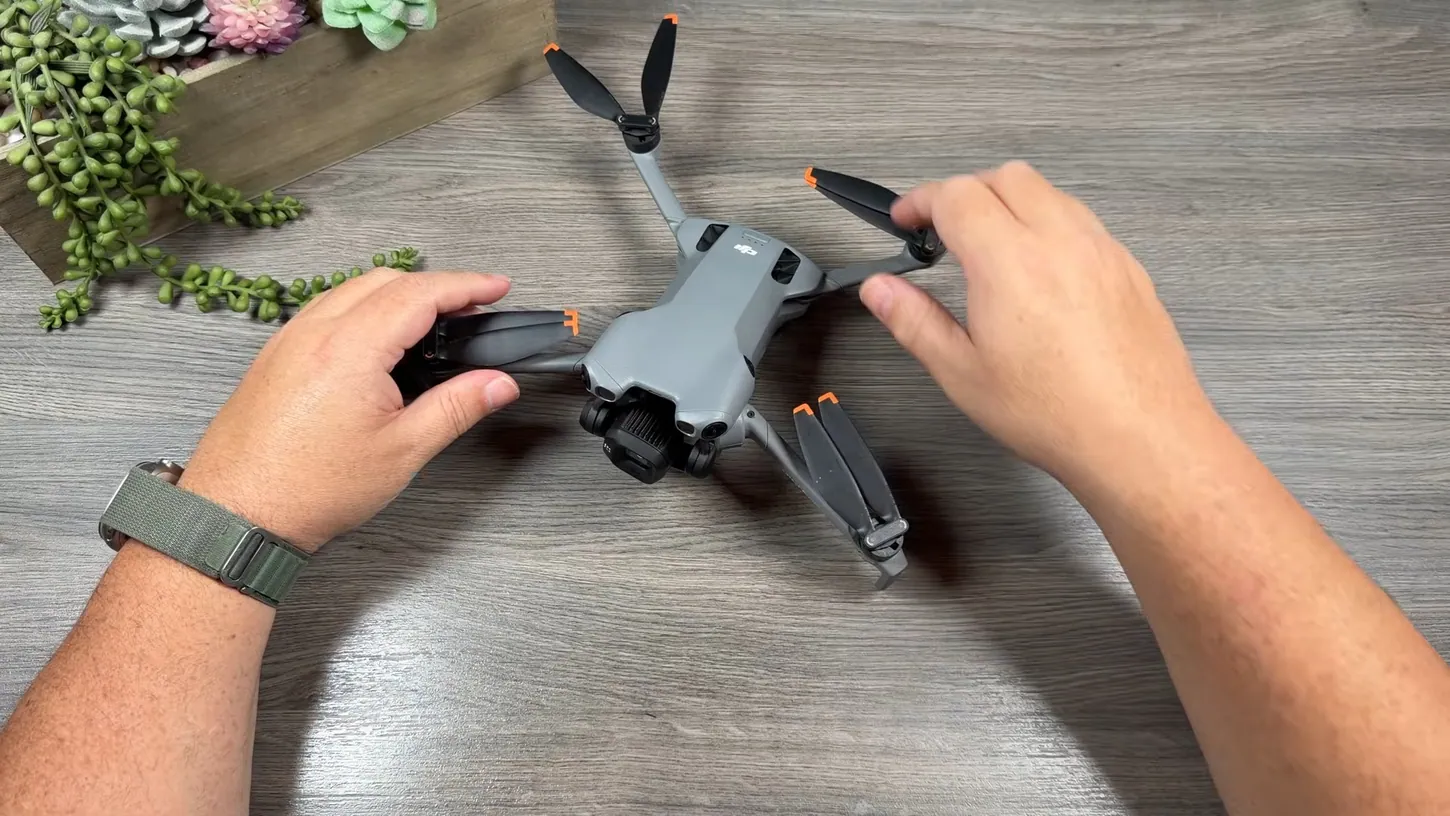
Another small upgrade, but in my opinion an important one, is the quick-release props. Changing props in the field used to mean little screws and a screwdriver. The quick-release props make it so much easier. It’s not something you have to do very often, since it’s not too often you damage a prop, but if you’ve ever had to do it, you will definitely appreciate them.
A year of flying left me with no problems except the weight
Over the past year the Mini 5 Pro has been extremely solid for me. I’ve not had any problems with it, and I don’t have any real gripes about it except the weight. I’ve used mine quite a bit this summer.
These mini drones are small, compact and light, and they fit in a pretty small bag. If you don’t want to lug around a bigger drone but don’t want to give up performance and video quality, a drone like this is a great choice. It’s also great for beginners who want an easy-to-fly drone that can grow with their skill level, and for anyone on the go who does a lot of hiking or travel and wants something small and easy to take along. Even professionals looking for a low-cost secondary drone get one that’s still extremely capable and able to do commercial work.
The weight is not terribly important for me, because I have other smaller drones I can use if I need to do something like fly beyond visual line of sight. If DJI releases an updated Mini 6 down the road, I’m hoping they really address the weight so it comes in under 249 g.
So I’m curious what your thoughts are. Has the Mini 5 Pro being over 249 g been an issue for you? Are you happy with its quality and performance? Let me know in the comments.
This article is based on a video from our YouTube partner Shawn from Air Photography. Watch the full video on the Air Photography YouTube channel, and find more of Shawn’s work on his DroneXL author page.
Advertise with DroneXLYour company hereReach 200,000+ drone readers a month with a sponsored article, a banner on your beat, or a partnership.See the options →